 Μake us preferred on Google
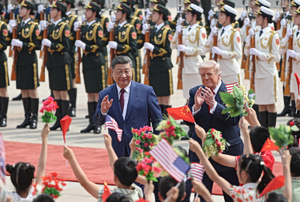
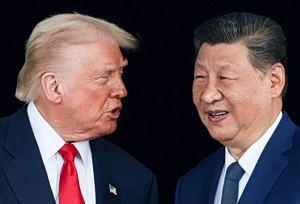
 BEIJING—President Trump and Chinese leader Xi Jinping headed into the final day of their summit with strikingly divergent stories to tell.
Beneath the pomp and bonhomie there are significant differences in what the two sides wanted to get out of the summit and how they perceive the U.S.-China relationship writ large.
The summit’s second and final day was a test of whether the talks could yield a concrete deal. By the time Trump left Beijing, none had materialized.
In a social-media post ahead of the second day of his summit, Trump sought to paper over differences of opinion with Xi, playing down the Chinese leader’s prior comments that the West is in decline.
The carefully worded readouts of the first day of meetings between the world’s most powerful men avoided direct disagreement. But the White House account framed the day as a businesslike trade reset. And Beijing’s statement cast it as the opening move toward a multiyear “strategic stability” framework—Xi’s attempt to secure a more predictable Trump for the rest of his term, and beyond.
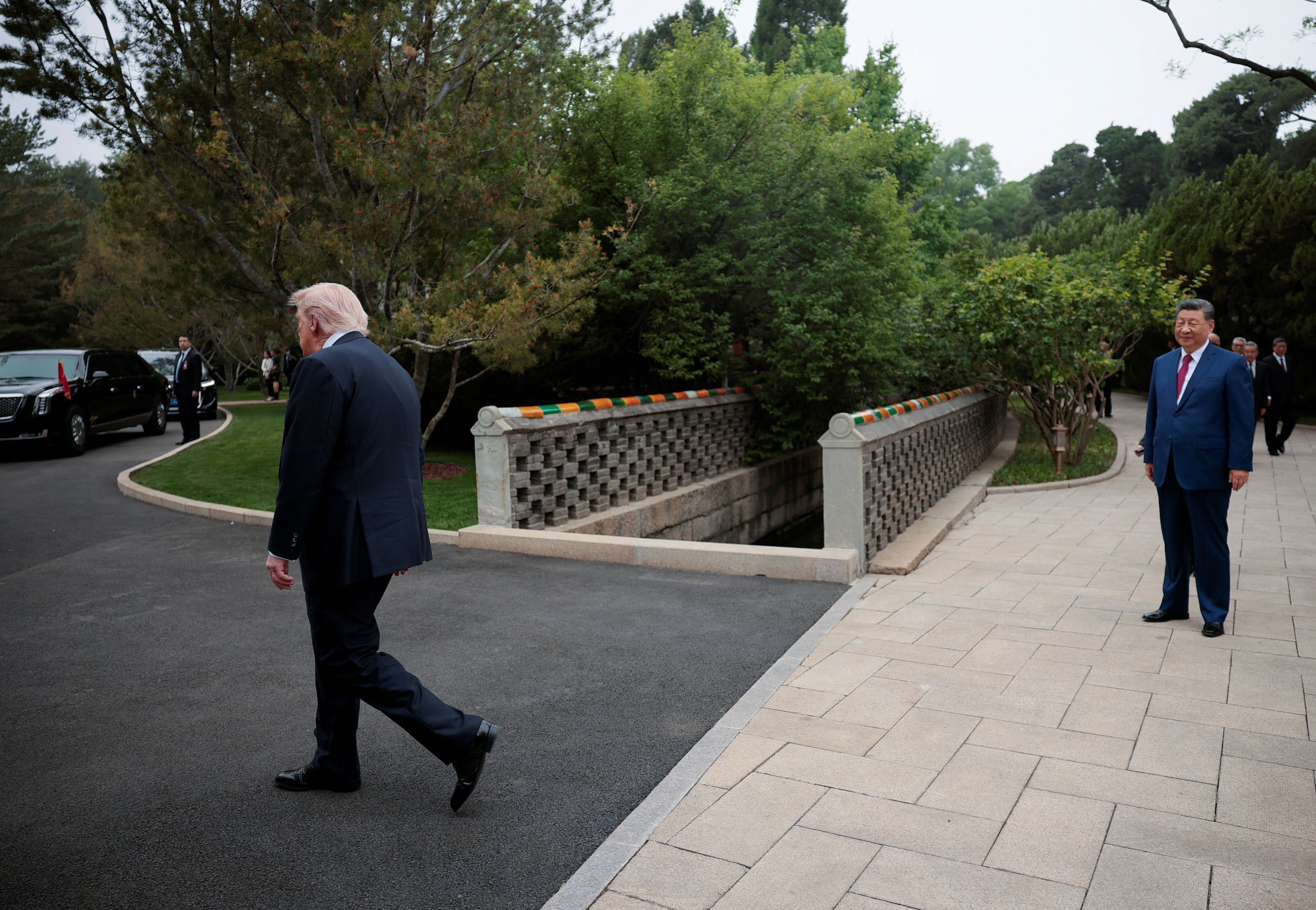
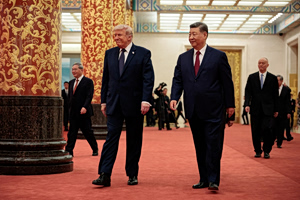
U.S. President Donald Trump walks towards his car after a visit to the Zhongnanhai Garden as Chinese President Xi Jinping looks on, in Beijing, China, May 15, 2026. REUTERS/Evan Vucci/Pool
The White House highlighted market access for American businesses in China and Chinese investment into the U.S. It also contained joint commitments that the Strait of Hormuz “must remain open” and Iran “can never have a nuclear weapon.” Trump, toasting at the state banquet, called the talks “extremely positive” and invited Xi for a state visit to Washington on Sept. 24.
The Chinese readout of the summit emphasized managing differences and setting competition limits to build an overall stable relationship. It underscored a strategic framework aimed at thwarting forces advocating a tougher stance on China.
Taken together, the gap is the clearest sign yet of how Xi intends to manage the rest of Trump’s term: by locking Trump into a public commitment to U.S. restraint—no surprise tariffs, no sudden sanctions, no perceived provocations on Beijing’s red lines.
It is good politics in Beijing. With the domestic economy still grinding through weak consumption and industrial overcapacity, Xi can present a smoother U.S. relationship as a counterweight to the discontent simmering in property, employment and local finance.
Against that backdrop of stabilization talk, however, Xi’s message on Taiwan stood out for its bluntness as he sought to undermine the U.S. support for the self-ruled democratic island Beijing intends to bring under its control.
Xi was direct with Trump, telling him Taiwan is “the most important issue” and warning that if it isn’t “handled properly, the two countries will collide or even clash, putting the entire U.S.-China relationship in an extremely dangerous situation.”
Analysts say Beijing is trying to define the terms of the superpower relationship by clearly linking Taiwan to the bilateral framework.
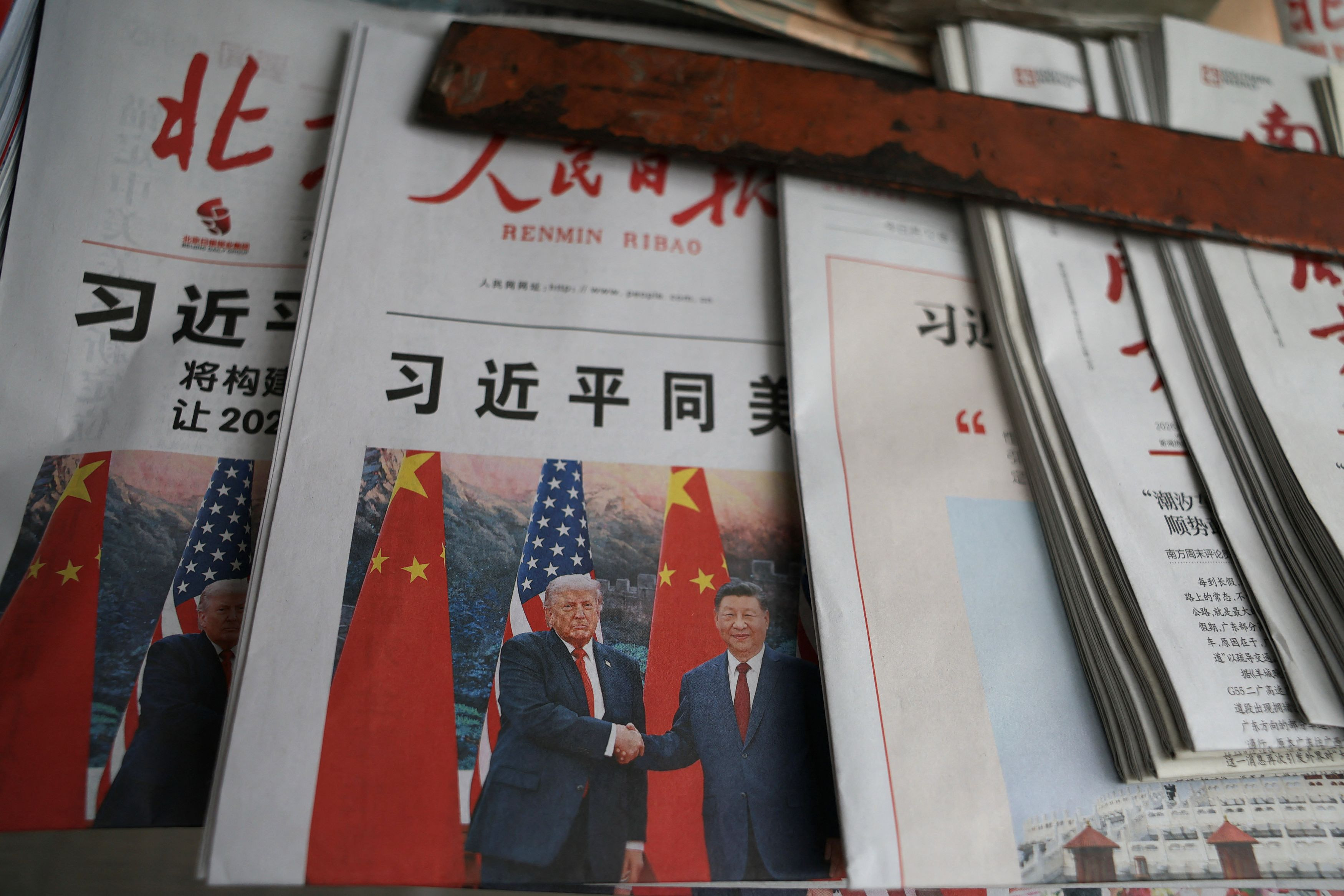
Newspapers with images of Chinese President Xi Jinping meeting U.S. President Donald Trump at the Great Hall of the People are displayed on the front page, at a newsstand in Beijing, China May 15, 2026. REUTERS/Tingshu Wang
“You can’t have constructive strategic stability and mismanage Taiwan at the same time. We’re not going to give you both,” said Daniel Kritenbrink, a former senior U.S. diplomat who is now a partner at Washington-based Asia Group, referring to Xi’s strategy. “They’ll go back to that every time they’re unhappy with something the U.S. does, and say, ‘See, you’ve done something to undermine the consensus of the two leaders.’”
Trump didn’t publicly respond to Xi’s statement on Taiwan when prompted by reporters. The White House insisted in previews of the summit agenda that U.S. policy toward the island wouldn’t change.
Since Washington and Beijing established formal diplomatic ties in 1979, the U.S. has committed to the policy of acknowledging—but not endorsing—Beijing’s position that Taiwan is part of China. Secretary of State Marco Rubio, who is traveling with Trump, warned that it would be a “terrible mistake” if China were to take Taiwan by force. “From our perspective, any forced change in the status quo and the situation that’s there now would be bad for both countries,” Rubio told NBC after the leaders’ meeting Thursday.
Taipei expressed some relief at what it has seen from the summit in Beijing. “Everybody is concerned that China’s strong demands are going to end up hurting Taiwan,” said Liang Wen-chieh, deputy head of Taiwan’s Mainland Affairs Council. “We haven’t heard anything like that…for now.”Trump’s proposed Sept. 24 date for Xi’s White House visit is being billed by both sides as yet another step toward a rebalanced relationship. In practice, analysts say, the promise of the visit could also be used as leverage by Beijing to slow-walk decisions it wants delayed in Washington.
Chief among those is U.S. arms sales to Taipei, which Washington is legally bound to provide. Xi warned Trump against approving a fresh package in the run-up to this summit, and the cadence of a planned visit gives Beijing an opportunity to continue pushing against the sales. Chinese officials have argued that any high-profile arms announcement would “undermine the atmosphere”—Beijing’s diplomatic-speak—of an event both leaders are invested in.
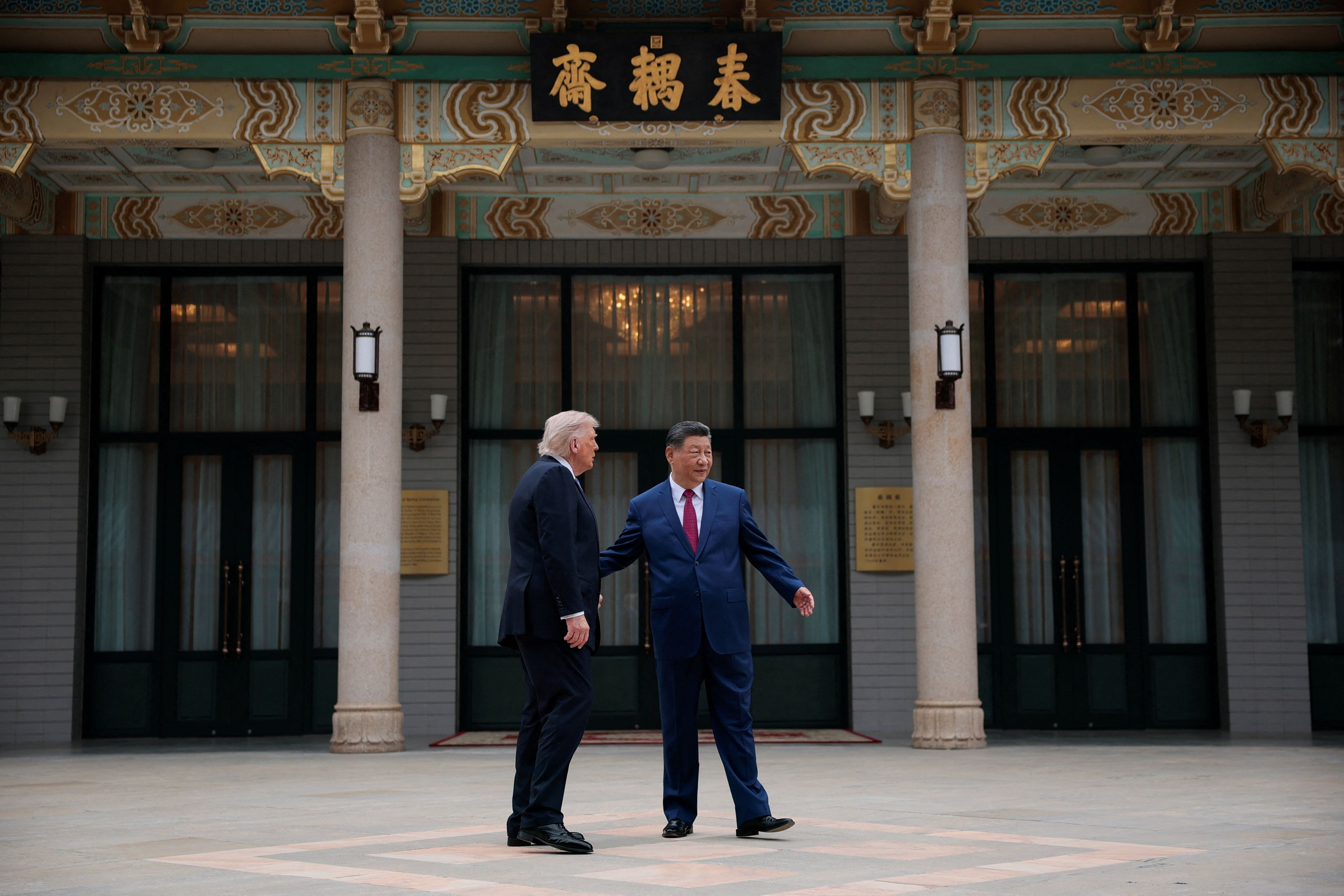
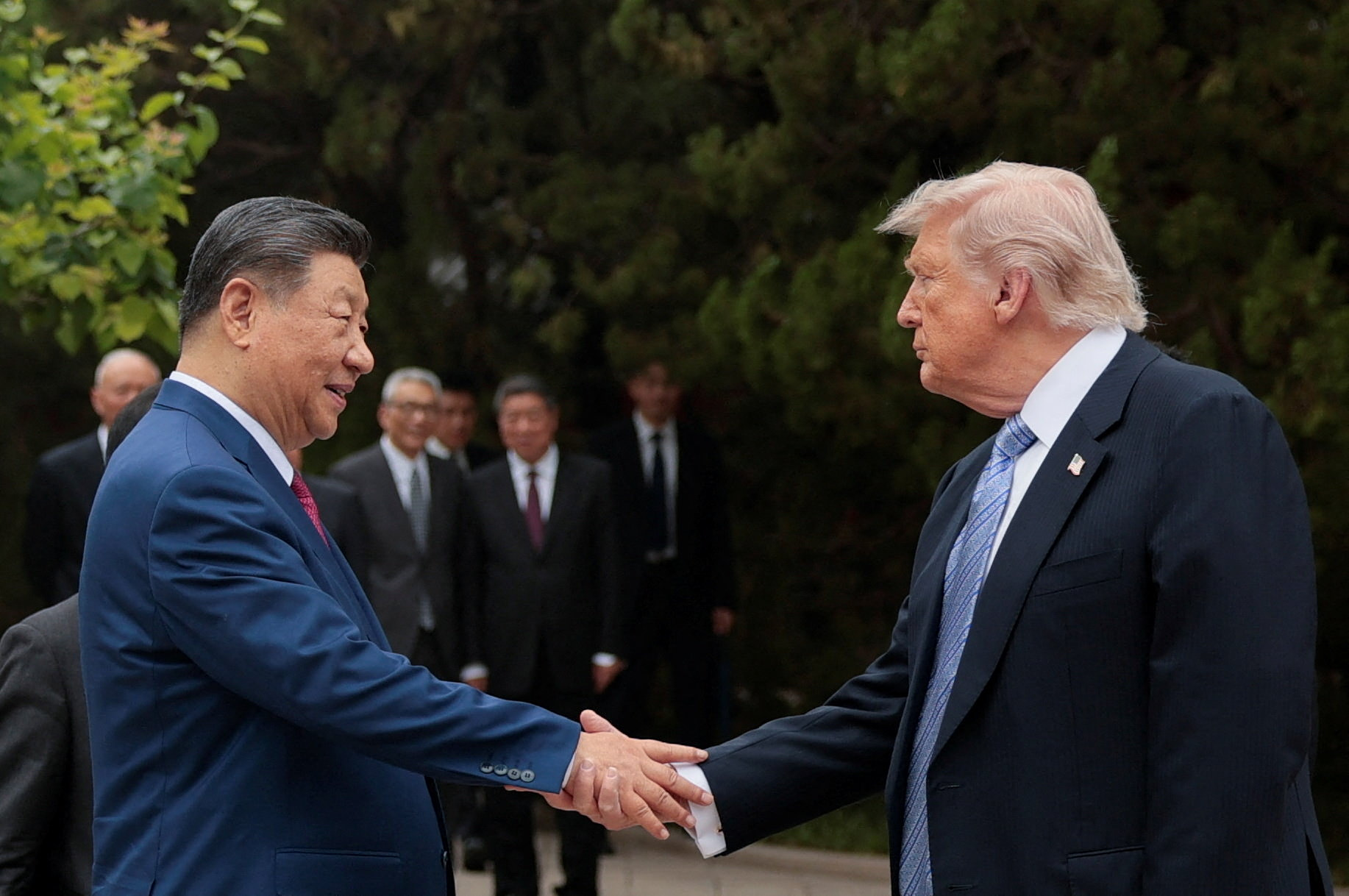
Chinese President Xi Jinping guides U.S. President Donald Trump during a visit to the Zhongnanhai Garden in Beijing, China, May 15, 2026. REUTERS/Evan Vucci/Pool
“Beijing’s near-term objective is not forcing an immediate unification, but constraining Taiwan’s strategic space,” said Jason Hsu, a former Taiwanese legislator and now a senior fellow at the Hudson Institute. “Xi wants to keep this pressure on Trump.”
The two nations have de-escalated from a tit-for-tat trade war last year that heightened tensions. But the underlying structure of the relationship hasn’t changed. Whether on technology or Chinese investments in the U.S. or Iran, Washington and Beijing are largely at odds, despite Trump’s insistence that he and Xi are friends.
In an interview with Fox News, Trump said Xi told him China “is not going to give military equipment” to Tehran, and added that Xi “would like to see a deal made” and offered to be of help. But China so far has made little indication that it will stop buying Iranian oil—keeping Chinese crude purchases the lifeline to the very economy Washington’s sanctions regime is designed to choke.
The agreement to talk about safety protocols involving artificial intelligence revealed the fierce competition between the two powers. Treasury Secretary Scott Bessent, speaking on CNBC Thursday, framed a new U.S.-China dialogue on AI as a function of America’s lead in the race to advance the technology.
“The two AI superpowers are going to start talking,” Bessent said. “The reason we are able to have wholesome discussions with the Chinese on AI is because we are in the lead. I don’t think we would be having the same discussions if they were this far ahead of us.”