 Μake us preferred on Google
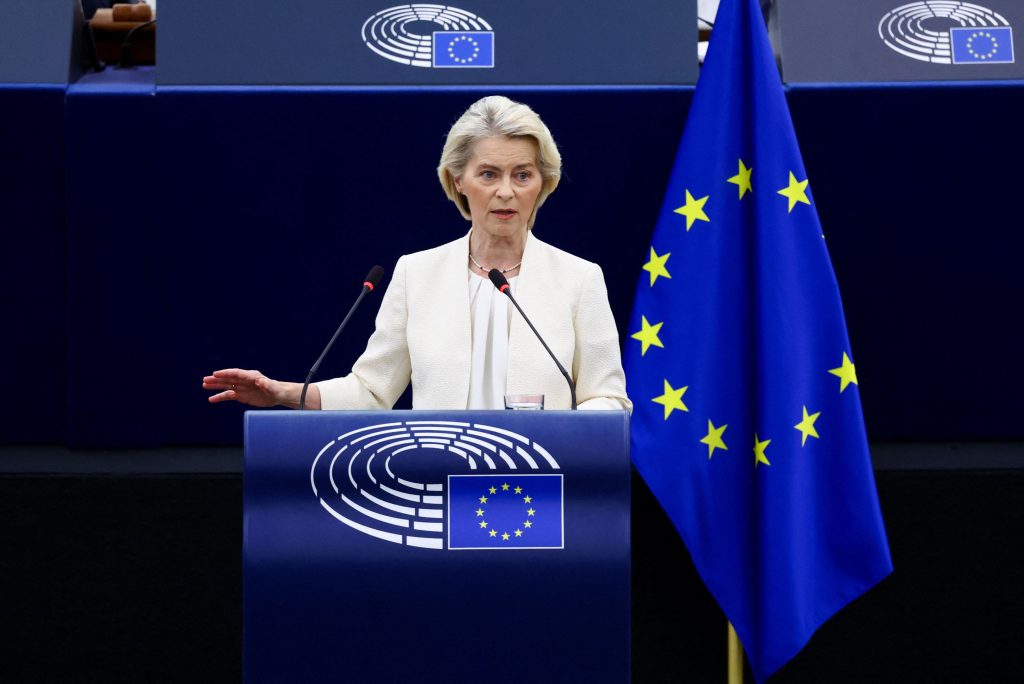
The position was reaffirmed during a debate at the European Parliament in Strasbourg on Tuesday, with European Commissioner for the Mediterranean Dubravka Šuica expressing the EU’s solidarity with Greece and Cyprus and stressing the importance of respecting the sovereign rights of member states.
The debate comes after Libya’s eastern-based House of Representatives ratified the memorandum on Oct. 20, prompting a strong response from Brussels. European Council President António Costa and European Commission President Ursula von der Leyen subsequently reiterated that the agreement infringes upon the sovereign rights of third states, does not comply with the Law of the Sea and is null and void.
The European Parliament’s relevant resolution, registered under procedure 2026/2981(RSP), is scheduled for a vote on Thursday.
The Commissioner’s intervention came during a plenary debate specifically devoted to the 2019 memorandum and its compatibility with the United Nations Convention on the Law of the Sea (UNCLOS). The debate was scheduled for Tuesday afternoon, with a parliamentary resolution due to be put to a vote on Thursday.
Šuica said the memorandum on the delimitation of maritime zones, signed by Turkey and Libya in 2019, was incompatible with international law and infringed upon the sovereign rights of third countries.
She stressed that the issue was directly linked to the protection of international law, stability in the eastern Mediterranean and respect for the sovereign rights of EU member states.
Addressing Turkey’s relations with the EU and its accession prospects, the Commissioner said the assessment of candidate countries was not limited to their domestic reforms but also took into account their conduct on the international stage.
The EU, she said, was closely monitoring actions and statements that could generate new tensions or undermine efforts to reduce tensions in the region.
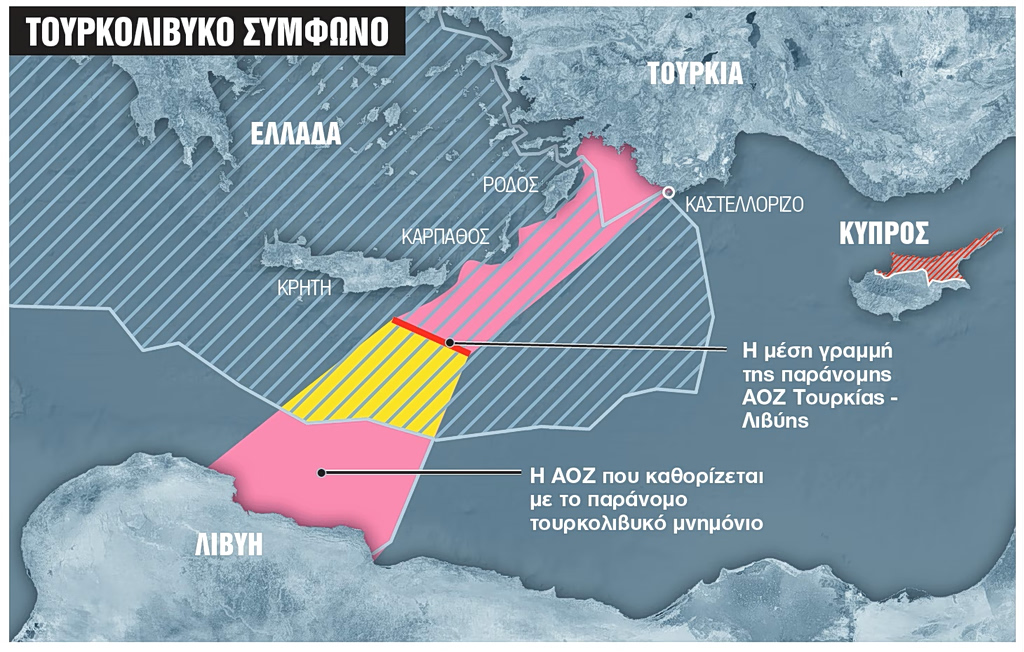
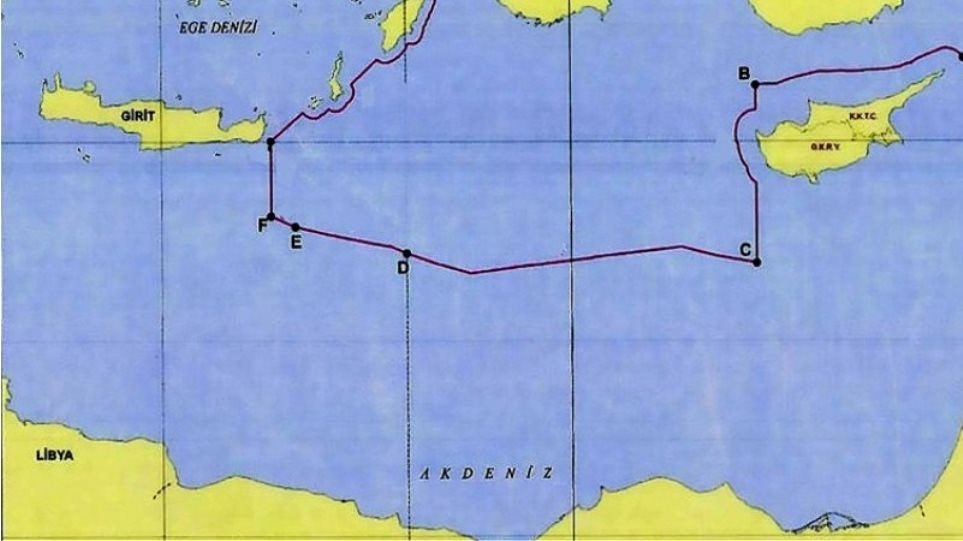
A map shows the approximate delimitation of maritime regions attempted by Turkey and Libya in 2019, with a relevant memorandum between the two states, however, deemed as illegal and baseless by Greece, other regional countries and the EU.
EU position on Libya and message to Turkey
Šuica also addressed developments in Libya, stressing that the country’s political transition should not be undermined by agreements that deepen divisions, create legal uncertainty or affect the rights of third countries.
She reaffirmed the EU’s commitment to Libya’s unity, sovereignty, territorial integrity and stability, noting that the country’s political future was closely linked to the wider stability of the eastern Mediterranean.
She concluded by stressing that unilateral actions disregarding the rights of other states were unacceptable and that the EU would continue to support Greece and Cyprus and raise the issue in its relations with Turkey.
The Commissioner’s statements are consistent with the EU’s formal position, reiterated in an Oct. 21 statement by EU foreign policy chief Kaja Kallas on behalf of the 27 member states. That statement said the memorandum infringed upon the sovereign rights of third states, did not comply with the Law of the Sea and could not produce legal consequences for them.
McConalogue: ‘A matter of principle, not a technical disagreement’
Irish Minister of State Charlie McConalogue, speaking on behalf of the Irish presidency of the Council of the EU, also described the Turkey-Libya memorandum as a matter of principle rather than a technical disagreement.
He reaffirmed the Council’s solidarity with Greece and Cyprus, stressing that the sovereign rights of all member states must be respected and that maritime boundaries should be determined through dialogue and negotiations conducted in good faith and in accordance with international law.
McConalogue said the EU had a strategic interest in maintaining stable and cooperative relations with Turkey, but stressed that any de-escalation had to be sustained and credible and include respect for the rights of member states.
The Council, he added, would continue to monitor developments in the eastern Mediterranean and was prepared to address actions undermining the sovereignty, sovereign rights or jurisdiction of EU member states or violating international law.
Defending these principles, he said, meant defending not only the rights of Greece and Cyprus but also the credibility of the international legal order.
Kefalogiannis: Challenging Greece’s rights means challenging EU
Speaking on behalf of the European People’s Party (EPP), New Democracy (ND) party MEP Manolis Kefalogiannis described the Turkey-Libya memorandum as illegal and incompatible with the Law of the Sea, accusing Ankara and Tripoli of attempting to impose faits accomplis in the eastern Mediterranean.
He recalled the international objections to the agreement and referred to Article 3 of UNCLOS, which recognizes the right of every state to establish the breadth of its territorial sea at up to 12 nautical miles.
Kefalogiannis also criticized Turkey’s continued threat of war, or casus belli, against Greece over a possible extension of its territorial waters in the Aegean, as well as Ankara’s Blue Homeland doctrine.
“Challenging the sovereign rights of an EU member state means challenging the EU as a whole,” he said, expressing confidence that Thursday’s parliamentary vote would send a strong message to Turkey.
Maniatis: ‘We must now move from words to action’
PASOK MEP Yannis Maniatis, speaking on behalf of the Socialists and Democrats (S&D) group, called for a decisive European response following the recent ratification of the Turkey-Libya memorandum by Libya’s House of Representatives.
He described the condemnation of the agreement by the presidents of the European Council and European Commission as an important first step but argued that concrete measures were now necessary.
“We must now move from words to action,” Maniatis said, stressing that protecting the sovereignty and sovereign rights of member states was not merely a national concern but a shared European responsibility.
He outlined the S&D group’s proposed resolution, which calls for the renewal and extension of the EU’s existing sanctions framework concerning the eastern Mediterranean to cover illegal activities based on the Turkey-Libya memorandum.
The proposal also calls for respect for international law to become a substantive condition for any future EU cooperation with both Libya and Turkey.
Another key provision concerns European protection for the Greece-Cyprus electricity interconnection project, the Great Sea Interconnector (GSI), which has encountered obstacles amid the wider disagreements over maritime jurisdiction in the eastern Mediterranean.
“The EU is a unique experiment in peace. However, it must also have the power to defend its principles and protect all its member states equally,” Maniatis concluded.