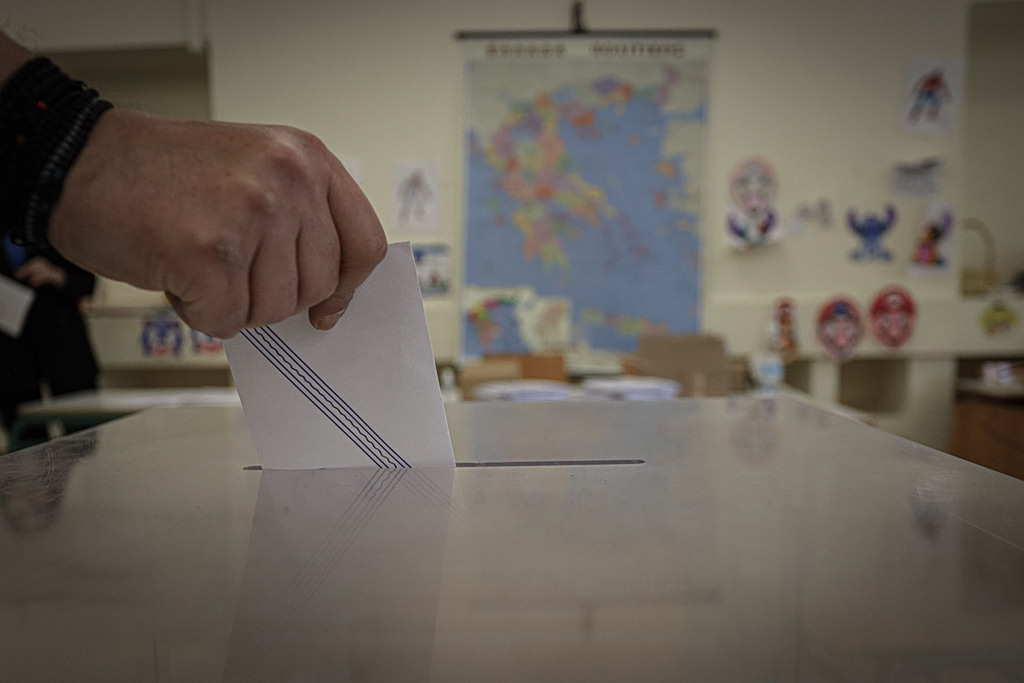

With New Democracy wrapping up its Cabinet “amendment” and electing a new Secretary, all the parties are slowly assuming battle stations for the upcoming elections.
It’s hard to say when they’ll take place exactly, though the government—with the Prime Minister leading the choir—keeps monotonously insisting on a “2027 window” at every opportunity.
Even so, we know that the next government must be ready to assume the presidency of the European Union on July 1, 2027.
Meaning that the two-month (minimum) period required for back-to-back elections cannot kick off any later than March 2027, and possibly earlier.
Given that we live in a country where elections always bring their fair share of commotion, we can definitely expect the six months between September 2026 and March 2027 to see the nation in full campaign mode.
Of course, if the elections end up taking place somewhat earlier than anticipated (say, this fall), the electoral disruption will be that much shorter.
Still, the exact date of the elections is not the issue right now—nor is it in our hands. Because the Prime Minister won’t be taking his final decision till late summer, when he’ll factor in the latest economic forecasts. Needless to say, he won’t be giving the other interested parties advance warning.
Which is why the parties are digging in for an imminent showdown which promises to be drawn-out and anything but refined.
Seeing as the elections are shaping up to be a “life-or-death battle” for most of Greece’s political formations, leaving little scope to hope for moderation, restraint, or sobriety.
What’s more, the disparity between the faction currently in government and the rest of the field is only compounded by the infighting within the opposition ranks.
Meaning that everyone is against the government, but also against each other—a situation could lead to paralysis, if the elections fail to produce a “clear-cut solution.”
But we’re not there yet. The parties are drawing up their battle lines primarily to clarify what we traditionally call an election’s “defining choice” and to formulate their responses to it.
Obviously, the government will be fighting the good fight for “stability,” while the opposition will be battling under the banner of “political change.” It doesn’t take a genius to figure that out.
As for the arguments they’ll be bandying about, let’s not set our expectations too high. We’re sure to hear everything under the sun and its exact opposite.
Still, I remain convinced that the crucial question isn’t how the country goes into the polls.
It’s how it emerges from them.