 Μake us preferred on Google
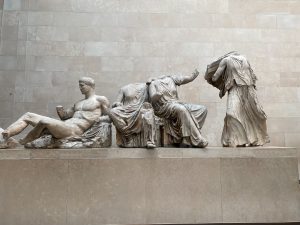
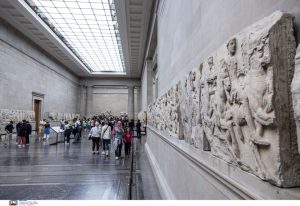
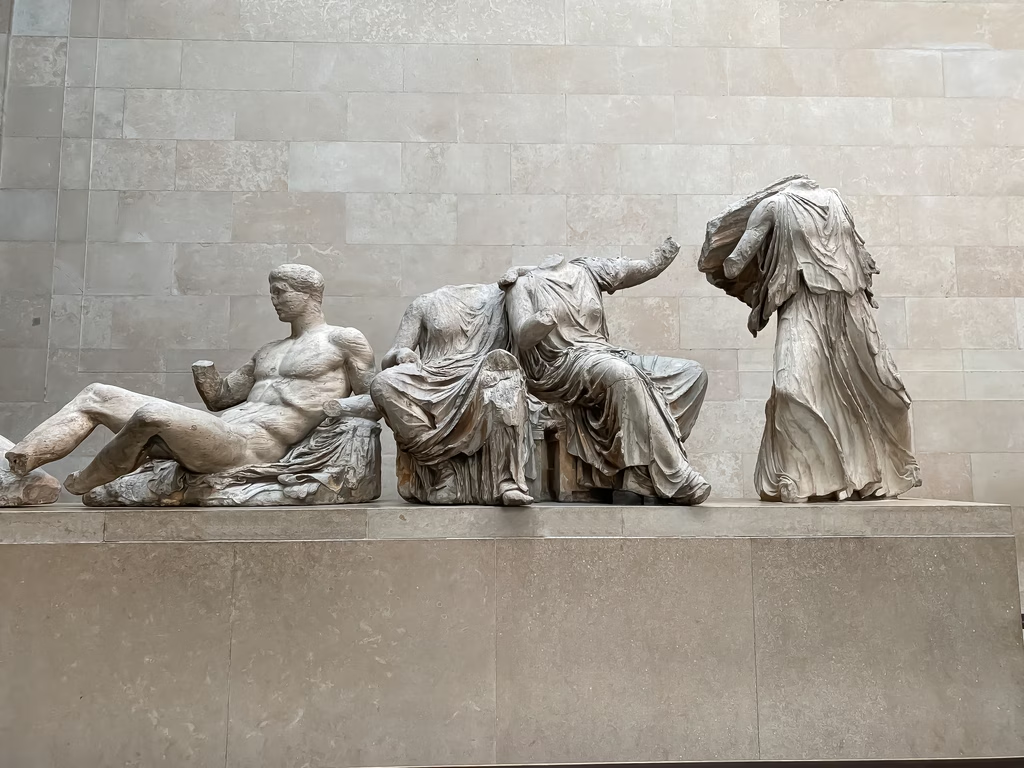
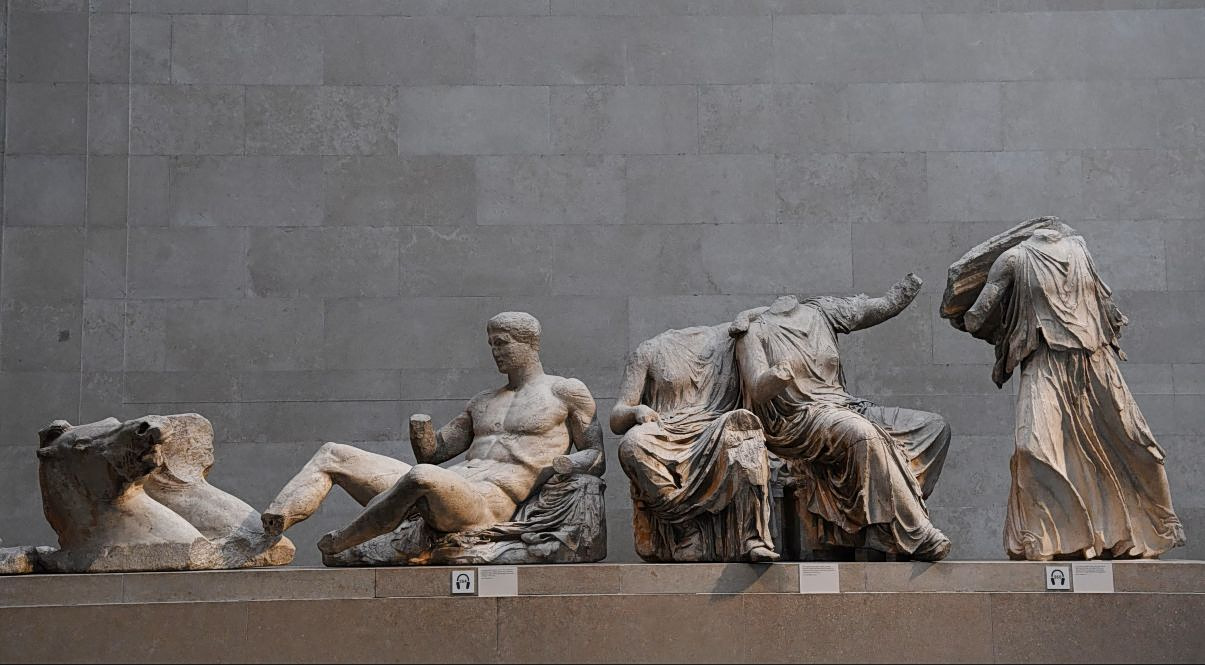
 British filmmaker David Nicholas Wilkinson has posed a blunt question to Prime Minister Andy Burnham after Burnham retreated from a position he once held with total clarity: that the Parthenon Marbles should be returned to Greece, no strings attached. Weeks into his premiership, Burnham now says their fate is ultimately a matter for the British Museum. To Vima can reveal that on 23 July 2026, Wilkinson wrote directly to Burnham asking him to host a screening of his documentary The Marbles at Westminster for MPs and peers. He has had no reply.
The timing is pointed. This week, King Charles and President Macron stood together at the British Museum to welcome the Bayeux Tapestry to London — a 70-metre masterpiece loaned by France as, in the King’s words, the best possible symbol of Anglo-French closeness. Museum director Nicolas Cullinan suggested the success might offer a “glimmer of possibility” for the Marbles too.
Yet almost simultaneously, the Museum agreed to lend two Parthenon fragments to a Frankfurt museum, while Greece refused a German request to borrow nine Acropolis Museum fragments — since they would have been displayed alongside pieces held in London, the very objects Athens wants reunited.
Before Downing Street, Burnham was unambiguous, once saying the Marbles should go back unconditionally and that Britain should use culture to change how it’s seen abroad. Speaking to the Financial Times since taking office, he struck a far more cautious note, framing the matter as legally the Museum’s to resolve while insisting he still backs British cultural diplomacy.
Critics call that shift political, not semantic. Diplomatic sources told To Vima the remark could nonetheless be read in Athens as an opening, particularly as Britain seeks closer EU ties ahead of Greece’s EU presidency next year.
In his letter, Wilkinson congratulated Burnham on his premiership before urging him to arrange the Westminster screening, calling the Marbles dispute a two-century-old injustice deserving urgent attention. He told To Vima he still has no answer, and finds Burnham’s reversal hard to reconcile with a Labour tradition — from Michael Foot to Neil Kinnock to Jeremy Corbyn — of backing the Marbles’ return. His challenge to the Prime Minister is simple: who is he afraid of?
Wilkinson suggested Burnham has passed the buck just as Keir Starmer has, and pointed to Manchester’s museums, which returned human remains, as a model Burnham might have followed instead.
Archaeologist Mario Trabucco della Torretta offered a blunter reading: politicians talk boldly as backbenchers but grow timid once they face the law and the political cost of serving another country’s cause. He argued that Cullinan’s comparison to Bayeux is clever but misleading — France respects the Museum’s right to hold the tapestry, whereas Greece does not extend the same recognition over the “Elgin Marbles”, making a Frankfurt loan easy and an Athens loan a political impossibility. Repeating the offer to Greece, he said, costs the Museum nothing and merely looks good on camera.
Diplomat Michael Vatikiotis was more optimistic, suggesting the Bayeux loan could model a broader Greek-British cultural exchange benefiting both nations’ museums. But the two sides remain divided by language: London speaks of cooperation, Athens of reunification.
Art historian Tamara Newton rejected the idea that law forecloses politics, citing the 2009 Holocaust (Return of Cultural Objects) Act as proof Parliament can act when legislation blocks restitution. She argued Britain’s handling of imperial-era acquisitions implicates its own history, and that Greece’s claim isn’t going away.
Days earlier, To Vima revealed a BCRPM pamphlet directly rebutting the Museum’s own visitor literature — a sign, said chair Janet Suzman, that the debate is now playing out in front of the public itself. Writer Claire Meadows said she hopes Burnham’s handling of the issue isn’t a preview of a Downing Street tenure otherwise expected to avoid the indecision that dogged Starmer.
Bayeux proved cross-Channel cultural diplomacy can work; Frankfurt proves the Museum can cooperate internationally; the BCRPM pamphlet proves the historical argument remains contested; and Wilkinson’s unanswered letter proves a direct political challenge now sits on Burnham’s desk. The question is no longer what he believed as a backbencher — but what he’s willing to do as Prime Minister.