 Μake us preferred on Google
 Greeks of 2026 have a clear answer: Freddo Espresso
The word freddo comes from Italian, meaning “cold”.
This unique blend of iced espresso completely dominates consumption in the country, a dominance that is, by now, quantifiable. “Freddo espresso and freddo cappuccino alone are estimated to account for 70-80% of all cold coffee beverages consumed in Greece,” says Panagiotis Konstantinopoulos, Managing Director of Coffee Island, one of the country’s largest coffee chain.
What could explain such dominance?
The meteoric rise of the freddo espresso is quite understandable to those who have sampled it.
It’s stimulating, refreshing, and has a smooth taste. If the right brew is chosen and the barista is skilled, those first few sips can even feel “electric”.
For many, it’s simply a more refined, modern, and “polished” coffee iteration, compared to its predecessor, the iconic frappe.
We also can’t ignore the rise of Greece’s on-the-go coffee culture, defined by plastic takeaway cups with lids and straws as well as the rise of delivery coffee kiosks. This played a pivotal role in the proliferation of the drink’s popularity. This culture has made it easier and faster to consume coffee anywhere and at any time — and by anyone.
From lawyers rushing into court, to skateboarders sipping between sessions, the freddo espresso is Greece’s democratic caffeine ritual, a true universal drink.
But how is it made?
The process of crafting this concoction is pretty straightforward.
Begin with two standard espresso shots, but instead of pouring over ice, shake violently with ice in a metal mixer.
Optionally add sugar or any other sweetener at this stage.
This process cools the coffee instantly while creating a dense cream-like foam. The chilled espresso, now a freddo, is then poured over fresh ice, producing a drink that is cold, smooth, and remarkably stable.
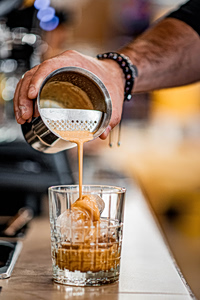
A barista pouring cold freddo espresso over fresh ice.
For the freddo cappuccino version, milk is also shaken until it becomes thick and frothy and then poured over the freddo espresso.
Some vital considerations
Greeks are usually very particular about the sweetness levels of their freddos.
The usual three “umbrella” choices are sketos (no sugar), metrios (approx. 1-2 teaspoons), glykos (2+ teaspoons).
This needs to be stated before the coffee is served, as, contrary to hot coffee or lattes, the cold layers of freddo settle quickly and won’t incorporate sugar stirred in afterwards.
A true freddo espresso has to survive a uniquely Greek kind of stress-test. Will it maintain its consistency after you come back from a quick swim? If the coffee has turned watery, it has failed.
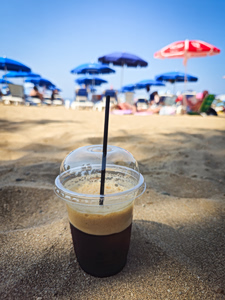
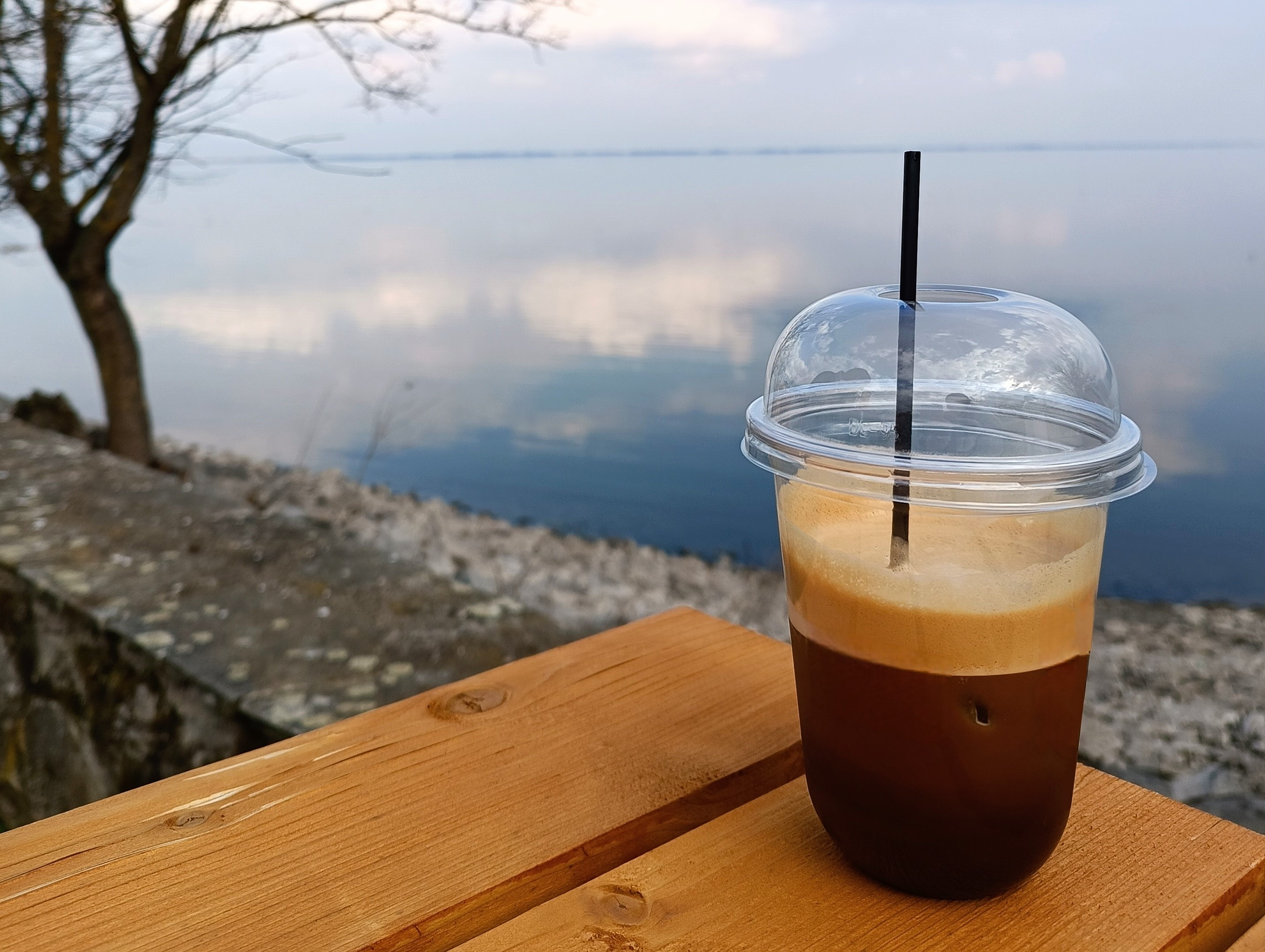
The beloved freddo espresso in its characteristic plastic cup; the perfect beach companion on a hot day.
The freddo espresso highlights the importance of mixing and many Greeks will testify how simply pouring hot espresso over ice, leads to a horrendous blend of watered-down bitterness, which is abhorrent to the more coffee-refined taste buds of many a native Greek.
While it may feel timeless today, an ever-present part of modern Greek culture, its history is surprisingly recent.
History of the drink
The origin story can be traced to its spiritual progenitor the frappe, an instant-coffee drink made by adding instant coffee granules in water, optionally with sugar and/or milk, and shaking the mix until a thick foam formed at the top.
Originally from Thessaloniki, Greece’s northern cultural capital, in 1957, the frappe became the go-to coffee beverage during the postwar Greek hot summer months.
Where does the freddo espresso fit into all of this?
The most widely accepted account of it’s origin credit Yiannis Iosifides, founder of the coffee distribution company Kafea Terra, the same company responsible for bringing espresso culture to Greece, first through their exclusive introduction of illy in 1988, and later through the launching of their own Dimello brand.
The purpose of the freddo espresso was simple: to combat decreasing hot espresso sales during the blazing Greek summers.
The industry also needed to raise a champion to take on the cold frappé head-to-head. In fact, the breakthrough was quite simple, yet also brilliant: apply the frappé’s shaking technique to espresso.
The Beverage Abroad
Strangely, while dominating Greek cafés, the freddo espresso remains surprisingly absent from the global café repertoire. Only recently has it gained traction, with Coffee Island, a Greek company founded in 1999, opening shops in UK, Switzerland, Romania, Spain, Canada, Egypt, Dubai (UAE), Bulgaria, Hong Kong, France, and India. Another Greek company, Gregory’s, has opened up in Cyprus, Romania, and Germany.
A last sip
The freddo espresso is not just a drink, it’s a cultural ritual, a modern consumption phenomenon. Whether nursing one through a lazy seaside afternoon or grabbing it on the run between meetings, Greeks have made it their own in a way that feels both modern and strangely traditional. As it slowly finds its footing abroad, the world may be catching on to what Greece has known for decades: that cold, shaken espresso, done right, is hard to beat.