 Μake us preferred on Google
 WASHINGTON—As the heads of the world’s two superpowers meet in Beijing this week, President Trump and Chinese leader Xi Jinping will have another nation looming over their summit: Iran.
The long anticipated meeting has already been delayed once due to the U.S. and Israel’s war against Iran, which has led to the closure of the Strait of Hormuz. Trump is eager to move on from the Middle East war that is sapping his domestic power and straining the global economy.
He will land in Beijing prepared to push China, which relies on Iran for low-cost oil in their transactional relationship, to help broker an agreement that ends the conflict, according to U.S. officials.
Xi also wants the fighting to stop, as Middle East turmoil restricts China’s oil supply and shrinks countries’ ability to buy Chinese goods. Finding a resolution could raise Xi’s stature as a global statesman who swooped in at the precipice of a possible military escalation, analysts and U.S. officials said.
Trump on Friday threatened to resume “Project Freedom,” the U.S.-led operation to help ships navigate the strait safely, adding this time that the operation would include “other things.”
The president on Sunday said a multipage response that Iran sent to the U.S. proposal to end the war, which didn’t include commitments about Tehran’s nuclear program, was unacceptable.
Senior U.S. officials insist the crisis in the strait and Tehran’s refusal to make nuclear concessions will prove an afterthought once Trump and Xi step into the Great Hall for trade talks. But both men head into the high-stakes summit aligned in seeking their own victories on Iran—with the Chinese particularly eager to ensure that the current Iranian regime remains intact so it can recover.
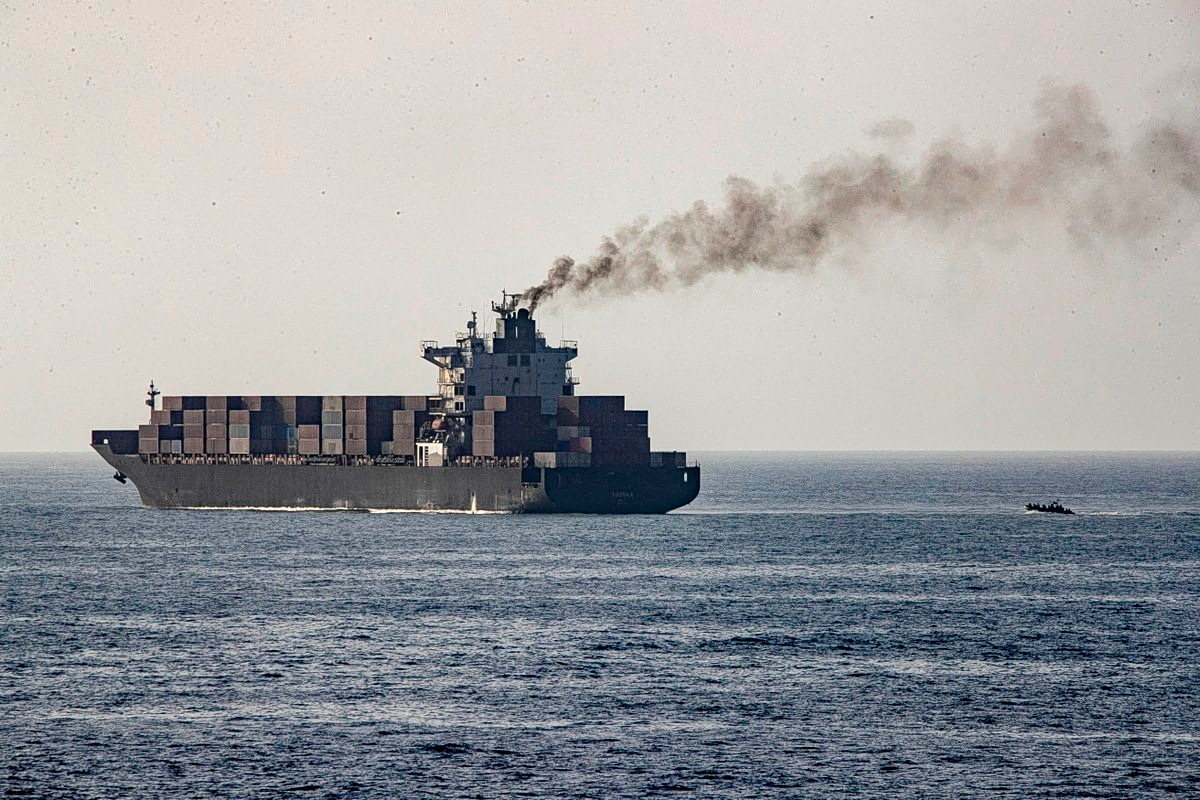
U.S forces patrol near the Iranian-flagged cargo ship M/V Touska after it was boarded and seized by U.S. forces on Sunday, at a location given as the Arabian Sea, in this handout image released April 20, 2026. U.S. Central Command via X/Handout via REUTERS THIS IMAGE HAS BEEN SUPPLIED BY A THIRD PARTY. MANDATORY CREDIT. BEST QUALITY AVAILABLE. VERIFICATION: Location and date could not be verified No earlier versions of the images were found posted online before April 20 Reuters was able to identify Iranian-flagged container ship Touska from the deck layout, mast, and superstructure of the ship that matched file images
At a minimum, Trump will have to keep one eye on a major conflict during a vital, multiday engagement halfway around the world. Trump is scheduled to land in Beijing on Wednesday night and leave Friday local time—giving the leaders two days of backslapping and handshaking. The schedule includes bilateral meetings, a tour of the Temple of Heaven, a state dinner Thursday night and tea between the two leaders on Friday before Trump departs, U.S. officials said.
“Trump will have to juggle briefings and updates on two different, multifaceted sets of policy issues at once, all while a bit jet-lagged,” said Jacob Stokes , deputy director of the Center for a New American Security think tank’s Indo-Pacific program. “Trump arguably faces a tight-wire act of simultaneous diplomacy and negotiation more complicated than any he’s yet seen in either of his presidencies.”
The discussions will focus largely on trade issues, namely the Chinese purchases of American agricultural goods, energy products and aerospace technologies such as Boeing airplanes, a senior U.S. official said. The leaders will also discuss establishing a U.S.-China board of trade that would consider how the countries can trade goods that aren’t related to national security.
The U.S. doesn’t anticipate China will propose a major investment package for manufacturing in the U.S., the official said. Even so, the sides are likely to discuss establishing a U.S.-China Board of Investment through which the two governments could consider investment plans in the future. Such an entity wouldn’t interfere with existing U.S. investment-screening entities, such as the Committee on Foreign Investment in the U.S., the official added.
“President Trump will continue doing what he has done over the past year—rebalancing the relationship with China and prioritizing reciprocity and fairness to restore American economic independence,” White House spokeswoman Anna Kelly said in a call with reporters Sunday afternoon.
Trump’s tariffs on China and Beijing’s riposte of export restrictions on rare earths last year unsettled the world’s most important bilateral relationship.
Since then, Trump has sought to recalibrate U.S.-China ties , including during an in-person meeting in South Korea in October. Gone are the first-term days of Trump bashing China as a rogue security threat stripping Americans of their jobs. Now Trump strikes a more peaceful tone aimed at turning former enemies into friends.
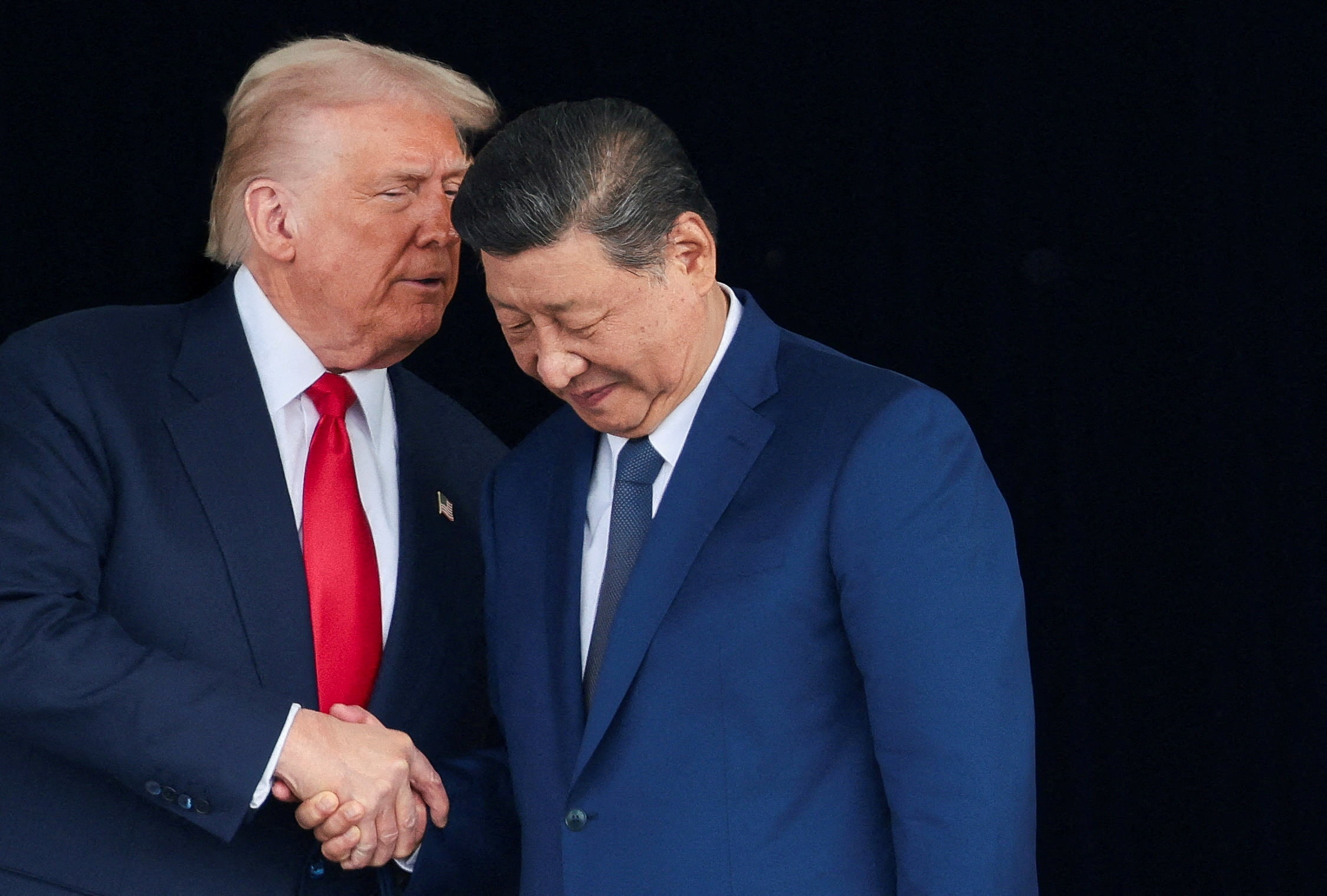
U.S. President Donald Trump and Chinese President Xi Jinping talk as they leave after a bilateral meeting at Gimhae International Airport, on the sidelines of the Asia-Pacific Economic Cooperation (APEC) summit, in Busan, South Korea, October 30, 2025. REUTERS/Evelyn Hockstein TPX IMAGES OF THE DAY
“President Xi will give me a big, fat, hug when I get there in a few weeks,” Trump posted on Truth Social in April.
All isn’t so rosy in the relationship.
China denied visas for some lower-level U.S. officials ahead of Trump’s visit, a step Beijing rarely takes. The coming summit is occurring against a backdrop of tightening media access. American journalists have faced increasing difficulties obtaining Chinese visas. Typically administrations fight to bring who they want as part of a broader American delegation, even if the host country objects. But U.S. officials say those decisions lie solely with China and that the denials won’t materially affect the meeting.
Trump is expected to bring up Beijing’s financial support for Iran and Russia and potential weapons exports to both countries, as he has during other encounters, according to a senior U.S. official. On Friday, the State Department sanctioned four Chinese entities for “providing satellite imagery that enables Iran’s military strikes against U.S. forces in the Middle East.”
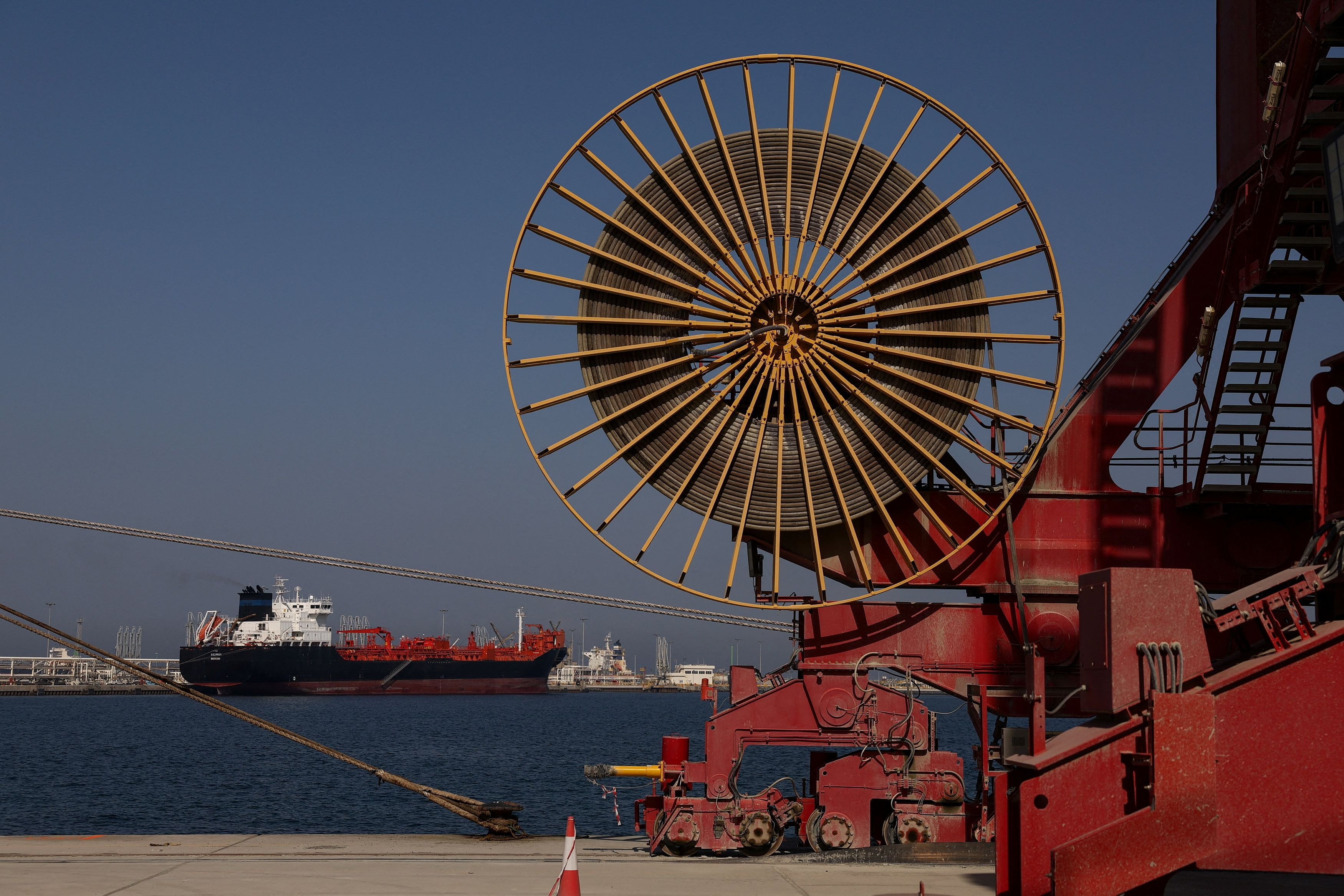
An oil tanker docked at the Port of Fujairah, as the U.S.-Israel conflict with Iran limits marine traffic in the Strait of Hormuz, in Fujairah, United Arab Emirates, May 6, 2026. REUTERS/Amr Alfiky
Despite Xi’s hopes for resolving the Iran crisis, he and Trump don’t see eye to eye on how it should end. China hosted Iran’s foreign minister last week. The timing was widely seen as designed to highlight ties between Beijing and Tehran ahead of the U.S. summit.
“Xi will want to make sure the latest American regime change war in the Middle East is seen as a failure—and naturally, Trump wants the opposite,” said CNAS’s Stokes.
Beijing and Tehran have relationship problems, too.
U.S. officials say Iran recently struck a Chinese-owned oil tanker in the Strait of Hormuz, setting fire to the ship believed to be the JV Innovation. Beijing expressed its deep concern over the situation while Trump administration officials used the moment to criticize the Iranian regime.
Trump’s struggles to bring the war to a close on his terms have driven him to seek Xi’s support. But the president, analysts said, should expect little from Beijing on Iran because China’s strategy is to appear useful in the conflict while avoiding a costly Middle East entanglement of its own.
“It’s hardly an ideal position for a U.S. president visiting China for the first time in a decade,” said Aaron David Miller, an American Middle East negotiator during Democratic and Republican administrations. “Trump comes without leverage he might have had now without tariffs and a war that’s alienating much of the world, handing Xi more than a few points.”
Taiwan and China’s claims on the self-governing island didn’t come up the last time Trump and Xi met in South Korea, U.S. officials said. This time those aides believe the topic will be addressed, though the U.S. has signaled that Trump isn’t eager to bog down negotiations with Taiwan-related talk, according to one adviser in touch with the White House.
Trump’s prep for the summit hasn’t included any plans for the U.S. to make a shift on its stance toward Taiwan, said senior administration officials.
Write to Annie Linskey at annie.linskey@wsj.com , Alexander Ward at alex.ward@wsj.com and Gavin Bade at gavin.bade@wsj.com