

 Μake us preferred on Google
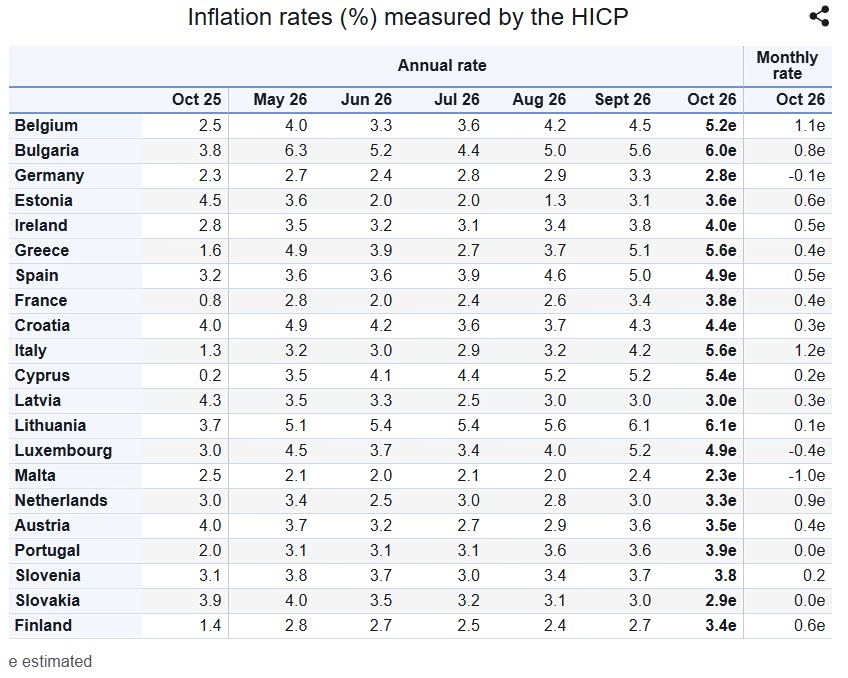
Inflation in Greece climbed to 5.6% year-on-year in October, according to Eurostat’s flash estimate, up from 5.1% in September.
Annual inflation in the eurozone is estimated to have risen to 4.0%, from 3.8% in September.
Inflation in Greece is among the highest in the eurozone. Italy recorded the same rate, while only Lithuania (6.1%) and Bulgaria (6%) posted higher inflation.
The lowest inflation was recorded in Malta at 2.3% annually, followed by Germany at 2.8% and Slovakia at 2.9%.
Energy Inflation at 20.8%
Looking at the main components of eurozone inflation, energy is expected to have the highest annual rate in October, at 20.8%, compared with 18.9% in September.
It is followed by services at 3.3%, compared with 3.2% in September; food, alcohol and tobacco at 1.6%, compared with 1.3%; and non-energy industrial goods at 1.2%, compared with 1.1% in September.
Core inflation in the eurozone, which excludes volatile energy and unprocessed food prices, remains at 2.2% annually.
Germany Eases From Three-Year High
Inflation in Germany is estimated at 2.8% in October on a national basis, down from the nearly three-year high of 3.3% it reached in September.
This is also below market expectations of 3.0%, according to preliminary estimates from the Federal Statistical Office (Destatis).
Based on the results available so far, Destatis also reports that consumer prices fell by 0.2% on a monthly basis.
Harmonized inflation also stood at 2.8% annually, while harmonized consumer prices fell by 0.1% on a monthly basis.
Core inflation, which excludes food and energy prices, is estimated at 2.1% annually in October.
Energy prices rose by 12.2% compared with the same month last year.
The increase in energy prices slowed slightly in October, after reaching 14.9% year-on-year in September.
The ECB
The trend in eurozone inflation confirms the upside risks the ECB highlighted after its decision last week to keep interest rates unchanged.
As the central bank’s Governing Council stated in its announcement: “Energy prices have continued to rise, posing upside risks to the inflation outlook and downside risks to the growth outlook. While the effects of the energy shock continue to unfold across their full range, underlying inflation has so far remained broadly stable and wages are not showing a significant reaction at this stage.
The increased intensity and duration of the energy shock, as well as the impact of indirect and second-round effects, are likely to push inflation higher and slow growth. Financing conditions have become tighter since the Governing Council’s last meeting, a development that is likely to weigh on inflation and growth.”