 Μake us preferred on Google
 The past few days have reminded us of one of the two chief contemporary economic realities: the president of the US is a wrecker. Yet this is consistent with the other reality, which is that despite the disruptions and shocks of our era, the world economy remains a powerful growth machine, driven by remarkable innovations, risk-taking finance and large accumulations of debt. Can this last? The reason for believing that it will is that growth has been the dominant feature of the global economy since the middle of the last century. Yet we must always remember that growth is one thing, but stable growth quite another.
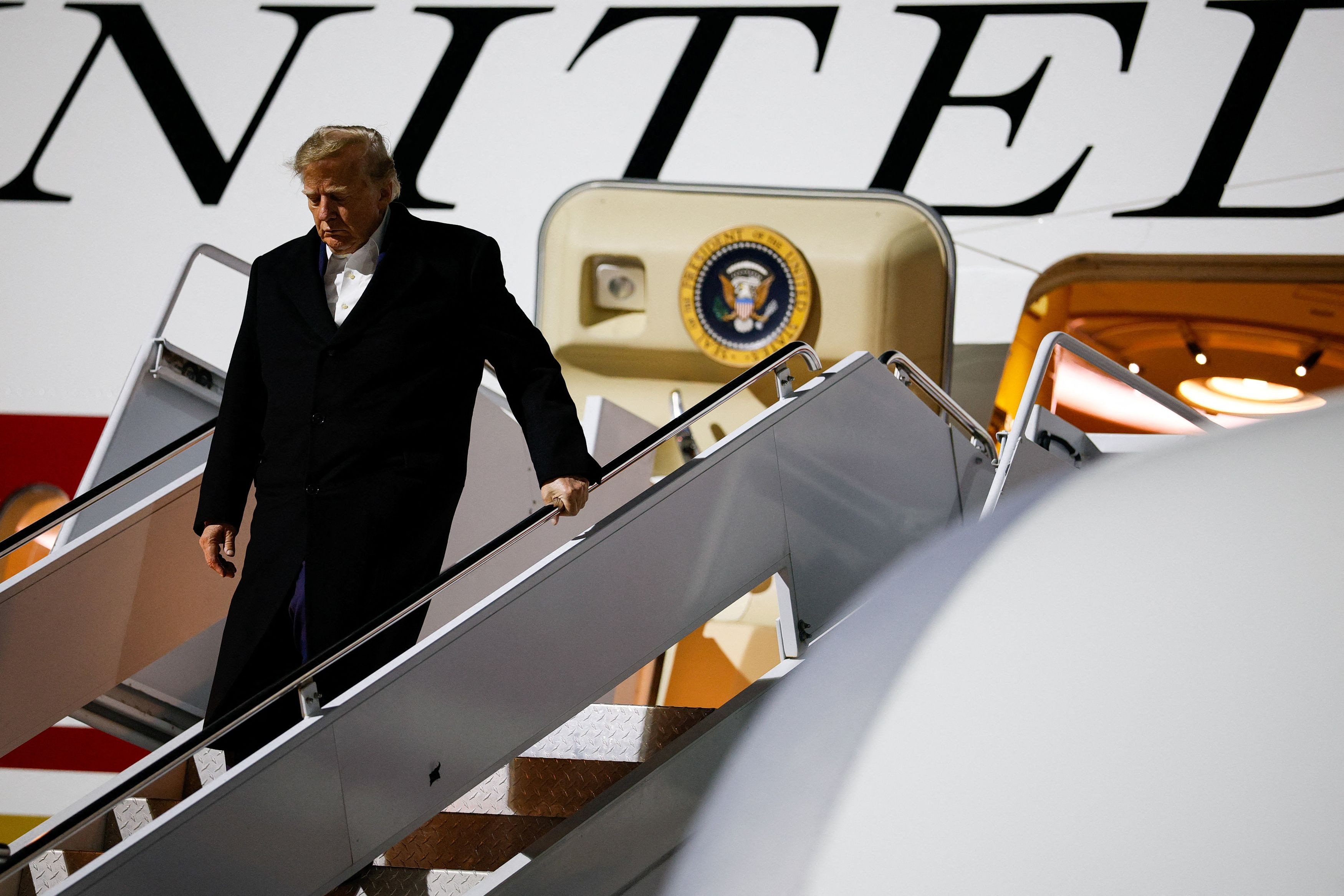
What, then, is the latest Donald Trump outrage? First, he started a war on Iran, without a plan, which has raised diesel prices in the US and worldwide. Then, a few days ago, he made a deal with Vladimir Putin to release Russian diesel on global markets, in violation of sanctions imposed after Putin’s illegal invasion of Ukraine. Trump also told Kyiv to halt its strikes on Russian oil refineries and threatened to cut off intelligence sharing with Ukraine and access to US-made weapons. This “deal” is both foolish and wicked: foolish, because it is too small to lower diesel prices significantly, and wicked, because it is prepared to sacrifice a country that is struggling heroically to be free from tyranny.
Current US policymaking is not just reckless and immoral. It is also one of the causes of the world’s unpredictability. Thus, the IMF’s latest World Economic Outlook (WEO) starts with the following comment from Silvana Tenreyro, the new economic counsellor: “In less than seven years, the global economy has been subjected to an exceptional sequence of events.” Yet all but one of these shocks, the exception being the pandemic, are man-made, or perhaps “strongman-made”. The others are the war in Ukraine, the tariff war and the war in the Middle East. Putin launched the first of these in 2022. Trump, of course, began the other two.
These shocks have, as Tenreyro says, “tested the resilience of households, firms, financial markets, and governments. Individually, each of these major developments would have been considered unlikely. Their confluence over such a short period of time is even more extraordinary.” Yet, remarkably, the WEO’s forecasts for growth this year and next, at 3.1 and 3.4 per cent respectively, are “broadly unchanged from April”, despite more persistent energy disruption than was then expected. Global inflation is, however, expected to hit 4.7 per cent this year, as a result of higher commodity prices, and 4.1 per cent in 2027. But, happily, “the pass-through to core inflation is expected to be limited”.
The explanations for this resilience are familiar. They include adjustment of exports and imports away from direct trade between the US and China. More recently, however, the dominant factors have been the flexibility of the global energy economy, discussed here last week, and the investment boom triggered by AI. Yet neither is guaranteed to last. As Nick Butler points out, stocks of crude and products are low after six months of drawdowns. Moreover, “product exports of diesel and jet fuel [from the Gulf] remain minimal”. Also at risk are supplies of naphtha, urea and liquefied natural gas (the latter of special importance to Europe). The AI investment boom also concentrates risk. Even if AI itself works out, the level of investment is likely to stop growing, if not decline, at some point. Moreover, AI might not work out financially on the hoped-for scale at all. (See charts.)
Other fragilities are evident, notably the fiscal positions. Despite the big post-pandemic rise in real and nominal interest rates, most large economies continue to run significant primary fiscal deficits (before interest payments). The US position stands out, with a forecast primary fiscal deficit of 4.8 per cent of GDP this year, a share of T-bill issuance in gross borrowing at 58 per cent and an average maturity of a mere 5.9 years.
The WEO rightly emphasises the importance of rebuilding fiscal space. The good news is that, in today’s circumstances, the negative impact of structural fiscal tightening is likely to be offset by lower real and nominal interest rates. But redressing global current accounts imbalances will also be essential. That must, at last, involve China.
The WEO emphasises other downside risks, including a worsening of the ongoing wars, (probably AI-enhanced) cyber threats and climate catastrophes. Neither a stock market crash nor a collapse in AI-related investment can be ruled out, should returns on AI disappoint. Upside economic risks include still faster progress with AI technology, though that could also inflict devastating social consequences. Another plausible upside is an accelerated energy transition, as recent events underline the unreliability of fossil fuels. Given their physical location, these are bound to remain so for many countries. The WEO notes that the ability to exploit AI and meet energy needs reliably will be crucial for growth prospects. Sadly, the world’s poorest countries are particularly vulnerable in both respects. Thus, the WEO rightly fears that their living standards are likely to fall still further behind those in richer countries.
It would be good to believe the world will become less prone to shocks. But it will probably not do so. The best response is to strengthen fundamentals, notably economic flexibility and dynamism, together with energy resilience. In this context, as the WEO notes, it is essential to make support for people vulnerable to shocks targeted and temporary. The time for throwing public money around freely has come to an end. It would help if the shocks stopped, too. Alas, given our leaders, I would not bet on that.
Follow Martin Wolf with and on
Link To FT.com: https://www.ft.com/content/5e6d1d30-0934-4fda-b2c0-27b0d96aeba3
Copyright The Financial Times Limited 2026
© 2026 The Financial Times Ltd. All rights reserved. Please do not copy and paste FT articles and redistribute by email or post to the web.