 Μake us preferred on Google
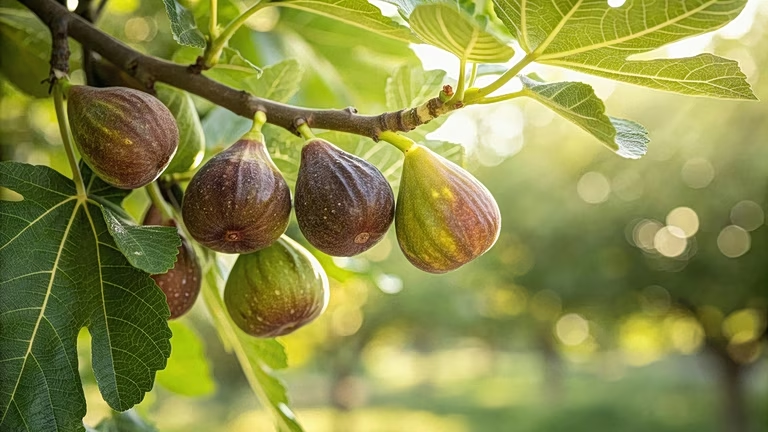
 For many people in Greece, no fruit captures the spirit of summer quite like the fig. Whether growing in city neighborhoods, village lanes, or along country paths, fig trees seem to appear everywhere, becoming an inseparable part of the Mediterranean landscape.
For generations, picking a perfectly ripe fig straight from the tree has been a quintessential summer memory. But the fig is far more than a seasonal fruit. Throughout history, it has occupied a unique place in Greek culture and countless civilizations, symbolizing fertility, prosperity, wisdom, hospitality, healing, and renewal.
The fig’s deep roots in Greek culture
The fig is among the oldest cultivated fruits of the Mediterranean and the Near East, with evidence of cultivation stretching back thousands of years, even to the Jordan Valley.
Its significance in Greek civilization dates to antiquity, when it was not simply a food source but an essential part of daily life and survival. Rich in nutrients, naturally sweet, and easily preserved by drying, figs became closely associated with abundance and prosperity.
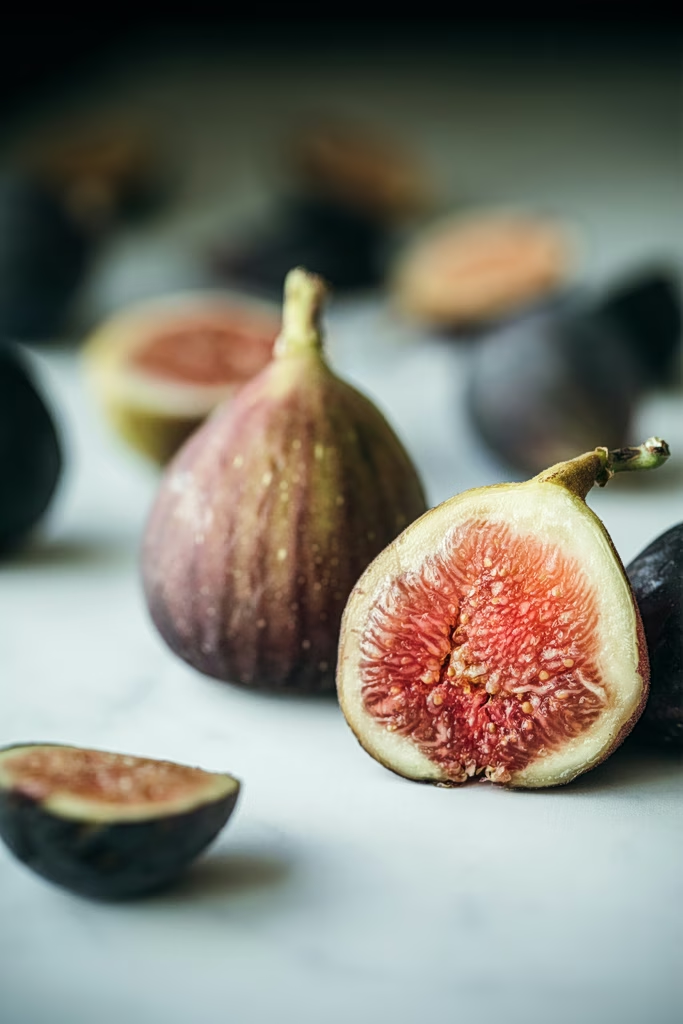
Ancient Greek mythology is filled with stories celebrating the fig tree.
One myth tells of Sykeus, described in different traditions as either a Giant or a Titan. During the war between the gods and the Titans, Zeus pursued him until Gaia, the Earth goddess, transformed him into a fig tree to save his life. The story made the tree a symbol of maternal protection, survival, and rebirth.
Another legend connects the fig tree with Demeter, the goddess of agriculture and harvest. After Hades abducted her daughter Persephone, Demeter wandered the earth in grief, leaving the land barren. According to the ancient Greek traveler Pausanias, she was welcomed in Attica by Phytalos, whom she rewarded with the first sacred fig tree. The myth helped explain why Athenians regarded the fig as a blessing and a symbol of life’s renewal.
A fruit prized by both philosophers and revelers
Figs were a dietary staple in ancient Greece, enjoyed by both wealthy citizens and ordinary people. They also played an important role in religious life, particularly in the worship of Dionysus, the god of wine, fertility, and celebration. For his followers, figs symbolized pleasure, vitality, abundance, and joy.
Yet the fruit also found admirers among philosophers.
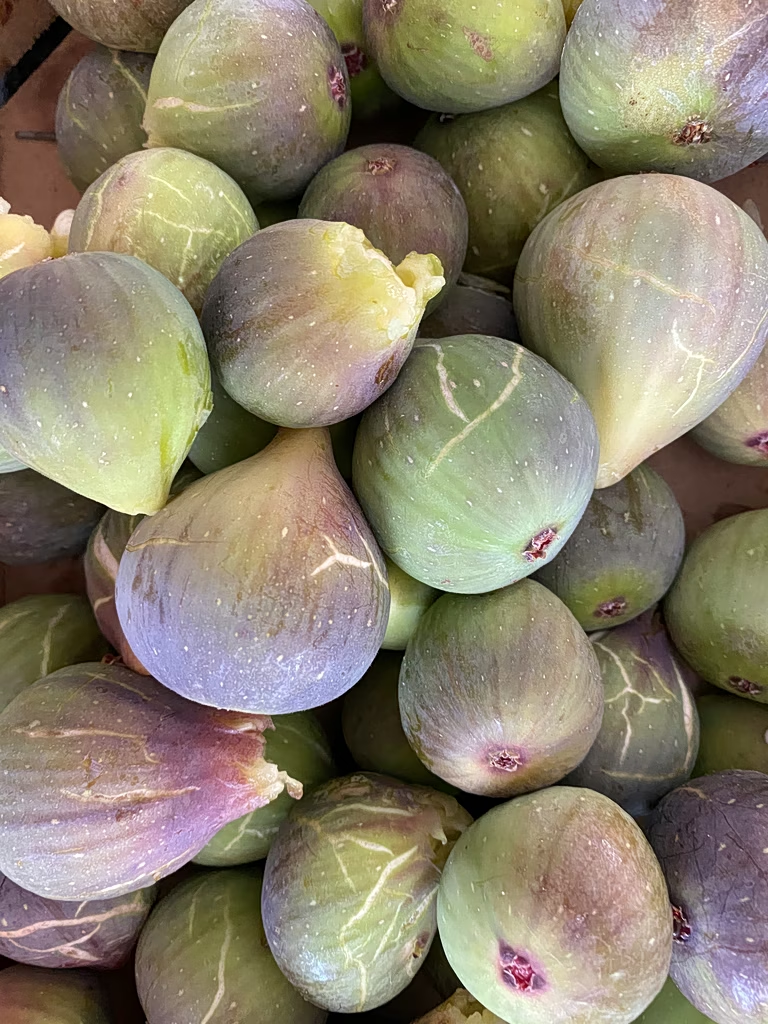
Pythagoras regarded figs as an ideal food for maintaining physical health and mental balance. Within Pythagorean philosophy, where diet reflected a broader ethical way of life, the fig represented simplicity, self-sufficiency, and harmony with nature.
Perhaps this explains the fruit’s enduring appeal: it has long been cherished both by those who celebrate life’s pleasures and by those who seek moderation and contemplation.
The surprising origin of the word “sycophant”
The fig was so valuable in ancient Athens that laws regulated its trade and export.
From this economic importance emerged one of the Greek language’s most enduring words: “sycophant.”
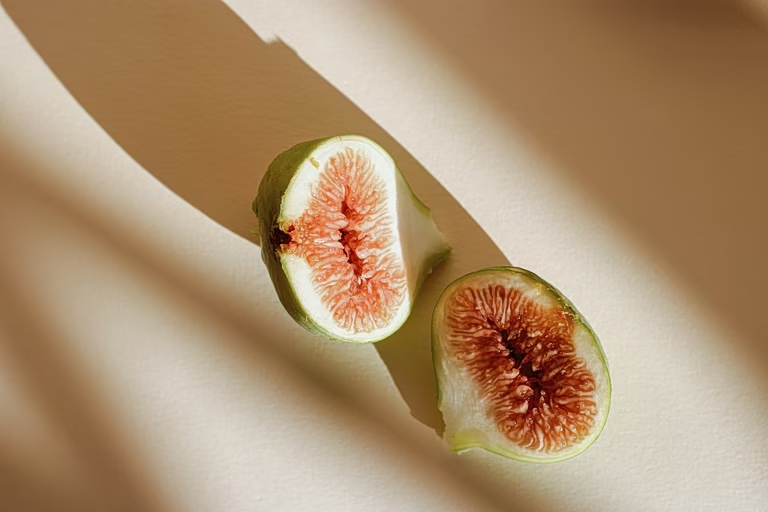
According to the most widely accepted explanation, the word originally referred to someone who reported illegal fig trading or unauthorized exports from Attica. Although historians continue to debate the exact origin of the term, its association with figs highlights their significance in the Athenian economy. Over time, the meaning evolved into the modern sense of a malicious accuser or false informer.
The fig tree across civilizations and religions
The fig tree occupies an important place far beyond Greece.
In ancient Rome, the sacred Ficus Ruminalis was believed to be the tree beneath which Romulus and Remus—the legendary founders of Rome—were discovered and suckled by the she-wolf. The tree became a symbol of motherhood, protection, and the birth of Rome itself.
In ancient Egypt, the sycamore fig (Ficus sycomorus) was closely associated with Hathor, the goddess of motherhood and fertility. Egyptian art often depicts the goddess emerging from the tree to offer food and water to the dead, making it a symbol of eternal life.
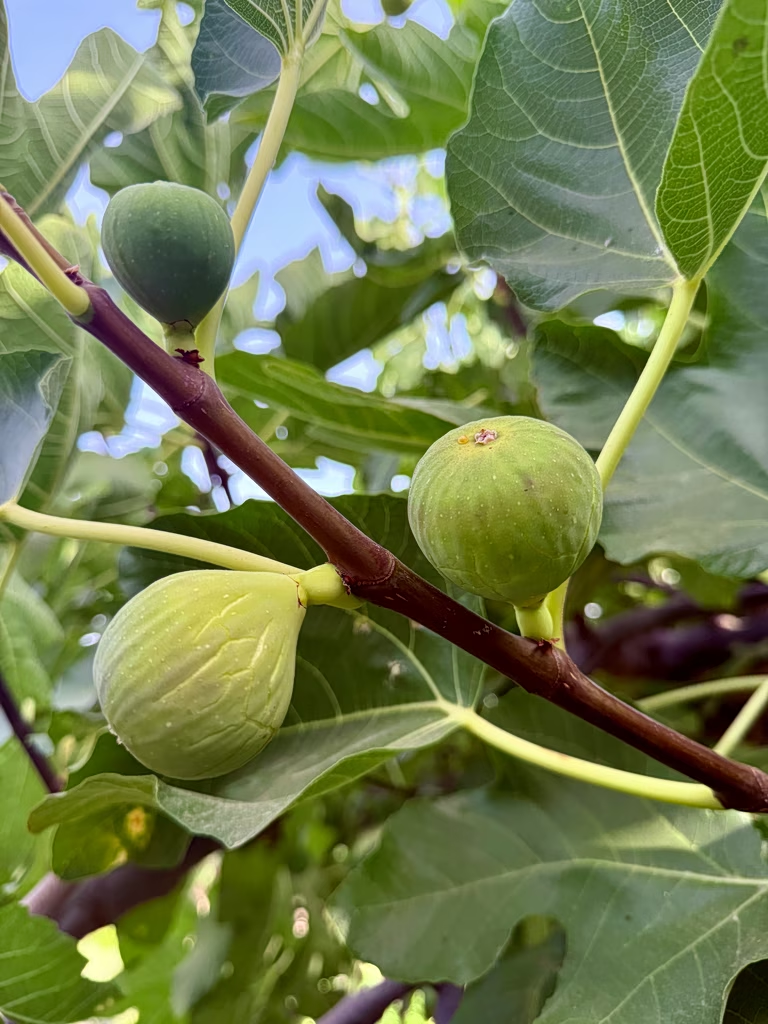
In Jewish tradition, sitting beneath one’s vine and fig tree represents peace, security, and prosperity.
Christianity gives the fig tree a more complex symbolism. It represents both abundance and spiritual fruitfulness, while the parable of the barren fig tree also makes it a symbol of judgment and faith.
In Islam, the fig is so highly regarded that an entire chapter of the Quran, Surah At-Tin (“The Fig”), opens with the oath, “By the fig and the olive.” The fruit is considered blessed and associated with divine wisdom.
In Buddhism, the sacred Bodhi Tree—a species of fig—is where Siddhartha Gautama attained enlightenment and became the Buddha. Since then, it has symbolized wisdom, knowledge, and the search for truth.
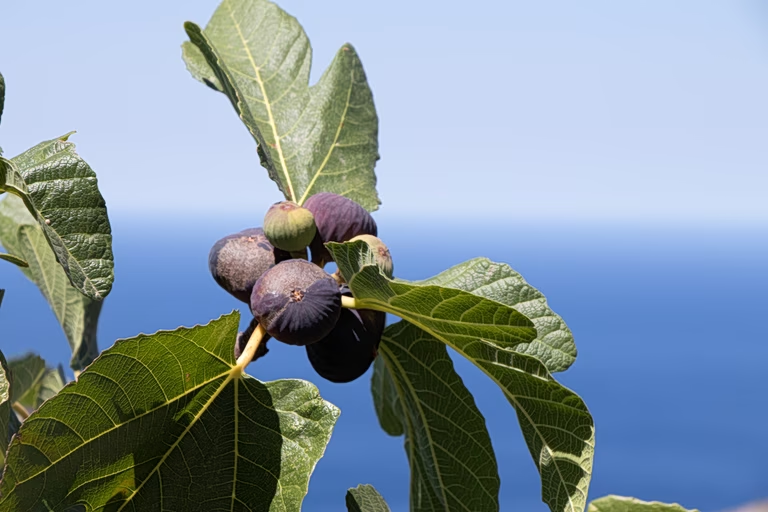
In India, the sacred fig, known as the Peepal or Ashvattha tree, has been revered for millennia. Hindu scriptures portray it as a symbol of the universe and the connection between heaven, earth, and the underworld.
Why do fig trees grow on abandoned buildings?
Fig trees often appear to grow from old stone walls, abandoned homes, ruined rooftops, and crumbling masonry. Their presence may seem almost miraculous, but there is a scientific explanation.
Fig trees thrive in the dry climates of the Mediterranean and require remarkably little soil and moisture to take root.
Their reproduction depends on an extraordinary partnership with the tiny fig wasp, known in Greece as the psina, a relationship already described by Aristotle more than 2,300 years ago. The microscopic insect enters the fig, where the tree’s hidden flowers are located, pollinating them and allowing fertile seeds to develop.
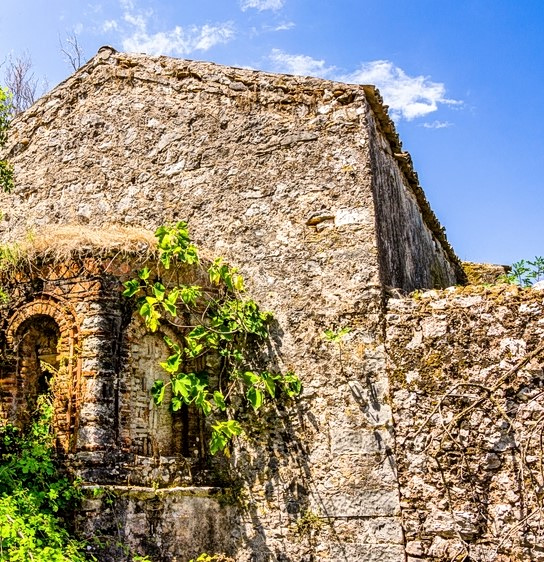
Not all cultivated varieties require pollination, however. Many commercial fig trees produce fruit without fertilization, while wild figs and some traditional varieties still depend on this unique natural partnership.
Once the seeds are formed, birds and small mammals eat the ripe fruit and disperse the seeds over long distances. They often end up lodged inside cracks in old walls, rooftops, gutters, or stonework where a little soil and moisture have accumulated.
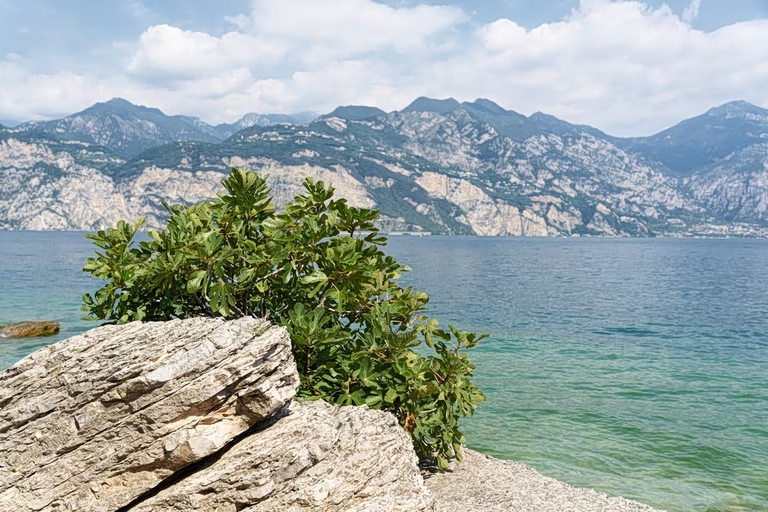
Researchers studying urban fig species have found that these tiny crevices act like miniature nurseries, providing ideal conditions for germination.
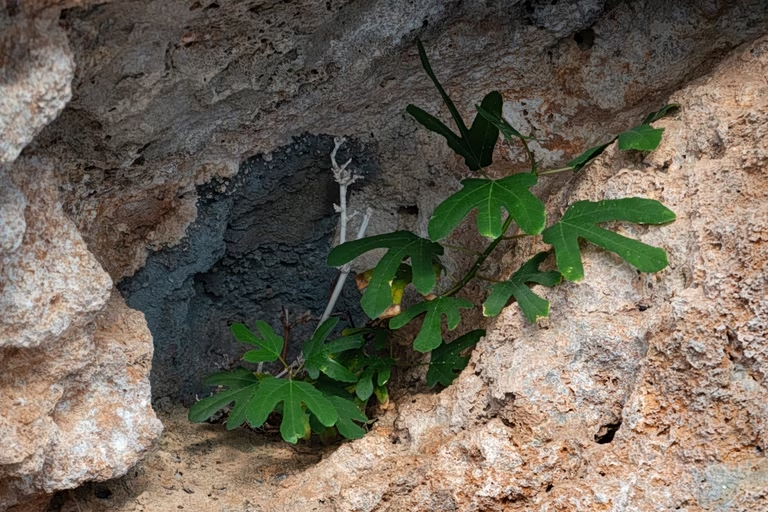
Although fig roots are strong, they rarely damage well-maintained structures. Instead, they gradually exploit existing weaknesses in neglected buildings, widening cracks over many years.
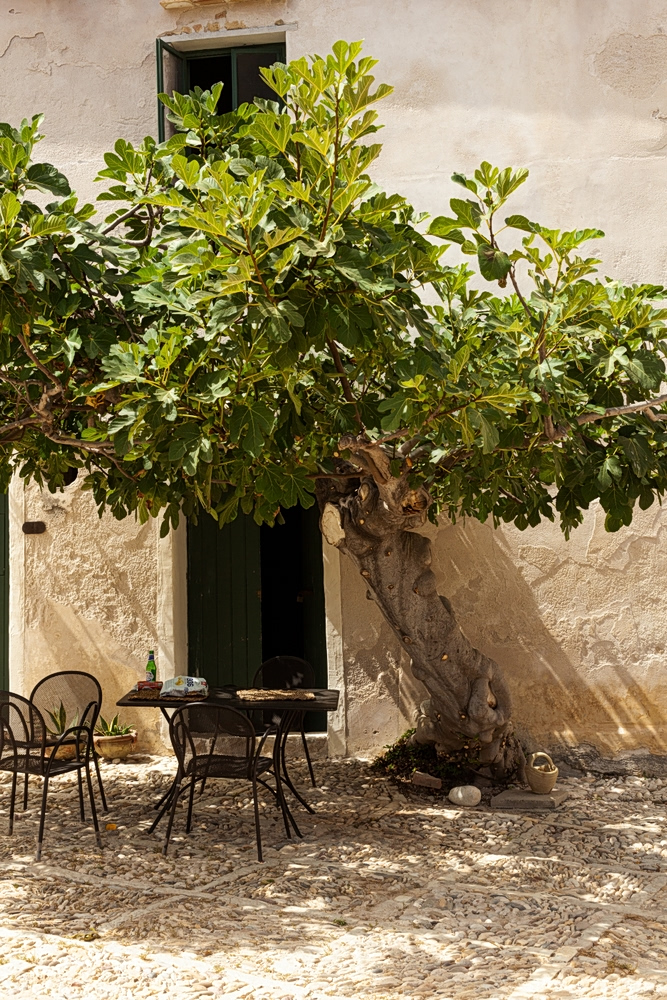
In many ways, the fig tree beautifully illustrates what happens when people leave a place behind: nature quietly returns, reminding us that life always finds a way.
Greece’s beloved fig preserve
If one dessert perfectly represents the ingenuity of traditional Greek cooking, it is glyko tou koutaliou syko—fig spoon sweet.
Unlike most preserves, it is made not from ripe fruit but from small, green, unripe figs harvested between April and early June, before seeds develop. The tradition reflects a defining feature of Greek home cooking: wasting nothing and preserving seasonal ingredients for the months ahead.
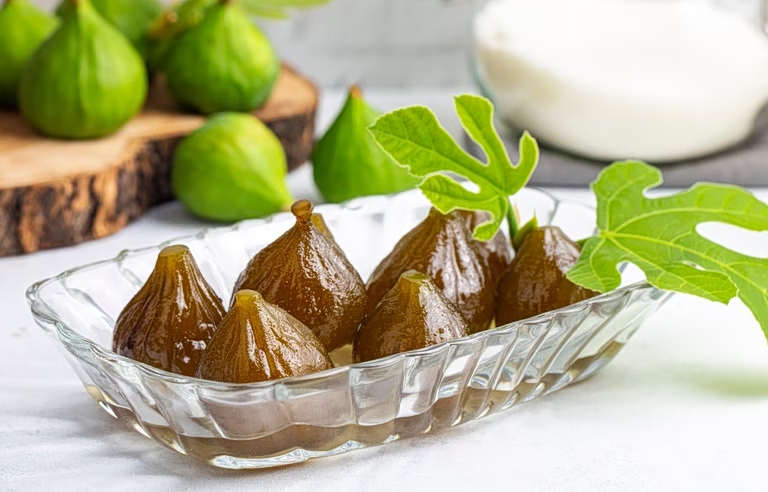
Preparing the preserve requires patience and skill. The figs are peeled, scored to release their juices, boiled several times to remove bitterness, and then slowly simmered in thick sugar syrup. Many traditional recipes flavor them with scented geranium leaves or lemon, while others insert a whole almond into each fig to help preserve its shape.
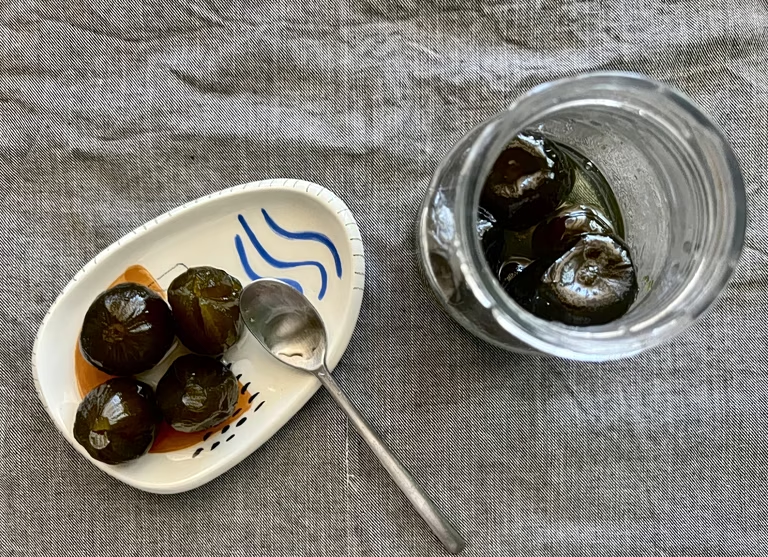
Tasoula Koufopoulou’s exceptional fig spoon sweet, prepared for the family-run restaurant Apomero in Karditsa, served in a cozy living room in Athens.
The preserve is enjoyed throughout Greece, especially on the Aegean islands, Crete, the Peloponnese, and other regions where fig trees flourish.
Served on a small glass plate alongside a glass of ice-cold water, fig spoon sweet has long been one of Greece’s most cherished gestures of hospitality. For many, it evokes childhood visits to relatives, leisurely afternoons beneath vine-covered courtyards, and welcoming cafés in villages and islands.
More than just a dessert, it signals the arrival of summer itself.
Traditional Greek Fig Spoon Sweet
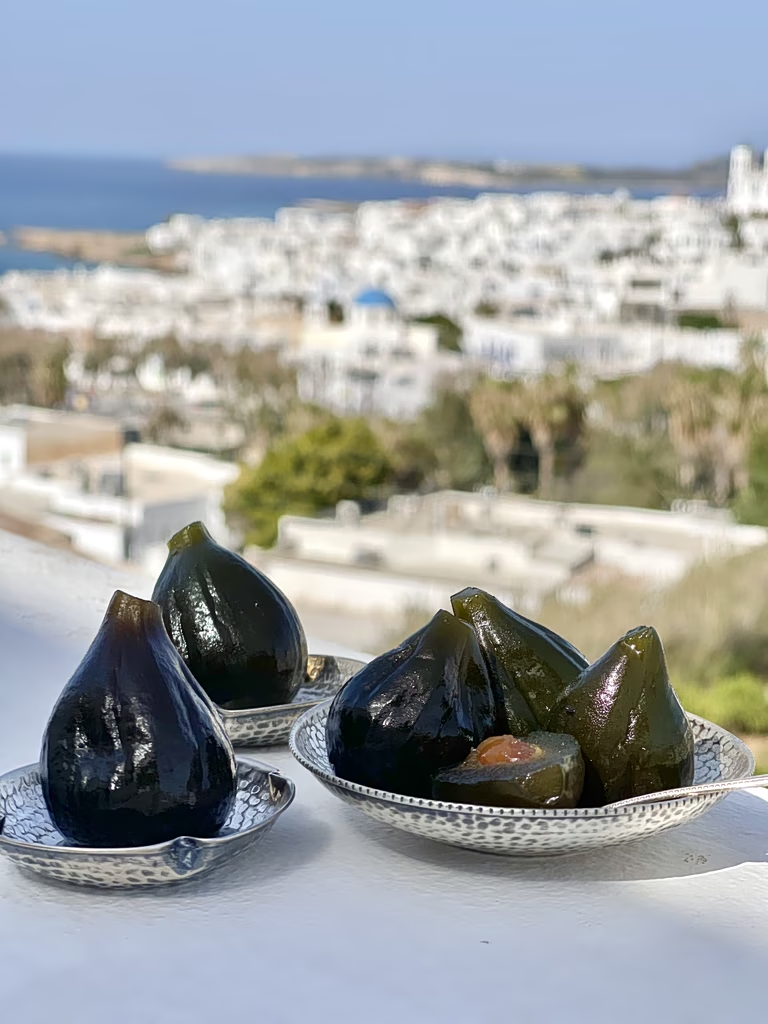
One of Greece’s best-known versions comes from the island of Paros and is made with tiny unripe “Rinia” figs.
Preparation time
30 minutes
Cooking time
1 hour
Waiting time
2 days
Difficulty
★★★
Makes
About 60 pieces
Ingredients
- 2.2 lb (1 kg) small unripe Rinia figs (about 60)
- 2.2 lb (1 kg) granulated sugar
- 3 cups water
- A lentil-sized piece of copper sulfate (used traditionally to preserve color)
- 60 whole cloves
- 60 blanched almonds
- ½ cup glucose syrup
- Juice of 2 medium lemons
Instructions
- Pick the unripe figs from a wild fig tree in May. Place them in a large pot, cover completely with water, and add the copper sulfate. Bring to a boil and cook for about 15 minutes, or until the figs soften enough to slide off a fork.
- Transfer immediately to a bowl of cold water to stop the cooking. Leave the figs soaking for two days at room temperature, changing the water five or six times.
- Drain thoroughly.
- Gently squeeze each fig to remove excess water. Insert one blanched almond into the opening of each fig and secure one whole clove into the flesh. Arrange the figs on a clean towel and allow them to dry completely.
- Place the figs carefully in a wide, heavy-bottomed pot. Add the sugar and water and bring to a boil.
- Reduce the heat to medium and simmer for about 40 minutes until the syrup thickens. Avoid stirring with a spoon; instead, gently shake the pot by its handles. Skim off any foam as needed.
- Add the glucose syrup and boil for another two to three minutes. Stir in the lemon juice and cook for a further two to three minutes.
- Store the preserve in sterilized jars. It will keep for many months in a cool, dark cupboard without refrigeration.
Tip: This recipe requires a two-day soaking period, so be sure to factor the waiting time into your preparation. The repeated water changes are essential for removing bitterness and achieving the preserve’s signature delicate flavor.