Naxos is endlessly beautiful. It has a culinary tradition with deep roots and a wealth of products that make every local proud. On this island, you are unlikely to run out of things to move you. You stop for a coffee or a local spirit and discover landscapes and people that stir something inside you, that tug at the heart.
Naxos is beautiful — and, somehow, it has managed to preserve much of itself from the pressures of mass tourism. Even its contemporary restaurants retain something of the philosophy and authenticity of the old ones.
Those were my thoughts when I visited Harhalias.
The restaurant’s name carries the memory of the family’s great-great-grandfather, an old-fashioned Naxiot man who wore the traditional vraka, the loose trousers once commonly worn by men on the Greek islands. When he walked, his clothes would make a rustling sound described in the local dialect as “harhalizo.”
It is a sound from another era, a word unfamiliar to most of us, passed from mouth to mouth and generation to generation until it became the name of Yiannis Economou’s restaurant.
It is a reminder that here, the past is not something displayed in gilded frames on the walls. It enters the kitchen. It is kneaded, simmered and carried to the table.
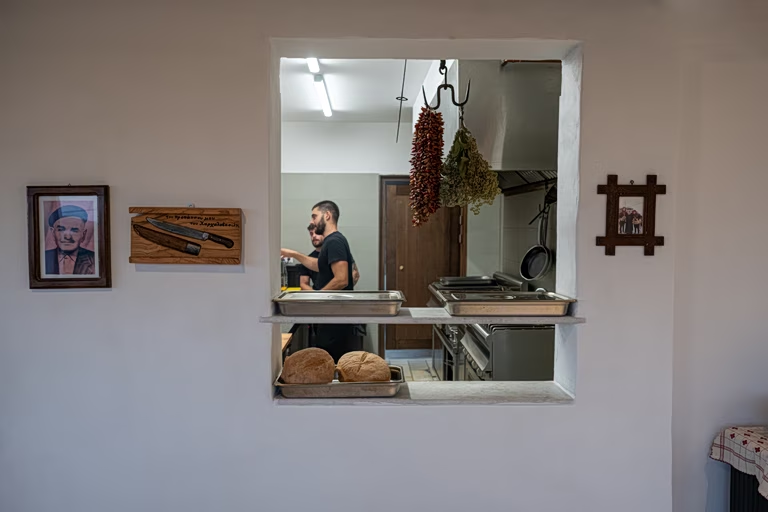
The family grandfather’s photograph hangs on the wall of Harhalias. In the kitchen are his two grandsons, chef Yiannis Economou and his brother, Stefanos. Photo: Alexandros Alexandris
At Harhalias, every dish begins taking shape long before the kitchen is switched on.
Its origins can be found in the fields, the vegetable garden, the fishing boat, the village bakery and the family table where loved ones gathered.
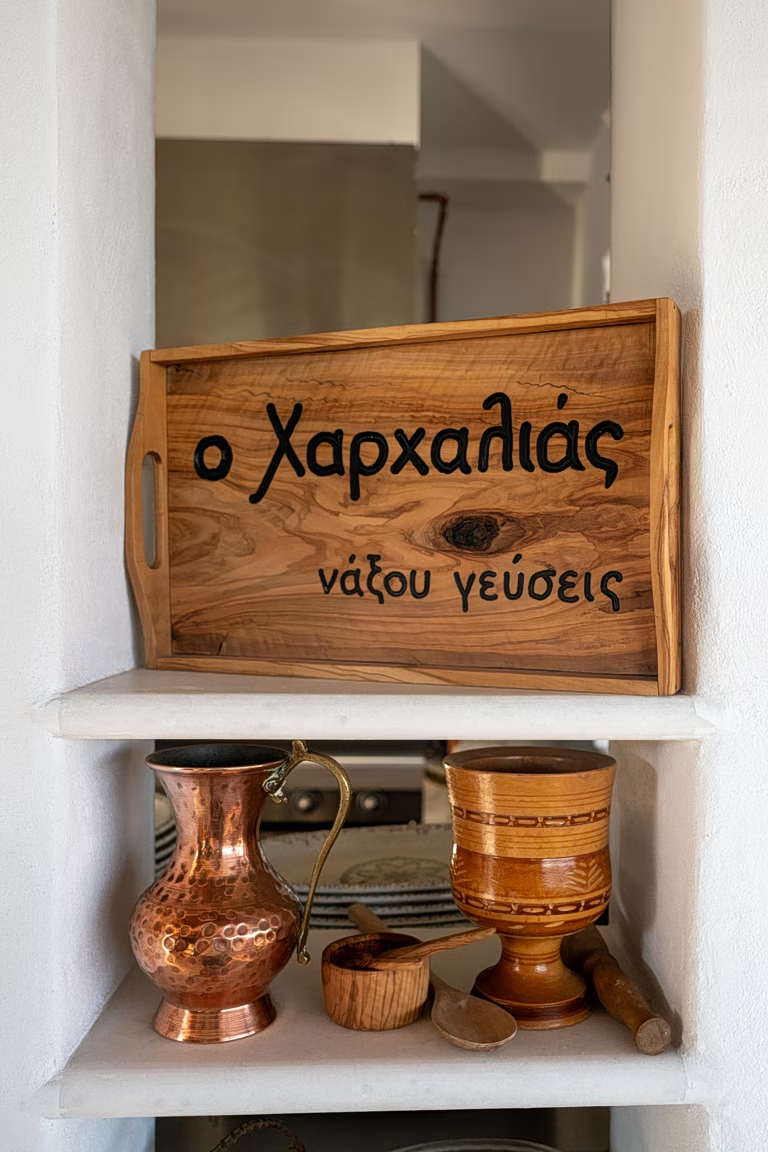
Naxos is everywhere. Harhalias celebrates traditional Naxiot cuisine as well as the island’s wider culture and way of life. Photo: Alexandros Alexandris
A return to their roots
Yiannis Economou worked alongside acclaimed chefs and became familiar with professional kitchens, techniques, precision and discipline.
At some point, however, he returned home — to give something back to the place that had given him so much, and to continue a story that had been growing inside him all along.
That return is the driving force behind his cooking.
Yiannis did not want simply to reproduce the traditional recipes of his homeland. Nor did he want to reinterpret them through a more contemporary lens, playing with textures and flavours.
He wanted something more personal.
He wanted his dishes to describe what he carried within him as someone born and raised in Apeiranthos, one of Naxos’ most distinctive mountain villages. He wanted to decode his island emotions through food.
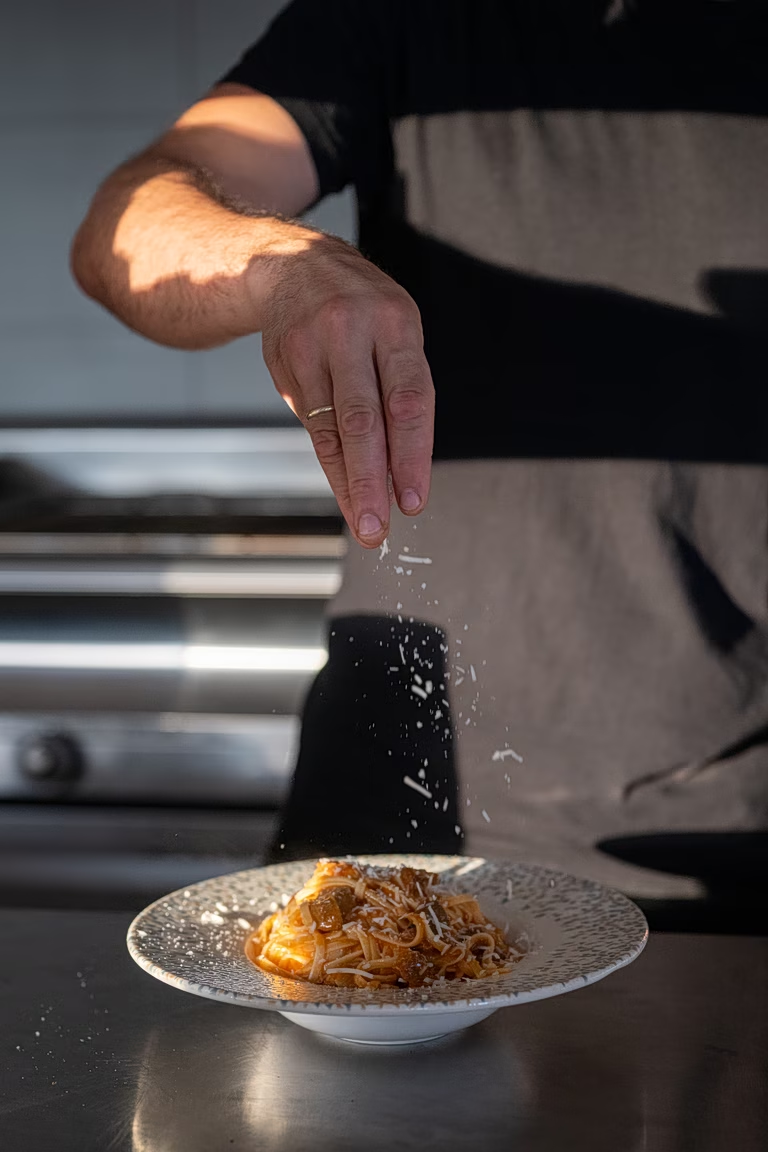
After years in professional kitchens, Yiannis Economou returned to his island and devoted himself to the cooking of his homeland, creating dishes inspired by the food that “stayed with him” from childhood. Photo: Alexandros Alexandris
When he says he “cooks his culture”, he means it.
Culture is sourdough bread. It is the father returning from a day of fishing. It is the mother making desserts. It is goat, potatoes, tomatoes and capers.
It is the food served at celebrations, but also the resourcefulness of the everyday family table.
Naxos provides the perfect setting for this kind of cooking. Its fertile land produces an extraordinary variety of ingredients, while its dedicated producers have a deep-rooted tradition of making sure nothing goes to waste.
That self-sufficiency is precisely what allows Naxiot cuisine to offer such a rich range of flavors and experiences.
The family around the kitchen
Yiannis may be at the heart of the kitchen, but he is far from alone.
His father, Father Michalis, a priest in the parish of Apeiranthos, often heads out to sea in his small fishing boat and returns with fresh fish. In the mornings, he can frequently be found at the restaurant, peeling potatoes and preparing vlita — a leafy wild green widely eaten in Greece — alongside his sons and helping with the preparations.
His mother, Eirini, makes the desserts.
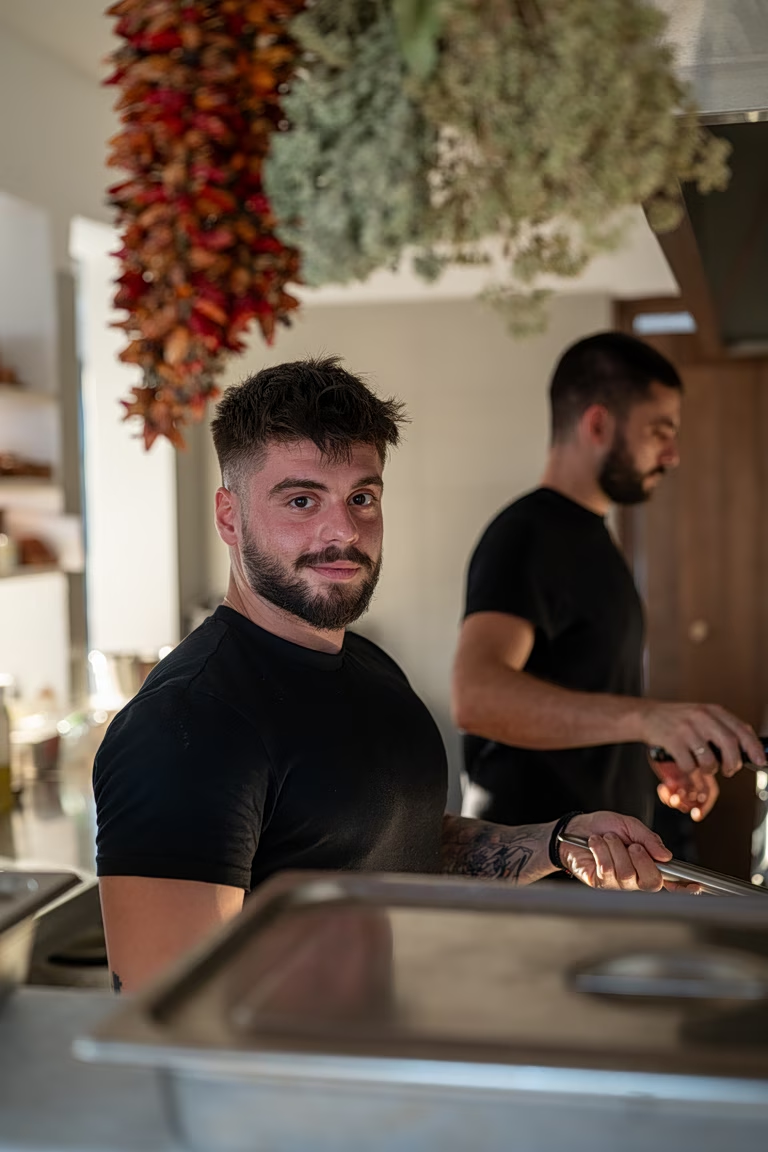
Stefanos works alongside his brother in the kitchen, their mother makes the restaurant’s desserts, while their father, Father Michalis, helps with the preparations. Photo: Alexandros Alexandris
His brother Stefanos is also in the kitchen.
It is a close-knit family, bound by a warm relationship that seems to hover over the restaurant like a blessing. Their energy fills the space and makes you want to become part of it yourself.
The dishes that leave the strongest impression
A meal at Harhalias begins with an entire story hidden inside a slice of bread.
The bread is sourdough, made with a starter that has been kept alive since 1963, when the village’s first bakery opened. It is the same starter once used to make prosphora, the loaves of bread traditionally offered at Orthodox Christian church services.
That gives the bread another layer of symbolism.
In fact, this delicious loaf encapsulates the entire philosophy of the restaurant: patience, respect, perseverance, ethics and values passed from one generation to the next.
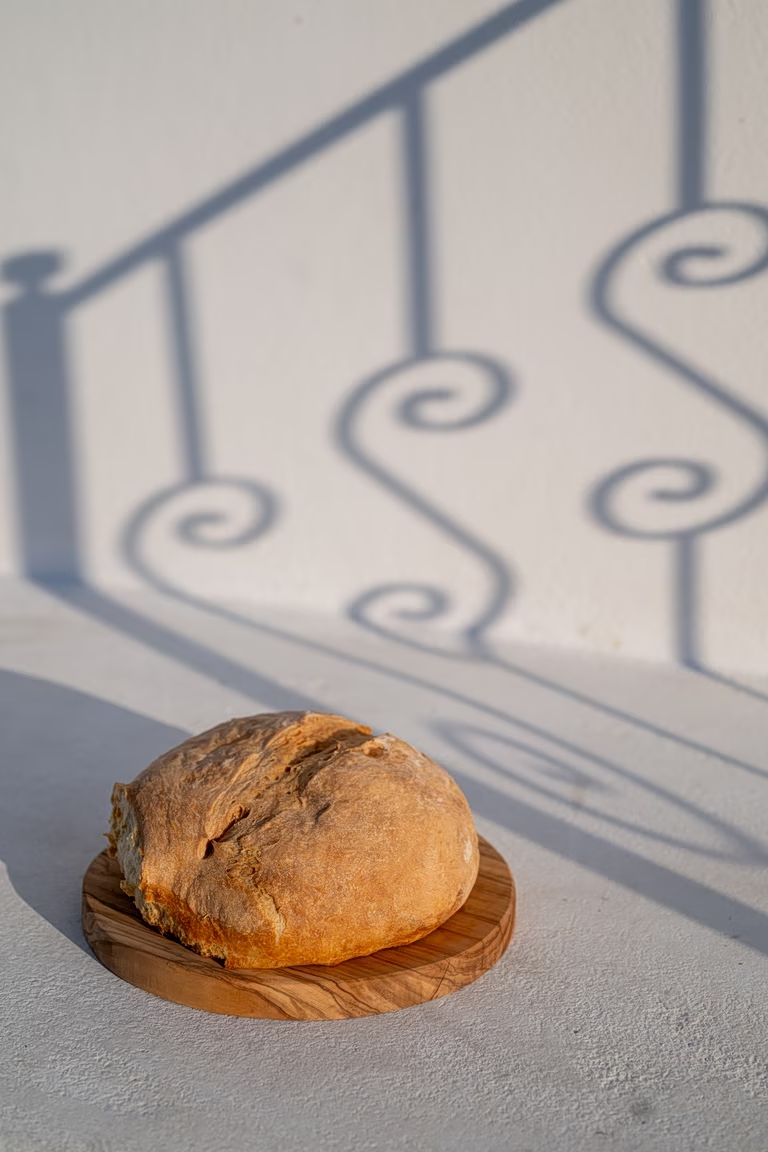
The wonderful bread arrives at Harhalias every day from the island’s first bakery and is made with a sourdough starter dating back to 1963 — the same starter once used to make prosphora for the church. Photo: Alexandros Alexandris
The same philosophy runs through the menu.
The ‘goat makaronada’, already one of the restaurant’s signature dishes, captures the identity of Naxiot cuisine particularly well.
Goat lies at the heart of the island’s pastoral tradition, and Yiannis Economou chooses to showcase its authentic character without unnecessary intervention. Slow-cooked with patience, the meat develops deep flavor, while its rich sauce coats the pasta, creating a dish that evokes the Sunday family tables of Naxos.
It is no coincidence that the recipe is also a personal memory for the chef himself, who brings it into the present with the precision of a modern professional kitchen.
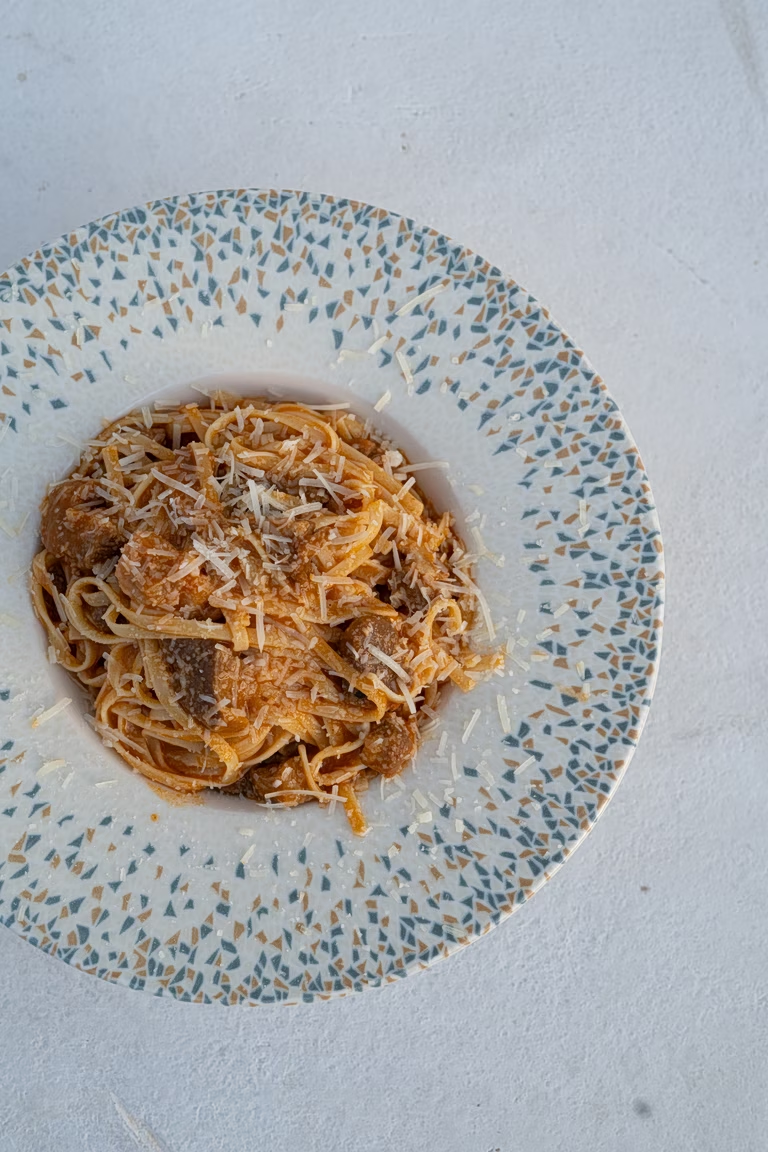
The ‘goat makaronada’, which Yiannis creates from his own childhood memories, with the same extraordinary flavor he remembers from growing up. Photo: Alexandros Alexandris
The rest of the menu follows the same philosophy.
The charcoal-grilled rooster, juicy and delicately smoky, proves that even a seemingly humble ingredient can develop a distinctive personality when treated with the right technique and respect.
Beside it, smoked vlita transform one of the most unassuming greens of the Naxiot landscape into an elegant little meze, the Greek tradition of small dishes designed to be shared.
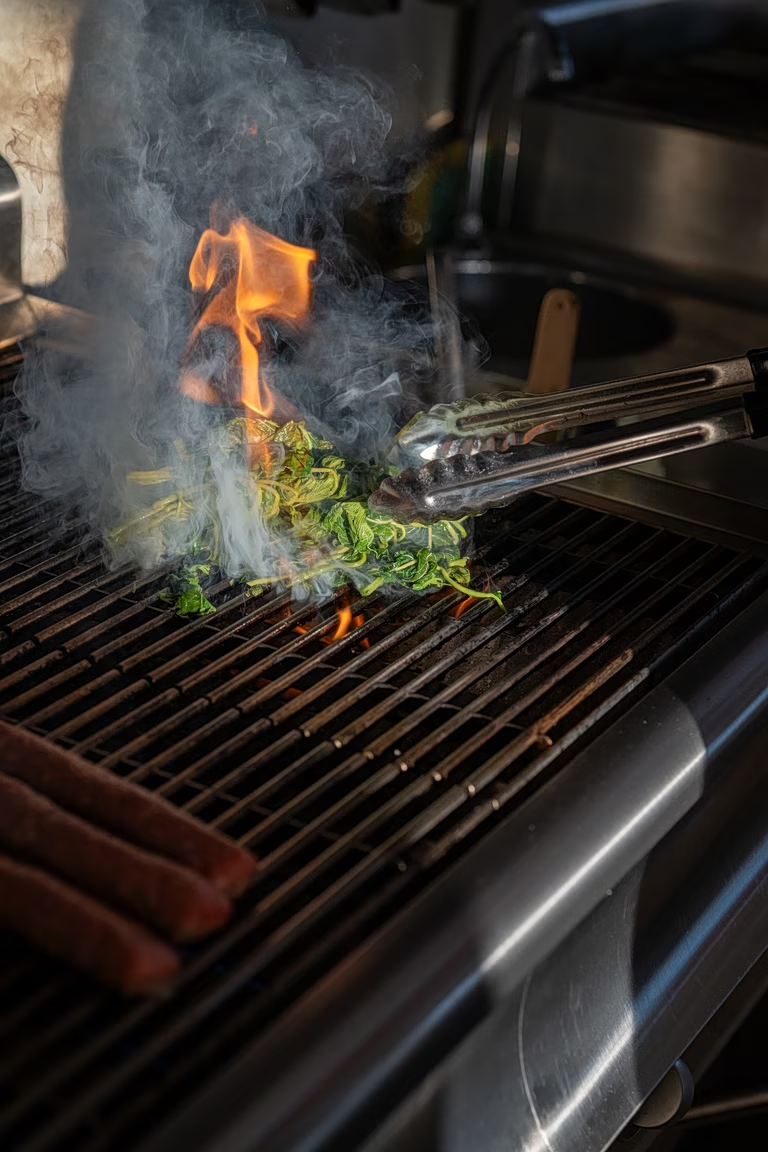
Smoking the greens over the grill transforms vlita into an exquisite meze. Photo: Alexandros Alexandris
The chef’s creative eye becomes even more apparent in the crispy eggplant, served over a refreshing tomato gazpacho with Naxos capers.
The sweetness of the eggplant, the acidity of the tomato and the intensity of the capers come together in perfect balance, demonstrating how tradition can evolve without losing its identity.
The same is true of lemony rosto, one of the most characteristic dishes of Naxiot cuisine. It retains all its authenticity: the meat is so tender it almost melts in the mouth, while the lemon provides the freshness needed to enhance, rather than overwhelm, its flavor.
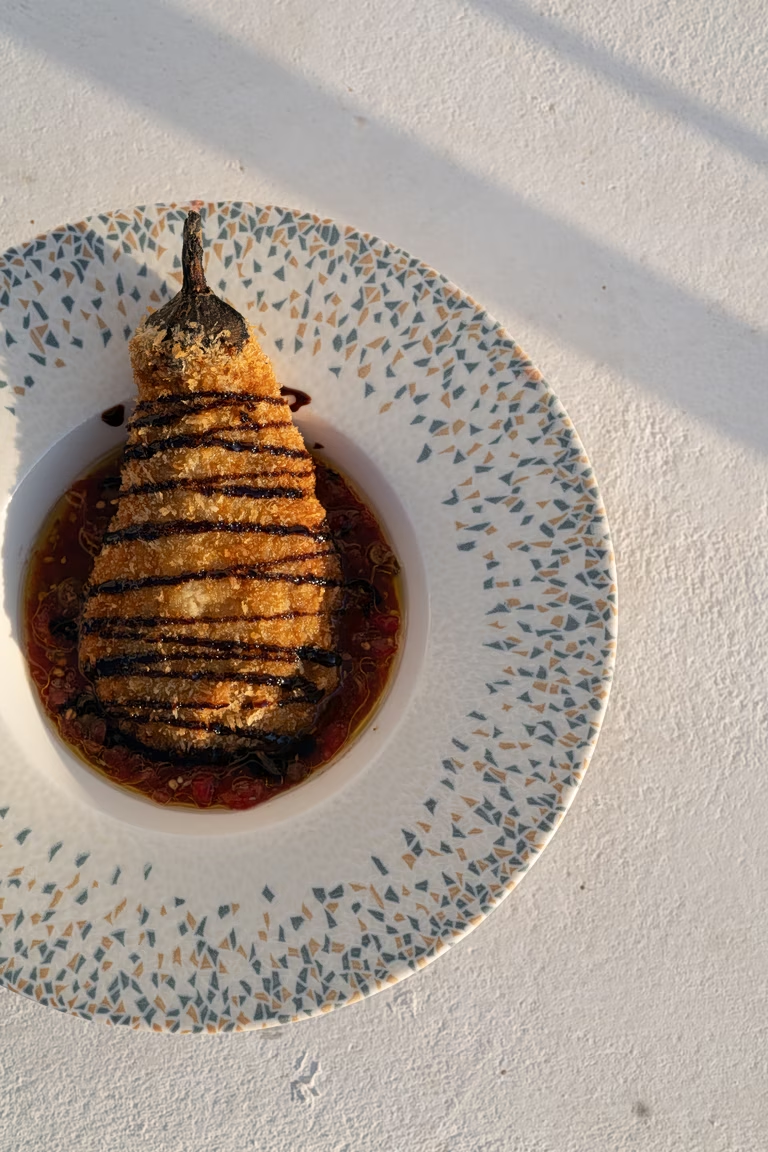
Crispy eggplant served over tomato gazpacho with Naxos capers. A poem in flavor. Photo: Alexandros Alexandris
The same approach can be seen in the roasted eggplant and fried zucchini — dishes that make no attempt to impress through complicated techniques, but instead allow the quality of the island’s seasonal vegetables to speak for itself.
Local cheeses, including graviera and arseniko Naxou, a distinctive traditional Naxos cheese, appear discreetly in several dishes, adding depth and character without overpowering the other flavors.
After all, at Harhalias, every dish begins with the ingredient itself — and with the season.
What a perfect day
Mesi Potamia is only a few minutes from Chora, the main town of Naxos, yet it feels as though it belongs to a different island altogether.
This is the Naxos of vegetable gardens, plane trees, stone houses and small villages that continue to live according to their own rhythms.
That is where Yiannis Economou chose to establish his restaurant — not beside the sea, as many might have expected.
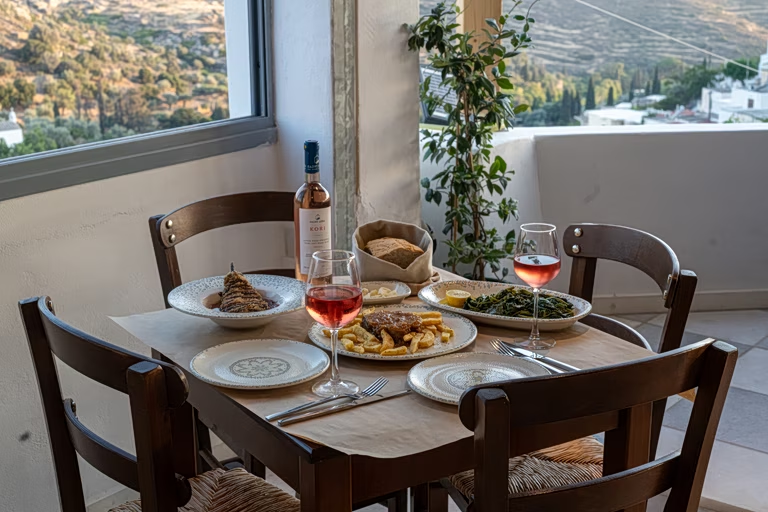
From the window of Harhalias, you can see the plane trees and vegetable gardens surrounding Mesi Potamia. This is the other side of Naxos. Photo: Alexandros Alexandris
When you leave, you take more than the flavors with you.
You leave with the feeling that you have met a family that still lives around the table, and a cook who has managed to transform his own memories into flavors that describe the island with remarkable precision.
This is an experience not to be missed.
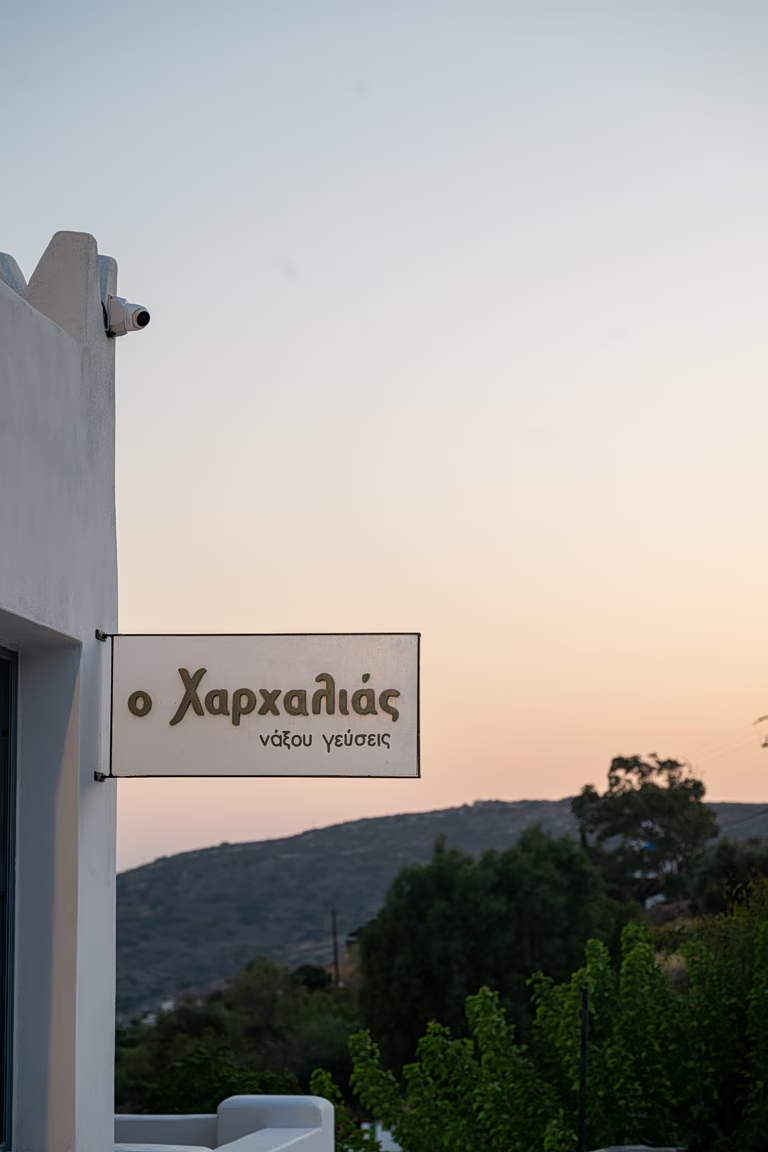
Photo: Alexandros Alexandris