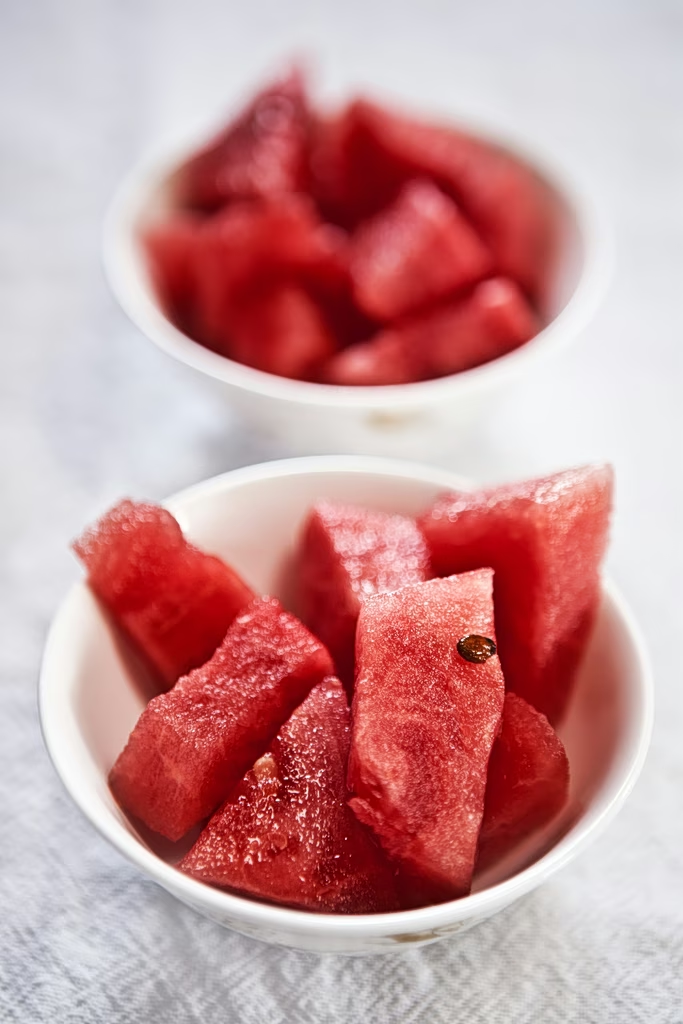
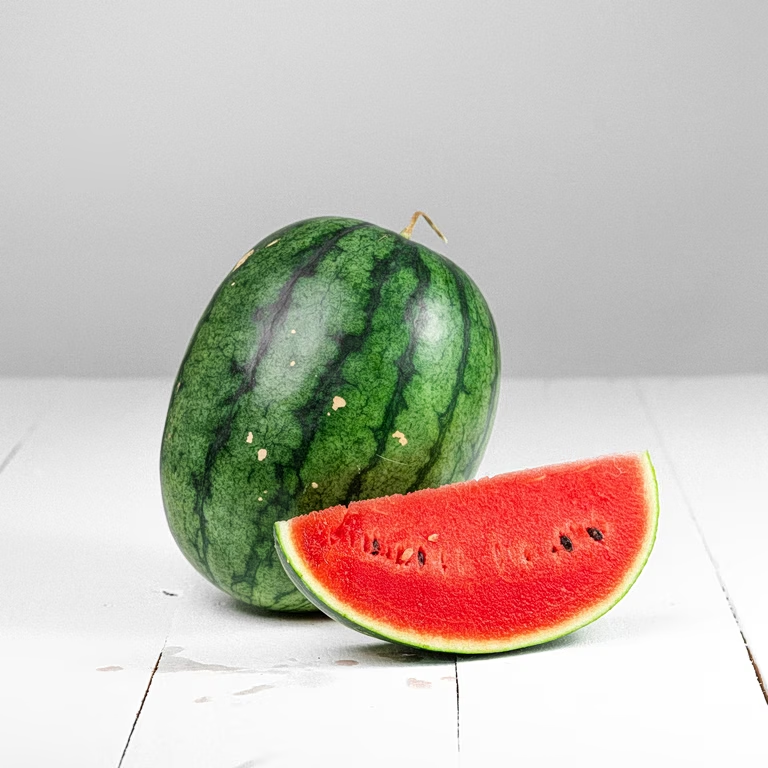
Bright red, which means it’s rich in lycopene—the powerful antioxidant linked to heart health. Packed with water, making it one of summer’s best sources of hydration. Loaded with vitamins A and C to support the immune system and keep skin looking healthy. And all that comes with remarkably few calories.
What more could you ask from a fruit?
But nutritional benefits aren’t the real reason we love watermelon.
For Greeks, watermelon—even the occasional disappointing one—is the taste of summer itself. Its vibrant color, its unmistakable aroma, the familiar half-moon slice held in your hands as you bite into it without caring if the juice runs down your arms—these are memories deeply woven into childhood and family holidays.
Of course, the watermelons we eat today are not quite the same as those many of us remember growing up with. Then again, what fruit or vegetable still tastes exactly like it did decades ago?
Growers and greengrocers alike acknowledge that rising demand has changed the way watermelons are produced. Modern seed varieties have been bred to make the fruit more durable and easier to transport, sometimes at the expense of sweetness. Yet consumers are happy to have watermelons available from May until well into September, even if flavor occasionally takes a back seat.
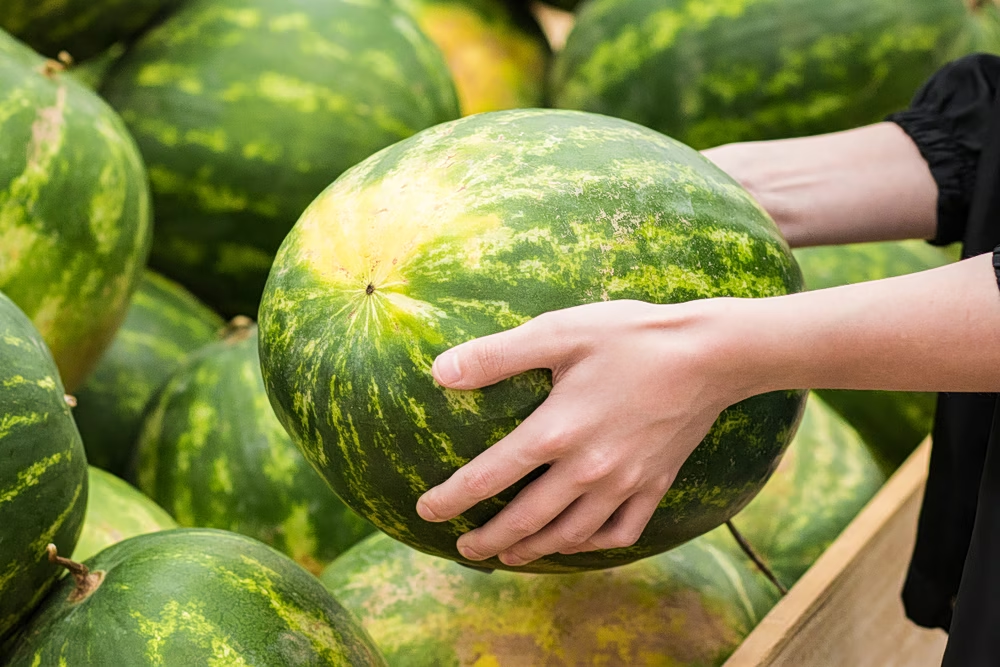
What no producer is eager to admit, however, is that some watermelons are destined to disappoint from the very beginning.
Some come from inferior seed stock. Others are harvested too early, before they have had enough time to develop their natural sugars. Hidden beneath a thick green rind, their bland flesh gives little away. Mixed among better fruit from earlier deliveries, they make their way onto market stalls and supermarket shelves unnoticed.
And that’s where the trap begins.
As an eager shopper craving an ice-cold slice of watermelon on a hot summer’s day, you’re standing in front of a pile of fruit with no obvious way of knowing which one will be sweet and which one will be a complete let-down.
The challenge is avoiding the wrong choice.
Choosing a watermelon may seem like one of life’s small decisions, but anyone who’s cut open a flavorless one knows just how quickly it can ruin the mood—especially in the middle of a heatwave.
Most of us solve the dilemma the easy way: we let someone else decide.
We ask the greengrocer, “Can you pick one for me?” and trust their experience.
Usually, that’s a safe bet. A local fruit seller who knows their customers has little reason to disappoint them—provided they weren’t misled by their own supplier in the first place.
But what happens when that relationship of trust doesn’t exist?
What if you’re on holiday, buying from a roadside vendor or, worse, from a tourist supermarket?
Unlike peaches or melons, watermelons rarely reveal their secrets through obvious bruises or changes in color. That’s why it pays to know exactly what to look for before you buy.
1. Check the Field Spot
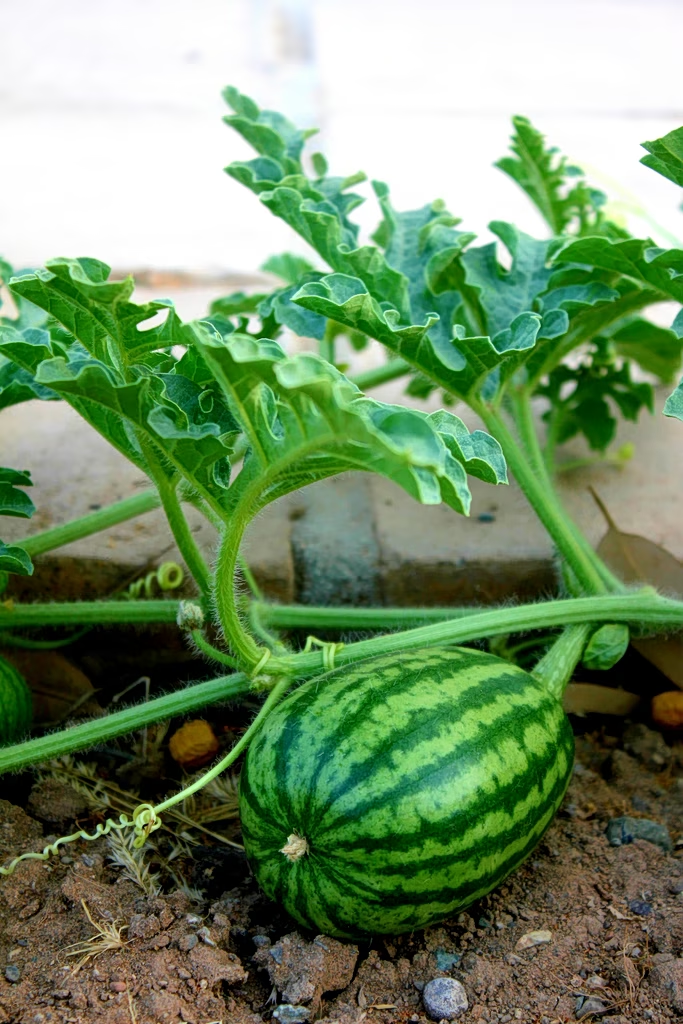
Before they’re harvested, watermelons spend weeks ripening while resting on the ground.
The area where the fruit sat in the field develops a large patch—known as the “field spot”—that offers one of the clearest clues to ripeness.
A ripe watermelon should have a deep creamy yellow or even orange-yellow field spot. This means it stayed on the vine long enough for its sugars to fully develop before harvest.
If the spot is pale yellow or almost white, the fruit was picked too early. Although it may continue to ripen after harvest, it is unlikely to develop the same sweetness.
2. Heavier Is Better
Watermelons from the same harvest often look almost identical.
They may be round or oblong, but if two are roughly the same size, pick them both up.
The heavier one is usually the better choice.
Extra weight generally means higher water content, proper ripening and a juicier, sweeter interior.
It’s worth lifting two or three similar-looking watermelons before making your decision. A quick comparison can make all the difference.
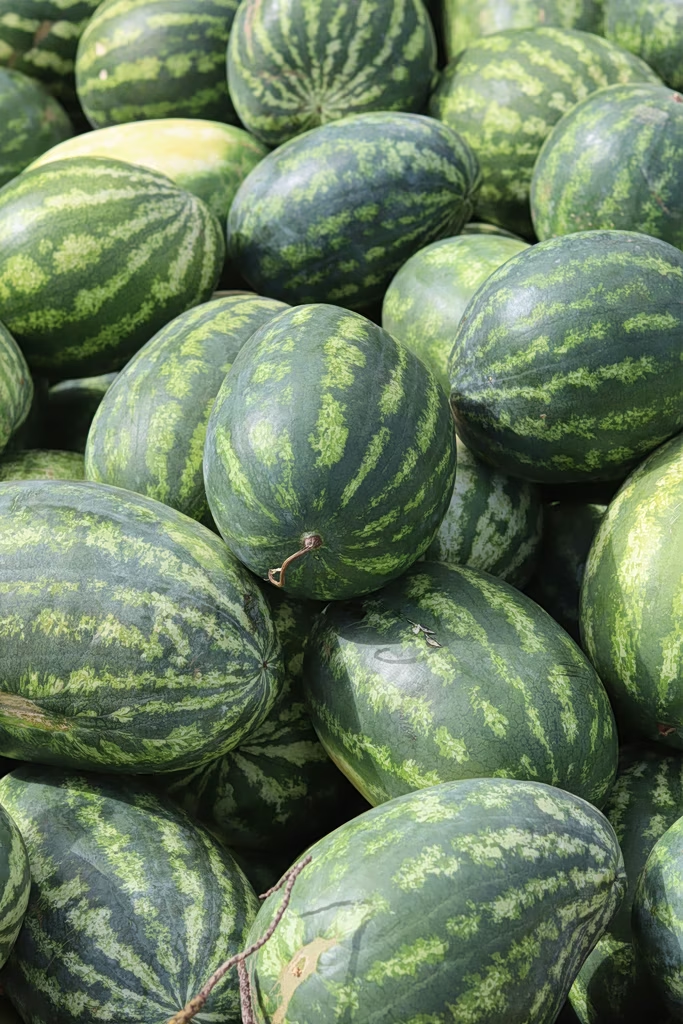
3. Listen to the Sound
Almost everyone taps a watermelon before buying it.
It’s something we do almost instinctively, even if many of us aren’t entirely sure what we’re supposed to hear.
The secret lies in the sound.
A ripe, juicy watermelon produces a deep, hollow resonance when tapped.
That’s the sound you’re looking for.
If the knock sounds dull, flat or muted, the flesh inside is likely to be dense, under-ripe and lacking in sweetness.
It may feel awkward knocking on fruit in the supermarket, but there’s a reason generations of shoppers have done it.
4. Look at the Stem
The stem provides another reliable clue.
If it’s still green and fresh-looking, the watermelon was probably harvested before it had fully ripened.
A mature watermelon should have a stem that’s dry and light brown.
However, there’s another extreme to avoid.
If the stem is completely shriveled, grey and brittle, the fruit may have been sitting in storage or on the shop shelf for far too long.
Instead of crisp, juicy flesh, you’ll often end up with a watermelon that’s overripe, soft and beginning to lose its fresh aroma.
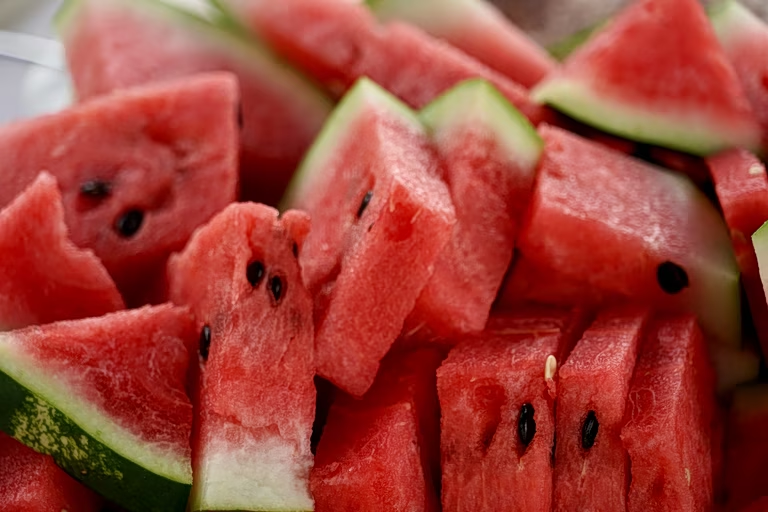
5. Study the Shape and Appearance
This final check combines several small details.
First, choose a watermelon with a regular, symmetrical shape and no obvious dents or bruises.
Some people insist that round watermelons are sweeter than long ones, but that’s largely a matter of variety. In fact, the large elongated watermelons that arrive later in the season—particularly in September—can be exceptionally sweet.
What matters more is the appearance of the rind.
Strong, well-defined light stripes against a rich green background, combined with a healthy sheen, are generally good signs.
By contrast, faint stripes on a dull, lifeless-looking rind often suggest fruit that is under-ripe, watery and lacking flavor.
A Little Knowledge Goes a Long Way
It may sound like a lot to remember, but in reality these are just a handful of simple checks that can save you from one of summer’s greatest disappointments: slicing into a watermelon only to discover it’s bland and tasteless.
With a little practice—and, admittedly, a touch of luck—you’ll dramatically improve your chances of taking home the watermelon everyone hopes for: intensely red flesh, an irresistible aroma and outstanding sweetness.
Serve it ice-cold on its own, toss it into fruit salads, pair it with fresh mint, or, for a classic Greek summer combination, enjoy it with feta cheese.
However you eat it, one thing remains true.
Watermelon is the taste of summer—and summer should always be sweet.