 Μake us preferred on Google
 There is a particular moment, usually somewhere between opening the refrigerator and asking yourself, “What are we going to eat today?”, when you realize something has gone terribly wrong.
You went grocery shopping—and not that long ago, either. You spent a small fortune at your favorite supermarket, an amount you’d rather not think about, the refrigerator is packed, and yet somehow there is absolutely nothing to eat.
Or, to be precise, there is half a bunch of parsley that is starting to give up on life, two zucchini, three different cheeses, a container of unidentified leftovers, and that avocado you waited four days to ripen only to watch it decide to rot overnight.
Once again, life has reminded you that, apparently, everything is a matter of timing.
Saving money in the kitchen doesn’t necessarily mean buying cheaper food. More than anything, it means using what you buy while it’s still good. Throwing away less, shopping a little more intelligently, and not treating your refrigerator like a black hole where food—and money—disappear.
And by doing all of that, you’re also helping the environment, which is already struggling to meet the world’s enormous demand for food and energy.
That’s precisely why September 29 was designated the International Day of Awareness of Food Loss and Waste: to encourage all of us to make the most of what we’re given and what we buy ourselves.
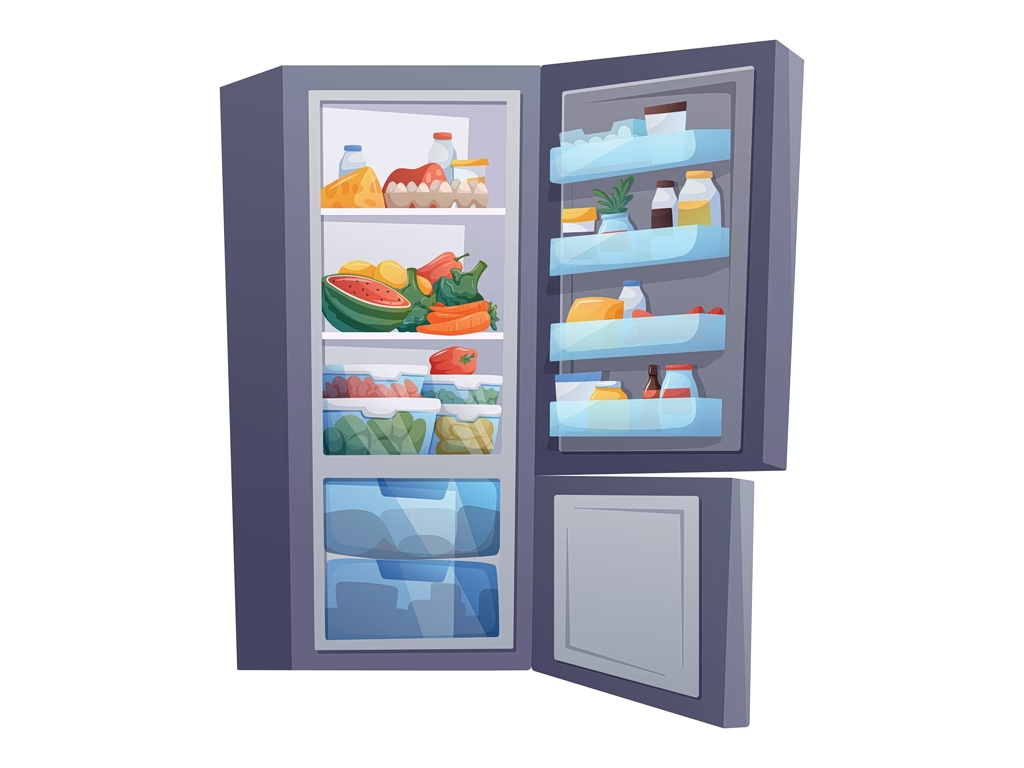
Fortunately, you don’t need an elaborate Excel spreadsheet to keep track of your beans and lentils, nor do you need to spend an entire Sunday cooking seven identical containers of chicken and broccoli for the week.
A few simple habits are enough.
1. Don’t skip the shopping list
“I don’t need a list.” “I’ll remember what we need.”
That approach has led to three boxes of crackers, a new jar of pesto because “I don’t remember if we have any,” and no laundry detergent—the very reason you went to the supermarket in the first place.
A shopping list remains one of the simplest ways to spend less, provided you use it properly.
And using it properly means first doing a quick check of the refrigerator, freezer and kitchen cabinets. There is no point buying another can of tomatoes when three are already hiding behind the pasta.
Ideally, organize your list by category: vegetables, dairy, meat or fish, pantry items and cleaning supplies.
You’ll save time, but you’ll also avoid those unnecessary trips up and down the aisles where financial accidents tend to happen.
And there is another old rule that still works: don’t go grocery shopping hungry.
A hungry person doesn’t shop to fill their stomach. They shop to fill their eyes.
2. Plan your meals for the week
Meal planning: two words that, on Instagram, are usually accompanied by seven glass containers lined up in perfect formation.
In real life, however, a weekly meal plan can be much more relaxed. You just need to have a rough idea of what you’re going to cook over the next few days.
Two main meals, something quick for the difficult days, and an emergency option in the freezer already constitute a plan.
The most important thing is to think about ingredients as building blocks.
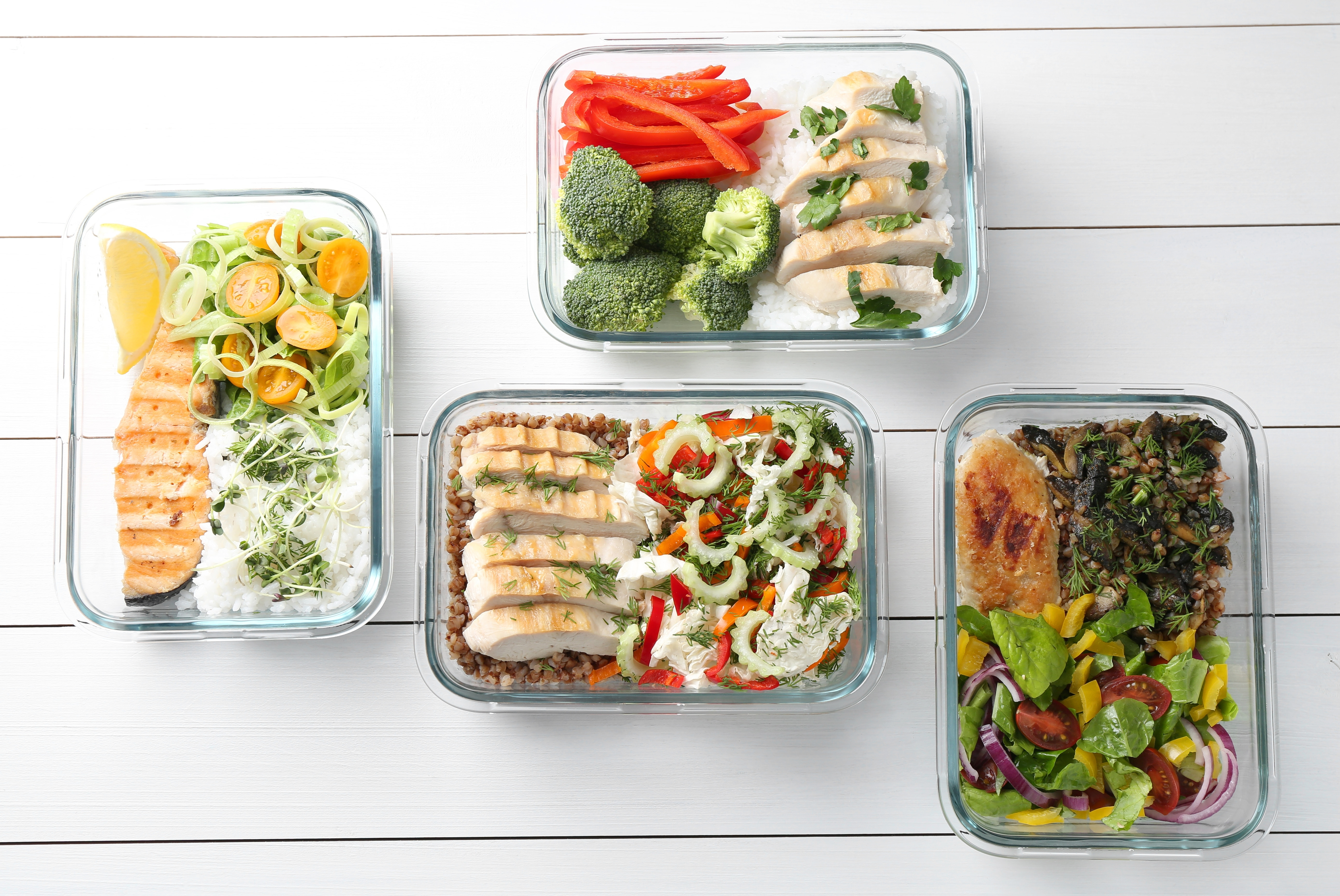
If, for example, you buy a whole chicken for Sunday, whatever is left can go into a salad on Monday, a sandwich or tortilla on Tuesday—perfect for fajitas.
If you roast a large tray of vegetables, they can accompany your main dish today, become an omelet tomorrow and go into pasta the day after that.
3. Freeze your leftovers
The little asterisk next to the word “frozen” on a Greek taverna menu may make you slightly nervous, but at home, your freezer is your ally.
It is one of the best tools for fighting food waste—and at the same time, one of the most misunderstood areas of the kitchen.
For many people, the freezer functions like an archaeological site.
Somewhere in there is a serving of pastitsio, the classic Greek baked pasta dish layered with meat and béchamel. No one knows how long it’s been there.
And yet, if you use it properly, the freezer can become the place where food gains extra time rather than simply being forgotten.
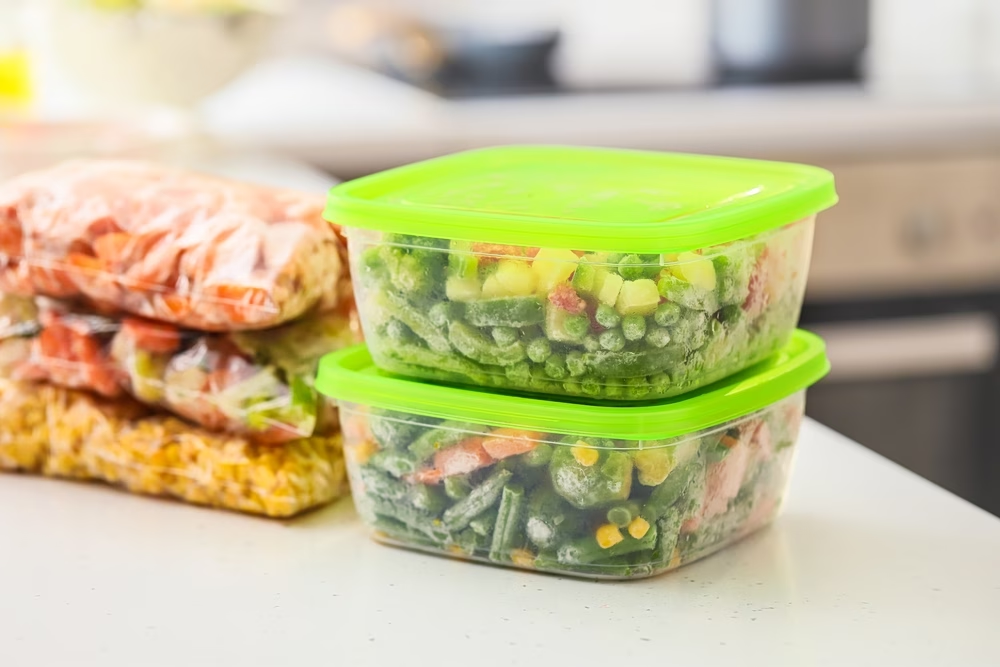
Leftovers can be frozen in individual portions and come to the rescue the next time you open the refrigerator with absolutely no desire to cook anything complicated.
Soups, legumes, stews, sauces, bread and even fresh herbs can be saved instead of ending up in the trash.
The secret is extremely mundane: write on each container what it is and when it was frozen.
Because “I’ll know what it is” doesn’t work when everything has acquired the same mysterious frozen shape.
And one more thing: don’t wait for something to become a leftover before putting it in the freezer.
If your bananas are becoming overripe, cut them up and save them for smoothies or banana bread.
If you know you won’t finish a loaf of bread, slice it and freeze it while it’s still fresh.
Prevention always costs less than replacement.
4. Make pickles, sauces and jams
This is where the really interesting part of the kitchen begins.
Because many of the things you might consider “leftovers” are actually ingredients waiting for a second life.
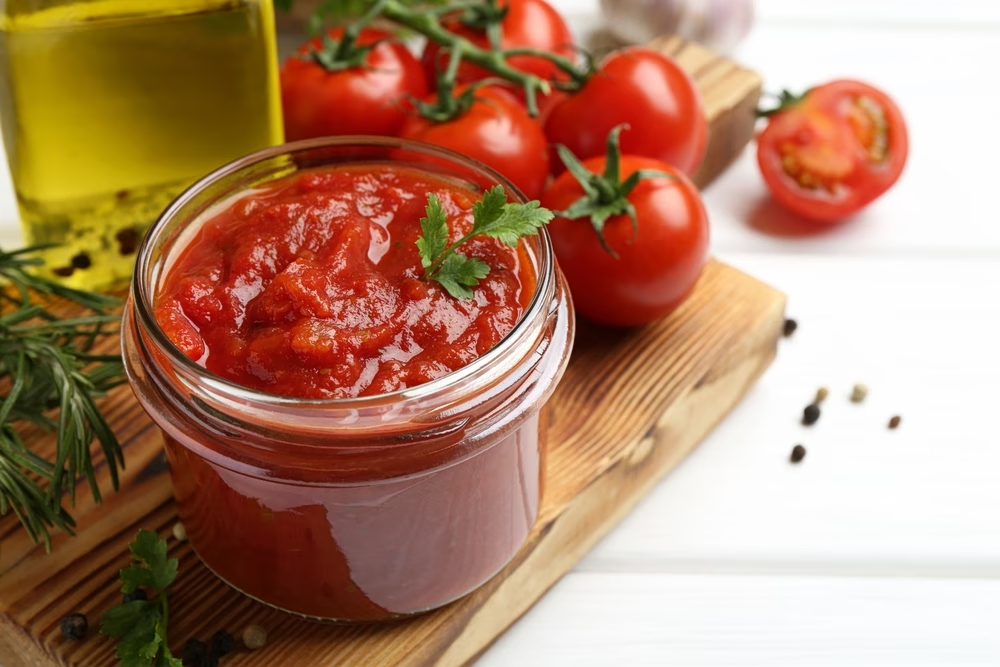
Very ripe tomatoes—which many people would simply throw away—are perfect for sauce.
Cook them with onion, garlic, olive oil and herbs, purée them, and you’ve got a ready-made base for pasta, pizza or a Greek-style braised dish.
If you have a lot of them, divide the sauce into small containers and freeze them.
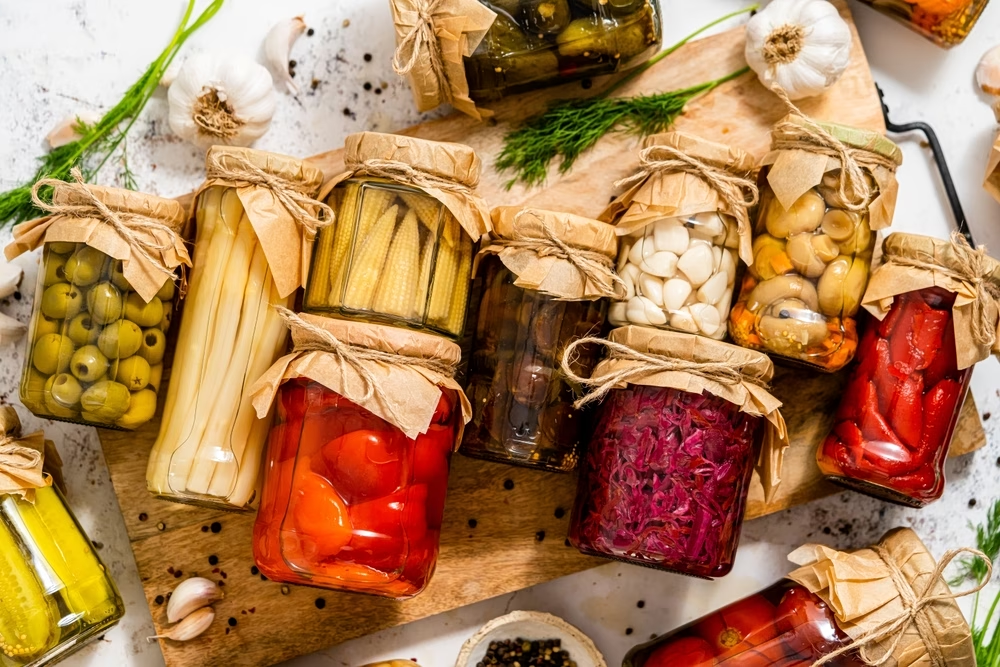
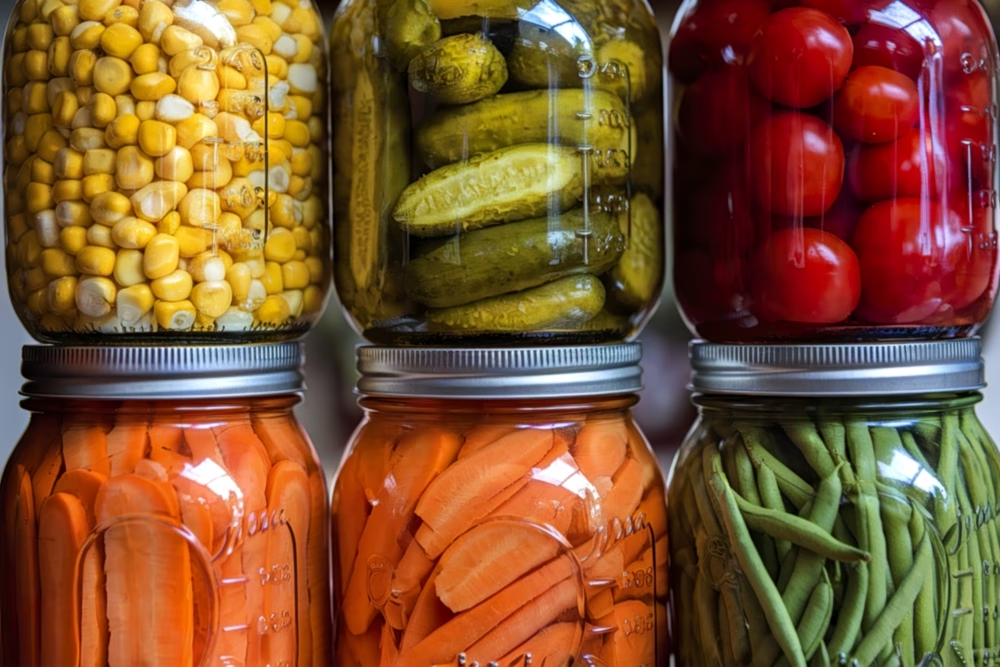
Vegetables that have started to lose their freshness can become pickles.
Cucumber, carrot, onion, cauliflower and peppers, combined with vinegar, water, salt and a little sugar, suddenly acquire an entirely new “career.”
You don’t need specialized canning equipment or the knowledge of some grandmother from a mountain village.
For a quick homemade pickle, a clean jar and a few basic ingredients are enough.
Herbs that are starting to wilt can become pesto or a green sauce made with olive oil, nuts or seeds, a little cheese and lemon.
It doesn’t have to be basil. Parsley, cilantro, arugula—even combinations of whatever happens to be left in the vegetable drawer—work perfectly well.
Broccoli stems can go into a stir-fry or soup. Carrot tops can become pesto. Vegetable peels and scraps can make stock.
Stale bread can become croutons, breadcrumbs, panzanella or the base for skordalia, a traditional Greek garlic-and-potato dip.
You don’t have to reach the point of staring at an onion peel and wondering how to turn it into an inventive dinner.
The idea is simply to delay your decision that something is useless—and find a way to add flavor where you least expect it.
5. Choose budget-friendly ingredients
Lentils, beans, chickpeas, eggs, potatoes, rice, pasta.
They may not have the photogenic appeal of tuna tartare, but they have one major advantage: they can feed a lot of people for relatively little money.
And during times of rising prices, that’s important.
Affordable doesn’t mean boring, as long as you have some imagination and a willingness to experiment.
Chickpeas can become hummus, salad or curry, or they can be roasted in the oven until crisp.
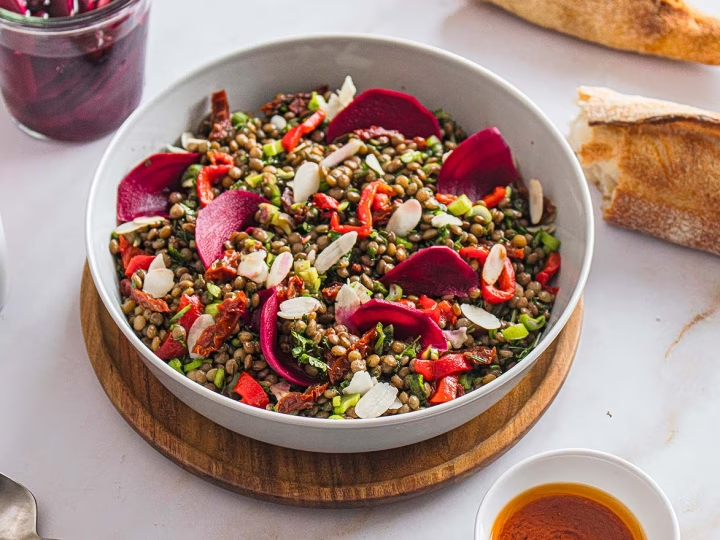
Lentils can move beyond the classic soup and meet roasted vegetables, feta and vinaigrette.
An omelet can accommodate almost anything left in the refrigerator.
Because a smart kitchen doesn’t depend so much on expensive ingredients as it does on the ability to make something simple interesting.
6. Check the price per pound
Sales are wonderful—until you buy three things you don’t actually need in order to “save” two dollars.
At that point, the whole idea of saving money has started to lose its meaning.
At the supermarket, it’s worth looking at the price per pound or per liter, rather than just the final price on the package.
The larger package isn’t always the more economical option, and a sale isn’t a real bargain if half the product is going to expire in your refrigerator.
If you live alone, for example, and buy three packages of cheese because they were on sale, only to have one expire in the refrigerator, you probably didn’t score the deal of the year.
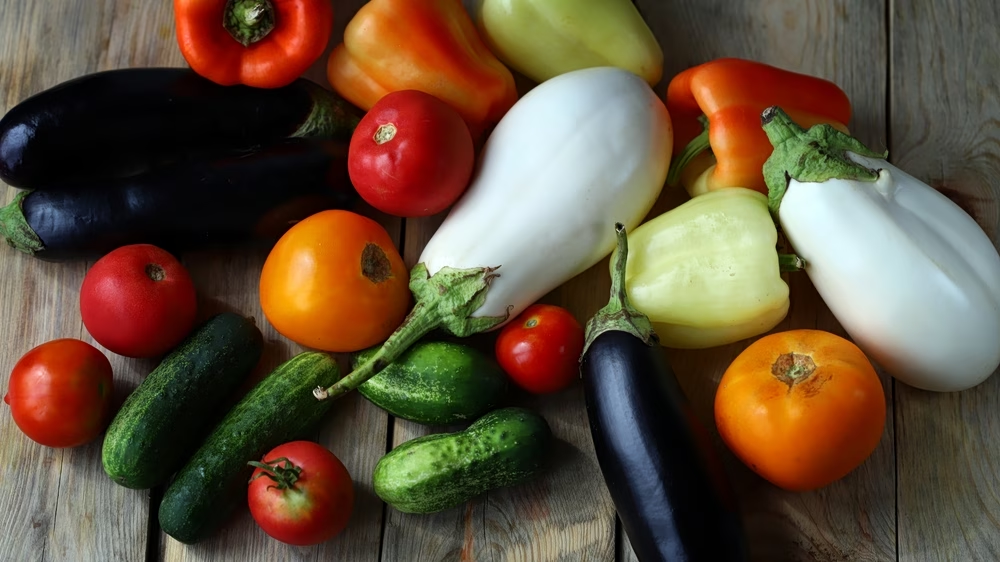
The same applies to foods that are sliced, washed, grated and generally “ready to use.”
Grated cheese, cut fruit, prepared salad and cleaned vegetables may save you time, but they usually cost more than the equivalent whole ingredients.
Sometimes you’re buying convenience, and there’s absolutely nothing wrong with that.
Just know that you’re paying for it.
7. Choose recipes with fewer ingredients
There are recipes that require 15 different ingredients, 10 of which you don’t already have in your kitchen.
And somehow, a single dinner ends with a shopping cart full of things you’re unlikely to ever use again.
Because the problem isn’t just how much a recipe costs. It’s what it leaves behind.
You might need two tablespoons of a sauce, half a bunch of an herb or 100 grams of an ingredient that is sold in a package three times that size.
If you don’t plan to make the same dish again soon—or something else that uses the remaining ingredients—they’ll sit in the refrigerator until you forget about them.
So favor recipes with fewer, more versatile ingredients that you know can be used in other dishes, too.
The goal isn’t to eat nothing but three-ingredient pasta.
It’s to avoid having to open a branch of the supermarket in your kitchen cabinet every time you want to try a new recipe.
8. Move food that needs to be eaten first to the front
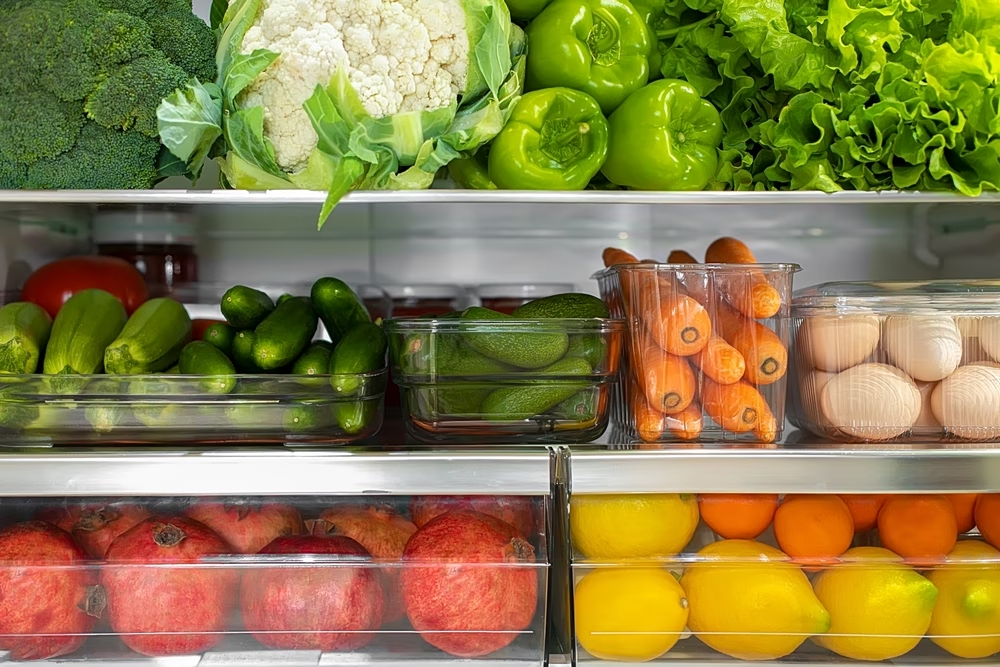
First in, first out.
In simple terms, whatever you bought first gets eaten first.
Put the new yogurt containers in the back and the older ones in front.
Don’t let fresh milk hide the carton that expires tomorrow.
Vegetables that need to be eaten soon should be somewhere visible—not buried at the back of the crisper drawer, where zucchini go to “die peacefully” on their own.
You can even create a small “eat me first” box in the refrigerator for anything approaching the end of its life.
No high technology required. Just organization.
9. Use your appliances efficiently
The oven is wonderful, but it doesn’t need to heat up to 400°F for two slices of bread.
For small quantities, appliances such as an air fryer or a smaller-capacity countertop oven may, depending on how they’re used, consume less energy than a large conventional oven.
There are also small habits that add up.
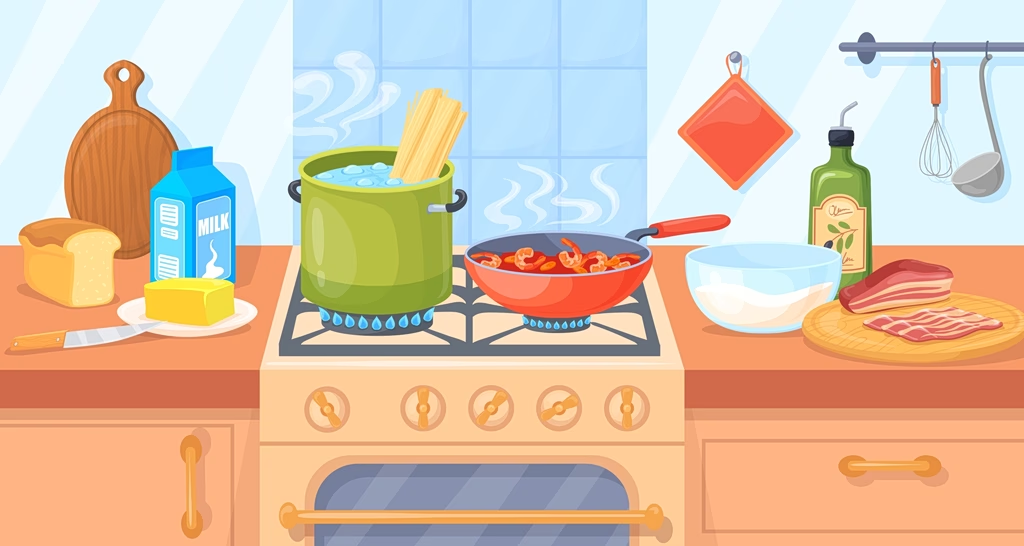
Put a lid on the pot so it reaches a boil faster. Heat only as much water as you need. Use cookware that matches the size of the burner.
And when you open the oven every three minutes to “see how it’s going,” remember that there’s a reason the oven door has a window.
Even better, make the most of the oven whenever you turn it on.
Roasting chicken? Put a tray of vegetables or potatoes in there, too. They can become a side dish—or even the main course—the following day.
Saving money in the kitchen doesn’t require deprivation or major sacrifices.
It simply requires a little better planning and a few habits that, once they become part of your everyday routine, can make a real difference.
Because the goal isn’t to put less food on your plate. It’s to make better use of what you already have.
And, between us, every bunch of parsley rescued from the bottom drawer of the refrigerator is a small victory.