 Μake us preferred on Google
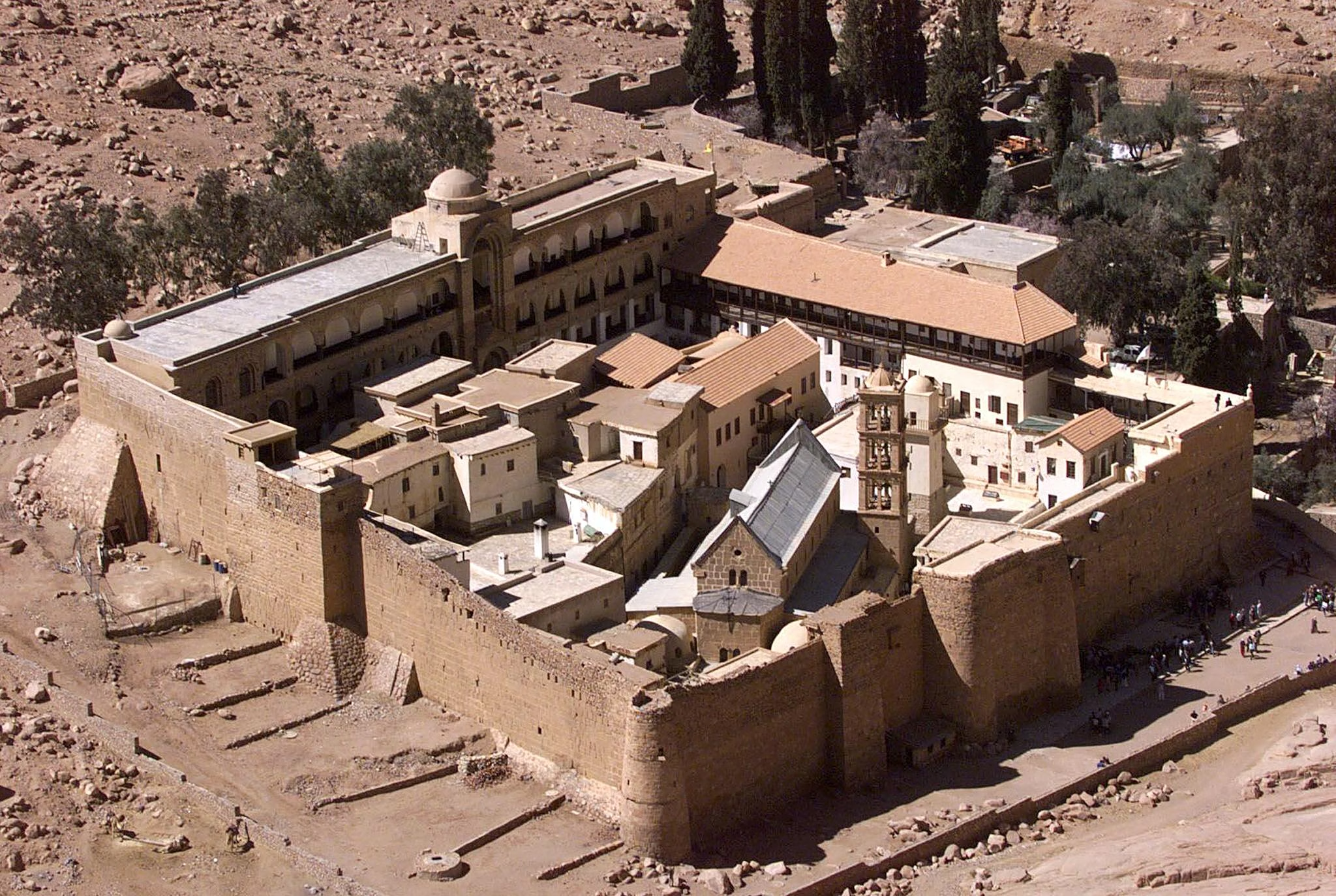
The statement by Archbishop Symeon of Sinai, announcing his intention, as representative of the Sinai brotherhood, to come forward and sign an agreement with the Egyptian authorities on the institutional and legal framework of the monastery, marked a loud start to the “sprint of the last hundred meters.”
In the short time remaining until the final signing, a series of issues must be resolved. These are the obstacles to the agreement, both before and after it is signed:
- Finalizing the text of the agreement, which is currently in English, in Arabic and Greek, with mutual ratification of both versions so that there are no issues of interpretation in the future.
- Making the text public, at least on the day of signing if not earlier, as the rules of good faith require.
- Making public the letters of approval from the Ecumenical Patriarchate, the Patriarchates of Jerusalem and Alexandria, and the Churches of Greece and Cyprus.
- Clarifying the scope of the term “religious use and possession,” which is expected to be included in the agreement.
- Clarifying who has jurisdiction over the monastery’s properties outside Egypt.
- A similar clarification on jurisdiction over the monastery’s treasures and relics outside Egypt.
- Will the monastery be given legal status in Egypt as a legal entity under public law?
- Will the monastery’s fundamental regulations be recognized by the Egyptian authorities as a broader legal text, or will their recognition be for “internal use” only?
- Forming a new Synaxis (council of fathers), as required after the election of a new abbot, since the old one is still in place.
- The need to gather the monastery’s archival records and material, which are currently scattered across Athens, Cairo and Sinai, so that they can be recorded, documented and digitized.
- A final emerging obstacle is the validity period of the brotherhood’s residence permits. According to information, a period of three years is being considered.
As sources with inside knowledge of the months-long talks point out, the very positive climate in Greek-Egyptian relations in recent days, as reflected in the first statements by Prime Minister Kyriakos Mitsotakis, Foreign Minister Giorgos Gerapetritis and the Egyptian Foreign Ministry, provides an “ideal framework for a quick conclusion of the talks,” which the monastery’s side must “make the most of.”
Messages
First of all, the same sources note, Archbishop Symeon must immediately, “within today,” send the Egyptian government a specific proposed date for the signing. The brotherhood has already been consulted on the agreement in two or three video conferences. According to information, if Symeon’s health progresses smoothly, he is expected to be able to travel to Sinai starting next week.
Alongside Symeon’s arrival in Egypt, or the earlier setting of a date, Egypt is expected to issue the Presidential Decree recognizing him, so that he can sign.
Finally, the choice of where the agreement is signed will also send several messages. “The symbolism is different if the signatures are placed at the monastery, in the presence of the leaders of Greece and Egypt, and different if an administrative venue is chosen, either at the Ministries of Tourism and Antiquities and of Environment, which share responsibility, or at the South Sinai Governorate,” a church source said. It should be noted that Greece is only attending.
The Prime Minister and the Foreign Minister welcomed the announcement of Symeon’s intention to sign, calling it an agreement “of historic significance” that addresses “a 1,500-year-old institutional gap that left the very existence of the Holy Monastery exposed.”
Pressure Over The Agreement
On the other hand, both PASOK and former Prime Minister Antonis Samaras stressed the need for the agreement to be made public in time. At the same time, Maria Karystianou, leader of the Elpida party, sent an extrajudicial notice calling for the agreement and its provisions to be made public.