 Μake us preferred on Google
 A world defined by comparison
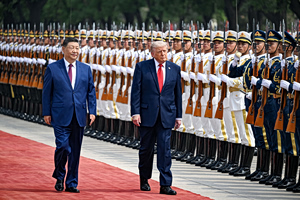
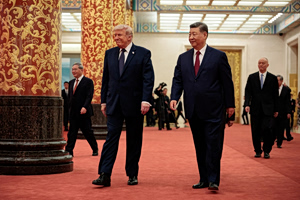
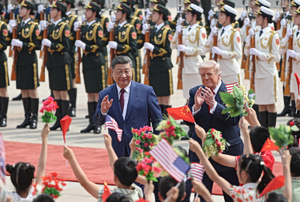
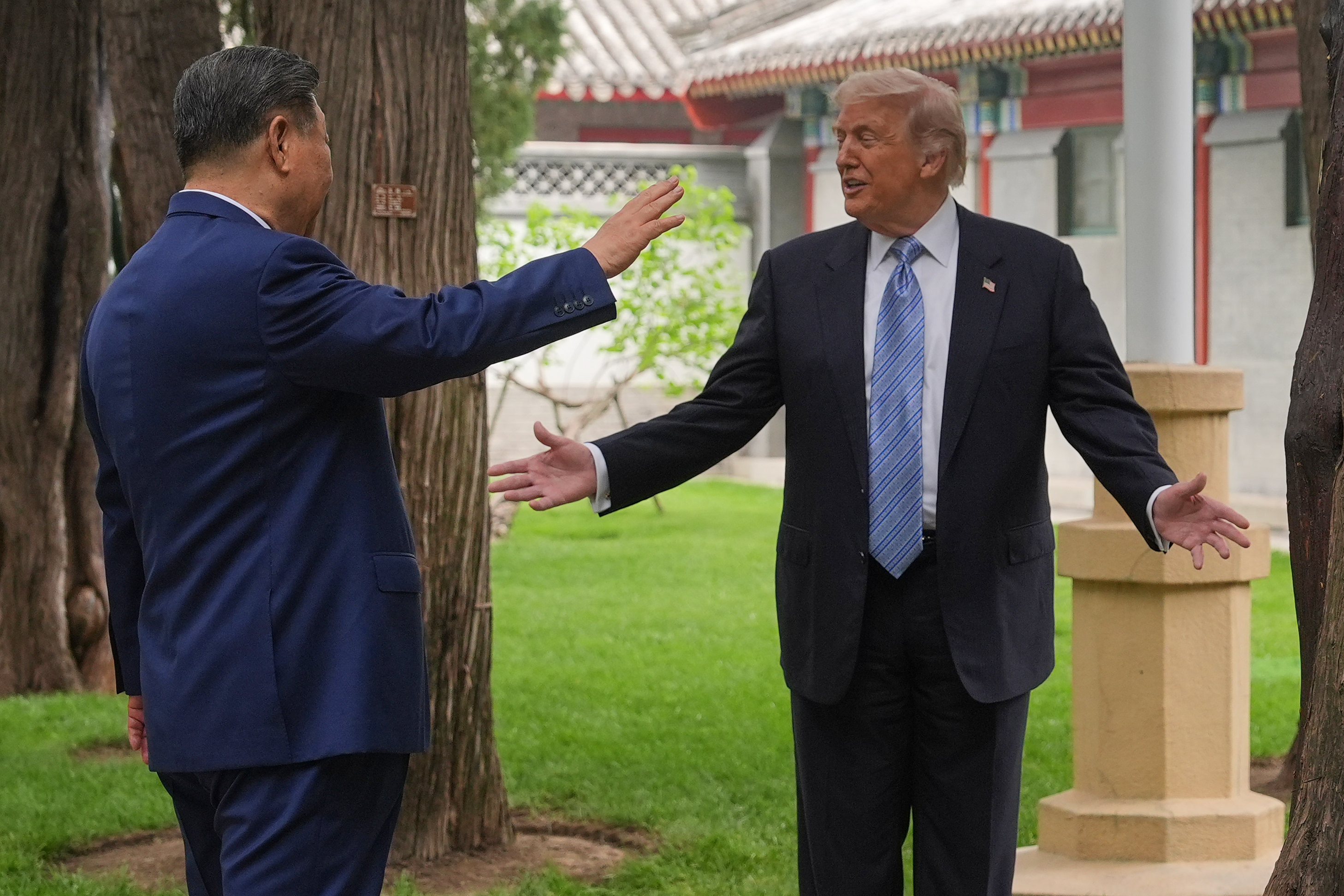
When Donald Trump and Xi Jinping met in Beijing, the familiar themes were on the table: trade, technology, strategic rivalry. Yet beneath the surface lies a deeper shift in world politics — a system increasingly organised not by what states are, but by how they compare.
During the summit, Xi Jinping referred to the Thucydides Trap — the idea that rising and established powers can drift into conflict, as ancient Athens and Sparta once did.
The reference was historical, but the logic is contemporary.
Power today is no longer fixed. It is positional — constantly measured, revised, and contested.
Measurement as the new reality
Countries are now rarely judged in isolation. They are continuously benchmarked: GDP, technological strength, military capability, artificial intelligence, innovation capacity.
Modernity increasingly transforms political life from qualitative judgment into quantitative rivalry.
Everything becomes measurable, but more importantly, everything becomes comparative. States are no longer evaluated by internal sufficiency alone, but by relative position within global systems of ranking and competitive measurement.
In this environment, value is no longer intrinsic. Value becomes relational. And once comparison becomes constant, it no longer simply describes reality — it begins to shape it. Pressure becomes structural rather than episodic.
The modern comparative order excels at measuring capability, but is often less adept at interpreting historical memory, social attachment, and the emotional foundations of political life. Systems highly efficient at optimisation do not necessarily become equally skilled at understanding people.
China, often described as a “civilisational state,” participates fully in this system of global comparison, but does not treat it as the sole measure of political meaning. Its governing tradition places greater emphasis on continuity, collective cohesion, historical consciousness, and long-term stability. Comparison is present, but contained within a broader conception of order that extends beyond economics alone.
Sparta, Qin, and the logic of pressure
Some historians and commentators have compared the Qin state during the Warring States period to a kind of “Sparta of the East,” reflecting parallels in militarisation, discipline, and state-directed social organisation under conditions of prolonged insecurity.
Both were shaped under sustained pressure, where cohesion became the overriding priority.
Sparta built discipline inward, through education and collective formation. Qin organised it outwardly, through law, standardisation, and administrative control — a logic that also found expression in the early systematisation of frontier fortifications that would later evolve into the Great Wall of China tradition, turning insecurity into a governed boundary.
Different mechanisms, but the same underlying logic: when insecurity becomes permanent, cohesion becomes the central task of the state.
Sparta cultivated cohesion through social discipline; Qin through administrative centralisation. Modern great powers increasingly combine both logics.
The Thucydidean structure today
Today, this logic has returned — not as history, but as a condition of the present.
Strategic rivalry between major powers reshapes domestic priorities. Security concerns influence industrial policy. Technological competition drives state involvement in innovation. Economic systems increasingly reflect geopolitical calculation.
Rivalry restructures states internally before it produces external conflict.
The Thucydides Trap today is therefore not only about war between states. It is about how sustained rivalry reorganises societies from within.
Industrial policy re-emerges. Technological sovereignty becomes a strategic necessity. Supply chains are securitised. State involvement expands in sectors once treated as purely economic. The distinction between economic competition and national security steadily weakens.
Beneath disputes over tariffs and technology lies a deeper contest between systems that understand political order differently: one oriented primarily toward optimisation and market adaptability, the other toward continuity, cohesion, and civilisational endurance.
At the same time, strategic competition increasingly extends beyond military or economic capability into competing models of political organisation. The United States expresses a logic of flexibility, decentralised innovation, and market dynamism; China expresses a logic of coordination, continuity, and long-term cohesion.
Sparta and Qin are therefore not distant analogies, but early expressions of a recurring political dynamic: cohesion hardened by pressure, institutions tightened by insecurity.
One world, different strategies
The United States and China operate within the same system of global comparison, but respond to it differently.
One still relies more heavily on decentralised innovation and market dynamism. The other places greater emphasis on coordination, continuity, and long-term strategic planning.
Yet both remain fully embedded in the same condition: constant measurement against others.
Here lies the deeper shift. In the past, measure implied balance and sufficiency. Today, measurement implies ranking and permanent comparison.
Measure defines limits. Measurement removes them.
Once comparison becomes permanent, achievement itself loses stability. Nothing is evaluated in itself; everything is assessed relative to competitors whose positions are also constantly changing.
And once everything becomes comparable, nothing is ever enough.
Conclusion: the age of permanent comparison
Sparta shows how discipline deepens under pressure. Qin shows how centralisation intensifies under pressure, from Legalist administration to the frontier fortifications that later evolved into the Great Wall. The modern world reflects the same pattern: international systems increasingly shaped by continuous comparison.
It was in this context that Xi Jinping invoked the “Thucydides Trap” during his meeting with Donald Trump — not merely as a historical analogy, but as recognition that prolonged rivalry reshapes states internally as much as it destabilises relations between them.
The Thucydides Trap, in this sense, is not only a warning about great-power conflict. It describes a deeper condition: a world in which comparison itself becomes a governing force.
The deeper danger may not simply be conflict between powers, but the emergence of a civilisation organised around permanent comparison — where states, institutions, economies, and even individuals increasingly understand themselves relationally rather than intrinsically.
The question is no longer only who is rising or declining, but whether any political order can remain stable in a system where everything is measured against everything else — and where nothing is ever sufficient in itself.