 Μake us preferred on Google
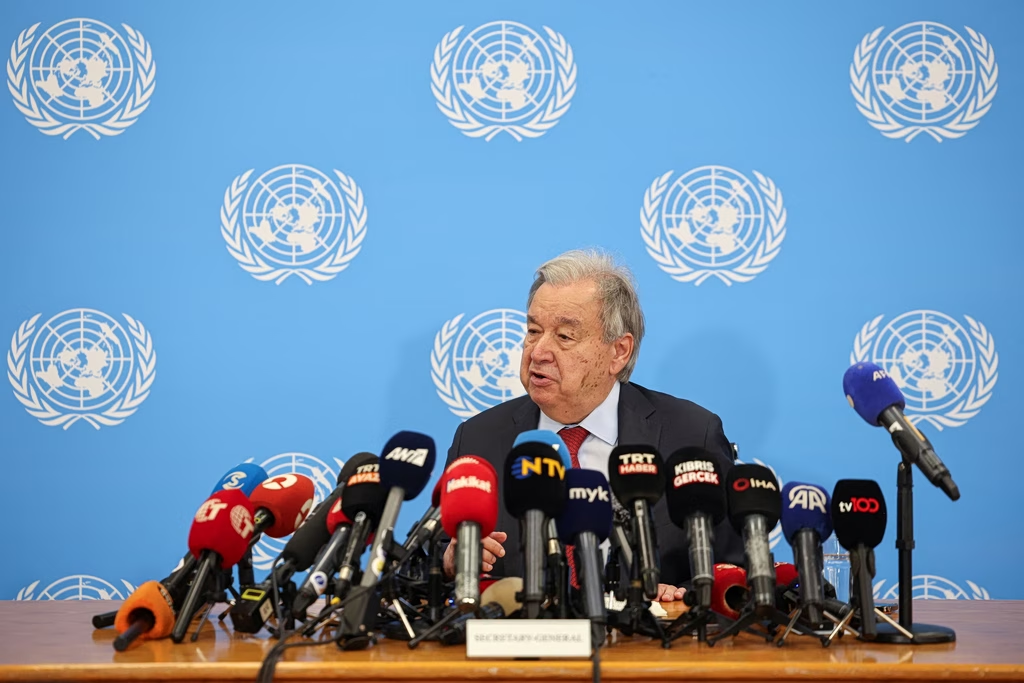
 United Nations Secretary General António Guterres said Wednesday he will convene a new expanded meeting on Cyprus in the 5+1 format, a diplomatic setting that brings together the island’s two communities alongside Greece, Turkey and Britain, the three countries that guarantee Cyprus’ independence under a 1960 treaty.
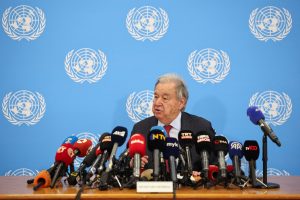
Guterres made the announcement at a news conference held inside the United Nations protected area near Nicosia’s airport, following separate and joint talks with Nikos Christodoulides and Tufan Erhurman during his visit to the island. He gave no date for the meeting, saying only that both sides and the three guarantor powers had given their consent to move forward once enough groundwork had been laid.
“I have the consensus of both sides and the guarantors to move into a 5+1 meeting but with adequate preparation,” Guterres told reporters. “Preparation on confidence building, preparation on methodology and preparation on substance, because I don’t want to have more 5+1 meetings without results. I want a successful 5+1 meeting in order to pave the way for a solution to be achieved.”
Guterres warns against another failed round
The secretary general said resolving the Cyprus problem carries weight well beyond the island itself. He described the region as one undergoing “important geopolitical movements,” where conflicts persist and have shown how easily they can spread. “I do believe that a solution in Cyprus is absolutely crucial not only to preserve the interests and the peace of the Cyprus people but also as a factor of stability in what is becoming a dangerously unstable region,” he said.
Guterres said his personal envoy, María Ángela Holguín, the former Colombian foreign minister who has led the UN’s shuttle diplomacy on the island, has been building on past UN efforts and on what she has heard directly from Cypriots. He said both Christodoulides and Erhurman had assured him of their determination to keep working in earnest with her.
Asked how much time the new preparatory phase might take, Guterres said no deadline had been set. “It was not defined, the deadline, we are going to work together as fast and as effectively as possible,” he said. Pressed on whether a new initiative could emerge during the UN General Assembly’s high level week in September, he asserted no Cyprus meeting is currently scheduled for that week, with efforts for now concentrated on direct engagement between the two sides and the guarantor powers.
He traced his own history with the Cyprus issue, listing rounds of talks held during his tenure in Geneva and Crans Montana in 2017, Berlin in 2019, Geneva again in 2021, and New York and Geneva in 2024 and 2025. He said his visit was meant to convey solidarity with Cypriots seeking a solution, while acknowledging the UN’s limits. “The United Nations cannot impose peace,” he said. “But let me be very clear: the United Nations remains fully committed to supporting the people of Cyprus in this crucial moment for the island and the wider region.”
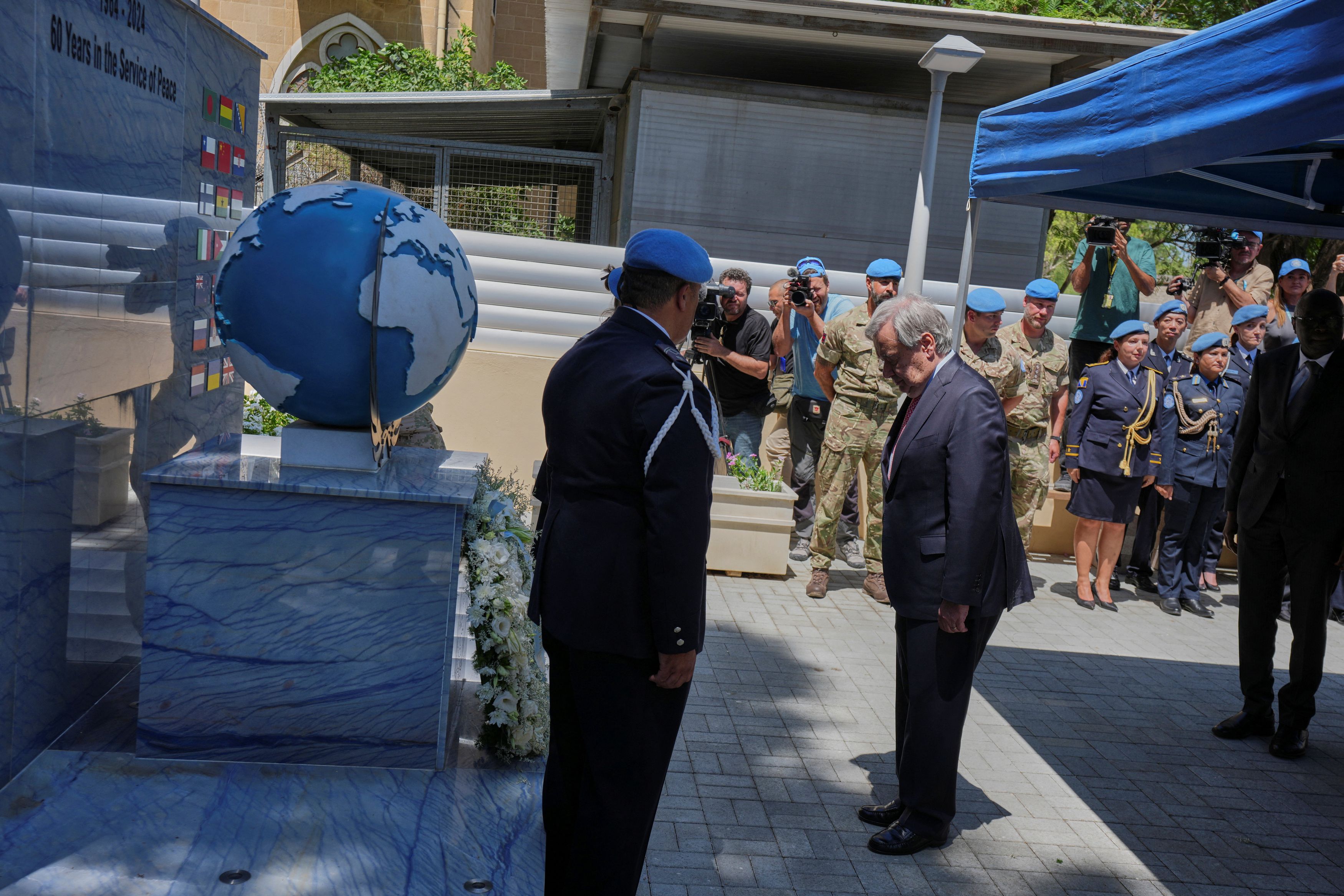
On the ground, Guterres said it was necessary to respect the mandated authority of the UN peacekeeping force in Cyprus, known as UNFICYP, both in the buffer zone and along the UN delineated ceasefire lines. He said the force has helped maintain calm and stability for more than six decades and that its continued effectiveness depends on cooperation from all sides.
He said he was impressed by the work of the Committee on Missing Persons, a bicommunal body that has spent decades trying to identify and return the remains of those who disappeared during the intercommunal violence of the 1960s and the 1974 conflict that split the island, calling its efforts to answer families’ anxiety “remarkable.” He said he was equally impressed by the bicommunal technical committees, which he said are “bridging the gap between the political track and everyday citizens, and finding practical solutions.” He also said he had engaged constructively with civil society representatives during the visit.
Guterres said the international community has an important role to play as well, and that he counts on the continued support of the three guarantor powers, Greece, Turkey and Britain. He closed by thanking the staff of UNFICYP and his Mission of Good Offices, saying he was pleased to convey his gratitude to them in person during the visit.
Christodoulides cites use of the negotiating record
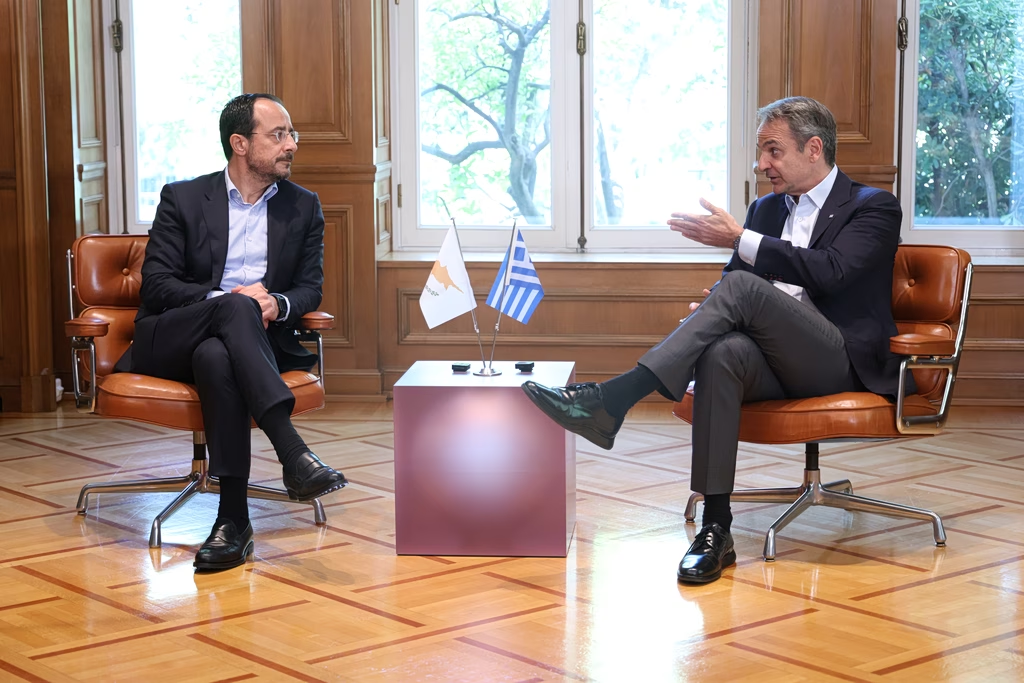
Christodoulides, the president of the Republic of Cyprus, said he took three things from his contacts with Guterres. He said the secretary general remains fully committed to the relevant United Nations Security Council resolutions and, importantly, to what Cypriot officials call the negotiating acquis, the body of convergences reached in previous rounds of talks up to the 2017 Crans Montana conference. He also welcomed the fact that all parties, including his own government, had responded positively to the idea of an expanded conference.
“We agree completely with the secretary general that it has to be a successful [meeting], and we will continue working with Ms. Holguín, and also the European Union, which the secretary general also referred to in our meetings today, so that we prepare the ground for this expanded meeting to have a positive announcement on restarting the talks from where they were interrupted at Crans Montana,” Christodoulides said.
He said it was significant that the previous negotiating record is being drawn on rather than starting over, calling that point “very important.” He also welcomed what he described as a new willingness by the European Union to play a role, both on the substance of unresolved issues and on the parallel track of Turkey EU relations, which he said Turkish officials themselves have indicated they want to see improve. Christodoulides said the European Commission president had offered to set up a legal team to support Raffaele Fitto, the commission’s special envoy on the Cyprus issue.
Christodoulides said work with Holguín and Fitto would begin Friday to build the conditions for the expanded conference, whose sole purpose, he said, should be to announce the resumption of formal negotiations. He added that the discussions in Nicosia had, for the first time since Crans Montana, gone into the substance of the Cyprus problem itself, touching on specific issues where convergences exist.
Erhurman wants a road map
Erhurman, the Turkish Cypriot leader, told reporters after the news conference that he was more optimistic than before Guterres’ visit, according to the Turkish Cypriot newspaper Kıbrıs. “We want to achieve results, not simply go through a process,” he said, adding that he did not consider the visit a farewell tour for Guterres despite no concrete deliverable, such as the opening of a new crossing point, coming out of it.
Erhurman noted that Cyprus has gone without a substantive negotiating process for about nine years, a gap he said has deepened mistrust between the two communities. He said progress on confidence building measures and negotiating methodology needs to come before any new negotiation begins, pointing to Guterres’ visits to the Committee on Missing Persons and the bicommunal technical committees as evidence of that approach. “If we do not pave the road to a solution properly, we will not get there,” he said, adding that lessons need to be drawn from the failed attempts of 2004 and 2017.
He said Greek Cypriots, Turkish Cypriots and the guarantor powers all view the informal 5+1 meeting favorably, provided proper preparation takes place first. “We do not want a five plus one meeting just to have one. We do not want negotiations just to hold negotiations. We want a five plus one meeting that is guaranteed to produce results and, this time, negotiations that will lead us to a solution,” he said. He added that the absence of a set date was not a bad sign, saying it should push both sides to make progress on confidence building and methodology.
“Today, for the first time, I see a road map ahead of me, in the sense that I understand it,” Erhurman said. He said Turkish Cypriots are ready to contribute to the process but stressed that progress cannot be one sided and requires mutual political will.
Source: in.gr, TO VIMA, UN. org