 Μake us preferred on Google
“The sirens reach you deep inside. You feel them in your chest.”
For Marianna Kritikou, a protection officer with the United Nations High Commissioner for Refugees (UNHCR), this is what living under the threat of Russian attacks in Kyiv feels like. Over the past year, she has witnessed how the war has reshaped everyday life in the Ukrainian capital, where air raid alerts, explosions and disruptions to essential services have become part of the daily routine.
Kritikou is responsible for monitoring and assessing the protection risks and needs of internally displaced people. She has worked on humanitarian missions in South Sudan, Chad, Ethiopia, Uganda, Namibia, Lebanon, Iraq, Syria, Jordan and Ukraine.
She arrived in Ukraine in October 2025 as part of a program documenting the needs of communities and human rights violations. Her work involves visiting communities and speaking directly with residents about their experiences.
Speaking to To BHMA, she said conditions had deteriorated significantly since late August 2026, with air raid alerts sounding far more frequently.
“The alarms go off much more often, every hour, if not every half hour,” she said. Previously, bombardments occurred mainly at night, during the curfew that ran from midnight until 5 a.m. Now, attacks take place throughout the day, making life exhausting.
Drone attacks have changed the threat
The nature of Russian attacks has also evolved, according to Kritikou.
Previously, large groups of drones would arrive together in swarms to disrupt Ukrainian air defense systems, followed by missile strikes. More recently, smaller and faster drones have increasingly been used to inflict significant damage on public infrastructure.
Targets have included railway networks, bridges, energy and water systems, telecommunications infrastructure, food warehouses and facilities storing humanitarian aid.
The shift has made daily life more dangerous, she said, because attacks can happen at any time and the speed of the drones makes them difficult to intercept.
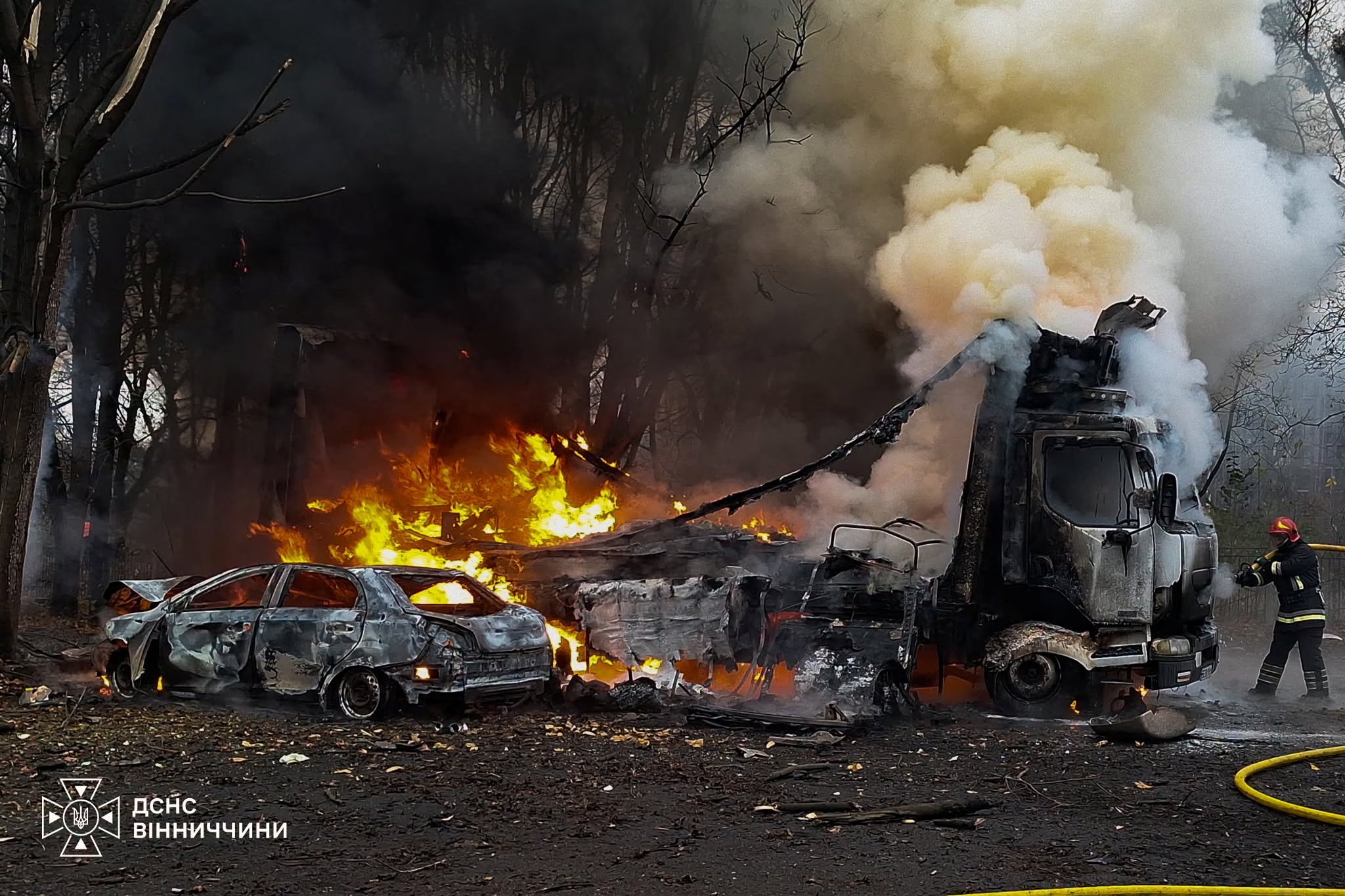
The danger does not end with the intended targets. Burning debris falling from the sky can destroy homes, property and lives.
“You have to be careful where you walk at all times, because things have become much more brutal,” she said.
The widespread use of drones has also changed how residents prepare for attacks. Unlike missiles, which are particularly expensive, drones cost considerably less and can therefore be deployed in much greater numbers and on a daily basis.
Online warning systems indicate areas that may be targeted, while information is also shared through Telegram. Residents have learned to recognize the different types of drones and missiles. Protective nets have also been installed to stop drones, particularly around bridges that are repeatedly targeted.
Shelters become part of everyday life
When an air raid alert sounds, normal activity comes to a halt. Public transportation, services and banks stop operating, and people must seek shelter in basements, parking garages and subway stations.
Spending the night in shelters has become a challenge in itself. Residents find ways to sleep there with their children, using sleeping bags, tents, benches and even yoga mats.
Cold temperatures make the experience particularly difficult. Kritikou recalled an attack near her location in January, when people were forced to spend hours in a shelter as temperatures fell to minus 15 degrees Celsius (5 degrees Fahrenheit).
She also described how the focus of attacks on infrastructure has shifted with the seasons. During the summer, water networks were targeted more frequently, while in the fall and winter, power plants came under attack, disrupting heating supplies.
“Their aim is to make people exasperated,” she said.
Power cuts and inflation deepen the hardship
Beyond the immediate threat of attacks, residents face mounting economic and practical difficulties.
The war has driven inflation higher, leaving many people struggling to make ends meet. Frequent interruptions to electricity, heating and water supplies further complicate daily life.
Even restaurants often serve only cold dishes, while many businesses rely on small, noisy generators to keep operating.
Kritikou recalled the period after Christmas last year, when energy distribution was strictly rationed. Kyiv was left in darkness amid freezing temperatures, creating what she described as an atmosphere of profound misery.
“You would go outside and your heart would sink,” she said.
The winter was exceptionally harsh, she added, with temperatures and conditions not seen for many years. Residents have been warned that this winter could also be difficult.
A vibrant city living under pressure
Despite the constant danger, Kyiv is far from a ghost town, Kritikou said.
When she first arrived, she expected to encounter a very different city. Instead, she found a beautiful capital rich in history and culture, with parks, wide streets, attractive neighborhoods, open shops and busy public spaces. Luxury cars and well-dressed residents are also part of the cityscape.
At first glance, much of daily life appears to be functioning normally. But the appearance of normalcy conceals a population living under enormous strain.
People are anxious and exhausted, yet continue with their lives. Kritikou said Ukrainians had treated her well and earned her deep respect.
“They are good and strong people. They are patriots. They endure, but the situation seems endless,” she said.
Residents have found ways to preserve moments of normality, meeting friends and continuing their social lives. But, as she explained, nobody can truly relax. Even during enjoyable moments, the war remains in the back of their minds.
The sirens are an inescapable reminder.
Last year, residents had about three minutes between hearing an alert and needing to take cover. Now, the explosion may come almost immediately after the siren — or even before it.
“You hear the siren and then you hear the bang. Or you hear the bang and then the siren,” she said.
Explosions, interception fire and smoke are visible and audible across the city. They create anxiety and weigh on people’s minds. Although the spectacle can initially trigger curiosity, residents have grown tired of it, she added.
The human cost remains visible
The consequences of the war are also present in the people living around the city.
Kritikou said the National Institute of Traumatology and Orthopedics is located in her neighborhood and treats people who have lost limbs. When patients are able to leave the facility, they try to resume everyday activities, including going to the supermarket.
Such encounters are a reminder of the human cost of the conflict, she said. Those who have been killed or injured are not just statistics but someone’s children, parents, spouses or siblings.
Posters, memorials displaying photographs of fallen soldiers and flags in public squares also serve as constant reminders of the sacrifices Ukrainians are making.
“All these people who have been lost are someone’s children, someone’s fathers, someone’s spouses, someone’s brothers and sisters,” she said.
For Kritikou, the contrast between Kyiv’s continuing vitality and the constant presence of war defines life in the capital. People keep going, but the threat never fully recedes.