 Μake us preferred on Google
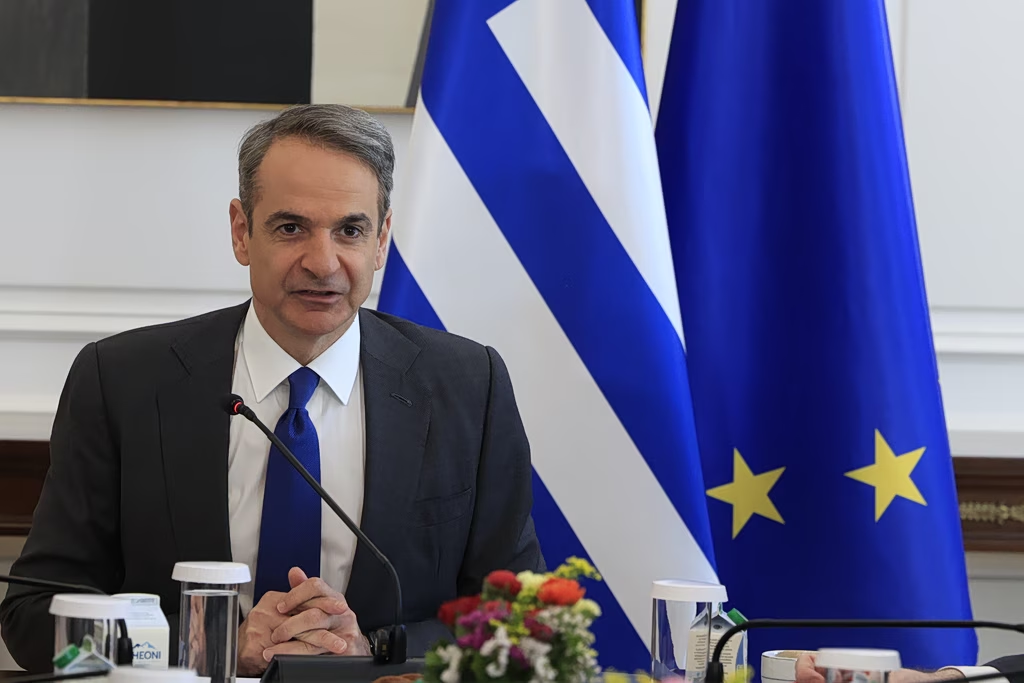
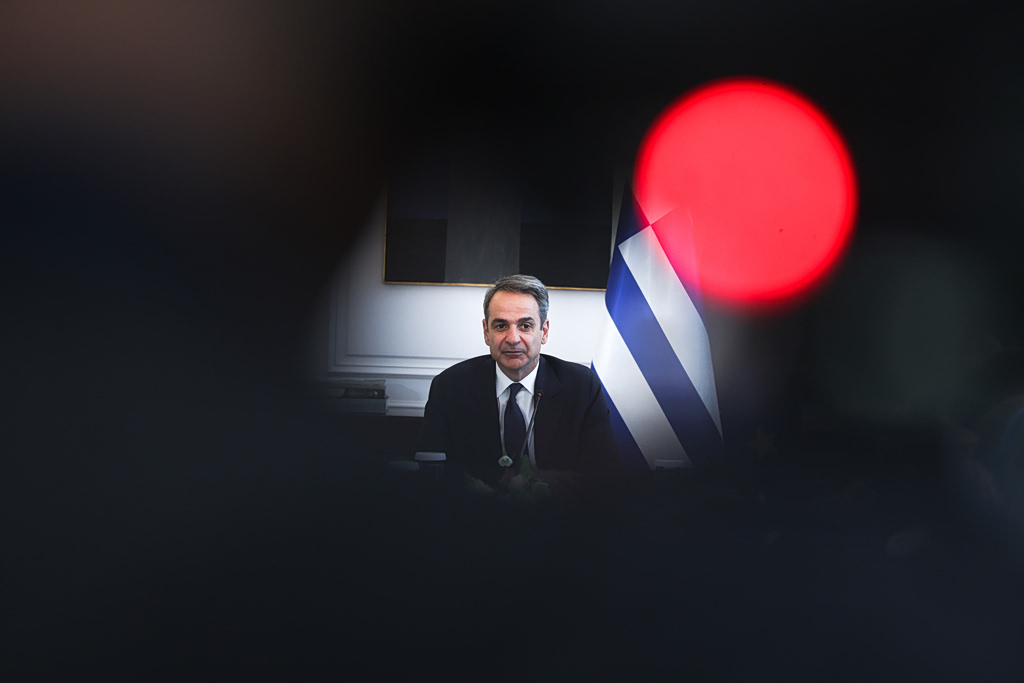
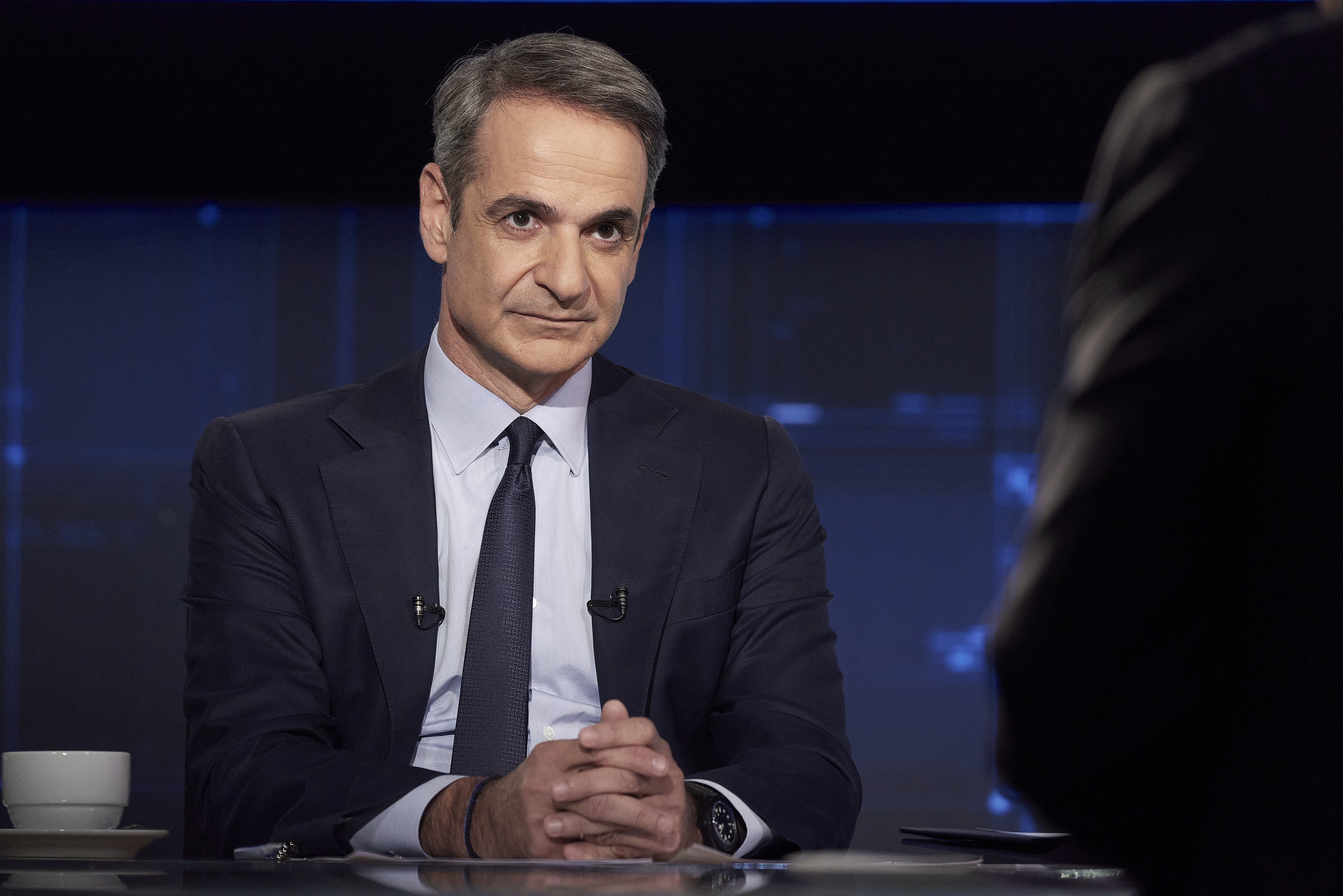
 Greece will hold elections in spring 2027, Prime Minister Kyriakos Mitsotakis claimed on Thursday night, timing the vote to ensure a stable government is in place before the country assumes the European Union’s rotating Council presidency on July 1 of that year.
Speaking on ANT1 channel, Mitsotakis reiterated his intention to lead New Democracy into that contest seeking an outright parliamentary majority, ruling out any coalition arrangement. “The conditions for a coalition government are not met,” he said, adding that voters “choose not only a party but also a prime minister.” He also declared that a third term would be his last, saying he has no intention of seeking a fourth.
Cost of living and fiscal limits
The prime minister acknowledged that the cost of living remains the dominant concern for Greek households, attributing it largely to global energy prices. He pointed to minimum wage increases and tax relief measures his government has delivered, but drew a firm line against cutting value-added tax or the special consumption tax on fuel, calling such steps “fiscally unsustainable.”smaras
He also ruled out reinstating a 13th monthly salary payment for public sector workers, a benefit that was abolished under the country’s bailout-era austerity program and has remained a recurring political demand. Mitsotakis justified his stance by claiming that much of what that measure would have addressed has already been covered through targeted pay increases for specific groups, including doctors, members of the armed forces, and other professional categories.
The bishops’ pay rise
Mitsotakis also defended a government bill that would raise the salaries of Greece’s most senior Orthodox clergy by as much as 95 percent, nearly doubling the pay of metropolitans and placing more than 100 hierarchs at the top of the public payroll. The measure, contained in an omnibus finance bill currently in public consultation, has drawn intense criticism from the public, though the political opposition has largely remained silent. Mitsotakis said the reported figures were inaccurate and described the raises as the fulfillment of a long-standing request from the Church of Greece. He also pushed back on comparisons with the salaries of state-appointed muftis in Thrace, the Muslim religious leaders in northeastern Greece whose pay is funded by the Education Ministry, saying he could not accept that a metropolitan bishop should earn significantly less, though previous reporting suggests the actual gap between the two salaries has been marginal.
NEWSLETTER TABLE TALK
Never miss a story.
Subscribe now.
The most important news & topics every week in your inbox.
Scandals and the rule of law
Asked about three cases that have dogged the government, Mitsotakis was categorical in rejecting accusations of a cover-up. The cases are: the OPEKEPE agricultural subsidy fraud, in which the European Public Prosecutor’s Office has been investigating the misappropriation of EU farm payments; the Tempi rail disaster, in which 57 people died in a 2023 head-on collision and a criminal trial is underway; and the Predator spyware affair, in which state surveillance of journalists and politicians triggered a prolonged parliamentary and judicial process.
“Justice is investigating everything and the government is not covering up responsibilities,” Mitsotakis said. He cited European Commission rule-of-law reports as evidence of measurable progress and called suggestions of a Tempi cover-up “despicable.”
On OPEKEPE specifically, he said the government had decided on a radical reorganization of the process, transferring oversight functions to the Independent Authority for Public Revenue, Greece’s tax and customs administration. On court delays more broadly, he pointed to a judicial map reform currently under way as a measure to speed up proceedings.
Greece-Turkey relations
On relations with Turkey, Mitsotakis rejected opposition criticism that his government has adopted an overly conciliatory posture. “Greece has not retreated from any of its established foreign policy positions,” he said, and claimed a shift in the bilateral dynamic: for the first time, he argued, it is Athens that is setting the agenda and Ankara that is reacting.
The Middle East and Israel
On the war in the Middle East, Mitsotakis expressed concern about its effects on the European and global economy. Asked specifically about Greece’s relationship with Israel, he said that while the two countries maintain a strategic partnership, Athens would not hesitate to voice criticism when it judged this necessary.
Intra-party tensions and the opposition
Mitsotakis addressed the fractured state of Greek politics and his own party. On former Prime Minister Antonis Samaras, who has publicly broken with the current New Democracy leadership over national security policy, Mitsotakis said the rift cannot be bridged. He described Samaras as “a good prime minister” but warned that an attempt to damage the party would harm Samaras’s own legacy, expressing hope that “reason will prevail.”
On former Prime Minister Kostas Karamanlis, another center-right veteran with whom relations have reportedly been strained, Mitsotakis said respect for predecessors does not require agreement on all matters. “For me the relationship will always be dignified and functional,” he said.
He offered a more measured assessment of Hope for Democracy, the new party founded by Maria Karystianou, whose son was among those killed at Tempi and who has become a prominent voice for victims’ families. Mitsotakis said the movement carries “an emotional reservoir of sympathy” but has yet to present a clear political platform.