 Μake us preferred on Google
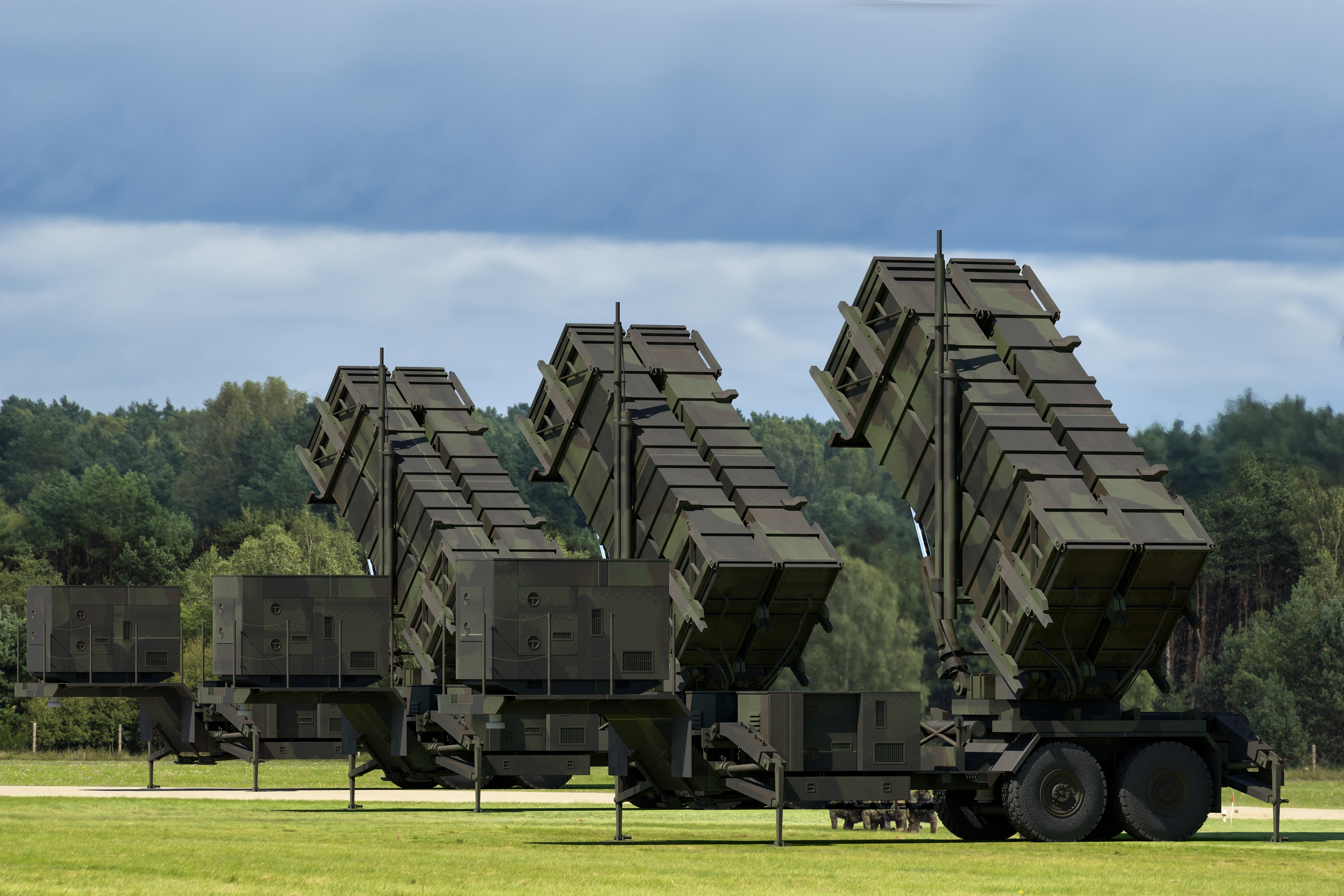
 Greece’s National Security Council (KYSEA) decided on Monday to withdraw the Patriot air defense batteries that had been deployed in northern Greece and on the island of Karpathos, in the context of the threats posed by the US-Israel conflict with Iran.
The Patriot Mission Deemed Complete
The mission was considered finished once it was assessed that the threat from Tehran and its regional allies had subsided. The batteries had been stationed in northern Greece to support Bulgaria’s air defenses, and in Karpathos to guard against potential threats to the Souda Bay naval base in Crete. Their deployment had no connection whatsoever to Greek-Turkish relations.
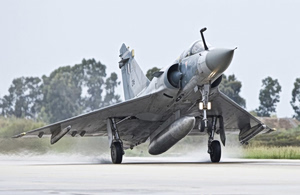
Following the withdrawal from Karpathos, a pair of fighter jets is set to be stationed on the island as a permanent security measure. A similar arrangement is planned for the Republic of Cyprus, following the completion of the mission carried out by two pairs of F-16s, which had likewise been deployed in response to the Iranian threat.
The withdrawal was reported by Turkish media.
According to information obtained by in.gr, Ankara raised objections within NATO over the deployment of Patriot batteries in both Karpathos and northern Greece. Those objections were not accepted, however, as the decisions had been made within the framework of alliance planning considered to serve collective interests.
In Athens, some voices have suggested that KYSEA’s decision to end the mission and return the batteries to base was made partly in response to Turkish pressure. Others have framed it as a necessary balancing act in light of Turkey’s forthcoming “Blue Homeland” legislation. Both the military and the Ministry of National Defense have categorically denied any such connection. Some analysts have nonetheless noted that the timing of the withdrawal could have been staggered to avoid any perceived link in the media between the pullout and the “Blue Homeland” bill, so as not to create the wrong impression.
German Patriots Headed to Turkey Under NATO
Meanwhile, Germany announced it will deploy a Patriot battery along with roughly 150 troops to Turkey as part of a NATO mission, aimed at strengthening the alliance’s southeastern flank. According to the Turkish outlet Daily Sabah, the German armed forces plan to form a “strike force” that will operate in close coordination with Turkish forces under NATO’s umbrella. The German deployment is expected to begin in late June and run through September 2026, replacing the American unit currently stationed on Turkish soil. Berlin has emphasized the trilateral cooperation between Germany, Turkey, and the United States.
Everything Seen Through the “Blue Homeland” Lens
In Greece, all of these developments are being interpreted in the shadow of Turkey’s pending “Blue Homeland” bill. No one yet knows how the legislation will be worded, but it is widely expected to escalate tensions in Greek-Turkish relations. Turkish sources have told in.gr that leaks in the Turkish press about the bill’s content have been exaggerated, and that the final text will not include maps or coordinates. Turkey has already communicated its territorial claims through formal letters to the United Nations.
The key question that remains is how far Ankara will go in its effort to embed into a framework law what Turkish sources describe as “basic principles of international law of the sea” into national legislation, and whether the specific language chosen will provoke Athens and trigger a new crisis in relations between the two countries.
Foreign Minister Giorgos Gerapetritis and Deputy Foreign Minister Alexandra Papadopoulou have both stated that Greece cannot make formal judgments until it has seen the final text of the bill, noting that the precise language used will be critical in determining Turkey’s true intentions.
Dendias: Europe Cannot Treat Its Security Architecture as a Marketplace
Defense Minister Nikos Dendias addressed the Turkish pressure issue indirectly on Tuesday at the Europa-Forum Wachau ’26 in the Austrian city of Krems, where he spoke on European security architecture.
Describing Greece’s strategic environment, he said the country operates at the crossroads of three continents, at the intersection of the Eastern Mediterranean, the Aegean, and the Balkans, and faces “threats that are continuous and evolving,” including revisionism, the exploitation of migration, and the persistent challenge to its sovereign rights. “These are not theoretical issues discussed in forums,” he said. “They are daily realities.”
He stressed that Article 42(7) of the EU Treaty, which provides for mutual defense among member states, cannot remain dormant or be activated selectively, warning that strategic ambiguity can become paralysis in moments of crisis. He called for structural solidarity now, rather than reserving it for acute crises alone.
Dendias also took aim at attempts by third parties to exploit Europe’s openness, and indirectly addressed Turkey’s bid to be included in the EU’s SAFE defense fund: “What may begin as a form of cooperation can, over time, become dependence, and if left unchecked, dependence becomes leverage. We have seen this in the energy sector.” He concluded that “Europe cannot treat its security architecture merely as a marketplace. Strategic expediency and economic benefit must not override our principles.”