 Μake us preferred on Google
 Commemorations marking the 107th anniversary of the Genocide of the Pontic Greeks culminated in central Athens on Monday, with participants emphasizing that the memory of the events remains alive more than a century later.
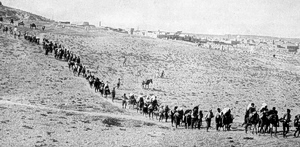
May 19 holds particular significance for Pontic Greeks, as it marks the 1919 landing of Mustafa Kemal in Samsun, an event widely associated in modern Greek historical memory with the beginning of the final and most violent phase of the persecution, displacement and mass killings of Pontic Greek populations in modern-day Turkey’s eastern Black Sea region. Greek sources and commemorative organizations place the death toll at 353,000.
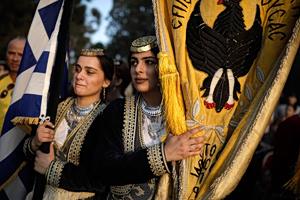
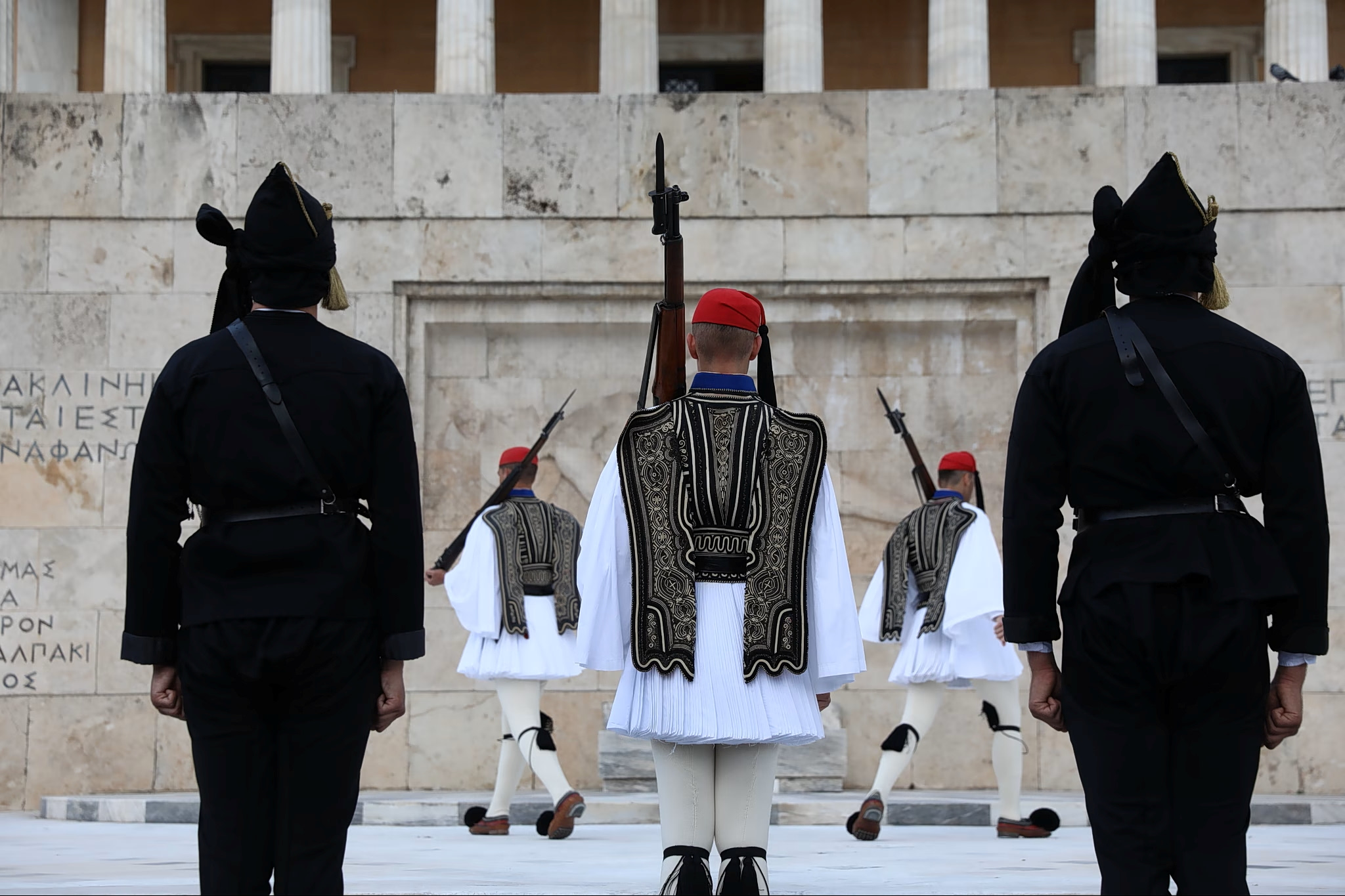
From early evening, Syntagma Square in front of Parliament in Athens filled with members of Pontic associations wearing traditional black attire, alongside people of all ages who gathered to honor ancestors forced into exile and refugee flight during the upheavals of the early 20th century.
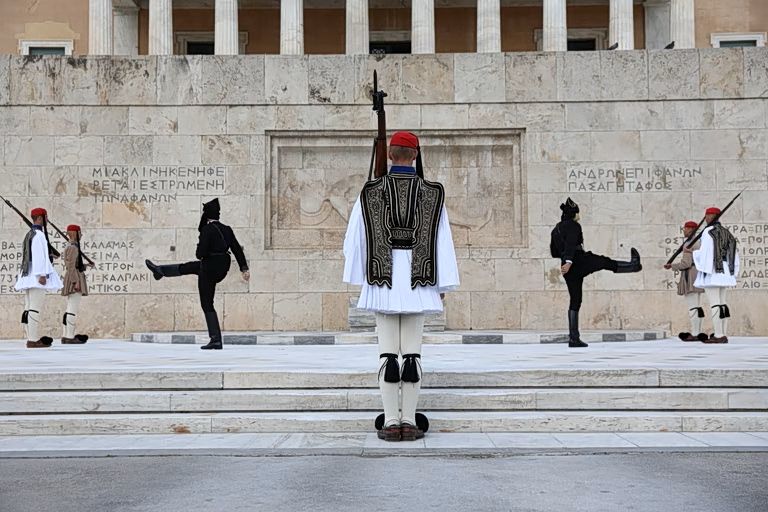
Photo: Danae Davlopoulou / Eurokinissi
The annual memorial ceremony was once again organized by the Pan-Pontian Federation of Greece, which has led commemorative events and public awareness initiatives on the issue for decades.
One of the most symbolic moments unfolded outside the Tomb of the Unknown Soldier, where Presidential Guard Evzones performed the traditional changing of the guard wearing the distinctive Pontic uniform.
Greek Parliament Lit in Tribute
The facade of the Hellenic Parliament was also illuminated with the official genocide emblem, the letter “G.”, as a tribute and expression of mourning for the victims of the atrocious events.
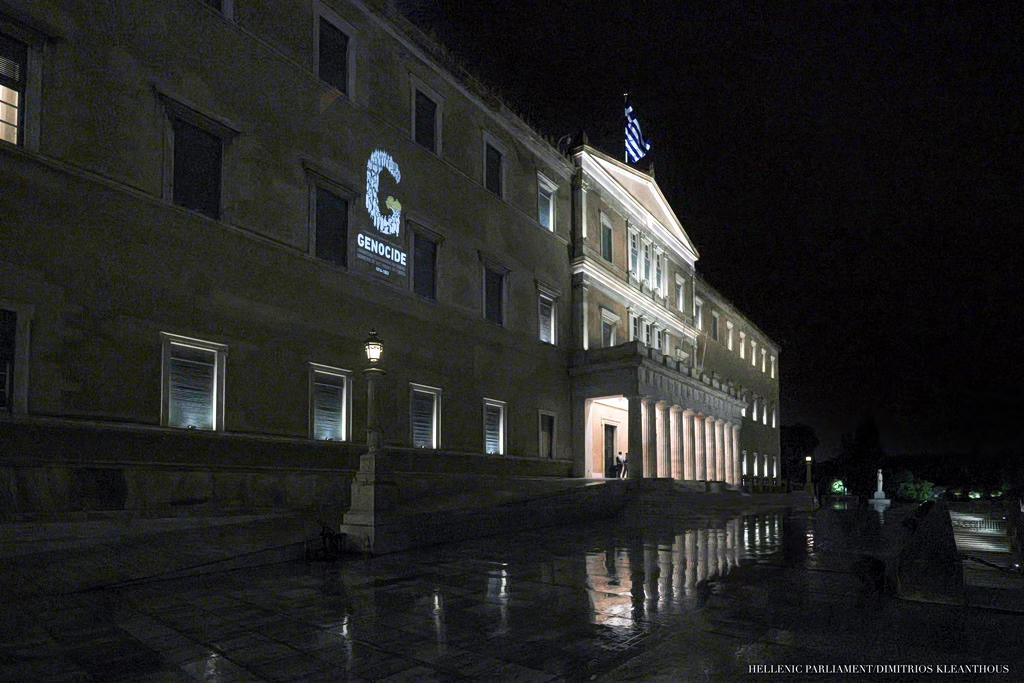
The initiative was implemented following a request by the 475 primary Pontic associations represented by the Pan-Pontian Federation of Greece . In a statement, the federation said: “The illumination of the Greek Parliament with the ‘G’ is a sign of mourning and a minimal tribute of honor. It is a gesture charged with deep emotional significance that touches the hearts of all Greeks.”
Angry Turkish reax
Meanwhile, in a curt reaction to the annual commemoration, Turkey’s foreign ministry issued a same-day response condemning what it called statements made in Greece during the Pontic Genocide remembrance events.
In repeating its annual revisionist denials, Ankara rejected references to genocide as “incompatible with historical facts,” accusing Greece of distorting history and targeting Turkey’s national struggle.
The ministry also accused Greek officials and organizations of “exploiting historical grievances for political purposes”.