 Μake us preferred on Google
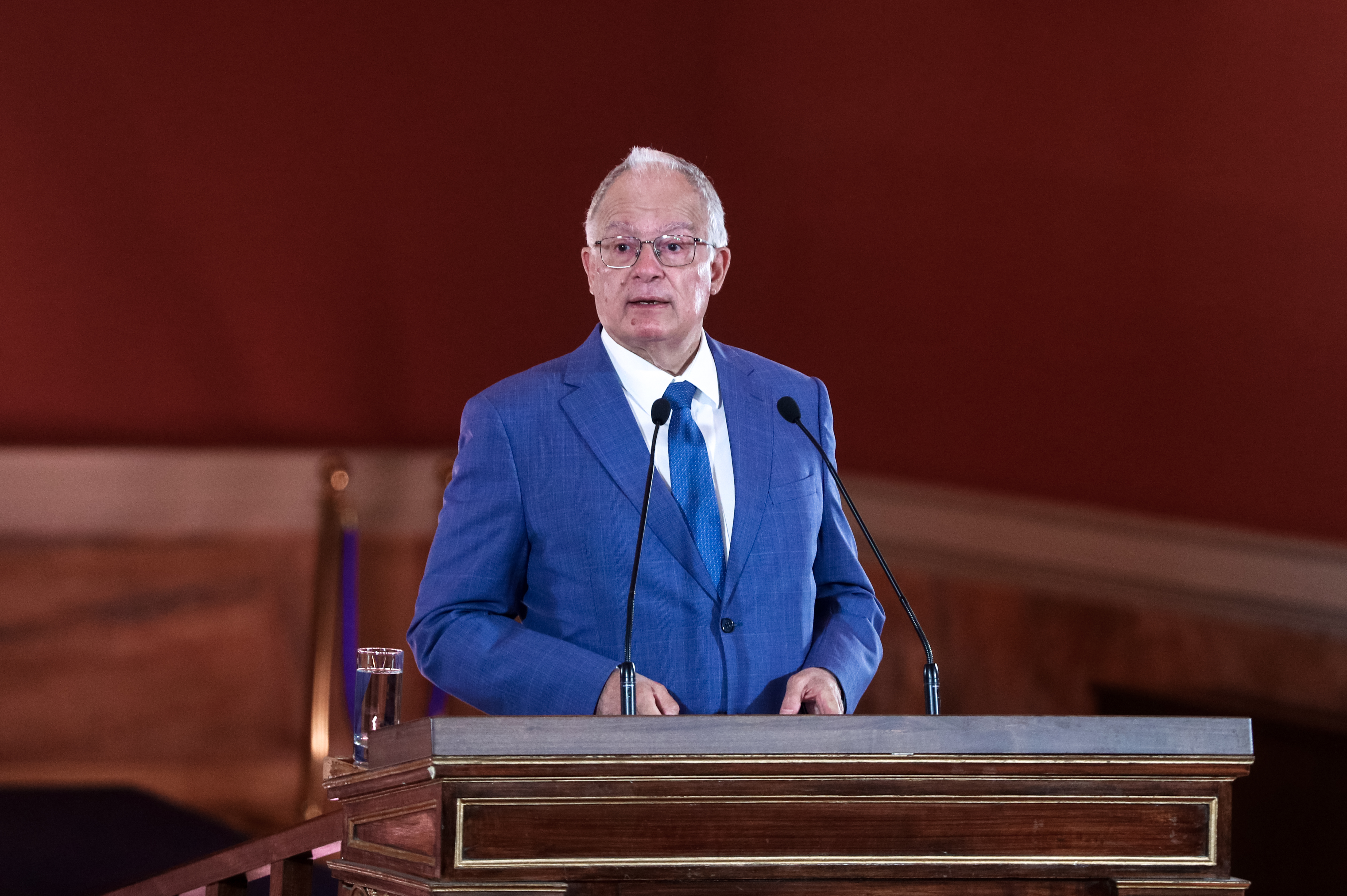
 President of the Republic Konstantinos Tasoulas highlighted Athens as a timeless source of inspiration and a beacon of Western civilization, speaking at To Vima’s conference, “Dialogues for Athens.”
With references to democracy, philosophy, and the arts, he described a city whose influence reached beyond its geographic borders and shaped global thought. He linked this legacy to the responsibility of today’s generations to pass it on to the next in better shape.
The Athenian Apartment Building and Social Cohesion
His reference to the Athenian “polykatoikia,” or apartment building, as a space of social coexistence drew particular interest. According to Tasoulas, the presence of different social classes in the same neighborhood, and even in the same building, helped soften divisions and strengthen social mobility.
He also connected this ability of the city to absorb and bring people together with the resilience of society and democracy during the economic crisis.
The Challenge of Climate Change and the European Outlook
Looking to the future, Tasoulas stressed the need to strengthen the infrastructure of Athens and Attica against rapid climate change, pointing to what happened in the Lasithi regional unit.
He welcomed the two-day conference as a forum for developing proposals on the environment, culture, and urban development, linking the capital’s historical identity with the prospect of a more modern and dynamic European city.
The Influence of Athens on Western Civilization
The influence of Athens on shaping the Western world held a special place in his speech. From Rome, which absorbed the decisive influence of the Greek spirit, to the Renaissance and Raphael’s “The School of Athens,” and from Neoclassicism to modern European thought, Tasoulas described an unbroken dialogue with the city.
As he noted, the pursuit of self-knowledge, moderation, and beauty found its fundamental expressions here, and the West adopted them on its path toward modernity.
The Parthenon and the World’s Intellectual Heritage
At the center of this journey, he placed the Parthenon, the emblem of Athens. He focused in particular on its frieze, highlighting its depiction of the daily life of Athenians as an innovation compared to scenes of war and mythology.
Athens, he stressed, is not just any city. It is the place where the idea of democracy, art, and thought took shape in a way that defined world civilization. That is why humanity returns to the intellectual heritage of Athens whenever it seeks answers about freedom, reason, and social coexistence.
From “Scythian Desolation” to Modern Capital
The President of the Republic did not limit himself to classical Athens, however. He traced the city’s path through periods of prosperity, decline, and revival, recalling the sorrowful description by Byzantine writer Michael Choniates, shortly before Frankish rule arrived in the early 13th century, describing a city that resembled a “Scythian desolation.” Yet Athens survived, preserving its intellectual radiance even in difficult times.
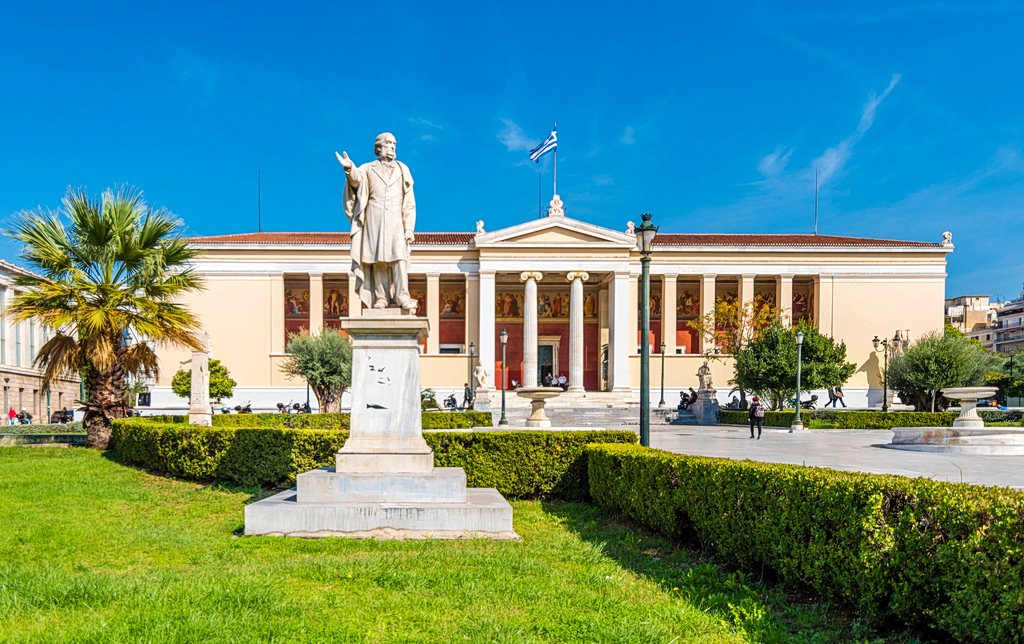
Its designation as the capital in 1834 marked a new beginning. Its neoclassical character, its educational and intellectual institutions, and the contributions of great benefactors reflected the ambitions of the new Greek state. As Tasoulas explained, for the benefactors, Athens symbolized Greece itself and the diaspora’s desire to see the free homeland grow.
Then came the new neighborhoods, the music, and the flavors brought by the refugees of the Asia Minor Catastrophe, the hunger and resistance of the Occupation, and the great wave of internal migration in the postwar decades. Through these successive transformations, Athens became a meeting place for people of different origins, social backgrounds, and political views.
The Duty to the Future
His closing message was one of responsibility. Invoking the oath of young Athenians to hand down their homeland in better condition, as well as the restrained smile of the Kritios Boy, he called on politicians, intellectuals, and scientists to reflect on their own duty to Athens. Its cultural heritage remains alive, but preserving and renewing it is the task of every generation.