 Μake us preferred on Google
 NASA has announced that 99942 Apophis, also known as the “God of Chaos,” an asteroid will pass near earth, approximately 20,000 miles from Earth’s surface on April 13, 2029, closer even than many satellites in geostationary orbit. Scientists at both NASA and the European Space Agency (ESA) have confirmed there is zero risk of impact, but the flyby is considered an exceptionally rare and scientifically significant event.
Watching the phenomenon won’t necessarily require a telescope. Under clear, dark skies, Apophis will be visible to the naked eye from parts of Europe, Africa, and Asia. NASA notes that it will be observable from the Eastern Hemisphere, weather permitting.
A Once-in-a-Generation Sky Show
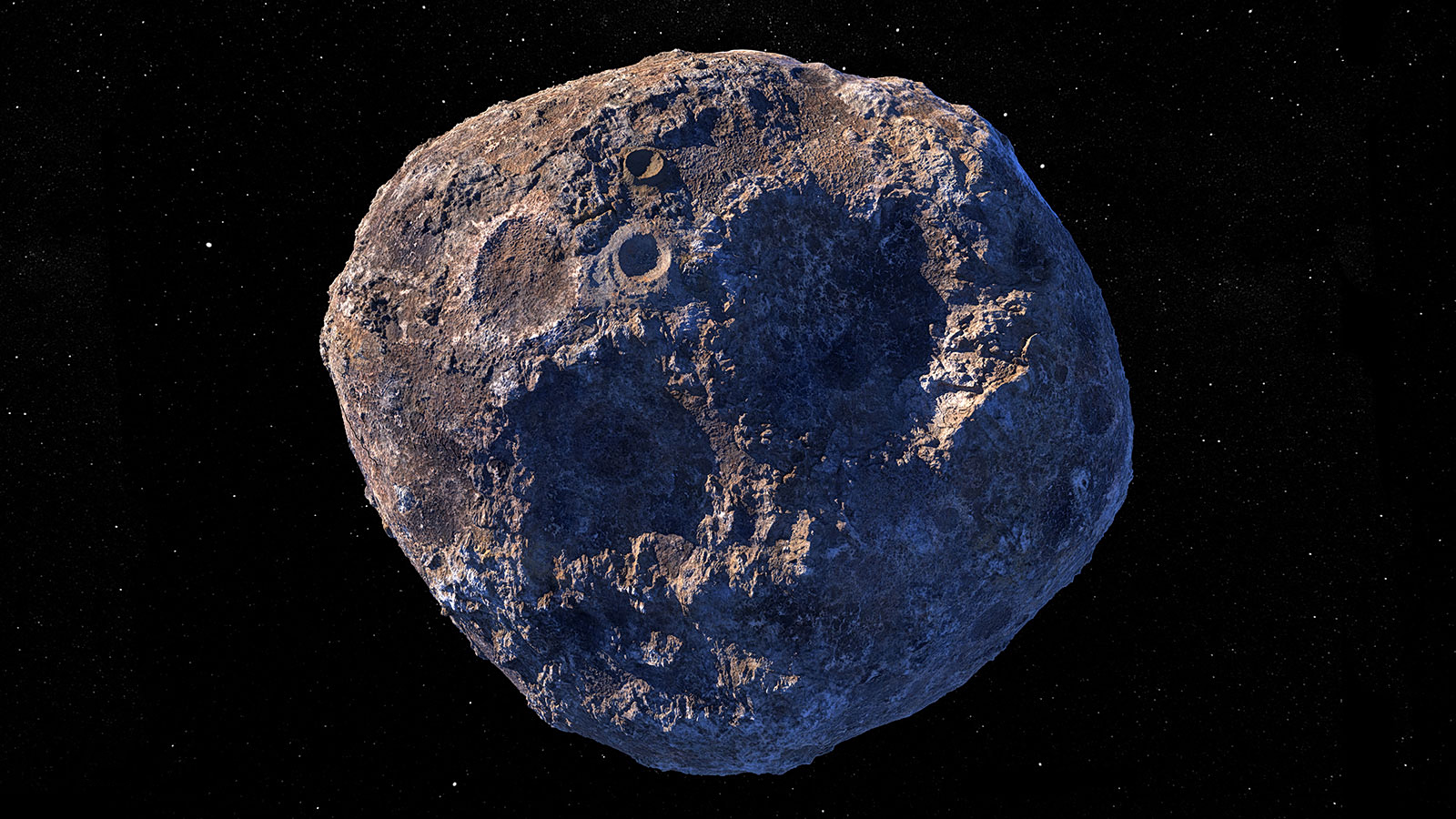
Apophis is no small rock. NASA estimates its average diameter at 340 meters, with its longest dimension reaching 450 meters, roughly the length of four American football fields. It will move quickly across the sky, appearing more like a faint moving dot of light than a stationary star.
For the best view, a dark horizon well away from city lights is recommended, as even modest light pollution can significantly reduce visibility.
From Fear to Scientific Certainty
When Apophis was first discovered in 2004, initial calculations suggested a small probability of impact in years such as 2029, 2036, or 2068. Those estimates were quickly ruled out, but the asteroid’s name remained tied to the early alarm it triggered.
The ESA announced that radio observations conducted in March 2021 refined its orbital data so precisely that any possibility of impact was ruled out for at least a century, removing Apophis from the agency’s risk list. NASA confirms there is no threat to Earth for at least 100 years.
Earth’s Gravity as a Natural Laboratory
Scientists are not drawn to this event out of concern, but out of opportunity. NASA and ESA expect Earth’s gravitational pull to alter both Apophis’s orbit and its rotation during the flyby, potentially triggering minor landslides or seismic tremors on its surface.
The two agencies also anticipate that its orbit will widen, shifting it from the Aten asteroid group to the Apollo group, a natural “nudge” from Earth that will allow scientists to study gravitational effects on a rocky body in real time.
The ESA’s Ramses Mission
The ESA is moving forward with the Rapid Apophis Mission for Space Safety, known as Ramses, which aims to rendezvous with Apophis before the flyby and document changes before, during, and after the gravitational encounter.
On February 10, 2026, ESA signed an 81.2-million-euro contract with OHB Italia, bringing the total mission value to approximately 150 million euros. The plan calls for a launch in April 2028 and arrival in February 2029, two months ahead of the close approach.
NASA’s OSIRIS-APEX Mission
NASA’s OSIRIS-APEX mission, an extension of OSIRIS-REx which returned samples from asteroid Bennu in 2023, has a scheduled rendezvous with Apophis in June 2029. Unlike Ramses, it will study the asteroid after its Earth flyby.
The spacecraft is already en route, having performed a gravity assist maneuver on September 23, 2025, at a distance of roughly 2,100 miles from Earth. NASA plans to bring it close to Apophis’s surface to trigger the ejection of dust and rock material for further analysis.
Private Missions and International Collaborations
Beyond government agencies, the private company ExLabs, in partnership with the Chiba Institute of Technology in Japan, is planning to deploy two small landers on Apophis during the 2029 approach. ExLabs notes that the mission is supported by a collaboration with NASA’s Jet Propulsion Laboratory for design and operational planning, with the goal of collecting valuable surface data.
What This Means for Earth
While Apophis poses no threat, scientists are quick to point out that asteroids have shaped Earth’s past and its ecosystems. NASA’s planetary defense team describes asteroid impacts as “the only natural disaster that can be prevented.”
The data collected in 2029 is expected to improve orbital prediction models and strengthen preparations for potential deflection missions, should a genuinely dangerous object ever be identified in the future.
More observation guides will be published as the spectacular flyby approaches, which NASA describes as a rare chance to watch science unfold before our very eyes.