 Μake us preferred on Google
 The major religious feast of the Dormition of the Theotokos, commemorating the repose, or “falling asleep,” of the Virgin Mary, is celebrated throughout Greece today, Saturday, Aug. 15, coinciding with the peak of the country’s summer holiday season and the annual mass exodus from the cities to the islands, coastal destinations and mainland Greece.
Known in Greek as the Κοίμηση της Θεοτόκου (KI-misi tis Theo-TO-kou), or Dormition of the Theotokos, the feast is one of the major celebrations of the Orthodox Church. It commemorates Mary’s repose and her translation into heavenly life. Orthodox liturgical tradition refers to her as “our Most Holy Lady the Theotokos and Ever-Virgin Mary.”
View this post on Instagram
The term Theotokos, meaning “God-bearer” and conventionally rendered in English as “Mother of God,” is among the most prominent expressions of Orthodox devotion to the Virgin Mary. It is rooted in the Church’s theological understanding of Mary as the mother of Jesus Christ and is embedded throughout Orthodox liturgy and hymnography. The feast’s principal troparion describes her as having “passed into life as the Mother of Life,” reflecting the Orthodox understanding of her passage through death to eternal life.
The Dormition is observed every year on Aug. 15 following a two-week fast that begins Aug. 1. In Greece, the religious observance is also a public holiday and has become inseparable from the rhythm of the country’s summer, with cities emptying as residents and visitors leave for island and mainland destinations.
By mid-August, the exodus is particularly visible in the greater Athens-Piraeus agglomeration and other large cities. Major roads, airports and ports experience some of the heaviest passenger traffic of the summer, while ferry services from Piraeus, Rafina and Lavrio serving the greater Athens area operate at or near capacity as travelers head toward the Aegean islands and other coastal destinations.
Aug. 15 traditionally marks the point at which Greece’s summer vacation period reaches its peak, when the country’s urban centers are at their quietest and the movement of residents toward the coast, islands and mainland countryside is at its most pronounced.
The transformation of Athens is particularly striking on the day itself. Streets that are normally crowded with commuters and traffic become markedly quieter, while many businesses remain closed for the public holiday. Thousands of residents who have not already left the capital make their way toward the islands, mainland seaside resorts and villages, reinforcing the impression of a city temporarily on pause.
The holiday also has a strong pilgrimage dimension. Across the eastern Mediterranean nation, churches and monasteries dedicated to the Panagia, the “All-Holy One,” another widely used Greek term for the Virgin Mary, attract worshippers for services, processions and local religious celebrations. Some of the country’s best-known Aug. 15 observances combine Orthodox worship with traditional village festivals, making the Dormition both a major ecclesiastical celebration and a defining feature of the Greek summer.
I would add it after the paragraph on the Panagia and local celebrations. Tinos and Soumela give the piece two particularly strong examples of how the Dormition is experienced as both pilgrimage and cultural memory.
One factual nuance: for international readers, I would identify Soumela as the historic monastery in Trabzon province, northeastern Turkey, rather than simply “Soumela,” and make clear that the Greek Orthodox pilgrimage tradition there is commemorated through events in the wider region and in Greece. The principal Dormition pilgrimage on Tinos is centered on the Church of Panagia Evangelistria.
Tinos
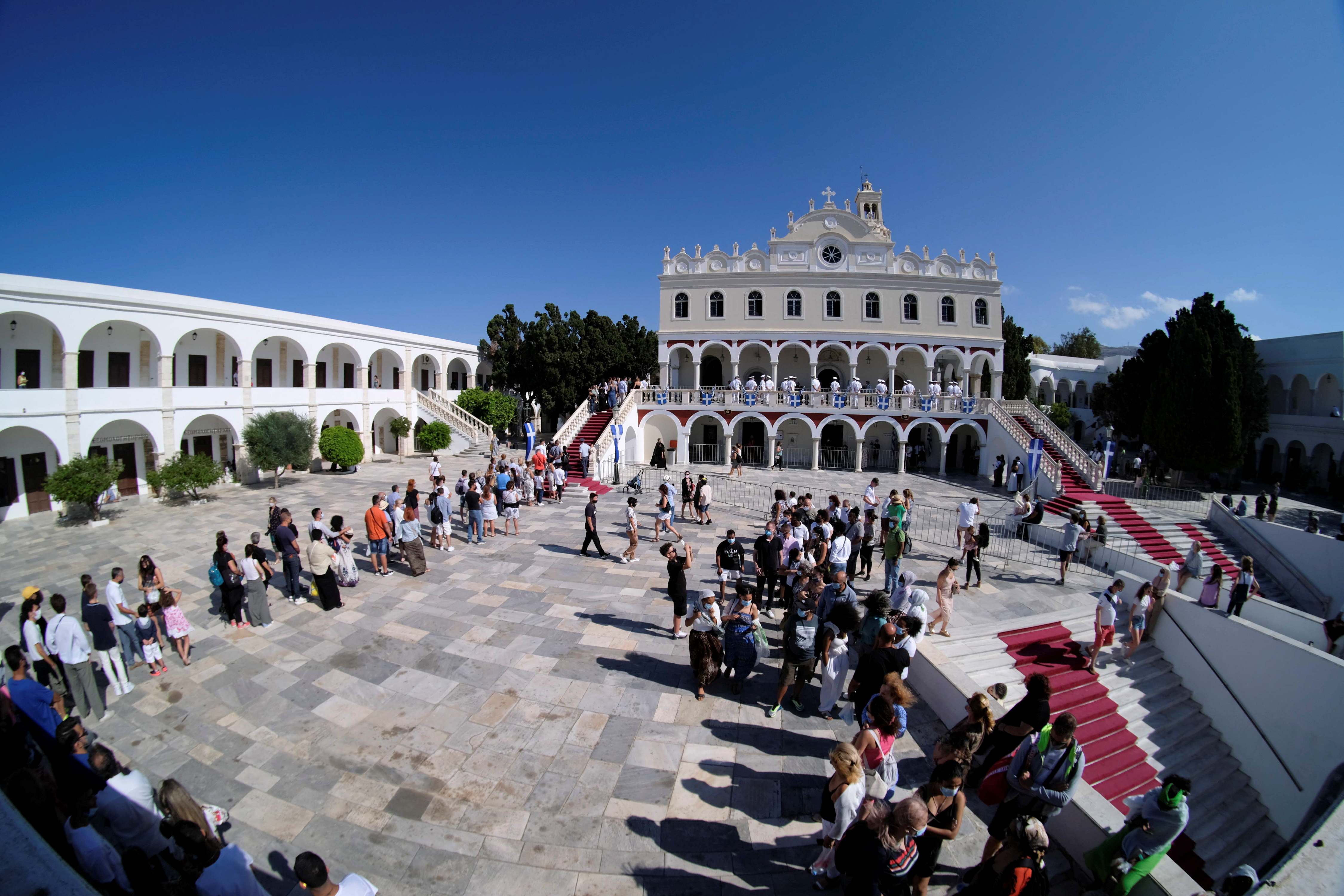
Two of the most emblematic centers of Dormition observance are associated with distinct strands of Greek Orthodox pilgrimage tradition. On the Cycladic island of Tinos, the Church of Panagia Evangelistria, home to an icon of the Virgin Mary regarded as miraculous by Orthodox believers, draws large numbers of pilgrims for the Aug. 15 feast. Many make the final approach to the church on their knees as an act of devotion, while the island’s religious celebrations are closely intertwined with its identity as one of Greece’s foremost pilgrimage destinations.

Soumela
The feast also carries particular historical significance for Soumela, the famed Greek Orthodox monastery dedicated to the Panagia on Mount Melá in the Pontic Alps near Trabzon in modern-day northeast Turkey’s Black Sea area. The monastery, founded according to tradition in the 4th century and historically associated with the Greek Orthodox population of Pontus, remains an important symbol of Pontic Greek religious and cultural heritage.

Pontic Greeks honor their beloved “Panagia Soumela” icon with a pilgrimage and procession on August 15 at the contemporary Panagia Soumela Monastery on Mount Vermio, in northern Greece. Photo: ANA-MPA /PIXEL/Michalis Pappous
The religious tradition surrounding the Dormition is considerably older than the modern holiday customs associated with Aug. 15. According to the tradition received by the Orthodox Church, Mary was informed of her approaching death and went to the Mount of Olives to pray and prepare herself.
For Greece, however, Aug. 15 is not only a day of religious observance. It represents the point at which the country’s summer calendar, shaped by Orthodox tradition, seasonal travel and the annual vacation cycle, reaches its fullest expression.
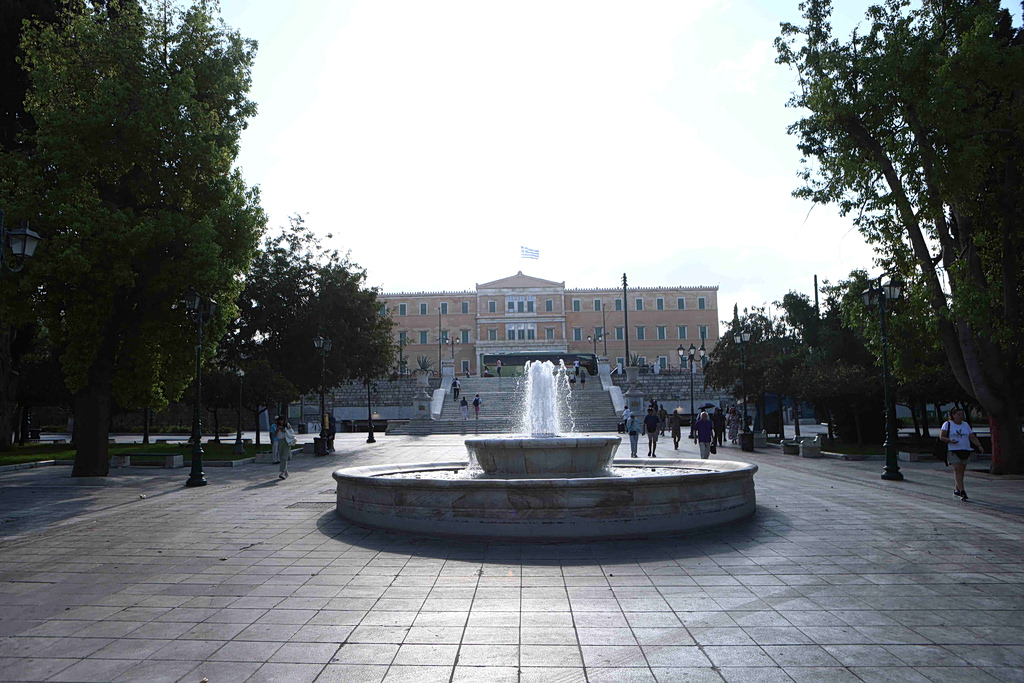
Α view of a mostly empty Syntagma Square in central Athens on Saturday, Aug. 15, 2026. The day coincides with the annual feast day of the Dormition of the Virgin Mary. The Parliament building is seen in the background. InTime.
The pause is less complete for those responsible for keeping the country functioning during the height of summer. Firefighters, first responders, coast guard personnel, transport workers and civil protection authorities remain on duty as Greece enters one of the busiest periods of the year.
That contrast — between cities emptied for the holiday and personnel remaining at their posts — has become a familiar feature of the Greek August.