 Μake us preferred on Google
 Teen fashion retailer Brandy Melville has shut all of its fitting rooms across stores in the United Kingdom, the United States, and Canada, prompting disappointment from customers who have taken to social media to express their frustration, according to reporting by Chloe Mac Donnell in The Guardian.
The closures come amid a broader trend in retail toward eliminating try-on spaces. In the UK, Sainsbury’s permanently removed all fitting rooms in 2025, citing the need to simplify in-store operations. In the United States, charity retail chain Goodwill Industries had already phased out its own changing rooms in 2023, pointing instead to escalating staffing costs.
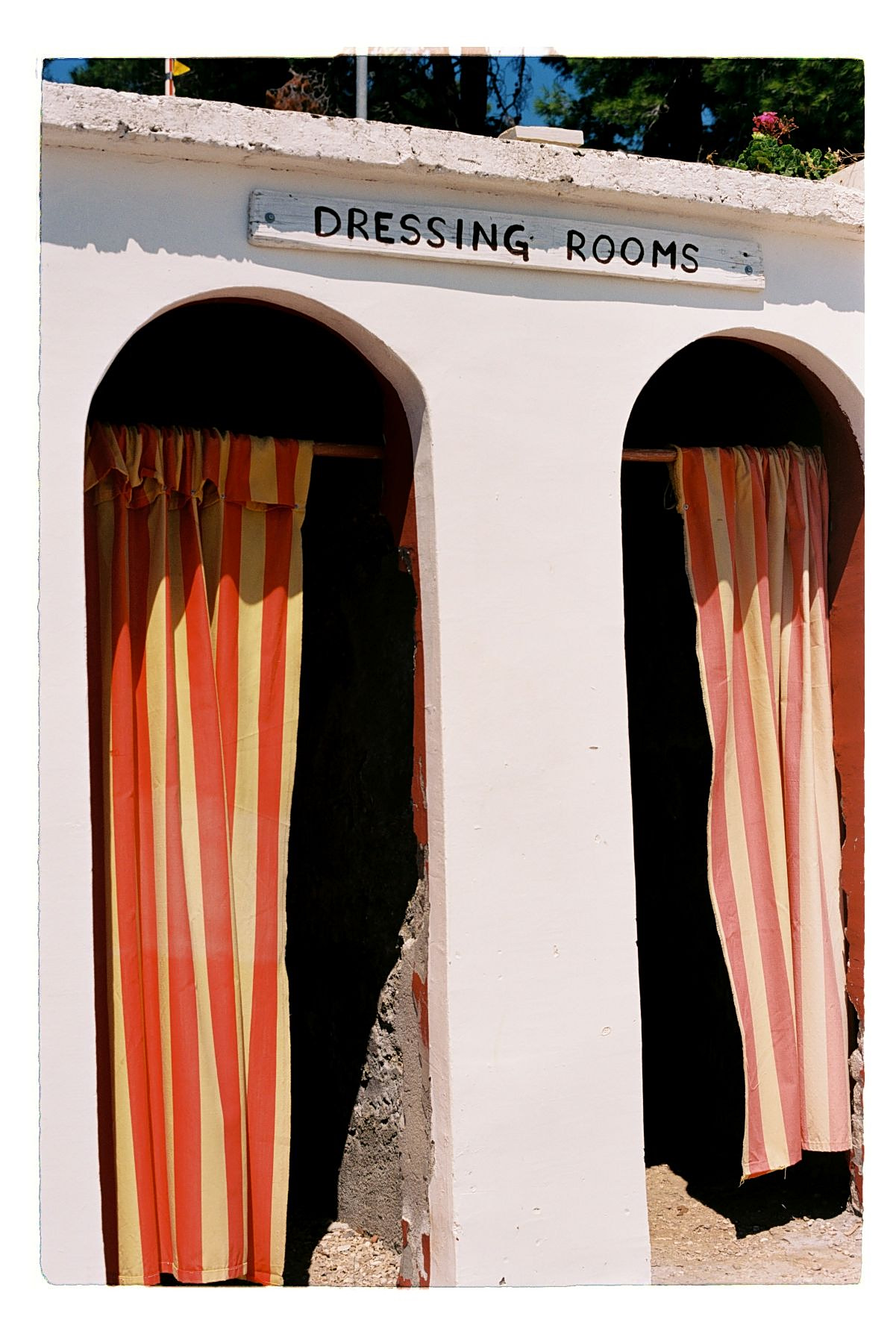
Unlike those cases, Brandy Melville has not publicly confirmed the reasons behind its decision. Online speculation, however, has filled the gap: some employees reportedly link the move to rising theft, while others point to a more unusual phenomenon dubbed the “gum issue” — a TikTok-fuelled trend in which shoppers allegedly use chewing gum to keep thin curtain panels closed, preserving privacy inside the booths.
The episode reflects how even the most mundane retail spaces have become entangled in social media behaviour, where store infrastructure can be repurposed in ways brands do not anticipate.
Beyond logistics and loss prevention, the decision has also reopened a more subjective debate about the role of fitting rooms themselves. In an era dominated by filters, curated images, and algorithmic self-presentation, the changing room remains one of the last places where clothing meets unedited reflection.
Yet, as any shopper knows, that reflection is far from neutral. Harsh lighting, unforgiving mirrors, and unfamiliar angles can transform a simple garment into a psychological test. The result is often less about the clothes than about perception — a private negotiation between body, fabric, and fluorescent light.
Still, some argue that buying without trying on is not as dramatic as it sounds. The more uncomfortable truth, they suggest, is that fitting-room mirrors have always functioned as a kind of social experiment — one that reveals as much about mood, posture, and expectation as it does about appearance.
In that sense, whether in-store or at home, the “truth” of the mirror may be less a fixed judgment than a shifting perspective shaped by context, light, and self-perception.