 Μake us preferred on Google
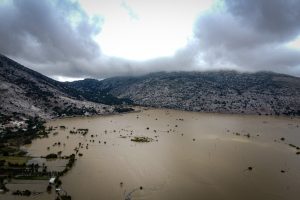
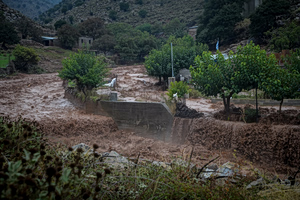
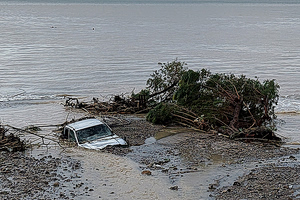
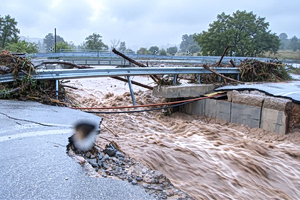
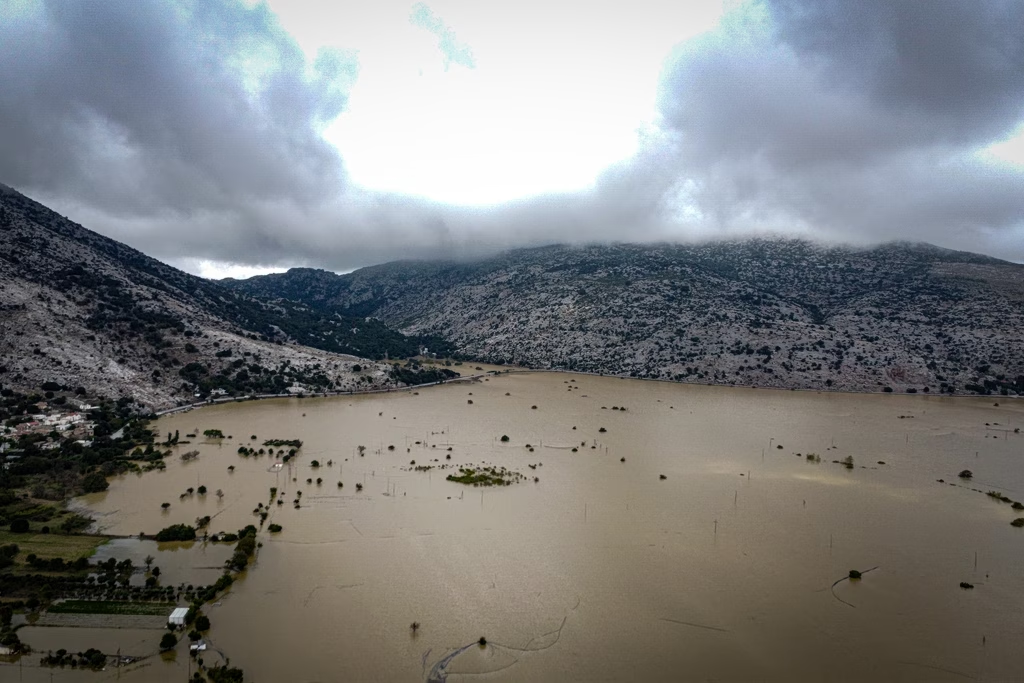
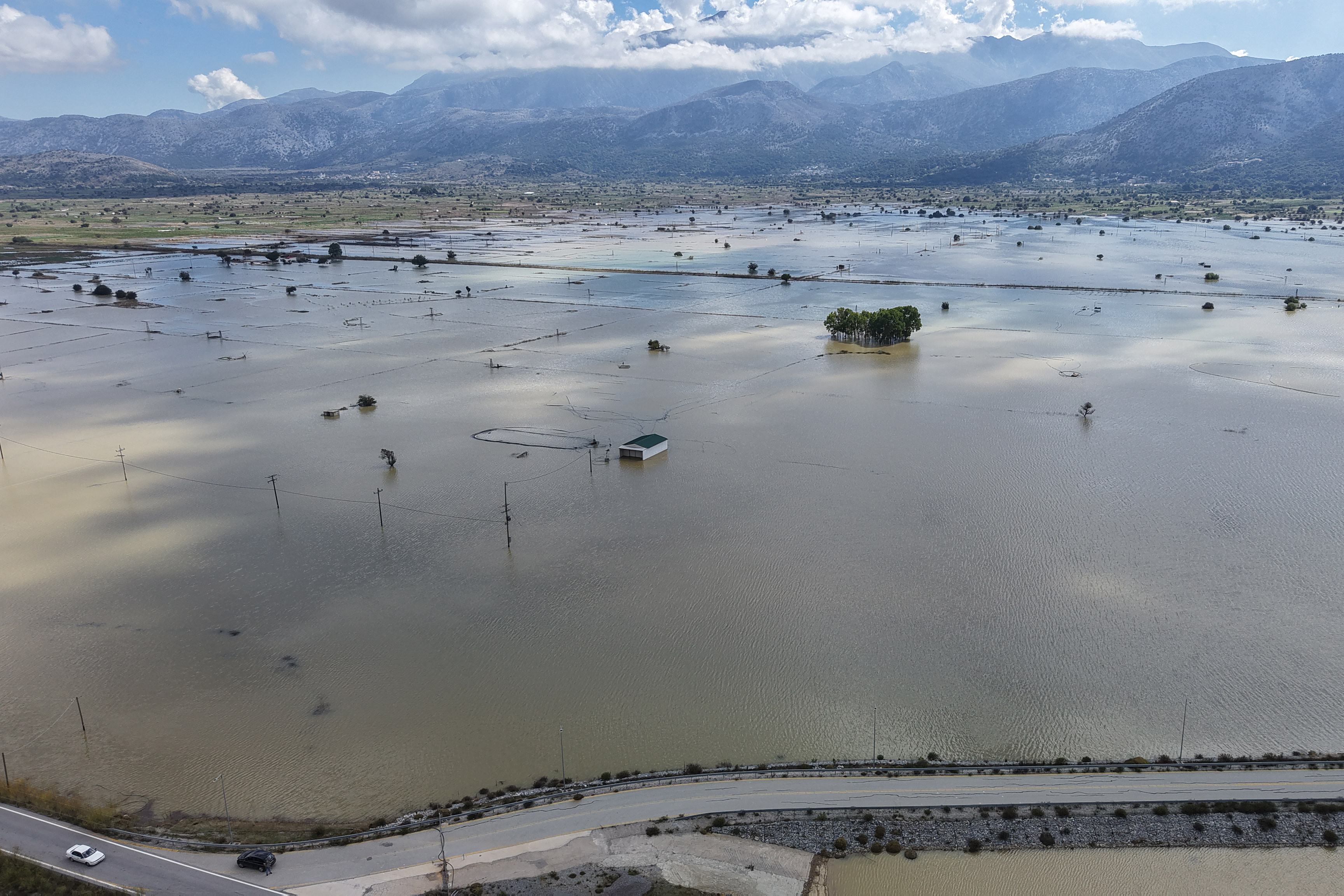
Twenty days after the first bout of severe weather and five days after the second, farmers on Crete’s Lasithi Plateau are looking in despair at their flooded fields. The two storms, separated by an eight-day break, caused the Agios Georgios and Havgas rivers to overflow, along with a reservoir in the area.
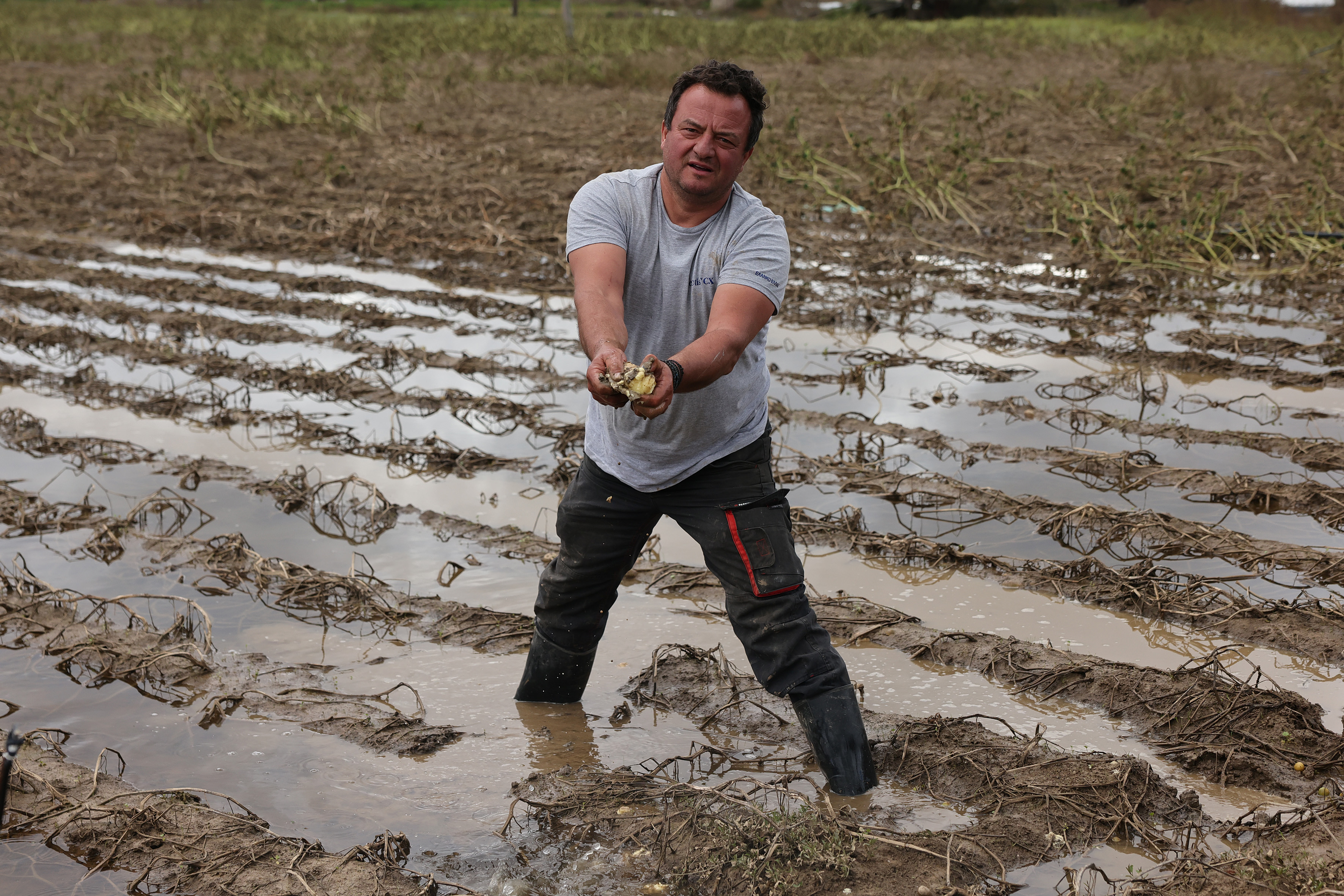
Crops across the plateau were submerged. Manolis Krasanakis, director of the Lasithi Plateau Agricultural Cooperative, told in.gr that between 60% and 70% of crops had been rendered unusable.
“We’re a swamp,” he said, describing conditions in the area.
“The situation is very straightforward: We cultivate from mid-April so that we can harvest in September and October. This year, the entire schedule changed. Because of heavy rainfall last April and May, we were late planting the crops and started in June. We expected to begin harvesting in October. In the end, we lost the entire season because of the way the weather turned out,” Krasanakis said.
Potatoes, vegetables and other produce are grown on the Lasithi Plateau.
Following the storms, the cooperative received 280 applications from farmers reporting the total destruction of crops across 1,310 acres.
Extreme Weather With Two Very Different Consequences
Kostas Lagouvardos, research director at the National Observatory of Athens and head of its METEO weather service, described the extremely difficult conditions that developed in the area.
“On Sept. 30, we had the first spell of severe weather, which, as we have noted, was wrongly not given a name and which affected a very large part of Crete: Mylopotamos, Chania, Rethymno and, of course, hit the Lasithi Plateau extremely hard.”
Rainfall totals on the Lasithi Plateau were particularly high.
On Sept. 30, 40.6 millimeters of rain fell. That was followed by 231 millimeters on Oct. 1, 107.2 millimeters on Oct. 2, 35.6 millimeters on Oct. 3 and 33.4 millimeters on Oct. 4.
“This is an exceptionally large amount of rainfall over a five-day period, and it led to the flooding of the plateau,” Lagouvardos said.
Eight rain-free days followed, but the plateau did not have enough time to dry out. Another 81 millimeters of rain fell on Oct. 13, 14 and 15 during the next bout of severe weather.
“This amount would not have concerned us if the first phase of the severe weather had not preceded it. The situation deteriorated dramatically after the second round of rainfall,” the METEO chief said.
According to Lagouvardos, nearly 530 millimeters of rain over 18 days constitutes extreme weather behavior and an exceptionally high cumulative rainfall total.
Yet the heavy rainfall over the Lasithi Plateau also resolved, for an extended period, the water shortage affecting many parts of Crete.
Following the downpours, the Aposelemis Dam, about 20 kilometers from the Lasithi Plateau, exceeded 85% capacity, with water reserves surpassing 20.3 million cubic meters. The reservoir gained 11 million cubic meters, bringing its total reserves to more than 20.3 million cubic meters.
As a result, the water supply for the municipalities of Heraklion, Hersonissos and Agios Nikolaos has been secured through 2030.
“We are flooding while everyone else is solving their water shortage problem, but we receive no compensatory benefits from the Aposelemis Dam,” residents said, describing how they feel about the major infrastructure project neighboring the plateau.
Infrastructure Problems
For farmers and residents of the Lasithi Plateau, a key reason the area flooded was that one of the dam system’s sluice gates, at the site known as Chonos, was opened two days after the first and most severe storm began. They say the time lost was critical.
“The water had nowhere to go. The sluice gate was opened two days late because of a faulty valve. By the time the replacement part arrived and the damage was repaired, we had lost two days,” Krasanakis said.
Manolis Paterakis, president of the Lasithi Plateau Agricultural Association, said a technical problem also occurred in the artificial tunnel that carries rainwater from the plateau to the Aposelemis Dam.
“There was a problem with a valve, an issue that had also emerged last April, when the area flooded again,” he said.
For residents, the main problem is that when the artificial tunnel cannot immediately handle the enormous volume of water generated by intense rainfall, the Lasithi Plateau is vulnerable to flooding.
According to Paterakis, the Agios Georgios reservoir project also remains incomplete because the accompanying irrigation networks designed to distribute water to crops have yet to be completed.
Local municipalities have for years pressed for permanent solutions and additional infrastructure projects to protect the area’s crops and infrastructure.
In any case, the plateau is particularly vulnerable to heavy rainfall. Major destructive floods have repeatedly been recorded in the past, including in 2019, 2015 and 2003, making flooding a longstanding problem for local agricultural production. Flooding also caused damage last spring.
“Geologically, the area is like a depression. It has flooded on other occasions in the past,” Kostas Voudouris, a hydrogeologist and professor at Aristotle University of Thessaloniki, told in.gr.
“The plateau’s drainage network needs improvement and maintenance,” he said. “There also needs to be serious flood protection, especially in the era of climate change we are already experiencing, when very high rainfall totals are appearing increasingly frequently through extreme weather events.”
Crete Development Organization: ‘Primarily a Drainage Project’
Disagreements between residents and employees of the Organization for the Development of Crete S.A. OAKAE, which manages the dam, over its sluice gates — including whether they are opened in time or are not operating properly — are frequent.
Employees insist the infrastructure operates within safety limits despite the pressure created by severe weather.
Amid intense criticism over the operation of the Aposelemis Dam system on the Lasithi Plateau, which farmers and residents say contributed to the flooding of the agricultural plain, OAKAE employees issued a statement on Oct. 19.
“Recently, we feel that we have been targeted by numerous ‘keyboard’ critics who, without any knowledge of the technical limitations and operating procedures of such a complex and important project, do not hesitate to make unfounded accusations and recommendations which, had we followed them, would have placed the facility at very great risk — something that must, under all circumstances, remain our fundamental and overriding concern,” the statement said.
“According to models and calculations, the Lasithi Plateau hydrological basin received more than 58 million cubic meters of water from precipitation within four days, with at least 17.5 million cubic meters of runoff inundating the plateau. As a result, the ground became saturated, the plateau’s reservoirs filled, and enormous quantities of water rushed toward Chonos and the energy dissipation structure, or tunnel.
“Such a difficult situation was managed with the safety of the project itself and the fastest possible drainage of the plateau as the guiding priorities, while all operating protocols for the facility were followed at all times.
“OAKAE personnel made every possible effort to support the operational planning during those difficult days, and it should at the very least be acknowledged that they know very well what a ‘sluice gate,’ ‘control valve,’ ‘valve,’ ‘tunnel’ and so on actually are.
“We therefore reject all these unfounded accusations of delays, poor handling and inadequate equipment maintenance allegedly leading to the destruction of crops on the Lasithi Plateau, making clear that in every respect we were dealing with a genuinely unprecedented phenomenon in terms of both its scale and duration.
“We reject any allegation that ‘the flooding was caused by the Aposelemis Dam works,’ given that these works were designed primarily for drainage and only secondarily for flood protection.”
In any event, those for whom there appears to be no protection plan comparable to the protocols safeguarding the dam are the farmers of the Lasithi Plateau.
They are waiting to be informed this week about how and when they will receive compensation covering 100% of the value of their lost production, as the government has promised.
Until the next flood.