 Μake us preferred on Google
 Another round of unsettled weather is affecting Greece on Saturday, with local rain in Evia (Euboea), eastern central Greece and the Cyclades, while Crete and the Dodecanese islands face thunderstorms.
The most intense conditions are expected through the evening in northern, mountainous and semi-mountainous parts of Crete. After the afternoon, storms are also expected to affect parts of the Dodecanese, particularly Rhodes.
The new weather system comes as Crete continues to deal with the effects of severe storms earlier in the week, which caused flooding, landslides and damage to roads and other infrastructure, while one person died. The municipality of Mylopotamos has been placed under a state of emergency, and authorities remain on heightened alert as further heavy rain moves across the island.
The risk is heightened by already saturated ground and damaged infrastructure, particularly in areas that experienced heavy rainfall earlier in the week. Residents in affected areas have been urged to exercise caution and avoid locations vulnerable to flooding, landslides and rapidly rising water levels.
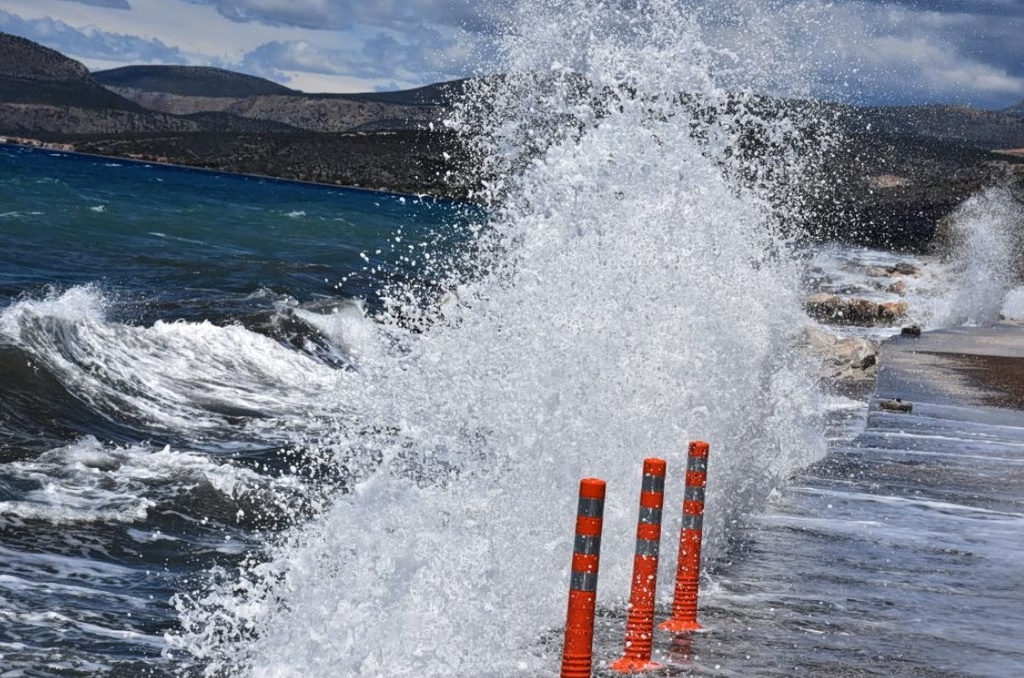
Strong northerly winds will continue to affect the Aegean, reaching 6-7 Beaufort and locally gale-force 8 Beaufort in the central and southern Aegean. Gusts could reach 90 kph, although winds are expected to gradually weaken. The strong winds have also disrupted ferry services and created problems for connections between mainland ports and the islands.
Temperatures will fall slightly across much of the country.
In Attica, which hosts the greater Athens-Piraeus area, temporarily increased cloud cover is expected in northern and eastern areas, with a possibility of localized morning rain in mountainous districts. Temperatures will range from 15 C to 21C, with readings 3-4 degrees lower in northern areas. Northerly winds will reach 6 Beaufort and locally near-gale-force 7 Beaufort in eastern Attica, with gusts of 80-90 kph, before easing after the afternoon.
The unsettled weather is expected to continue into Sunday, with Crete and parts of the southern Aegean remaining the areas of greatest concern as another period of heavy rain and thunderstorms moves through the region.