 Μake us preferred on Google
 A Greek man has been found guilty of murdering Jean Hanlon, a Scottish woman whose body was recovered from the sea off Heraklion, Crete, in March 2009, closing a case that her family fought for more than 15 years to reopen.
A court in Lasithi, in eastern Crete, made up of professional judges and lay jurors, unanimously found the 55-year-old man guilty of murder with diminished responsibility and sentenced him to 10 years in prison. Under Greek law, he cannot be named until the legal process, including any appeal, is complete. He will not begin serving the sentence until his appeal is heard, and the court ordered that he be monitored monthly by a psychiatric clinic at the Heraklion general hospital, with reports sent to the Lasithi prosecutor’s office.
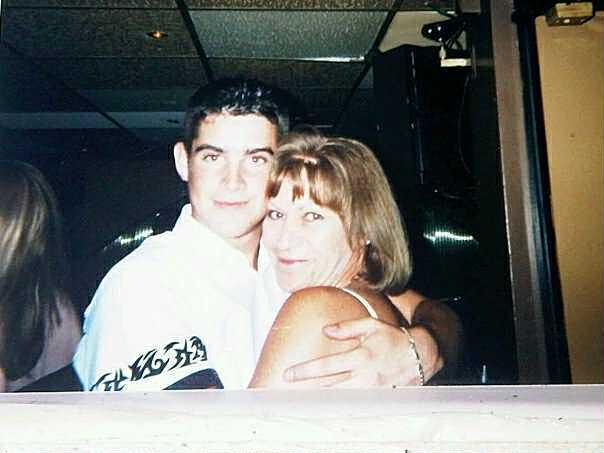
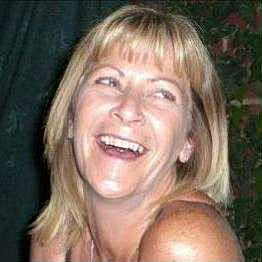
Hanlon, 53 at the time of her death and a mother of three from Dumfries, Scotland, had settled in the village of Kato Gouves, about 12 miles from Heraklion, where she worked in local bars and tavernas. She was last seen with a man at the Marina Cafe in Heraklion. Her body was found on March 13, 2009, four days after she was reported missing.
Greek authorities initially ruled her death an accidental drowning. Her family rejected that finding and pressed for the case to be reinvestigated. A later report concluded her injuries pointed to a physical struggle, and in 2023 the family commissioned a private investigator whose findings, handed to the authorities, led to the identification of a suspect.
The court heard that the man had been in a brief relationship with Hanlon at the start of 2009 and that, after she ended it, he began stalking her. Prosecutors argued he was with her the night she died and that he killed her. No physical evidence tied the man to Hanlon on the night in question. The court convicted him regardless.
The panel accepted that the man had diminished responsibility because of psychiatric conditions. The court heard he had been diagnosed with schizophrenia and bipolar disorder and took daily medication. His sister told the court that without his medication he turned aggressive, and prosecutors argued he had not been taking it during his relationship with Hanlon.
Forensic pathologist Elena Krantoni, who became involved in the case in 2019, told the court she had reviewed the post-mortem reports and photographic evidence without examining the body. Krantoni testified that the cause of death was a partial tear of the brain stem. The most probable explanation, she said, was a heavy strike to the back of the neck delivered with a blunt object, an injury pattern she said a fall could not account for. She testified that Hanlon appeared to have been put into the water rather than thrown, and was probably still alive at that point.
Hanlon’s three sons traveled from Scotland to Crete for the trial. Her eldest son, Robert Porter, told the court his mother had kept a diary in which the accused was named, describing what he called a steady relationship that she had ended politely, after which the man continued to bully her. Her middle son, Michael Porter, testified that his mother had tried to cut off all contact, but that the man kept turning up at her home and workplace, following her and asking for money.
The diary had been central to the family’s long campaign. In an earlier interview with To Vima, before the trial, Michael Porter described reading his mother’s private journal as an invasion of her privacy that nonetheless became the most powerful evidence in the case, saying her own words led them to the suspect. He also recalled the trauma the original drowning ruling caused, noting that his mother had been terrified of water.
The case reached trial after the Heraklion Misdemeanors Council rejected the accident ruling and referred it for prosecution. For the family, the verdict marks the first time the Greek justice system has formally acknowledged that Hanlon’s death was not an accident.
Source: BBC, TA NEA