
 Μake us preferred on Google
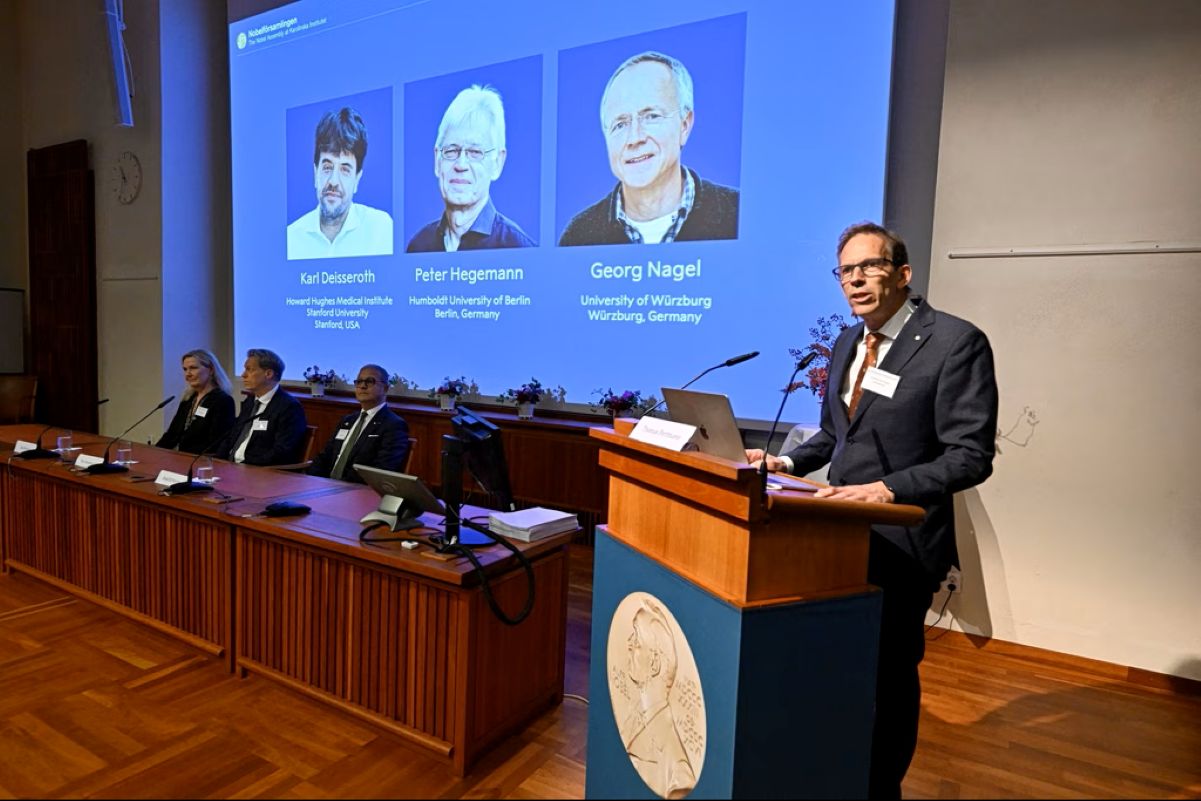
 Karl Deisseroth, Peter Hegemann and Georg Nagel have been awarded the 2026 Nobel Prize in Physiology or Medicine for their work in optogenetics, the Karolinska Institute in Stockholm announced on Monday, October 5.
The Nobel Committee said the trio is being honored “for their discoveries concerning light-activated ion channels and optogenetics,” a method that reveals how nerve cells inside the brain shape memories, emotions and behavior.
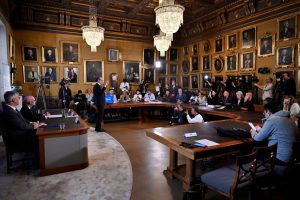
The medicine prize is traditionally the first of the Nobels to be announced, and this year’s award officially opens the 2026 Nobel season.
The announcement came shortly after 11 a.m. in Stockholm. As always, the winners’ names were kept secret until the last moment, since the Nobel Committee does not disclose nominations before the official announcement.
The Laureates
Karl Deisseroth, an American scientist and physician, is a professor of bioengineering and of psychiatry and behavioral sciences at Stanford University. A leading figure in developing optogenetics, he has also helped create technologies for studying the brain’s structure and function.
Peter Hegemann, a German biophysicist, is a professor of experimental biophysics at Humboldt University of Berlin. He is known for discovering channelrhodopsin, a class of light-sensitive ion channels that became a cornerstone of optogenetics.
Georg Nagel, a German biophysicist, is a professor of neurophysiology at the University of Würzburg. His research focuses on microbial photoreceptors and on optogenetic tools for controlling and studying nerve cell activity.
What Comes Next
The announcements continue throughout the week. The Nobel Prize in Physics will be revealed on Tuesday, October 6, followed by Chemistry on Wednesday, October 7, and Literature on Thursday, October 8. The Nobel Peace Prize will be announced on Friday, October 9, and the season wraps up on Monday, October 12, with the Sveriges Riksbank Prize in Economic Sciences in Memory of Alfred Nobel.
Each prize this year carries an award of 12 million Swedish kronor, or about $1.2 million. When a prize goes to more than one laureate or to an organization, the money is split among the recipients.