 Μake us preferred on Google
 Turkish President Recep Tayyip Erdogan on Wednesday revisited Ankara’s annoyance with Greek Prime Minister Kyriakos Mitsotakis over his government’s opposition to a possible US sale of F-35 fighter jets to Turkey, while renewing calls for both sides to resolve differences – unilateral claims by Turkey, according to the Greek side – through direct dialogue.
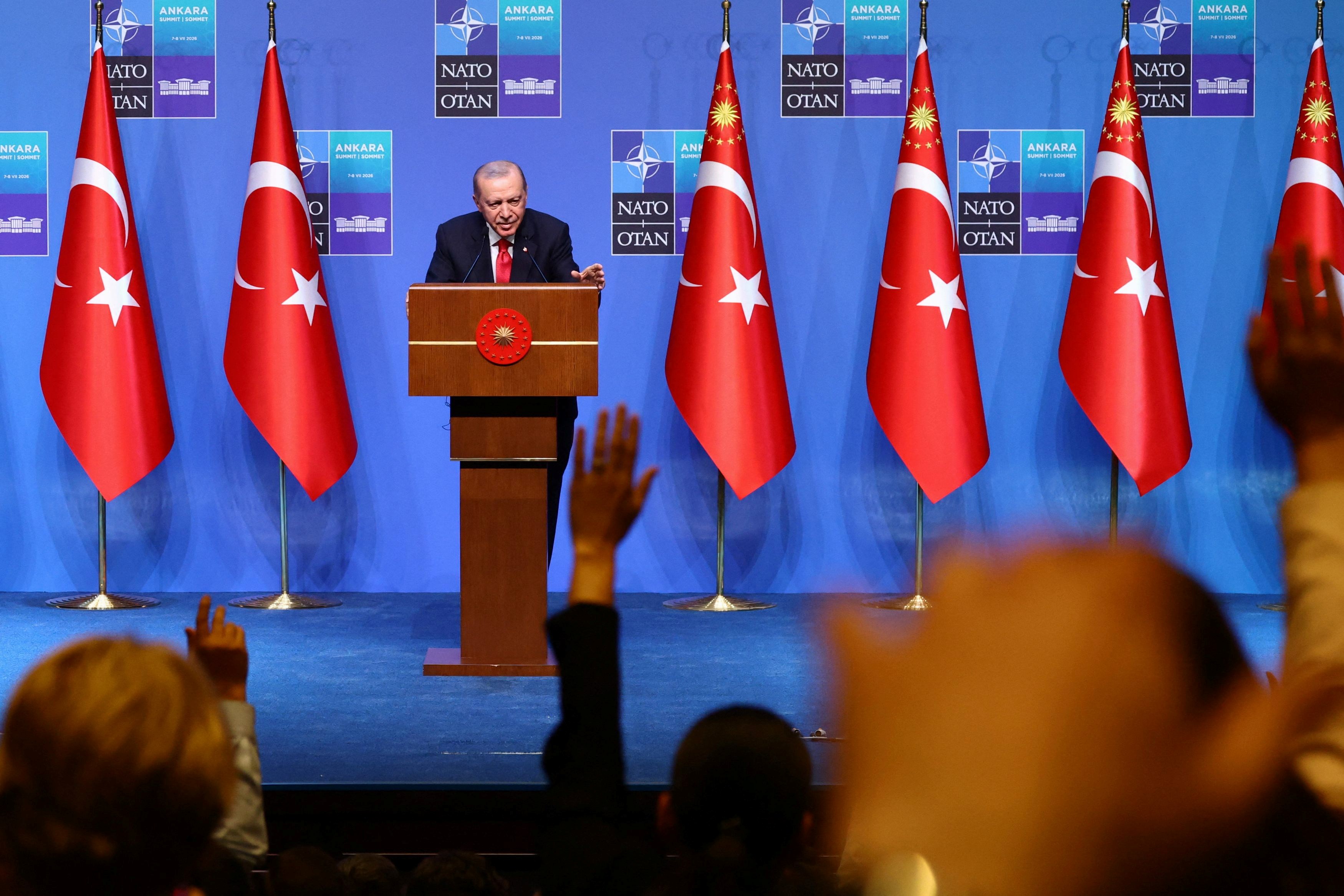
Speaking after the NATO summit in Ankara, Erdogan dismissed objections from Greece and Israel to Turkey’s efforts to acquire the fifth-generation US-made F-35 fighter, saying he did not accept such criticism. He argued that Greece was free to pursue its own defense procurement and that Turkey likewise had the right to purchase or develop the military equipment it considered necessary.
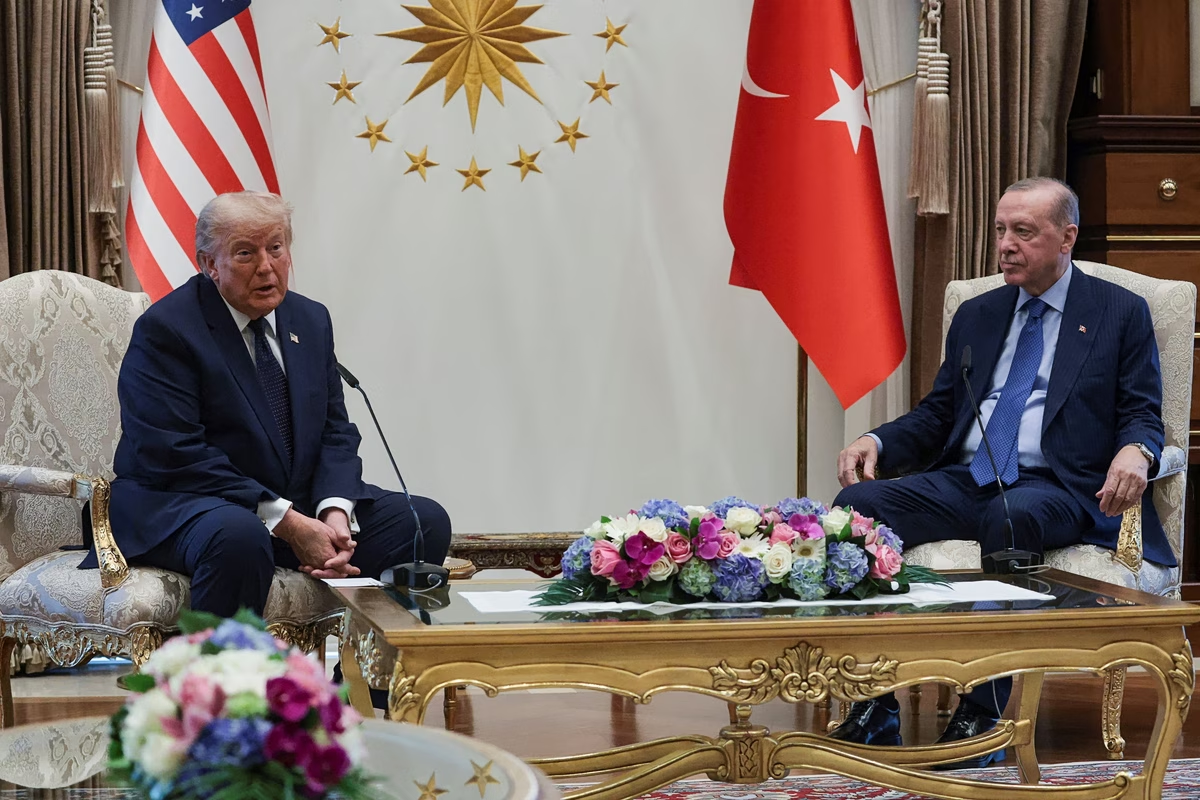
Erdogan said he believes US President Donald Trump viewed a potential F-35 sale positively and expressed hope that Washington would ultimately honor what he described as its commitments to Turkey.
Turning to bilateral relations, Erdogan said he shared Mitsotakis’ view that issues in the Aegean should be addressed through dialogue. He said the process should continue first at the foreign ministers’ level and, if necessary, be taken up directly by the two leaders, arguing that resolving such disputes is ultimately the responsibility of political leadership.
Asked about the Turkish grand assembly’s longstanding casus belli (cause of war) declaration, Erdoğan downplayed its prominence in public debate, suggesting that most Turkish citizens were unfamiliar with the issue and that neither the Turkish nor Greek public opinion should be “burdened by it”. Instead, he called for the two sides to resolve their differences through negotiations.
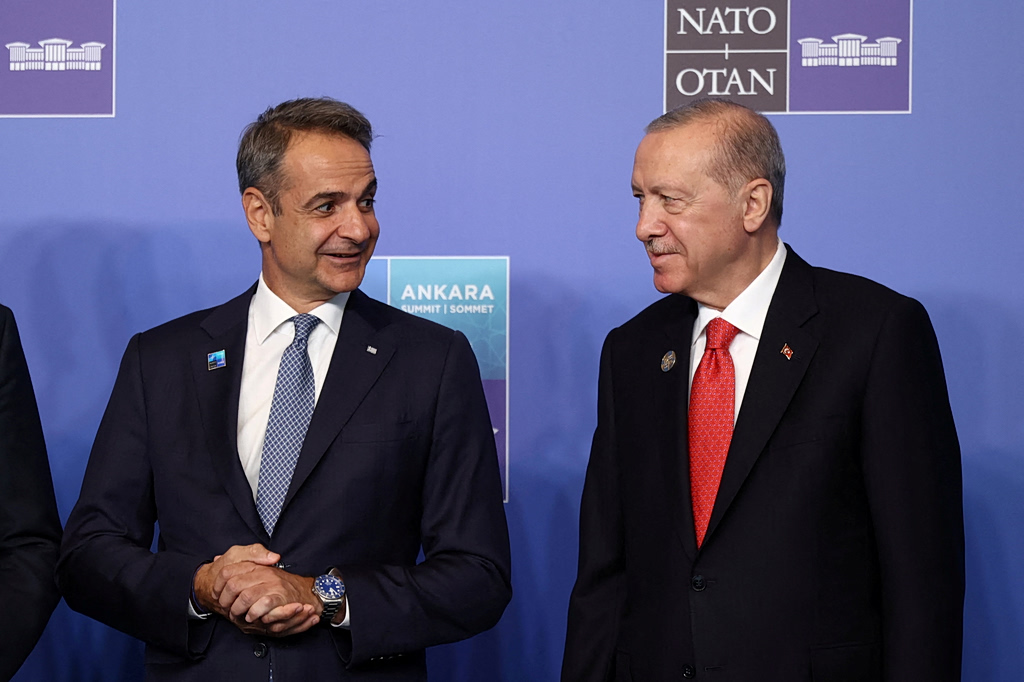
Turkish President Tayyip Erdogan welcomes Greek Prime Minister Kyriakos Mitsotakis at a NATO leaders’ summit in Ankara, Turkey, July 8, 2026. REUTERS/Stoyan Nenov
Mitsotakis interview to Turkish broadcaster
Earlier in the day, Mitsotakis reiterated in an interview with Turkish broadcaster A Haber that Greece remains committed to maintaining the positive momentum in bilateral relations established under the 2023 Athens Declaration. He said cooperation had expanded in areas including migration management, cross-border commerce and the visa-on-arrival program for Turkish visitors to several eastern Aegean islands.
The Greek prime minister also reaffirmed Athens’ long-standing position that the only unresolved dispute between the two countries concerns the delimitation of maritime zones in the Aegean and the eastern Mediterranean. He said the issue should be settled on the basis of international law, particularly the UN Convention on the Law of the Sea (UNCLOS), while stressing that disagreement on that question should not prevent cooperation in other areas.
Mitsotakis also reiterated that Turkey’s 1995 parliamentary casus belli resolution, which threatens military action should Greece – under UNCLOS – extend its territorial waters to 12 nautical miles as permitted under international law, has no place in relations between NATO allies.
According to reports over the past two days, Athens continues to pursue a dual-track approach toward Turkey, combining dialogue and confidence-building measures with the strengthening of Greece’s defense capabilities.
The Mitsotakis government has repeatedly maintained that improved bilateral ties require full respect for international law and the removal of longstanding sources of tension, including the casus belli threat, while continuing cooperation to combat illegal migration, boost bilateral trade and people-to-people contacts under the framework established by the Athens Declaration.