 Μake us preferred on Google
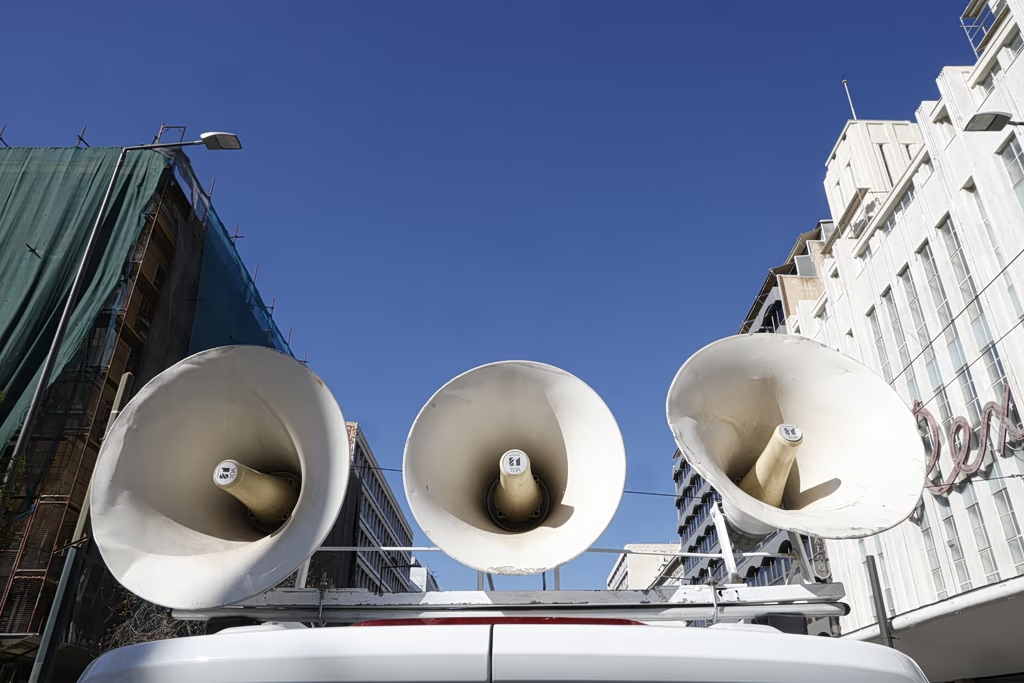
 A nationwide strike across Greece’s public sector will take place Wednesday, May 13, 2026, with the main protest rally scheduled for 10:30 a.m. at Klafthmonos Square in central Athens and parallel demonstrations planned in cities across the country.
All public sector employees, regardless of employment status, are participating in the strike. As a result, public services are expected to remain closed throughout the day.
Clarification on Public Transport
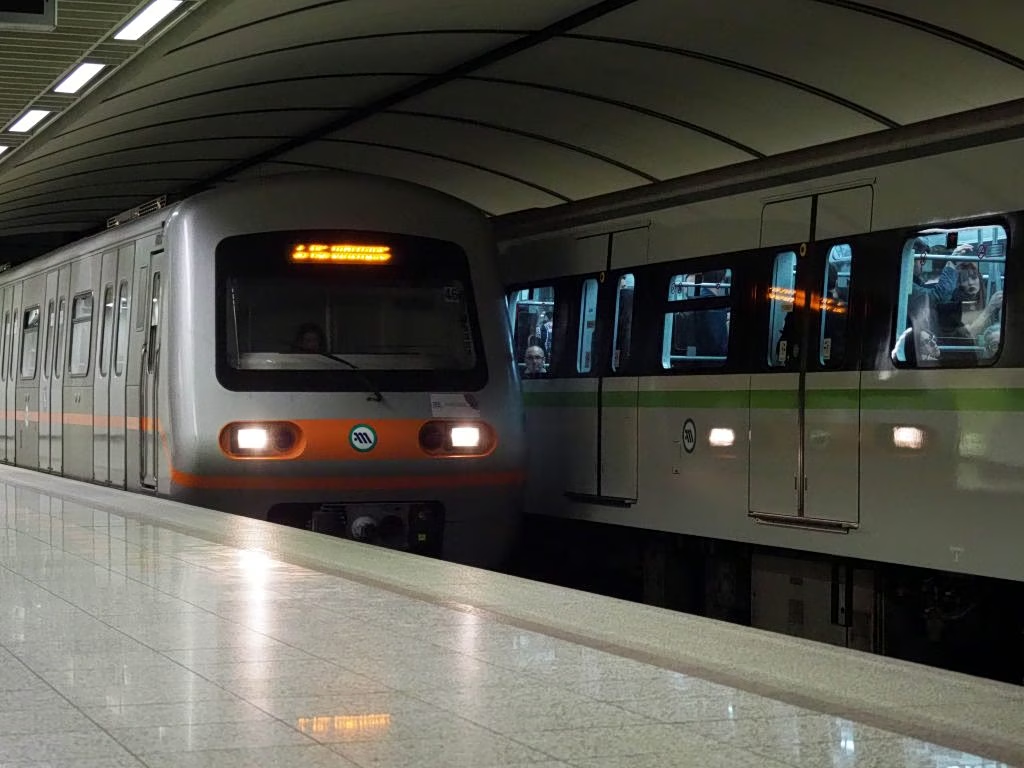
Following reports and social media posts circulating in recent hours, the Civil Servants’ Confederation (ADEDY), Greece’s main public sector union federation, clarified that public transport services are not part of the public sector and their employees are not unionized under ADEDY.
Consequently, Wednesday’s strike is not expected to affect public transportation, which is set to operate normally without changes to schedules or routes.
NEWSLETTER TABLE TALK
Never miss a story.
Subscribe now.
The most important news & topics every week in your inbox.
The clarification was issued in an effort to prevent further confusion caused by inaccurate information reproduced by some media outlets.
The Strike Demands
ADEDY stressed that in the May 13 strike, “workers are fighting against the policies of impoverishment that dominate today. They are responding to the policies implemented by the government majority, whose point of reference is the few and not the many.”
The union’s key demands include:
- Protection of permanent employment status in the public sector
- Restoration of the 13th and 14th monthly salaries, abolished during Greece’s austerity years
- Real wage increases to ensure dignified living conditions
- Abolition of the 2% unemployment contribution levy
- Reinstatement of frozen salary increments from the 2016–2017 period
- Raising the tax-free income threshold to €12,000, with an additional €3,000 for each child
- Expansion and strengthening of hazardous and unhealthy work allowances
- Mass recruitment of permanent staff in the public sector, particularly in healthcare, education and social security
- Substantial funding increases for Greece’s National Health System (ESY)
- Repeal of anti-labor laws and the new disciplinary framework
- Protection of public goods and opposition to privatizations