 Μake us preferred on Google
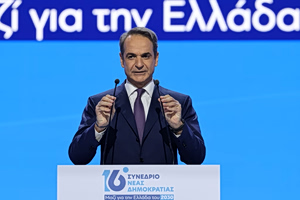
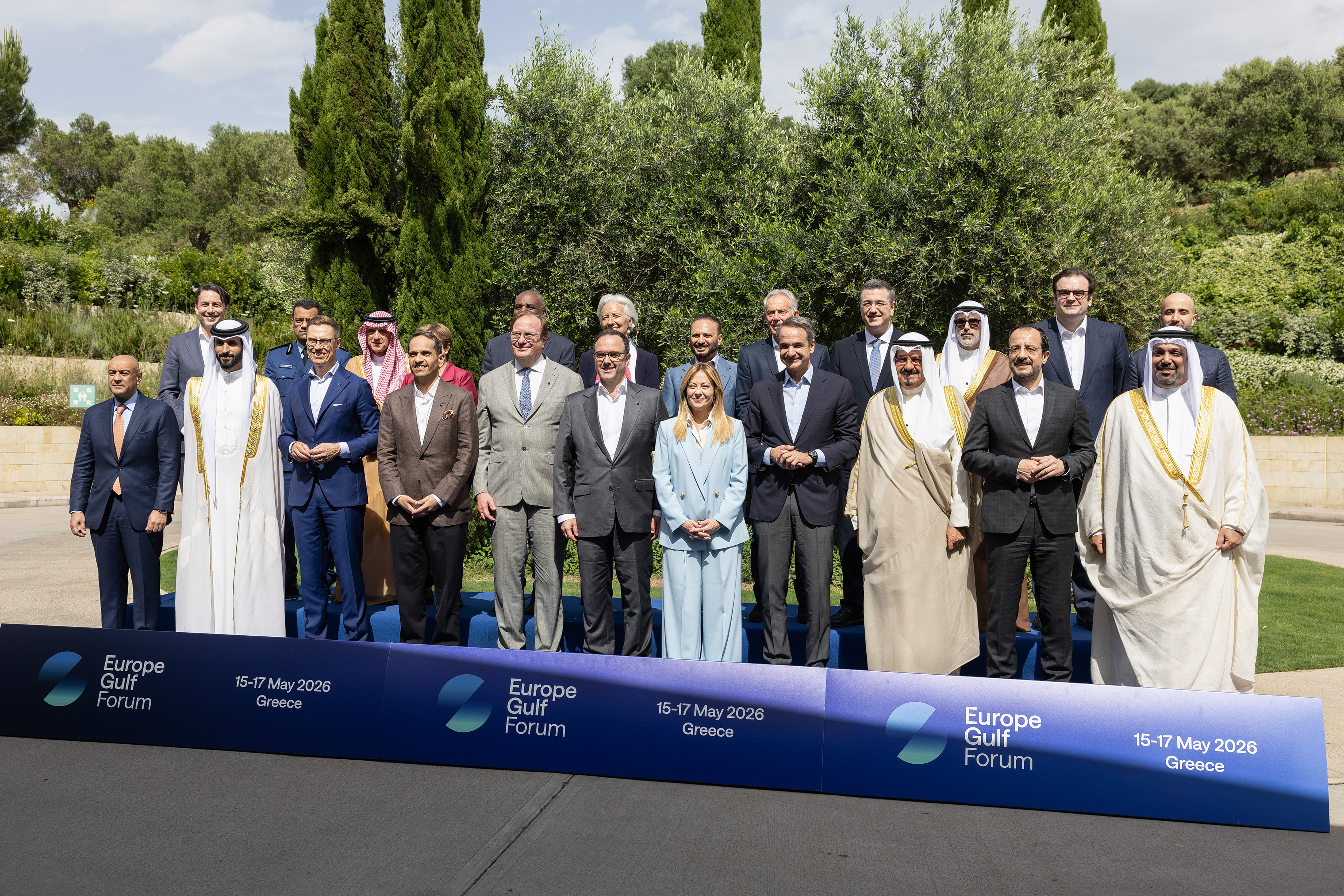
 The historic symbolism of the location hosting the Europe Gulf Forum — organized by Theodore Kyriakou, president of the Antenna Group, in partnership with the Atlantic Council — was highlighted this week by Greek Prime Minister Kyriakos Mitsotakis, who was among the key speakers at the closed-door leaders’ meeting held at Costa Navarino.
Mitsotakis congratulated Kyriakou for selecting the site, where in 1827 the pivotal Battle of Navarino took place. In that naval battle, the allied fleets of Britain, France and Russia defeated the Ottoman and Egyptian navy, paving the way for Greek independence.
The Extensive Guest List
As Kyriakou emphasized, the primary goal of the forum is to establish a permanent platform that will consistently bring Europe and the Gulf region closer together.
Among those responding to the invitation were Managing Director of the IMF Kristalina Georgieva, President of the ECB Christine Lagarde, Italian Prime Minister Giorgia Meloni, Finnish President Alexander Stubb, Qatari Prime Minister Sheikh Mohammed bin Abdulrahman bin Jassim Al Thani, Kuwaiti Prime Minister Sheikh Ahmad Abdullah Al-Ahmad Al-Sabah, Cypriot President Nikos Christodoulides, British Deputy Prime Minister David Lammy, and former British Prime Minister Tony Blair.
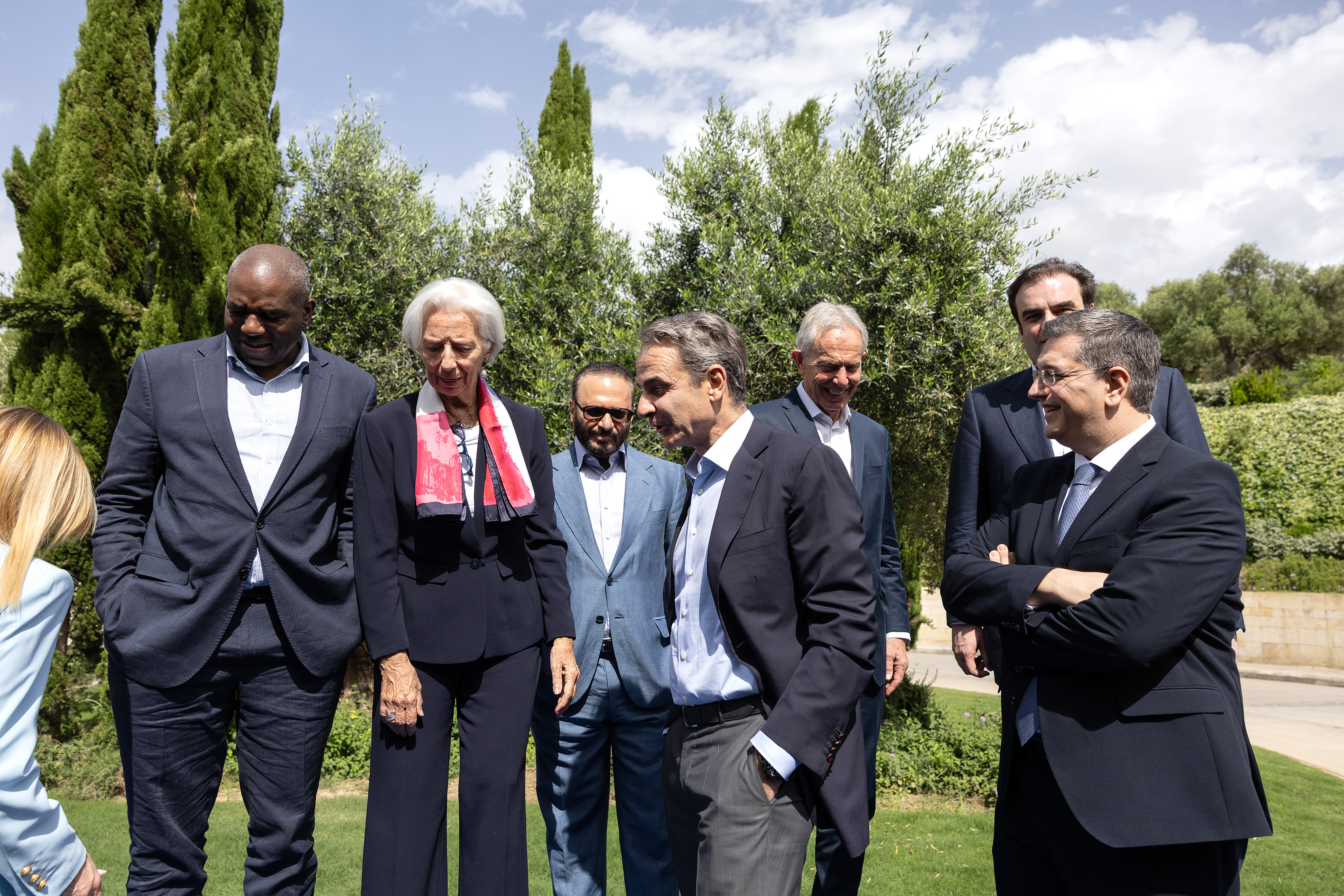
(ΓΙΩΡΓΟΣ ΚΑΡΑΧΑΛΗΣ/ΓΡΑΦΕΙΟ ΤΥΠΟΥ ΠΡΩΘΥΠΟΥΡΓΟΥ/EUROKINISSI)
Their participation added weight to efforts aimed at creating a new geopolitical and investment crossroads between Europe and the Gulf.
Representing Greece alongside the Prime Minister were Kyriakos Pierrakakis, in his capacity as head of the Eurogroup, and European Commissioner Apostolos Tzitzikostas.
On the sidelines of the forum at the Messinia resort, Mitsotakis held private meetings with Georgieva, Stubb and Lammy, while other leaders also scheduled bilateral discussions focused primarily on managing the consequences of the ongoing crisis in the Middle East.
Indicatively, Meloni described Iran’s attacks against other Gulf countries as “unjustified” and accepted an invitation to visit Kuwait in the near future.
A Bridge Between Europe and the Gulf
During the dinner hosted on Saturday evening, the Greek Prime Minister outlined the priorities emerging from the new geopolitical landscape.
According to Mitsotakis, the evolving security environment now requires Europe to build a far more constructive and productive relationship with Gulf nations.
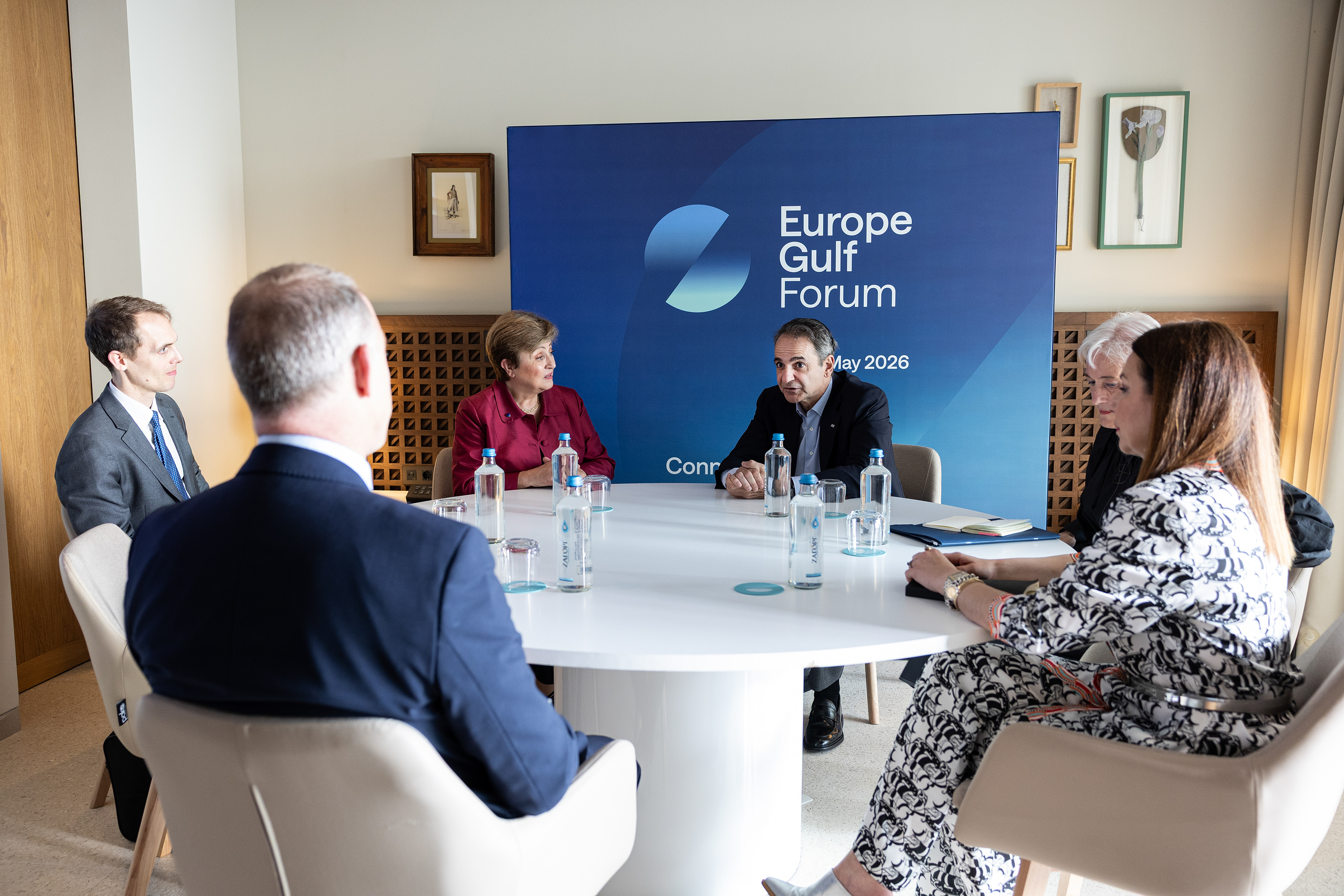
Ο Πρωθυπουργός Κυριάκος Μητσοτάκης συναντήθηκε με την Διευθύντρια του Διεθνούς Νομισματικού Ταμείου Kristalina Georgieva, τον Πρόεδρο της Φινλανδίας Alexander Stubb και τον Αντιπρόεδρο της Κυβέρνησης του Ηνωμένου Βασιλείου David Lammy, στο περιθώριο του Europe Gulf Forum, που φιλοξενήθηκε στο Costa Navarino, Σάββατο 16 Μαΐου 2026. (ΓΙΩΡΓΟΣ ΚΑΡΑΧΑΛΗΣ/ΓΡΑΦΕΙΟ ΤΥΠΟΥ ΠΡΩΘΥΠΟΥΡΓΟΥ/EUROKINISSI)
Greece’s objective, he said, is to serve as a natural bridge between the two sides by developing strategic partnerships in key sectors such as energy, defense, defense technology, investments and new trade corridors.
He specifically highlighted the India-Middle East-Europe Economic Corridor (IMEC), noting that Gulf countries sit geographically between India and Europe.
“We are always seeking to attract Gulf investment into Europe, but we should also be bolder when it comes to investing in this part of the world, which is undergoing profound transformation,” Mitsotakis said, referring to the still largely unexplored dimensions of economic cooperation between Europe and Gulf states.
The Greek Prime Minister also referenced the European naval mission Operation ASPIDES, stressing that Greece and Italy are currently participating, but arguing that more European partners should be persuaded to contribute “if they truly want to take this relationship with the Gulf countries more seriously.”