
 Μake us preferred on Google
Cyprus plans to release €25 million in funding for the Great Sea Interconnector (GSI) in the coming weeks, Cypriot Energy Minister Michalis Damianos said Monday, linking the payment process to the expected resumption of maritime surveys for the electricity project connecting Greece and Cyprus.
Speaking after presenting his ministry’s 2027 budget to a parliamentary committee, Damianos said the payment process was tied to the issuance of a NAVTEX, a maritime notice announcing survey operations, by the Greek authorities. He said the notice was expected before the end of October, according to Cypriot media.
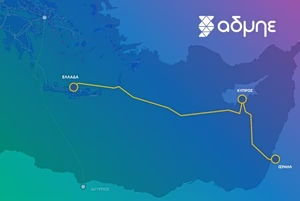
Damianos said the Cypriot government remained committed to completing the interconnector, which he described as important both for the island’s electricity supply and for geopolitical reasons. The Great Sea Interconnector is a planned subsea electricity cable intended to connect Cyprus to the European electricity grid through Greece.
Cyprus Sets Out Payment Schedule
Under the existing agreement, Cyprus has committed to contributing €25 million annually over five years, for a total of up to €125 million. Damianos said the Cypriot government intended to meet those commitments, with payments made according to the progress of construction. The payment originally scheduled for 2025 has been deferred because work did not advance during that year, according to TV station ANT1 Cyprus.
The minister also clarified that the government’s financial contributions were separate from the charges that Cypriot households would eventually pay through their electricity bills. Those consumer charges would begin only after the interconnector was completed and electricity started flowing to Cyprus, he said.
“If electricity does not reach Cyprus, we will not pay,” Damianos said, referring to the charges that consumers would bear. According to the minister, those costs would be recovered over a 30-year period, while the government’s annual €25 million contributions would come directly from the state budget.
Regulator Recognizes €82 Million of €302 Million Claimed
Damianos also provided an update on the project’s expenditure and the amounts recognized by Cyprus’ energy regulator.
Greece’s Independent Power Transmission Operator (IPTO/ADMIE), which is responsible for implementing the project, has submitted €302 million in expenditures for recognition. The Cyprus Energy Regulatory Authority has so far recognized €82 million. According to Damianos the regulator examines expenditures and recognizes costs according to the work undertaken.
The project has been allocated €650 million in European funding, while the possibility of securing additional financing remains under consideration. The minister said that if construction costs increase, alternative sources of funding may need to be examined, including new investors, investment funds or financing from the European Investment Bank. An EIB study of the project is underway, he added. Any potential equity participation by the Republic of Cyprus would be considered at a later stage, following the study’s completion.
Damianos also addressed the possibility that geopolitical risks could prevent the interconnector from being completed. He said determining what financial obligations would arise under such circumstances was a complex legal question that would need to be examined by legal specialists.
Greek Maritime Survey Authorization Pending
The next stage of the project involves the authorization of further maritime surveys. French cable manufacturer Nexans, which has been contracted to build the interconnector, submitted a survey application to the Greek Foreign Ministry during the first 10 days of October, according to reporting by in.gr. The same report said approval was expected in early November, with the French vessel Abeille Marengo due to carry out the surveys.
That timetable differs from the expectation outlined by Damianos, who said a Greek NAVTEX would be issued before the end of October.
Maritime surveys associated with the interconnector have also been affected by disagreements over jurisdiction in the eastern Mediterranean. According to reporting by Tyrkish outlet Hürriyet Daily News, Ankara has attempted to pursue diplomatic coordination with France over the electricity cable. Greek authorities, however, have rejected any such attempts and maintain that authorization for surveys in the areas concerned falls exclusively within their jurisdiction.
Damianos acknowledged the geopolitical risks associated with the project and said Greece, France and French commercial interests involved in its construction had a role in its protection. He also said the Cypriot government was receiving full updates from Athens on developments concerning the interconnector.