 Μake us preferred on Google
 US stock indexes are showing modest moves and a nervy tone Monday, following a week of strong gains, with investor attention firmly fixed on President Donald Trump’s rejection of Iran’s latest proposal to end the ongoing conflict.
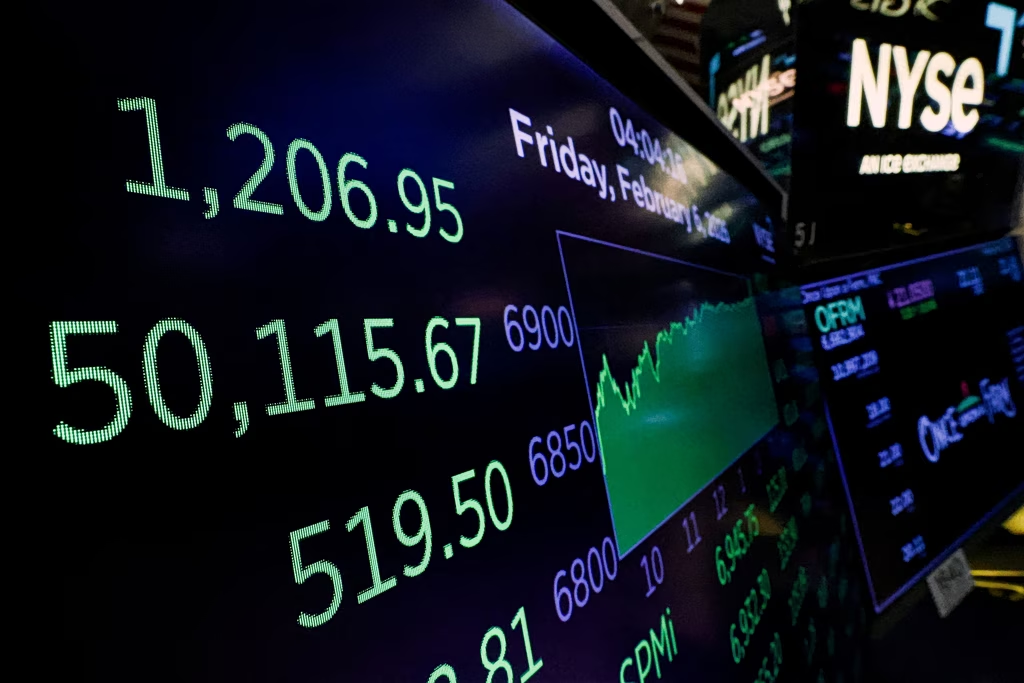
The Dow Jones is down 0.19% at 49,515 points, the S&P 500 is essentially flat with a gain of 0.01% at 7,399 points, and the Nasdaq is slipping 0.01% to 26,243 points.
These moves follow a week of robust gains during which the S&P 500 climbed more than 2% and the Nasdaq Composite surged over 4%. Both indexes notched their sixth consecutive week of gains, something that has not happened since 2024.
Markets rallied on Friday after US employment data showed 115,000 jobs were added in April, significantly above the 55,000 economists surveyed by Dow Jones had forecast. Both the S&P 500 and the Nasdaq closed Friday’s session at all-time highs.
US-Iran Talks
Meanwhile, Iran submitted a new proposal to the United States aimed at ending the months-long conflict, according to the semi-official Tasnim news agency. The proposal included a request for a cessation of hostilities on all fronts and the lifting of sanctions against Tehran.
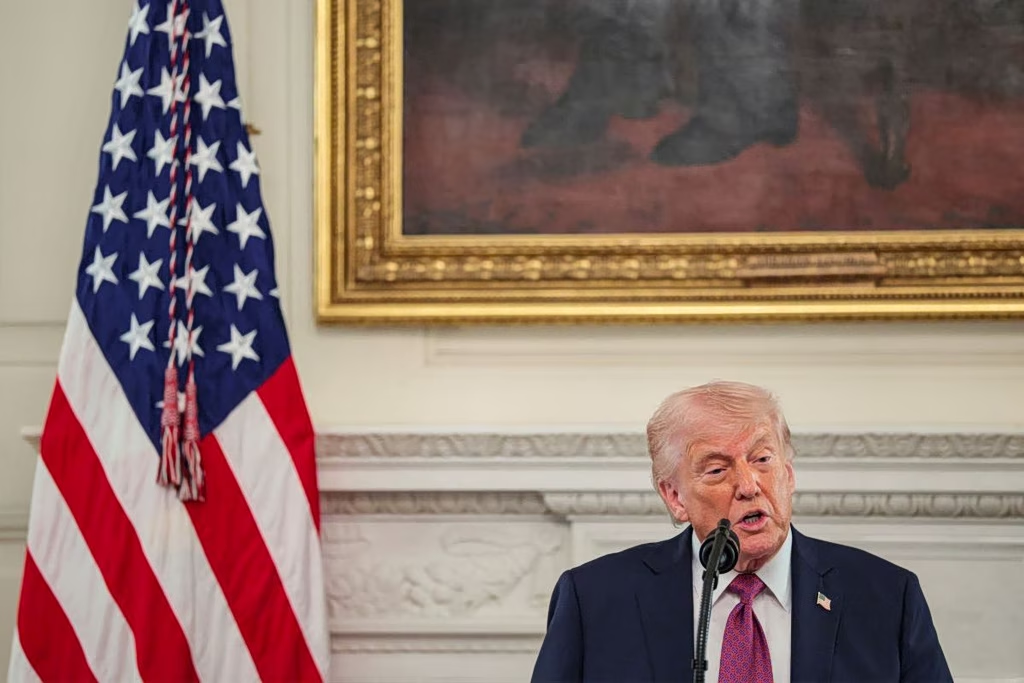
In response, Trump posted on his Truth Social platform that he was not satisfied with Iran’s proposal, calling it “ABSOLUTELY UNACCEPTABLE.”
Oil
Following that statement, oil prices moved higher. US crude WTI futures rose 2%, surpassing $97 per barrel, while Brent also climbed 2%, trading above $103 per barrel.
Despite the elevated geopolitical risk, some analysts believe US markets are holding up well. Rick Rieder, BlackRock’s Chief Investment Officer for fixed income, noted that the economy could slow due to the war with Iran and rising oil prices, but stressed that “there are significant structural factors supporting the economy more than many expect.”
Investors this week will be watching US inflation data closely, with the Consumer Price Index and Producer Price Index for April in focus, as both could shed light on how geopolitical developments are feeding through to prices.