
 Μake us preferred on Google
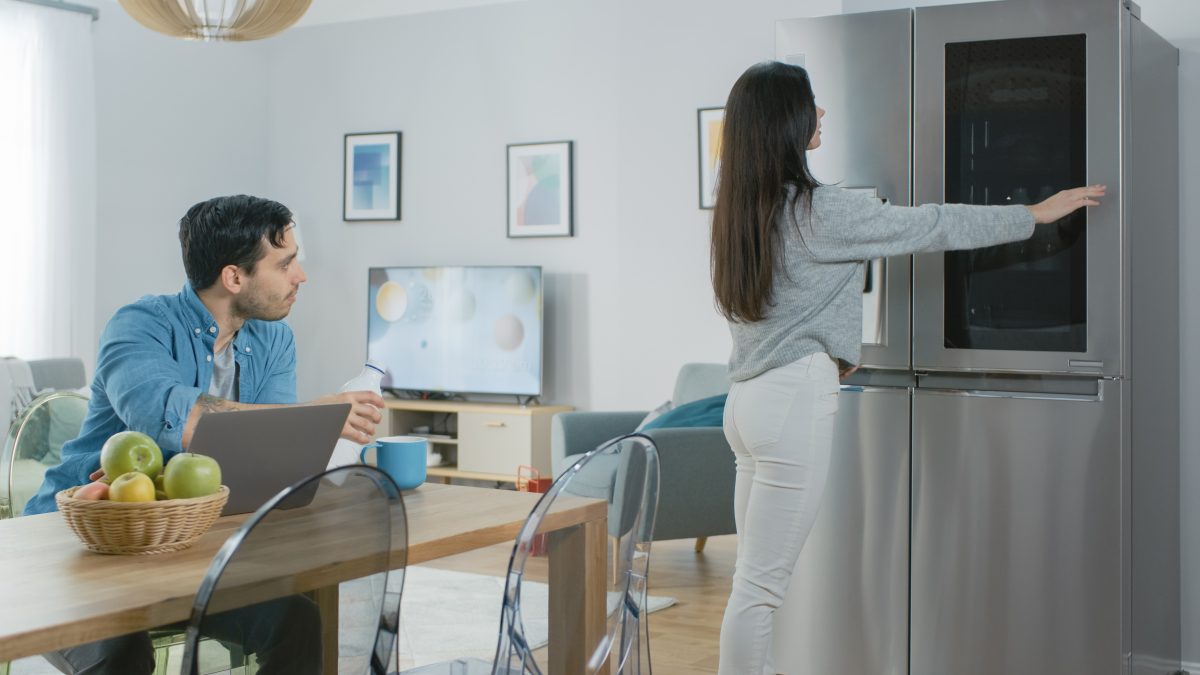
 Walking into his kitchen, Tim Yoder recoiled at a message on his refrigerator door: “Shop Samsung water filters.”
Yoder, a supply-chain manager in Chicago, owns a Samsung Electronics Family Hub fridge. He paid $1,400 for an appliance that came with a 32-inch screen on the door that allows him to control other Samsung gadgets, pull up recipes or stream music.
But since last fall, it’s been intermittently serving up ads, part of a pilot program being tested on some of Samsung’s smart fridges sold in the U.S. The response? Not warm.
“I guess this is another place for somebody to shove an ad in your face,” said the 47-year-old Yoder, recalling the first time he noticed one.
Americans have learned to live with ads on smartphones and other devices as a necessary trade-off of connectivity. They’ve also gotten used to growing intrusions in the physical world, where everything from bathroom stalls to taxicab seats have become fair game for marketers. But the kitchen remained largely off-limits.
The ads are only on certain Family Hub fridges that have screens and internet connectivity. They run as a rectangular banner at the bottom—part of a widget that also shows news, the weather and a calendar. Samsung declined to say how long the pilot might last or whether it would end. The firm recently unveiled a “Screens Everywhere” initiative that also includes washers, dryers and ovens.
Will Tipton just wants to go back to a plain old fridge. The 3-D animator in El Paso, Texas, grew annoyed after his smart fridge started showing banner ads.
Weeks later, the entire display lit up with a full-screen ad for Apple TV’s sci-fi show “Pluribus.” The all-caps ad beckoned Tipton with an oft-used refrain directed at protagonist Carol Sturka: “We’re Sorry We Upset You, Carol.”
“I think it’s rude for them to add something without my consent after the sale” was completed, said Tipton, 27.
He is hoping to return the fridge—and be done with the company for good. “I will never buy a Samsung appliance or device again, unless I absolutely need it.”
Samsung launched the banner-type fridge ads that come as part of the widget via an October software update. In a footnote of a news release at the time, Samsung pledged to “serve contextual or non-personal ads” and respect data privacy. The banner ads can be turned off in settings.
Samsung said the purpose of the pilot is to explore whether ads relevant to home chores can be useful to owners, and that overall pushback has been negligible. The “turn-off” rate for the pilot ad program remains in the bottom single-digit range, it said.
As for the full-screen ad Tipton encountered, it said when users access the internet through the screen’s web browser, third-party ads could appear—a feature Samsung can’t control or block.
While owners can turn off the banner ads, doing so eliminates the widget altogether, a bummer for Brian Bosworth, a media-industry engineer who liked the feature. Bosworth thinks it’s wrong to take away the new feature as a condition.
Wanting to keep the widget but not the ads, the 49-year-old in Edgewater, Md., made sure his home router’s ad-blocking software extended to his fridge. He hasn’t seen another since.
Other fridge owners won’t either. LG Electronics, Whirlpool and GE Appliances said they plan to keep their appliances ad-free. “Our screens are designed as functional value exchange tools, not advertising surfaces,” said Jason May, GE Appliances’ executive director of refrigeration.
Consumers may be more forgiving if the Samsung fridges were sold at a discount in exchange for showing ads, said Avinash Collis, who researches the economics of digitization.
“I think the company miscalculated the benefits versus losses,” said Collis, a Carnegie Mellon University professor.
The ads aren’t just for Samsung products. A banner ad for a bottle of Tide’s laundry detergent most recently spotted by Yoder blasted out the message: “Boosted: Cleaner, whiter, brighter, fresher.”
James Rafferty doesn’t own a Samsung smart fridge but is still livid. The 38-year-old aviation engineer thinks consumers paying top dollar for a premium fridge with a screen should decide how that display is used.
“Not a billboard for a corporation,” said Rafferty, who owns fridges produced by Whirlpool’s KitchenAid and Electrolux’s Frigidaire. He has no interest in buying a Samsung fridge, given its direction with ads.
The threat of fridge ads is also getting a chilly reception in places they haven’t reached. Siobhan Ellis, who lives in Cornwall, England, has a house full of internet-connected Samsung appliances. She’s worried the feature will come to the U.K. Samsung said it doesn’t have plans to expand the feature outside the U.S.
She won’t ditch her products for now. But she expects to move to Australia in two years—and when she buys new appliances, they won’t be Samsung.
“They should really think about this,” said Ellis, 62, a technology manager in the automotive industry. “It’s not just the fridge. It’s the whole knock-on effect too.”
Eddie Chavez isn’t slamming the door shut on fridge ads. He wouldn’t mind them popping up every now and then on the Samsung smart fridge at his home in Roseville, Calif. A promotion for a product he needs, he adds, might even feel useful.
“If it’s distracting,” he said, “that’d be a problem.”