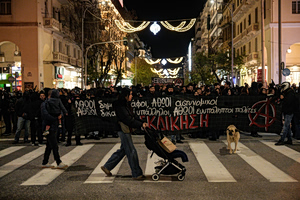
The challenge for Greece, therefore, is not insufficient civic engagement but limited strategic capacity. When citizens experience dissent as an end in itself rather than a means to reform, protest risks reinforcing stability rather than challenging it
No longer bound by an ideologically charged narrative used to serve America’s image as a beacon of democracy, Trump enjoys more flexibility to tilt to authoritarianism at home
Digitalization that ignores a country’s strengths and fails to support the sectors that need it most is ultimately ineffective
“What went wrong, and why did the situation get out of hand communication-wise?”
The Second Cold War broke out suddenly and unannounced between the US and Europe and as it expands to encompass ever more areas, there is little indication where it will go from here
After all this, it does not take much thought to realize that, after Ukraine and Gaza, a third extremely dangerous front is now opening in Latin America
Every major technological shift documented in history has arrived with both hope and fear. Yet history shows that while disruption is inevitable, societies adapt—and often emerge wiser and stronger
Nikos Romanos didn’t appear on the police radar out of nowhere. He is the 15-year-old who held his dead friend Alexandros Grigoropoulos in his arms when he was shot and killed by a police officer—a member of an auxiliary corps of the Greek Police—in Exarchia
If AI is the new currency of power, Europe is trying to mint its other side: a system in which authority remains accountable and humans are not assessed as statistical probabilities, but recognized as bearers of inalienable rights
Cooperation between the governments in Berlin and Athens on migration policy has been intensive for years; in scarcely any other policy area is it closer or more systematic
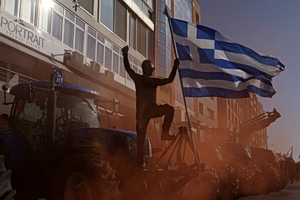
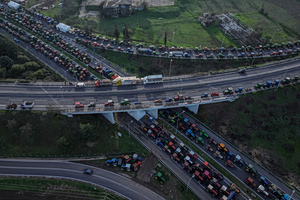
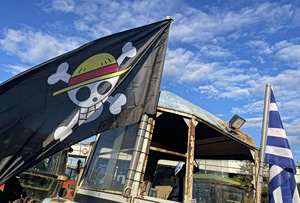
A wave of farmer protests—fueled by economic insecurity, anger over opaque subsidies, and a growing sense of abandonment—raises a crucial question: is this a temporary storm or the start of a deeper rupture between rural Greece and the ruling New Democracy party?
As Alexis Tsipras calls for a “new Metapolitefsi,” old allies reunite and rivals take aim. But can a fractured left—and a returning former prime minister—forge a new political era, or is Greece simply reliving the same drama under a new name?
Undoubtedly, Greece’s strategic position as an energy conduit shields it both diplomatically and defensively and can enhance its bargaining power
After decades of aspirations, Greece is no longer talking about becoming a regional hub — it is unmistakably one. Not in shipping or energy, but in the single most valuable resource of the modern era: data
Can this madness be stopped, or at least significantly undercut, before it lights up the universe?
Our recent political history has made their central role on the political scene crystal clear. Every Prime Minister, or almost every one, from Constantine Karamanlis and Andreas Papandreou to the present incumbent are cases in point.
What can change in a region that already has 7,000 years of history, countless wars and scars, treaties and conflicts under its belt, and seen more than its fair share of both triumphs and disasters, great civilizations and world-altering religions?
Alexis Tsipras’ new book promised a carefully crafted comeback narrative—until its release triggered a storm of accusations, old feuds, and political drama worthy of a reality show, raising the question: is this a new beginning or the final chapter?
Europe frequently speaks about the transition before it speaks with those who stand on its frontline
France has adopted a groundbreaking legal definition of rape based on lack of consent rather than physical force—an evolution with deep social implications and lessons that resonate far beyond its borders, including Greece.