 Μake us preferred on Google
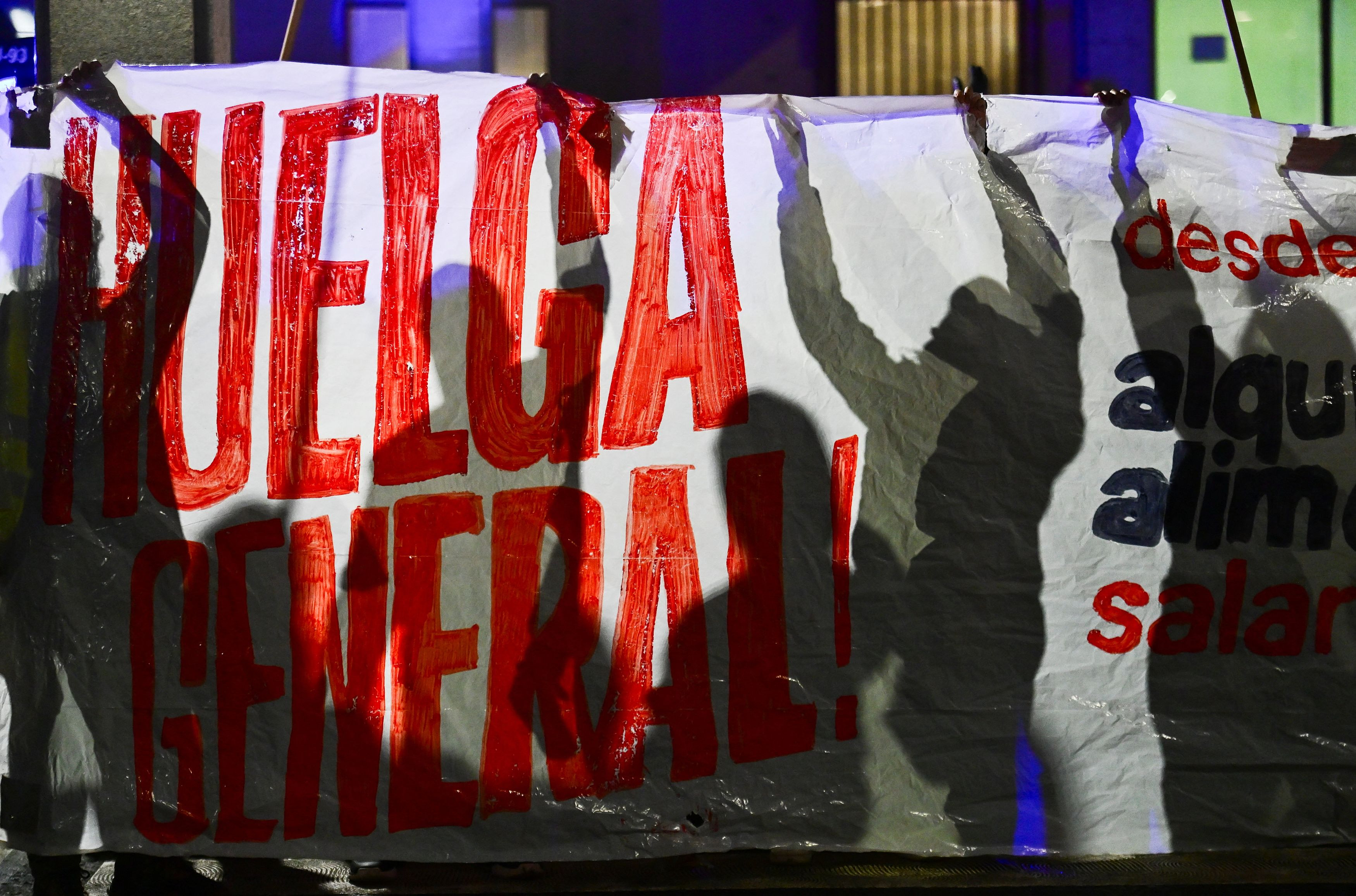
People struggling with the housing crisis and demanding the right to a home will take to the streets on Wednesday, November 11, in dozens of European cities, following a call by Spanish tenants’ unions.
In Athens, the demonstration is scheduled for 6 p.m. at Klafthmonos Square, while in Thessaloniki, protesters will gather at 6:30 p.m. at Nikos Papazoglou Square in the Kato Toumba neighborhood. The mobilizations are being organized by housing movements working together through broad-based platforms and networks of grassroots groups, as well as through a range of actions supporting people at risk of eviction and foreclosure.

Protest aimed at preventing the eviction of an elderly couple in Toumba, Thessaloniki, November 2, 2026. / Διαμαρτυρία με σκοπό την αποτροπή έξωσης ηλικιωμένου ζευγαριού στην Τούμπα Θεσσαλονίκης, 2 Νοεμβρίου 2026.
The calls, which are not affiliated with any political party, have already received the backing of dozens of public- and private-sector trade unions, student associations and municipal movements. Left-wing political organizations, both inside and outside Parliament, are also supporting the demonstrations, while unions and organizations affiliated with PAME, the All-Workers Militant Front, are organizing parallel actions.
In an interview with in.gr, three housing activists discuss the crisis and their demands: Konstantinos Liveris, president of the Panhellenic Association of OAED Employees — the former Manpower Employment Organization, now known as DYPA — and a member of the coordinating committee of the newly established “Housing for All” campaign; Eleni Pieropoulou of the United Initiative Against Foreclosures; and Nikos Vrantzis of the Thessaloniki Tenants’ Union.
Although they come from different backgrounds, they share a common goal: “No person without a home, no home without a person.”
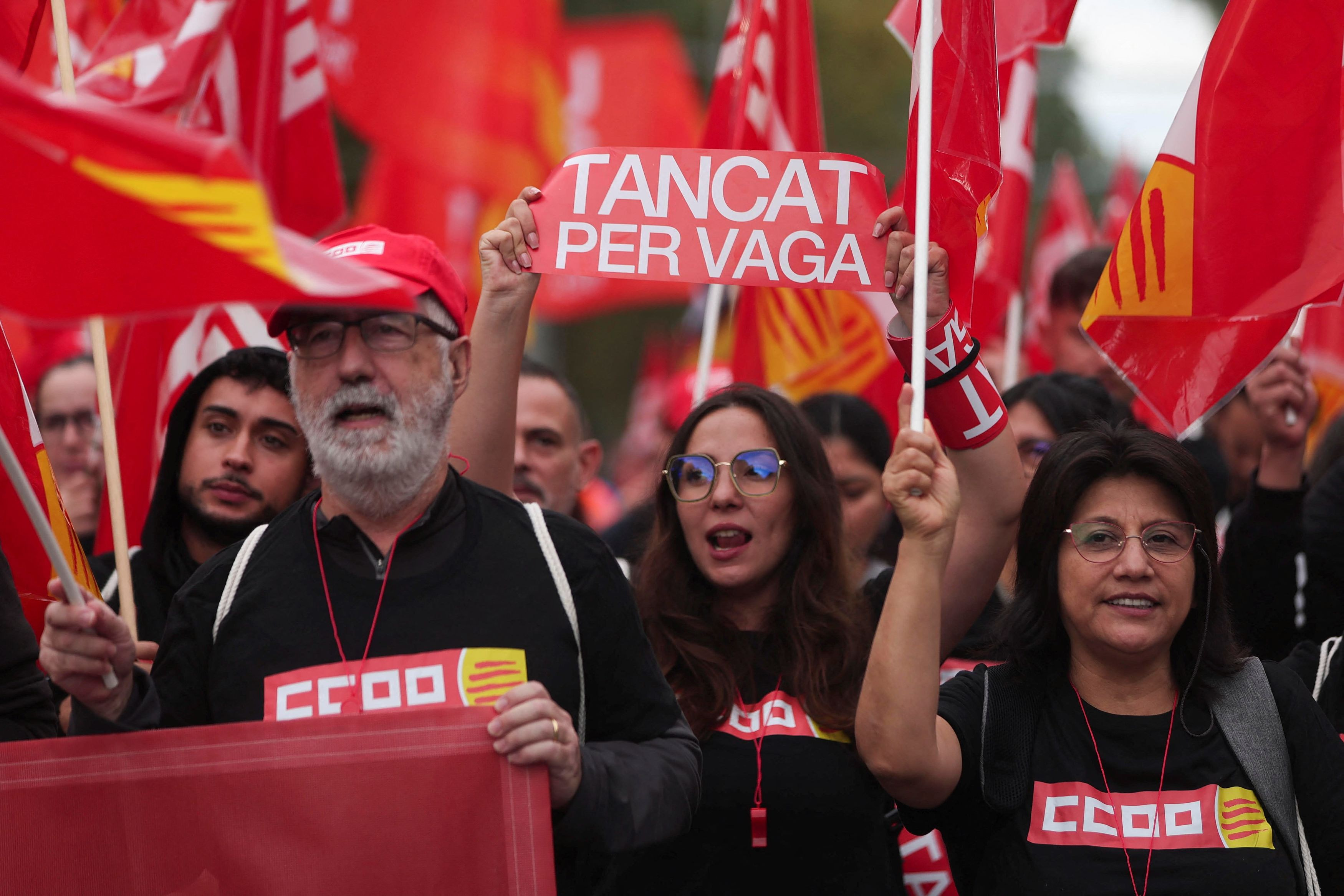
A protestor holds a sign that reads “closed due to strike” as people protest during a 24-hour nationwide general strike, held to demand wages that allow access to what demonstrators say is decent housing, in Barcelona, Spain, November 11, 2026. REUTERS/Bruna Casas
The Housing Crisis Did Not Come Out of Nowhere
During Greece’s bailout years, the country was often described as the eurozone’s “guinea pig,” subjected to some of the harshest austerity programs. Today, Greece is presented as an economic success story. Yet when it comes to the cost and quality of life — with housing perhaps the most decisive factor — the country remains a testing ground.
According to Eurostat, in 2025, 26.4% of people living in Greece were in households spending more than 40% of their disposable income on housing. That figure was more than three times the European Union average of 7.7% and the highest in the bloc. Among people at risk of poverty, the proportion soared to 82.6%, compared with an EU average of 29.1%.
Meanwhile, average rents in Athens exceed the minimum wage and account for between 70% and 94% of the average salary, according to research by the Center for Liberal Studies (KEFiM), a think tank not generally associated with left-wing positions.
It is no coincidence that housing has become a major battleground in national politics, with parties trading accusations over who first brought investment funds into the market and under which government the greatest number of people lost their homes.
“Housing is too important an issue to be turned into an arena for political promises,” Minister of State Akis Skertsos said at an OECD event on the eve of the demonstrations. His remark was aimed at the opposition and what the government considers to be unworkable pledges. But housing is, above all, a political issue.
Re-establishing the Workers’ Housing Organization
The Panhellenic Association of OAED Employees (PANSYPO), which has produced extensive research on the housing crisis, represents, among others, employees of the former Workers’ Housing Organization (OEK). Its campaign centers on re-establishing the organization, which was abolished in 2012 under Greece’s second bailout program and was never replaced.
“There are political responsibilities and specific causes behind Greece’s housing crisis. They abolished the Workers’ Housing Organization, depriving employees of an institution they themselves had funded, and today they present new household borrowing as housing policy. At a time when homes are being transferred into investment funds’ portfolios and property management companies are recording millions in profits, workers are struggling to pay rent with their meager salaries,” Liveris told in.gr.
He explains that re-establishing the OEK is not a demand made solely on behalf of a particular professional group. Above all, it requires returning to workers the organization’s resources, which remain unused and are estimated at more than €1.2 billion. Those funds could be used to finance social housing programs.
“Workers’ money must once again be used to build workers’ housing, public properties must serve society, and housing must stop being a privilege reserved for those who can afford it,” he says.
Foreclosures and Hidden Poverty
According to figures compiled by PANSYPO, 23,065 homes were auctioned and sold between 2021 and October 2026. Behind that figure are people whose lives have been turned upside down.
The United Initiative Against Foreclosures, founded in 2017 but rooted in grassroots activity dating back to the early years of Greece’s financial crisis, has stood alongside hundreds of families through public campaigns as well as quieter, painstaking work.
“There are many times when we negotiate with loan servicers alongside borrowers, trying to make their debt manageable. And sometimes we succeed,” Pieropoulou says.
Often, even identifying who manages each part of a debt is difficult, because loans are divided into multiple financial “products” and transferred from one company to another.
The most recent extreme case involved a divorced mother of three minor children in Agia Paraskevi, who works as a cleaner for the municipality. A debt of €17,000 had grown to €45,000 with interest, and her home, valued at €190,000, was due to be auctioned. The initiative succeeded in having the debt reduced to its original amount, with repayment arranged in interest-free installments of €250.
Pieropoulou considers the income thresholds for recognizing people as financially vulnerable — up to €7,000 a year — far too low. She also points out that even those who meet the criteria face unbearable costs.
“The biggest problem is that there is no longer any protection for primary residences in Greece. Although it may appear that the bailout programs are behind us, many people are living in absolute poverty. We see apartment buildings unable to turn on their heating. When someone rents a home for €900, how are they supposed to pay for it if they have two children?”
The initiative is calling for comprehensive protection of primary residences and for social housing that exists not just in name but in practice, under public and social oversight.
“If They Throw Us Out Onto the Street, We’ll Take to the Streets!”
The call for the European Day of Action for the Right to Housing is addressed to everyone affected by the rising cost of living and housing, says Nikos Vrantzis.
“We are not calling only on people who rent. We are also calling on over-indebted homeowners who are losing their homes to investment funds, students, and workers in the construction sector, who build cities they themselves cannot afford to live in.”
The Thessaloniki Tenants’ Union acquired legal status in February 2024 and, according to Vrantzis, is the first tenants’ union in Greece. It also played a key role in recent mobilizations in Toumba to prevent vulnerable elderly residents from being evicted.
In Thessaloniki alone, he says, another 4,500 property auctions have been scheduled.
But what does he say to the sarcastic remarks that elderly people facing eviction are being used as “mascots” — either by their children, who made them guarantors on loans, or by organizations pursuing political agendas?
“It is true that the prejudice persists in Greece that people who lose their homes are somehow to blame for it. But those making these comments have probably failed to understand what is happening around them. Instead of directing their anger at the speculative loan servicers, they turn against the people losing their homes. These people managed to break free from the logic of stigma and shame and ask their city for solidarity. We responded because this is a matter of justice.”
Vrantzis also recalls what he describes as a recent government “defeat,” when widespread public outcry forced the government to withdraw Article 8 from a bill concerning loan servicers. The provision would effectively have allowed expedited seizures of property without a court ruling.
“What the government failed to do to over-indebted borrowers, it has succeeded in doing to tenants. Since May 1, 2024, fast-track evictions have been in force. This means a landlord can remove a tenant from their home through summary procedures, without a court ruling, on the basis of a decision by a lawyer.
“The objective is the same: faster evictions, allowing investment funds and landlords to speculate more quickly. The opposing camp is clear: developers, investment funds, loan servicers and POMIDA [the Panhellenic Federation of Property Owners]. The social majority bearing the brunt of housing costs must come together to form a common front,” he concludes.