 Μake us preferred on Google
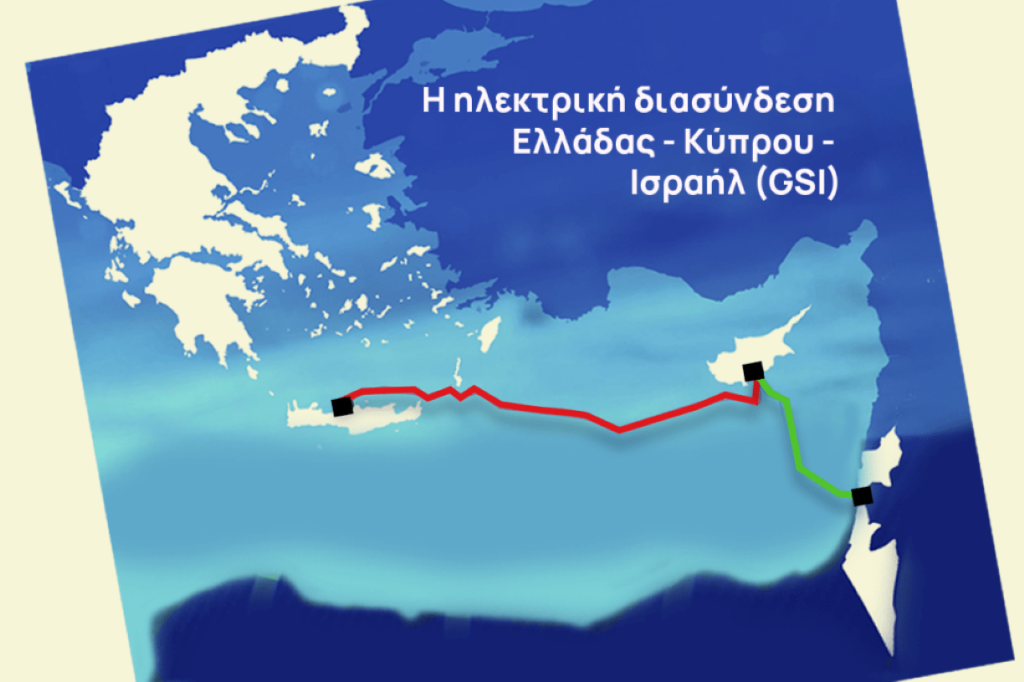
 Greece and Cyprus have agreed to support a funding request by Greece’s Independent Power Transmission Operator (ADMIE), to the European Investment Bank for the Great Sea Interconnector, the planned electricity link between Greece and Cyprus.
The move has brought renewed optimism for the long-delayed project, though diplomatic sources and energy market officials caution that it is still uncertain whether the project will now enter an execution phase, and whether or not Turkey will create obstacles for the project.
EU renews support for the project
The development came on the sidelines of the informal meeting of European Union energy ministers in Cyprus.
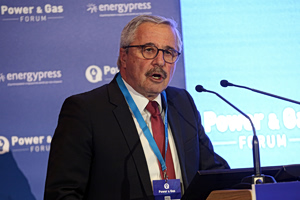
Greece’s Minister of Environment and Energy Stavros Papastavrou, his Cypriot counterpart Michalis Damianou, Deputy Minister Nikos Tsafos, EU Energy Commissioner Dan Jorgensen, ADMIE Chairman and CEO Manos Manousakis, and European Investment Bank Vice-President Ioannis Tsakiris encouraged ADMIE to submit a funding request to the bank.
The most significant element is that the EU, through the Energy Commissioner, reaffirmed its support for the Greece-Cyprus electricity interconnection. Greece and Cyprus also appear aligned on moving the project forward, despite objections raised by Nicosia several months ago.
Jorgensen recalled that the project has already secured €680 million in EU funding as a Project of Common Interest. He also noted that the European Commission has designated the GSI as one of eight Energy Corridors prioritized for the completion of the EU’s Energy Union.
He also linked the project to regional instability and the wider energy crisis.
“This is a project that can truly strengthen regional security of supply and market integration, as well as accelerate the integration of cheap and sustainable renewable energy in the Eastern Mediterranean. Especially at a time when we are facing yet another energy crisis, linked to our dependence on imported fossil fuels,” he said.
ADMIE to seek €1 billion from EIB
According to information from Brussels, ADMIE is expected to submit a funding request to the European Investment Bank within the next 10 days.
Sources say the request will be for €1 billion.
The project has already received €680 million in EU funding, while ADMIE is estimated to have spent €300 million so far. The overall budget stands at around €2 billion, meaning an additional €1 billion in capital is being sought.
The European Investment Bank will evaluate the request. More specifically, it will carry out due diligence on the project, assessing both its technical characteristics and its economic viability. Depending on its conclusions, it will then proceed with a specific financing proposal.
Turkey’s position remains unclear
Despite the renewed European backing, the project also has clear geopolitical dimensions.
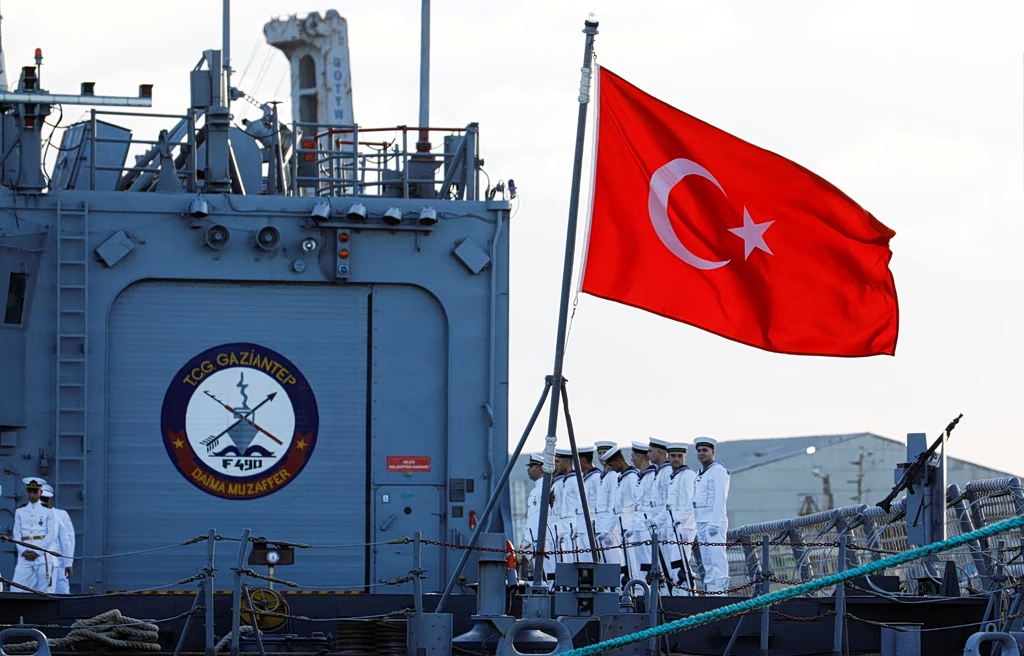
The Greece-Cyprus Cable, and its potential extension to Israel, has drawn explicit opposition from Turkey. Ankara has expressed its objections not only through statements, but also through warnings involving its fleet.
Turkish President Recep Tayyip Erdogan has repeatedly stressed that no project in the Mediterranean will move forward without Turkey’s involvement.
It remains to be seen whether Ankara will react again, or whether Athens, Nicosia and Brussels are working behind the scenes on a diplomatic move.