 Μake us preferred on Google
 I love louza. I love cured meats in general, although, sadly, I have given up most of them, with a few exceptions. They are often packed with preservatives and subjected to every kind of processing imaginable. In general, they are one of those foods that come with a serious health warning, especially when they come from mass-production chains.
But it wasn’t always this way.
For centuries, people cured meat simply to preserve it. No chemicals, no industrial processes—just the methods nature itself had taught them, perfected through experience and skill.
Thankfully, some producers still follow those old recipes. There aren’t many, but the good ones stand out. Farma Kouroupa on the Greek island of Tinos is one of them. And, as it happens, it was my craving for louza that led me there.
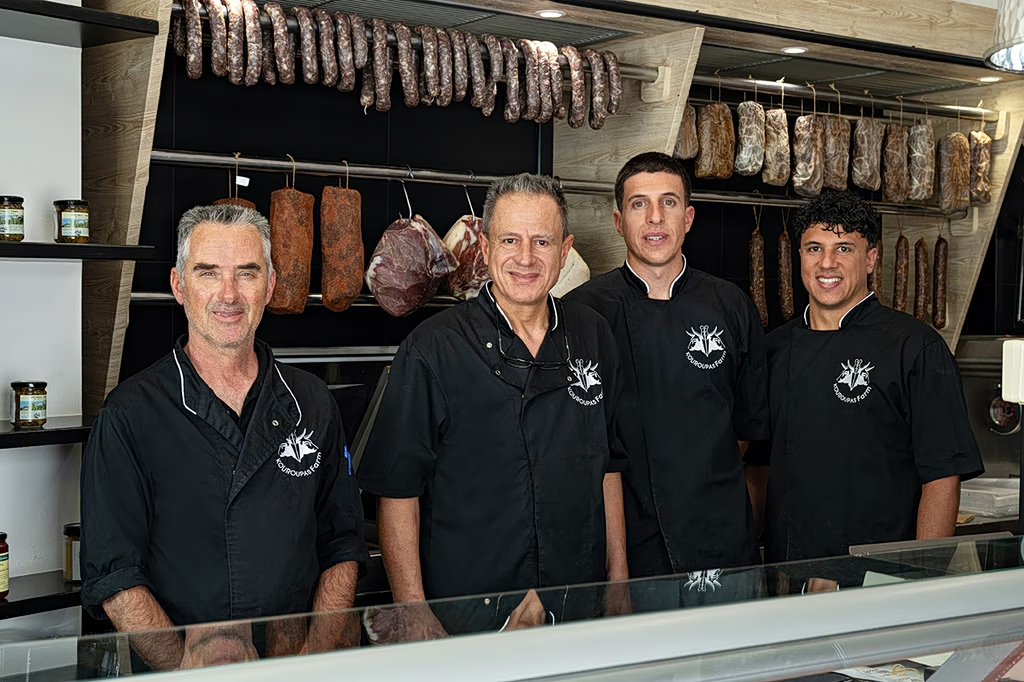
The Desypris family knows how to make locals, visitors and the island’s cooks happy: Kostas, Kostas, Takis and Dimitris. Photo: Alexandros Alexandris
A butcher shop locals swear by
Just before leaving the island, doing what any classic Athens tourist does, I asked locals where I should go to stock up on provisions. I wanted the things that give us the illusion that our trip lasted just a little longer—the tastes and aromas that transport us back to the island, if only for as long as a few bites.
Tinos’ cheeses are known around the world, and this year its graviera cheese reached the top of a global ranking. As for cured meats, international visitors may not know them as well, but serious food lovers should not leave the island without some louza and a traditional sausage. It would practically be a sin.
Every local I asked sent me to Kouroupa.
Except that Kouroupa isn’t actually the name of the owner. The family behind it is the Desypris family, and there isn’t just one of them—there is an entire family.
Their shop in Chora, the island’s main town, has been operating for more than 47 years. It began as a tiny 40-square-meter store tucked into one of the town’s narrow alleys. Two brothers, Dimitris and Giannis Desypris, started it with their own animals—pigs, lambs, goats and cattle—along with passion and their family’s traditional recipes for curing meat and making cheese.
“Besides their own animals, they also looked for meat from other livestock farmers on the island,” Kostas Desypris tells me. The son of Dimitris and the shop’s second generation, he took over the business with his cousin, also named Kostas, the son of Giannis. Together, just as their fathers had started it together.
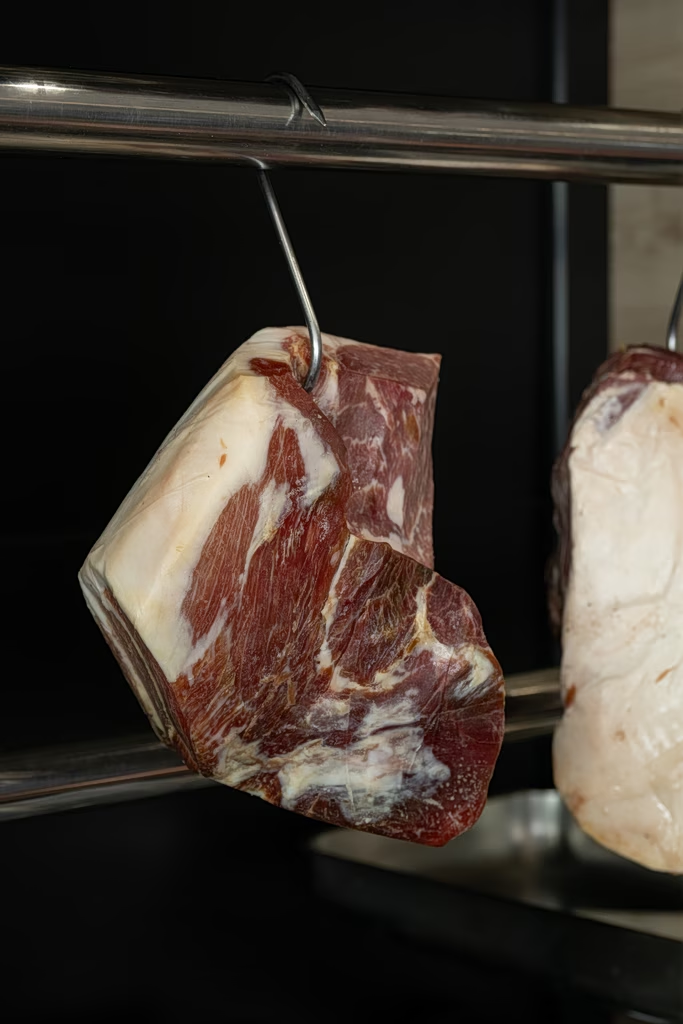
The meat that started it all. Today, Farma Kouroupa sells fresh local meat in various cuts and preparations, as well as dry-aged meat, all sourced from animals raised on Tinos. Photo: Alexandros Alexandris
The brothers sold fresh meat and cured products, primarily louza and sausages.
Today, the family no longer keeps pigs. It raises cattle and lambs and goats, while continuing to work with Tinos’ livestock farmers. The Desypris family raises and houses its own animals, continuing a tradition that is gradually disappearing on other Cycladic islands.
They insist on keeping it alive.
The lambs, goats and cattle are allowed to grow until they reach the appropriate age for slaughter. Their meat is sold fresh or put through a dry-aging process. The family keeps up with developments in the field, but the priorities remain quality and flavor.
Their cuts have become highly sought after, both by locals who know they can find the best meat at Kouroupa and by the island’s chefs and cooks, who care deeply about the quality of their ingredients.
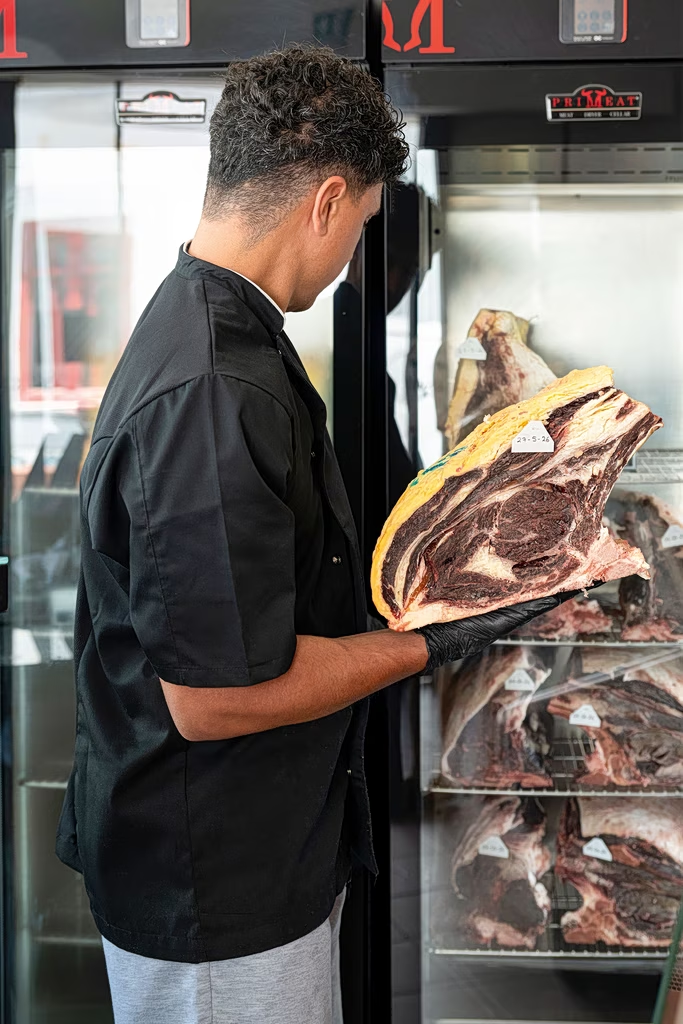
Dry-aged cuts have become highly sought after by private customers and restaurants, some of which source their meat exclusively from Farma Kouroupa. Photo: Alexandros Alexandris
Many of the island’s top restaurants work exclusively with Farma Kouroupa.
“Those who don’t look at the price but at the quality shop with us,” Kostas says.
Thankfully, there are plenty of them. Fou Fou in Isternia, Rifi in Pyrgos and Mikro Karavi in Chora are among the restaurants that rely on Kouroupa, appreciating the effort the family has put in over the years.
Livestock farming is hard work. As older generations retire, finally claiming their right to rest, production is declining.
“On our island, almost everyone still has their own meat,” Kostas tells me. “Of course, that is only for as long as the older people can keep doing it.”
The younger generations don’t seem to have the same passion—or the same willingness to devote themselves completely to a job whose financial reward may be disproportionately small compared with the effort it requires.
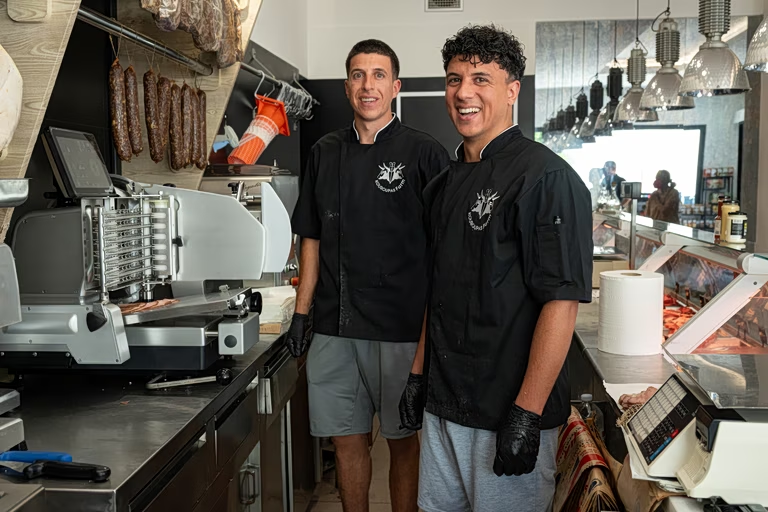
Takis and Dimitris, the third generation carrying on the Farma Kouroupa tradition. Photo: Alexandros Alexandris
Fortunately, the Desypris family belongs to a different category.
There is a future behind Kostas: the third generation. Farma Kouroupa continues as it began—not only in terms of who runs it, but also in its philosophy.
Even the recipes for its famous cured meats have remained unchanged for almost five decades.
Timeless recipes
Take louza, that wonderful, delicate cured meat with a pleasantly chewy texture reminiscent of prosciutto.
It is made from pork loin—pork loin, Kostas specifies—which is salted, submerged in red wine and left to mature before being seasoned with salt and pepper, oregano, clove and allspice. It is then stuffed into a casing and hung until it is ready to eat.
“We got this recipe from my aunt and we still follow the same one today,” Kostas says.
In the past, the entire process took place in winter, when temperatures were naturally suitable for properly curing the meat. Today, louza is made year-round. Farma Kouroupa’s modern production facility provides the ideal conditions for the cured meat to rest and develop its aromas and flavors before it reaches the shop.
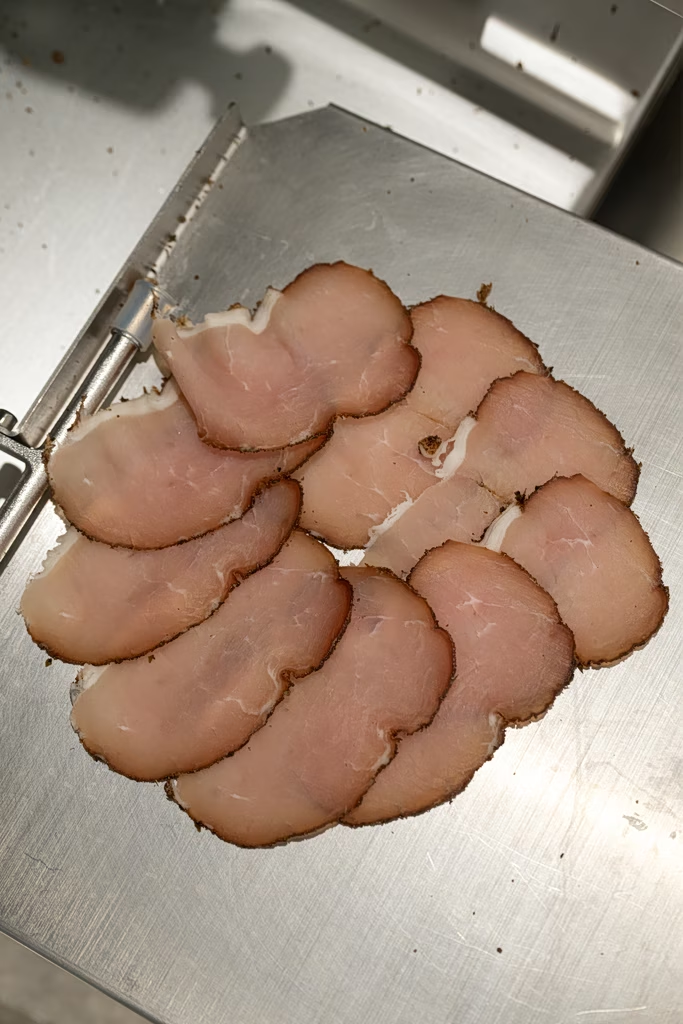
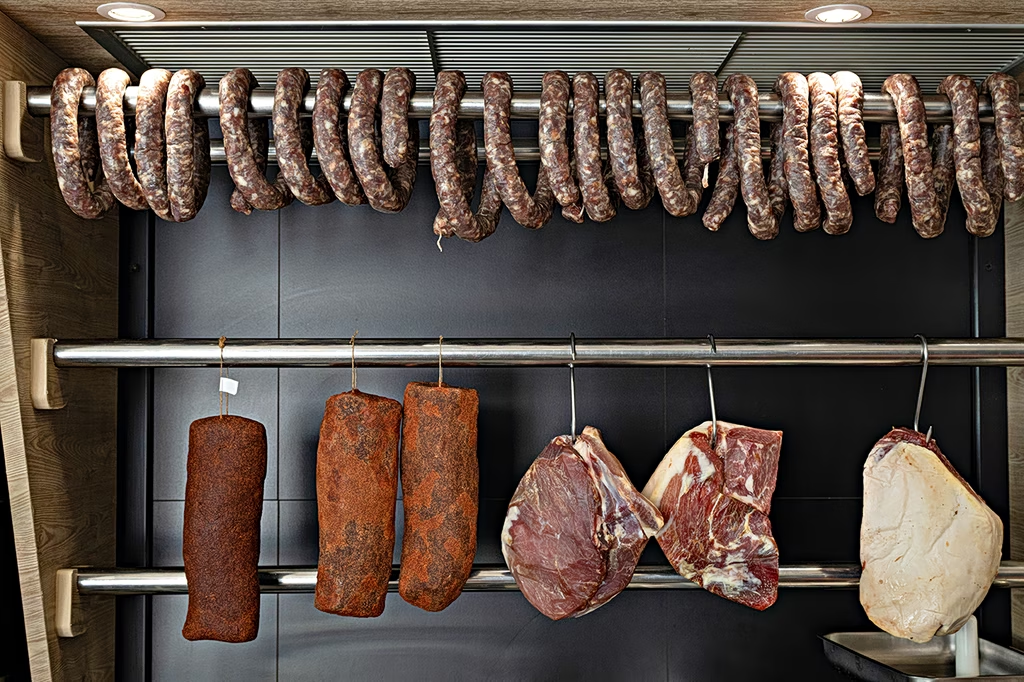
Farma Kouroupa’s exceptional louza, made from pure pork loin using the family’s traditional recipe. Photo: Alexandros Alexandris
Of course, louza is not the only thing they make.
There is excellent sausage, beef pastourma—a highly seasoned, air-dried cured beef—and salami, as well as bacon to meet more contemporary tastes.
But their bacon has nothing to do with the packaged strips sold in supermarkets. This is real meat, and even an inexperienced eye can tell the difference simply by looking at it.
The cheeses are another story altogether.
The family gives its grandparents’ recipes to the traditional Mandalena dairy in Kehros, Tinos, which produces cheeses on its behalf. The range includes graviera, volaki, kariki, kopanisti, anthotyro, malathouni and small cheese balls preserved in flavored oil, as well as pure cow’s butter.
The kind of butter that heals the soul and makes every dish taste better.
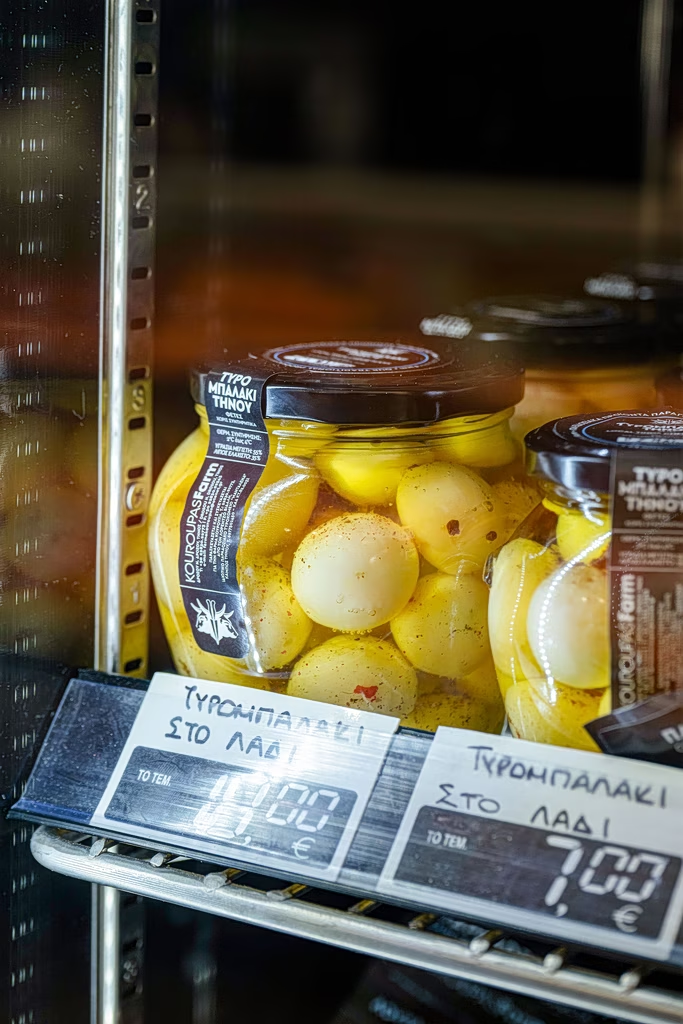
Small cheese balls in aromatic oil—the perfect accompaniment to raki. Photo: Alexandros Alexandris
At Farma Kouroupa, you can also find the products that define Tinos’ gastronomy: wild artichokes, thyme honey and sun-dried tomatoes.
Everything comes from producers on the island. The whole richness of Tinos’ land, on a plate.
Thankfully, that richness is appreciated.
Kostas tells me that in summer, lines often form outside the shop. Greeks and international visitors alike come to buy provisions and take a taste of Tinos home with them.
“Foreign visitors prefer the better-known cheeses—graviera, volaki and kariki. They know louza, too. They ask for it.”
Kostas speaks as if he has known all of his customers forever, as though he knows what they want before they even tell him. And how could he not? He is in the shop every day, from morning until night.
“We’re deficient in vitamin D—we never see the sun!” he jokes.
The work is demanding. It requires dedication and endless hours behind the counter.
“Four families lived off our fathers’ little shop—that 40-square-meter space. We grew, opened this place in 2004 and carried on.”
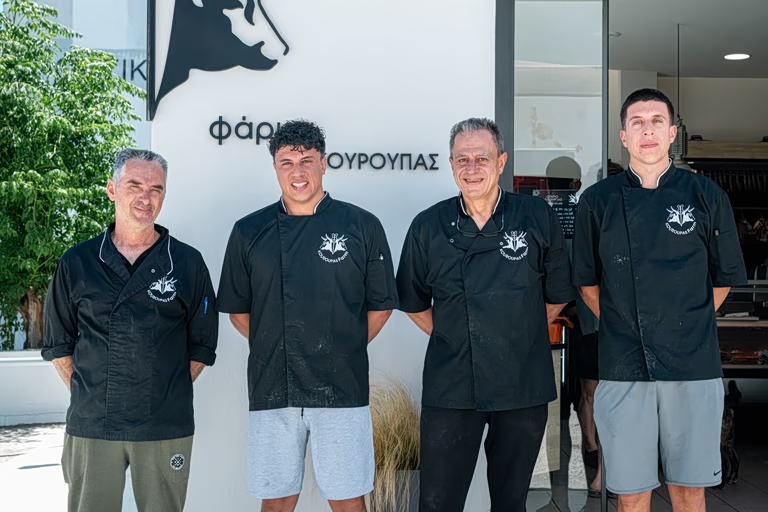
The Desypris family keeps going, preserving the traditional flavors of Tinos for future generations. Photo: Alexandros Alexandris
Thankfully, I think.
Thankfully there are people like Kostas and Kostas Desypris, the two cousins who took over their fathers’ business, continued it and grew it together.
They have done it without compromises or shortcuts, sticking to what they learned and to the principles that brought them this far.
The same principles that, surely, will carry them many, many years into the future.