 Μake us preferred on Google
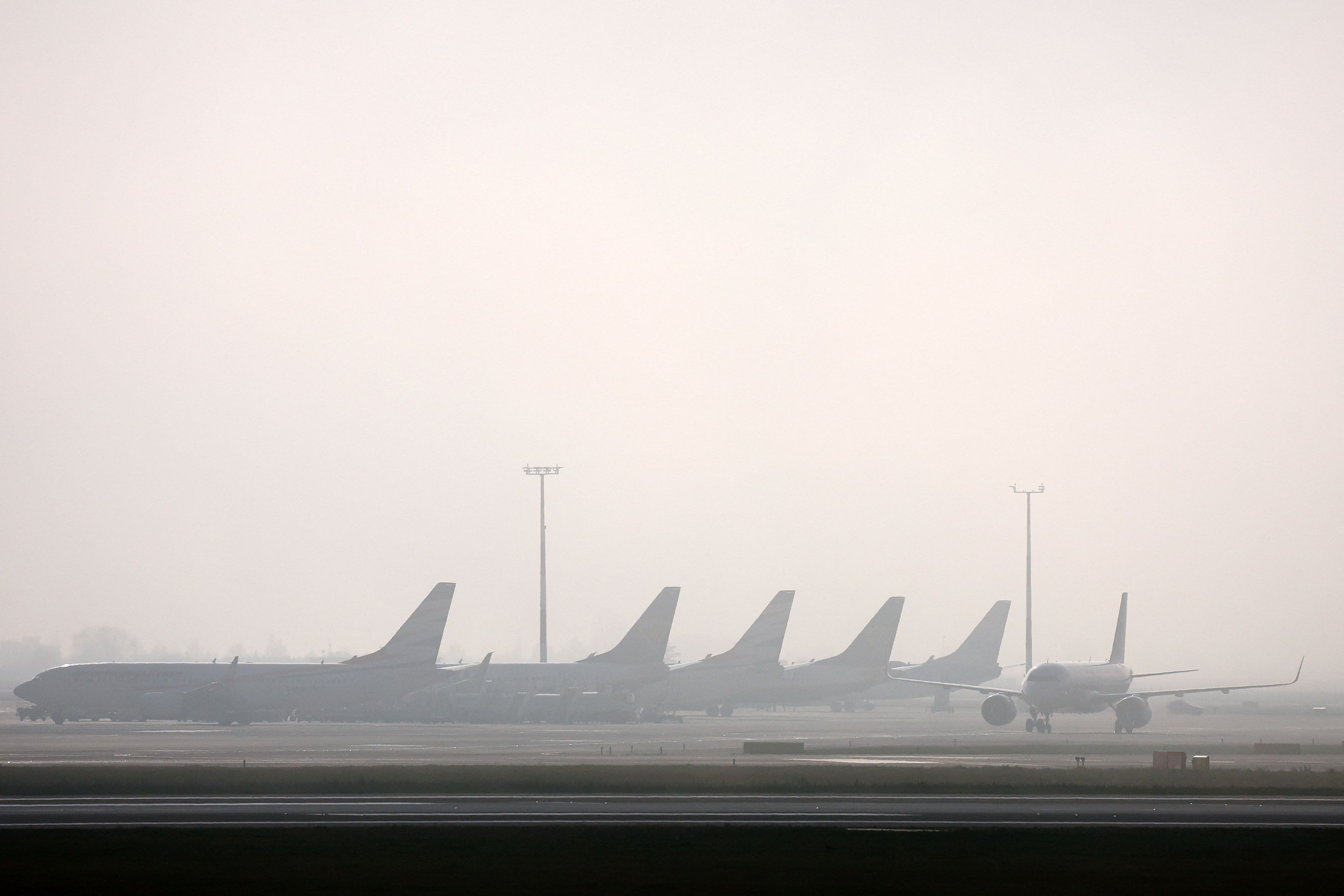
Last week, an Aer Lingus flight left Dublin, Ireland for Rome, Italy. A false bomb threat was received, and instead of landing at its designated location, it landed at Évreux, a French airbase, escorted by two French fighters.
Eurocontrol, which is Europe’s air traffic authority, counted bomb threats against 14 of the nearly 26,300 flights within European aviation on November 5th.
Of course, bomb threats aren’t new in aviation. Philip Baum, a professor of aviation security, states that some airlines even get them every day, with most bomb threats being quickly judged as non-specific. However, last week seemed different, he says. In fact, authorities in European countries seemingly treated them as credible threats, enough to justify landings and searches.
On an ordinary day, such threats are not usually answered so loudly. Authorities judge them as non-threatening, and the plane carries on with its itinerary. However, last week, governments instead answered loudly with diversions and fighter jet escorts.
We are seeing a pressure build up in Europe. In fact, an increasing instinct for preparedness shadowed last week’s bomb hoaxes. Someone who calls in a fake bomb threat doesn’t actually lose anything. However, the cost for answering such threats is very high. Baum reckons that each disrupted flight costs an airline as much as $250,000. And of course, the lost hours stack up.
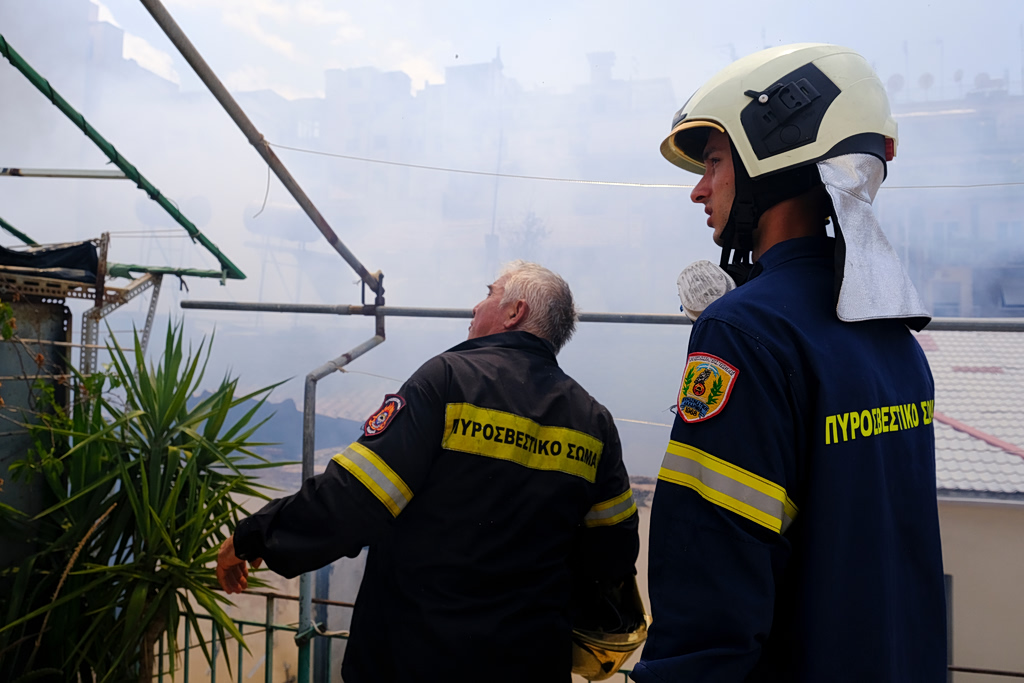
Greece was affected as well. At Syros on November 3rd, the Hellenic Coast Guard inspected the Crown Iris, an Israeli cruise ship with 1,537 people aboard, following such a fake bomb threat. Whilst the cruise ship has been a matter of protest in Greek ports since 2025, this time the authorities took the threat seriously enough to warrant a search.
Also since October, refrigerator hacks occurred, which were then followed by the bomb threats. Hackers, who were able to switch refrigerators in hundreds of French supermarkets into defrost mode, causing millions in damages, which was followed by a new wave of hacks across Europe.
Whatever anyone intended, maliciously or not, the way that this has all worked out shows itself as a test where we Europeans give the answers, and the answers are known publicly. Bitsight, a security firm, was able to conduct an investigation into web scans for web pages which were used to manage such fridges. Of the fridge systems it could follow since mid-September, six in ten were still open online three weeks following the French attack, which shows that even after France was hit, most of such systems elsewhere were still left open and vulnerable.
Greece also took into account its own vulnerabilities. On October 14th, two days following the French attack, Greece’s cybersecurity authority found more than 300 exposed systems, mainly refrigeration controllers. Its deputy head, Ioannis Pavlosoglou, called Greece a little lucky since it digitizes some things a little more slowly.
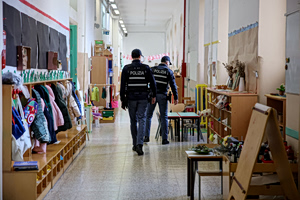
By November 6th, authorities did not attribute the threats to any group or state. However, in Italy alone, signatures pointed in different directions, aiding in the foggy nature of the attacks. An email that emptied a primary school in Rome claimed origin from the Iranian Revolutionary Guard Corps. And emails which were sent to Italian airlines named a Russian far-right movement whose own founder states the group is defunct and was not involved. It has always been clear that a name costs nothing to borrow. And in fact, it is what might be aiding in our inability to figure out who actually is behind all this.
The only concrete answer we have is that the affected systems rely on our ability to sustain society. That means airports, ports, and of course, servers being vulnerable. It seems as though government advice to keep cash, water, and food at home has stopped sounding like preparedness and has started to sound like a potential warning. Diversions do cost money, but crossing a little further along also costs the calm of the people.
On November 3rd, the European Commission proposed to member states a non-binding preparedness guideline, including steps for the first 72 hours of a crisis, listing essential needs. Whilst the original 72-hour target for preparedness dates back to March of 2025, its reintroduction into policy discussion shows that Brussels understands a risk. Interestingly enough, the Commission’s own staff paper warns that such communications to the public may be perceived as alarmist.
We have already seen Sweden with its central bank suggesting households to keep 1,000 kronor in cash per adult at home, with Sweden stating that the worst case scenario is war. In May of 2025, a Dutch payments forum chaired by the central bank advised 70 euro per adult for a three-day monetary infrastructure outage, with both coming in before the hoaxes.
We can see then that the hacks of last week follow an already heightened state of preparedness within the European Union. To the point that even Ireland had to step back, its government dropping plans to tell households to be self-sufficient for at least 72 hours, because they feared that such advice would make its citizenry anxious.
So, how many fake bomb threats until Europe stops answering? Europe cannot stop incoming bomb threats. It can only answer more quietly, as it does on ordinary days. The number worth knowing, though, is a different one. How much actual pressure can we as Europe take before a government’s advice to keep essentials at home crosses the alarmist line?
Each country draws that line in different places. However, the pattern recognition throughout Europe is public, and it is clear for anyone who is paying attention that Europe is inside a boiling kettle. And in Greece, one may wonder, would the same words from a government bring back the fiscal worries from 2015?
Whoever sent such threats, an attentive state actor or group need only to take a look. It only has to watch for the first government to cross the line and for what that government’s people do next.
So far, it’s only a bit of pressure, and it’s already cost Europe money.