 Μake us preferred on Google
At a seminar in Beijing in July, scholars in economics and international relations had a first-hand view of the disruption caused by the biggest round of purges in China for five decades.
Befitting his role as one of the most senior participants, a seat and nameplate had been prepared for Fang Xinghai, a retired Chinese market regulator.
But to the surprise of the other attendees of the conference at Peking University, the Stanford-trained Fang, one of Beijing’s most articulate interlocutors with foreign businesspeople and investors, never showed up to speak.
Messages to his phone went unanswered. Then, Xinhua, the official Chinese news agency, announced Fang was under investigation for “suspected severe violations of Party discipline and the law”.
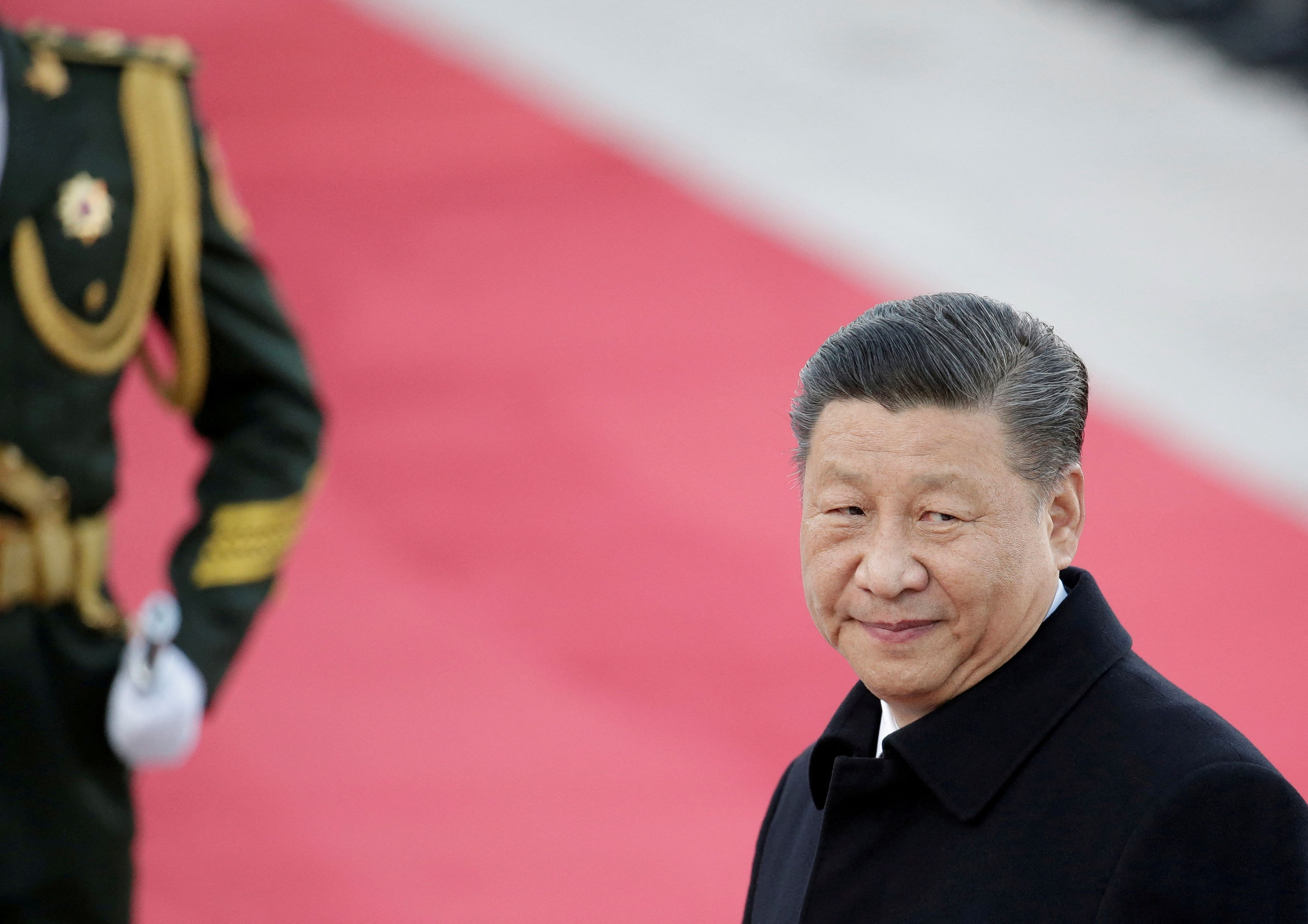
As Xi Jinping prepares for a fourth term as Communist Party leader next year, probes are multiplying into the party’s rank and file for discipline and corruption violations.
Even elite policymakers such as Fang are among those disappearing into Beijing’s feared internal investigation system as a decade-long campaign of party “self-purification” accelerates, with implications for the distribution of power, the economy and even the military.
One indication came last week at one of the most important political meetings of the year: the “fifth plenum” of the Communist Party’s largest leadership group, the Central Committee.
About one quarter of members were absent, largely due to purges, in the committee’s most depleted gathering since Mao Zedong’s Cultural Revolution over half a century ago.
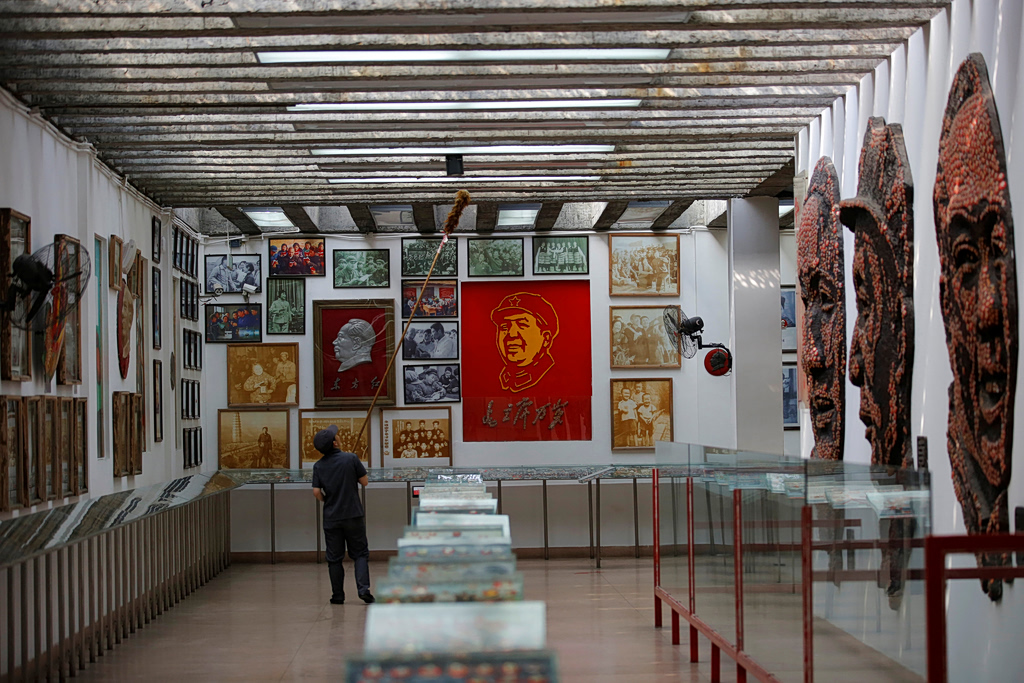
A staff member cleans an exhibition hall displaying images of late Chinese chairman Mao Zedong and pictures taken in the 1960-70s at Jianchuan Museum Cluster in Anren, Sichuan Province, China, May 13, 2016. Tucked away in southwestern China’s Sichuan province, a private collector stands virtually alone in exhibiting relics from the 1966-1976 Cultural Revolution. Monday marks the 50th anniversary of the start of the political movement, with no official commemorations planned. Official records whitewash the details of both periods, but admit that Mao made major mistakes. REUTERS/Kim Kyung-Hoon FOR EDITORIAL USE ONLY. NO RESALES. NO ARCHIVES. SEARCH “CULTURAL KIM” FOR THIS STORY. SEARCH “THE WIDER IMAGE” FOR ALL STORIES?
Hammering home the message, the meeting released a communiqué telling cadres they had one choice: full obedience to the party leadership or the risk, at the very least, of expulsion.
Since Xi became general secretary in 2012, the communiqué said, the leadership had turned “the blade inward” and cut out “serious hidden dangers within the Party, the state and the military”. Now, it added, “we must maintain intense pressure”.
As apprehension spreads through the bureaucracy, analysts warn the endless purges risk having a chilling effect on frightened officials lower down the system — a filter through which they allow only good news to reach the top.
In a country with no free press, a heavily censored internet, no general elections and few other independent feedback mechanisms, the consequences could be profound. Experts warn the impact could be particularly dangerous at a time when the party needs dynamic policies to reverse a deflationary spiral threatening China’s economy.
“The party was already in an echo chamber before the fifth plenum,” says Steve Tsang, director of the China Institute of Soas University of London.
In his view and those of many others, Xi’s iron grip is only going to get tighter: “The plenum is basically all about loyalty, discipline, control.”
Disciplining millions
When Xi became general secretary 14 years ago after decades of rapid growth, one of his tasks was to crack down on rampant financial corruption and give the party greater political legitimacy in the eyes of the public.
According to Zhang Fuhai, deputy secretary of the party’s internal investigation unit, the Central Commission for Discipline Inspection, the anti-corruption campaign has achieved “an overwhelming victory”.
At a press conference after the plenum, Zhang hailed the campaign’s progress in “eradicating evil” and “resolutely clearing the viruses eroding the healthy body of the Party”.
Officials argue the campaign is aimed at clearing out bad practices in the party so that it can “better serve the people”.
But empirical measures indicating its success are hard to find. China’s score in Transparency International’s Corruption Perceptions Index has improved by only four points since 2012, from 39 to 43 last year. The global average was 42 in 2025, with scores below 50 indicating serious corruption problems.
Beijing tends to measure the progress of the battle against corruption by the number of officials disciplined. By that score it is a raging success. Nothing like it has been seen since Mao’s rule, according to Minxin Pei, professor of government at Claremont McKenna College in California.
About 7.2mn Communist Party members have received some form of political, administrative or judicial punishment, Pei calculates. These include at least 632 “tigers” — senior officials at or above vice-ministerial or deputy governor ranks.
Over the 11 of Xi’s 13 years of rule for which data is available, about 628,000 cadres have been criminally prosecuted and have probably received jail terms. (Generally, far fewer than 1 per cent of prosecutions in China fail to end in conviction.) Those convicted are thought to represent a sizeable portion of China’s 1.69mn jail population as of 2024, Pei says.
The number of those disciplined has also risen dramatically.
During the second term of Xi’s predecessor Hu Jintao, an average of 145,800 cadres per year were disciplined and about 5,460 prosecuted.
In Xi’s third term as president, which started in 2023, an average of more than 800,000 a year have been disciplined, hitting a record last year of 983,000.
Prosecutions are now about 14 times higher than during Hu’s second term, with charges brought against an average of about 75,000 officials each year during Xi’s current mandate.
“It’s not a coincidence that a year before the next party congress he is putting out this resolution [on stronger party control],” says Pei, referring to the meeting next year expected to give Xi a fourth five-year term.
“And that’s a warning to everybody.”
The scars borne by the Central Committee from the purge were on display at the fifth plenum last week.
The communiqué confirmed the expulsion of 33 officials — 17 civilian and 16 military — who were Central Committee members or so-called alternates who do not have the right to vote.
The empty seats in the vast hall hosting the plenum were once occupied by heavy hitters such as Zhang Youxia, formerly the Central Military Commission vice-chair.
Previously the most senior-ranking official in charge of the People’s Liberation Army after Xi, who is the commission chair, Zhang has been accused of disloyalty and forming “cliques and factions”. The Politburo formally approved his expulsion from the party and military last month.
The communiqué confirmed the expulsion of Ma Xingrui, a former aerospace engineer and party boss of Xinjiang, and Jin Zhuanglong, a former technology minister. Also ejected was Liu Jianchao, a former top Chinese diplomat and contender for foreign minister, who, like Fang, regularly interacted with foreigners in Beijing and abroad.
The meeting announced that Zhang Shengmin, Xi’s current vice-chair on the military commission, had been elevated to the party’s Politburo — which now has no other military members. The new appointee, a political commissar, has led Xi’s sweeping purge of the military over the past two years.
The move reflects the importance Xi assigns to loyalty, says Soas’s Tsang, potentially at the expense of professional military experience. He notes that the now-purged Zhang Youxia — who participated in China’s war with Vietnam in 1979 — was one of the few remaining People’s Liberation Army officers with combat experience.
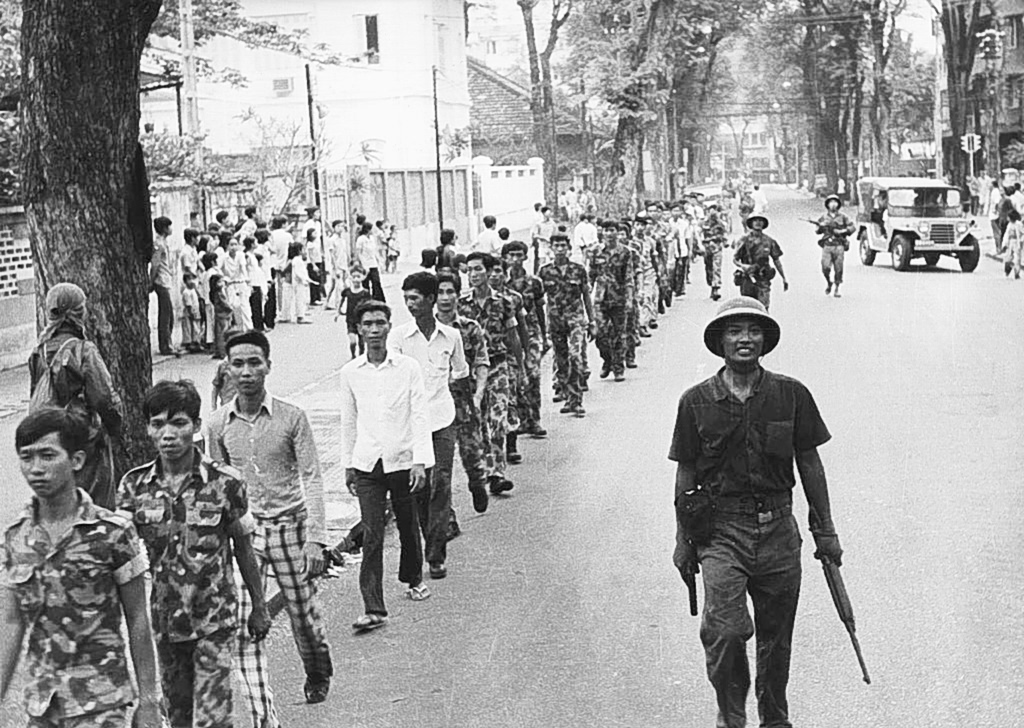
(VIETNAM-25,)
A 30 April 1975 photo shows a line of captured US-backed South Vietnamese Army soldiers, escorted by Vietnamese communist soldiers, as they walk on a Saigon street after the city fell into the hands of the communist troops on the same day, marking the end of the Vietnam War. Government calls for a renewed spirit of self-sacrifice 25 years after the end of the Vietnam War are met with increasingly deaf ears from a post-war generation which eyes the material prosperity of Vietnam’s pro-Western neighbours with envy. AFP PHOTO
In the near term, the sweeping purges of the military could be highly disruptive to its ability to conduct large-scale operations, such as an invasion of Taiwan, Philip C Saunders of the National Defense University in the US wrote in an article published by the Asia Society think-tank. But he added that, in the medium term, it could improve the PLA’s operational capabilities as younger, better-educated officers rise through the ranks.
“You have now shifted from putting the PLA under the charge of arguably the most professional, competent combat commander into the hands of a political commissar,” Tsang adds. “So it’s loyalty and party spirit which you are now clearly prioritising.”
Chess and card rooms
After more than a decade warring against corruption, Xi’s grip on the party appears to be stronger than ever. And yet his speeches indicate frustration that he does not have enough control or that policy is not being implemented effectively.
In January this year, the Chinese president delivered a speech behind closed doors to the CCDI, the internal investigation body, signalling rising exasperation with top officials’ poor delivery of his policies.
The speech remained secret for months, but according to extracts published in Qiushi, the CCP’s official ideological journal, in the run-up to last week’s plenum, he lectured senior officials on the need for vigilance against “two-faced” cadres who, he said, “take many forms”.
Xi listed six manifestations of duplicity. These include people who “quickly and loudly” expressed their commitment to carrying out the central committee’s plans only to “inwardly resist” and disobey orders.
Then there are those, he said, who are “ideologically liberal”, adopting his doctrine — officially dubbed Xi Jinping Thought on Socialism with Chinese Characteristics for a New Era — “only when it suits them”. A further type is “factional” and pursues the interests of their small cliques. Others are concerned only with self-interest, or shift “with the political winds” or take a “laissez-faire” attitude towards their responsibilities, allowing problems to “fester and spread”.
Xi said all six types were “extremely harmful to the party’s cause and image” as he urged the commission’s members to “resolutely eliminate them”.
“It is interesting saying what all these problems are . . . but they are very restricted in handling them,” says Alexander Davey, an analyst at the Mercator Institute for China Studies in Berlin. “It is very different from how we do things in a democracy.”
Davey argues that Xi can only reform the Chinese system through changes within the party rather than external accountability and oversight, as would be the case in countries with the separation of powers.
At the heart of the challenge facing the Chinese president is the problem of incentives. For years party officials were able to leverage the country’s astronomical growth trajectory for their own personal gain — whether financial or career based, or both.
But since coming to power, Xi has sought to overhaul the way party officials are assessed internally, the so-called cadre-evaluation system, to include more than just their ability to generate GDP growth, said US-based academic Zhuoran Li in a July paper for the Asia Society that drew on interviews with Chinese officials.
Now such goals encompass priorities including sustainable economic development, social harmony and party-building, among others.
But just as the party has sought to recalibrate the incentive system, Beijing has also cracked down on the country’s debt-fuelled property boom, removing the main source of funding for local governments: land sales.
The property implosion and evaluation reforms meant officials “faced a growing number of performance targets while operating under increasingly constrained fiscal and administrative capacity”, Li said.
Perhaps because of the difficulty of career advancement, local officials are instead seeking to demonstrate their abilities and adherence to national objectives via “showcase” projects to gain their superiors’ attention.
Among scores of examples cited by state media, a small county in Linyi, in China’s eastern Shandong province, invested more than Rmb700mn ($105mn) in a “modern agricultural public training base”.
The project was originally touted as a large-scale facility expected to train 17,000 people a year in high-tech agricultural technologies and services, while also accommodating as many as 1,000 people for multi-day conferences.
Local reporters who visited the site said in April that they found an auditorium, a hotel, apartments, small gardens, a gym and rooms for playing chess and cards. The report added: “What they could not find was a single facility or piece of equipment related to crop cultivation, livestock breeding or agricultural machinery training. The only visible connection to agriculture was a small sign.”
Zhang Zhongjun, deputy director of the Research Centre for Xi Jinping Thought on Socialism with Chinese Characteristics for a New Era at the elite party school, wrote at the time that such projects highlighted that officials were “paying insufficient attention to public satisfaction . . . policy implementation and the delivery of tangible improvements to people’s livelihoods”.
In August, a report in CCP magazine Dang Jian, or Party Building, lambasted officials who pursued spotlight projects in a bid to “satisfy their superiors”.
“They are reluctant to tackle difficult problems inherited from the past or lay the groundwork for long-term development plans. As a result, old problems remain unresolved while new ones continue to emerge,” the report said.
Self-revolution
Despite Xi’s frustration with errant or intransigent cadres, many question how much further the party can push the disciplinary campaign.
This Monday, in an article under his own byline in the mass-circulation People’s Daily — a rare occurrence — the president suggested there was some way to go.
He wrote of how, while living in a “cave dwelling” in 1945, Mao had suggested letting the Chinese people supervise the party. Mao saw this idea, which he called “democracy”, as a means of preventing dynastic rule, says David Bandurski of the China Media Project.
Xi added that the party had arrived at a second answer during his own rule — “self-revolution”, the party’s supervision of itself — to maintain its “advanced nature and purity” and achieve “self-renewal”.
The danger is that the policy will backfire by creating the incentive for cadres to inform on their peers, decimating the ranks for little return, analysts say.
“If you say there is zero tolerance, officials who are in fierce competition with each other will begin to submit evidence of wrongdoing on each other as a way of getting rid of their competitors in this kind of tournament towards higher-level offices,” says Victor Shih, a professor of Chinese political economy at the University of California, San Diego.
He adds that the plenum proposed reforming institutions to eliminate undisciplined cadres but notes that it had already taken such a step five years ago. “It apparently has not worked because more and more officials are being accused of corruption and being removed,” he says.
Ultimately, the purges could create paralysis among local governments, with officials afraid to approve ambitious projects. China’s local government debt problems already mean that they are struggling to invest.
“I think many officials are not doing very much,” Shih says. “Because any time you try to do something big . . . you’re going to involve a lot of contractors, billions of renminbi will change hands and you’re going to be vulnerable to charges of corruption.”
With China suffering from weak domestic demand, the plenum communique’s “emphasis on political discipline could create tensions with Beijing’s economic objectives”, according to Oxford Economics senior economist Sheana Yue.
“Local officials may prioritise political compliance over experimentation,” she wrote in a research note. “Greater risk aversion could slow project execution” and weaken the impact of fiscal stimulus measures.
The additional problem is the danger of the echo chamber — that Xi and the top leaders only hear what they want to hear, with lower-level cadres too scared or unwilling to tell them the true picture about social or economic challenges.
In notes released at the plenum, Xi went out his way to deny that his campaign is having any negative effect on the economy. Instead, he argued that “by resolutely addressing all forms of misconduct and corruption, it safeguards a market environment defined by fair competition, stimulates the positive energy needed for initiative and enterprise and prevents harmful economic activities”.
The closed nature of elite politics in China means it is difficult to tell how much good information Xi and the top leaders receive, says Claremont McKenna College’s Pei. If analysts are seeking to establish whether information flows to top decision makers are deficient, he argues, policy mistakes provide just about the only evidence.
Arguably the last such error was Beijing’s maintenance of its draconian pandemic controls for too long in 2022, which contributed to today’s weak domestic economy. The party’s unwillingness to act decisively to stimulate stagnant demand could be another.
On the other hand, Beijing has achieved a vanguard position in strategic sectors such as artificial intelligence and clean energy because of its industrial policy and investment in technology.
Soas’s Tsang argues that the embedding of the anti-corruption drive, or what the party calls “rectification”, as a permanent feature of the system ultimately will politicise more decision-making at all levels.
Since “technocrats now have to behave more like party apparatchiks”, the discipline Xi has imposed on his party and country “is going to be at the expense” of the economy in the longer term, he says.
Christopher Nye, a non-resident fellow at The Jamestown Foundation, says for Xi the crackdown serves one important objective: ensuring loyalty to the party, with him at the “core”. For that reason, there will be no let-up.
“A decade of his medicine hasn’t worked, and even his closest people turned out to be corrupt,” says Nye. “His answer is a bigger dose.”
Link To FT.com: https://www.ft.com/content/8407d5dc-c231-46aa-a4fb-58d25c85892a
Copyright The Financial Times Limited 2026
© 2026 The Financial Times Ltd. All rights reserved. Please do not copy and paste FT articles and redistribute by email or post to the web.