
 Μake us preferred on Google
WEST PALM BEACH, Fla.—Two years ago, Meg Weinberger clung so closely to Donald Trump in her bid for a Florida state House seat representing a slice of Palm Beach County that she became known as “MAGA Meg.”
In office, her signature accomplishment was to co-sponsor legislation renaming the Palm Beach International Airport and part of a local boulevard for the sitting president.
Just after 8:15 p.m. Tuesday, she sauntered into a local Italian restaurant for an election party that seemed destined to be a victory celebration. Instead, an hour later, a downcast Weinberger was consoling supporters in a thinning room. MAGA Meg had fallen to a first-time candidate, Democrat Elizabeth Holmes (not that Elizabeth Holmes) who had raised just $53,000 to Weinberger’s more than $600,000.
“It’s time for MAGA to go,” said Holmes, a schoolteacher who entered the race, as she put it, “after a bad day at work.” MAGA, she argued, represented hate and corruption and the wealthy few over the struggling many. “I mean, I just want to see it fizzle out,” she said.
Across the country, in places such as West Palm Beach—where Trump celebrated his restoration at a sparkly party two years ago—such scenes played out again and again as Republican incumbents succumbed to a blue wave whose scale few had anticipated. The MAGA faithful, in turn, were left to digest a historic election defeat while trying to imagine a future for their movement without their leader and talisman.
On the latter count, many simply can’t.
Through a decade of rallies and arena-sized bonding sessions, Trump appealed to communities both Democrats and Republicans had long overlooked or misunderstood. Together, they formed a heavily white working-class coalition whose zeal and unswerving loyalty enabled Trump to become the dominant force of this political era.
Now, pundits are forecasting what one called an “asteroid level extinction event for MAGA,” a reckoning that hardcore followers from Arizona to Florida to Pennsylvania aren’t ready to accept.
Tom Cook, 56 years old, a software engineer who rallied at the Capitol on Jan. 6, 2021, after Trump insisted the election had been stolen, was still absorbing the losses Wednesday morning over eggs and coffee at Alice’s Diner in Lancaster, Pa. A day earlier, Cook had predicted Republicans would hold Congress. Now, he framed the rout as a fluke that would correct itself: Trump, as always, would regain his standing.
“There is no way that GOP candidates run on an anti-Trump platform in 2028,” Cook said. “His presidential library is probably going to be the biggest tourist attraction in America.”
Blake Marnell, widely known as “the Wall guy” for the brick-patterned suit he wears to MAGA rallies, admitted the results caught him off guard. Still, Marnell said: “I do not think this is a death knell for MAGA.”
At its heart, he argued, MAGA is about the restoration of American patriotism and an optimistic vision of the country’s future—something Trump tapped into. “With that as the groundwork, it doesn’t really go away,” he insisted.
But, as a political force, some analysts believe MAGA is already in decline. Daniel Faraci , a Washington, D.C.-based political strategist, views it as the latest in a series of populist eruptions on the right—from the nativist campaigns of Pat Buchanan and Ross Perot to the Tea Party. The next time it emerges, it will be under a different guise.
“That core loyalist group will still be there,” he said. “But as far as this broad-based movement, I don’t see it sustaining itself as a big force in future elections.”
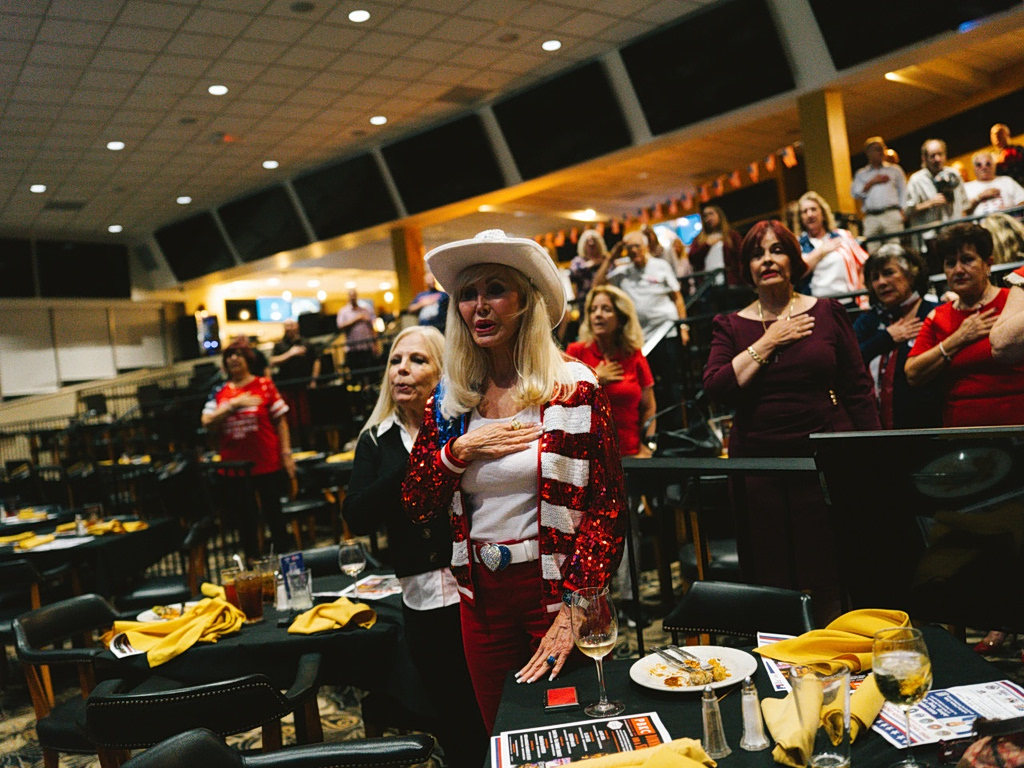
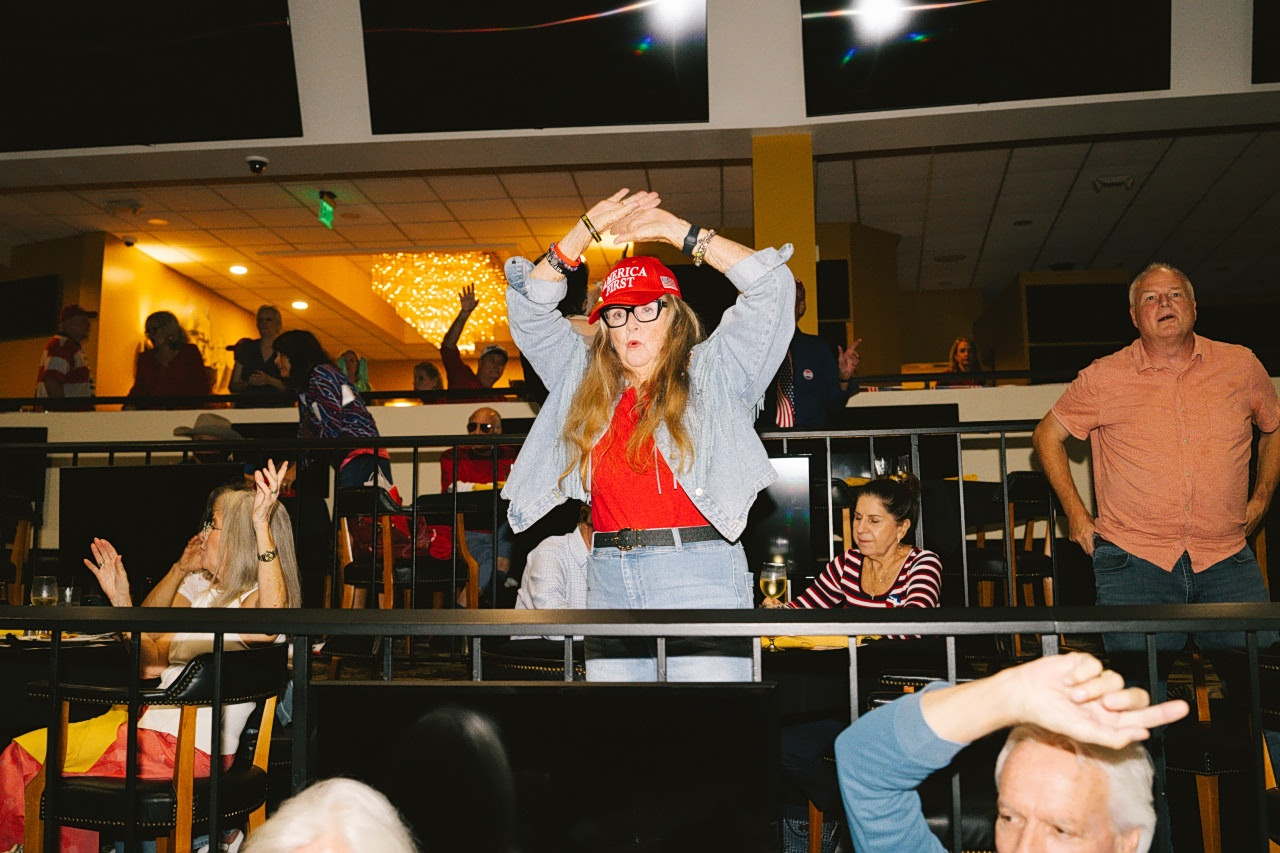
The Kennel Club watch party in West Palm Beach, the city where Trump celebrated his restoration two years ago. Photography by Martina Tuaty for WSJ
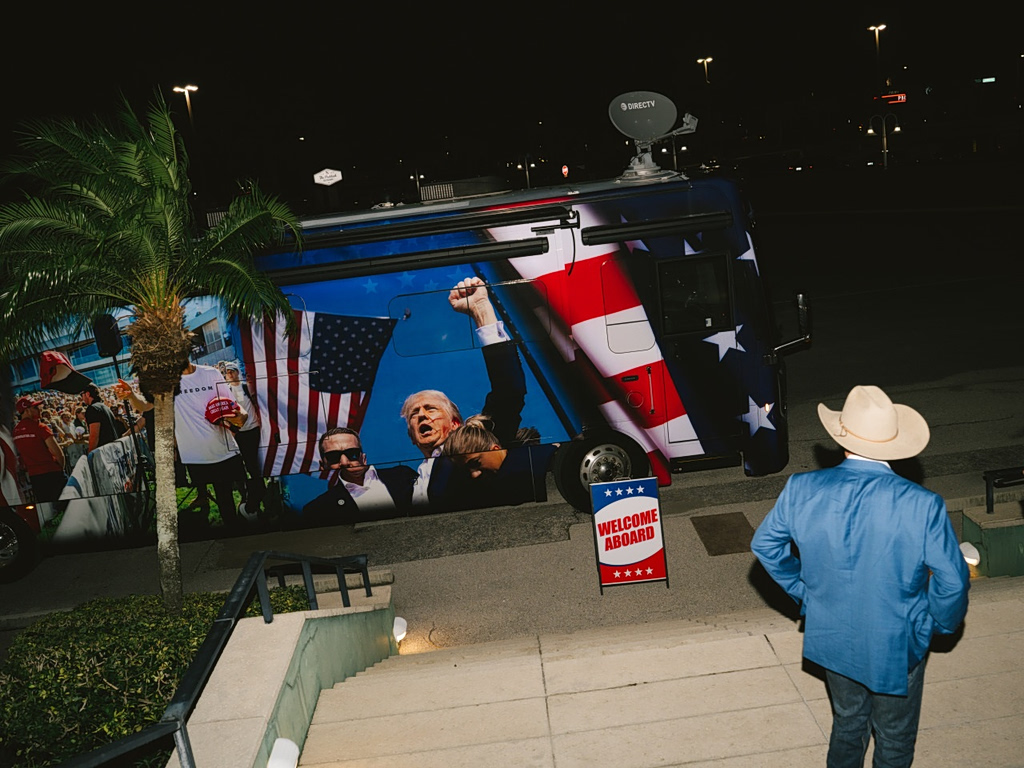
A MAGA bus outside the Kennel Club watch party. Photography by Martina Tuaty for WSJ
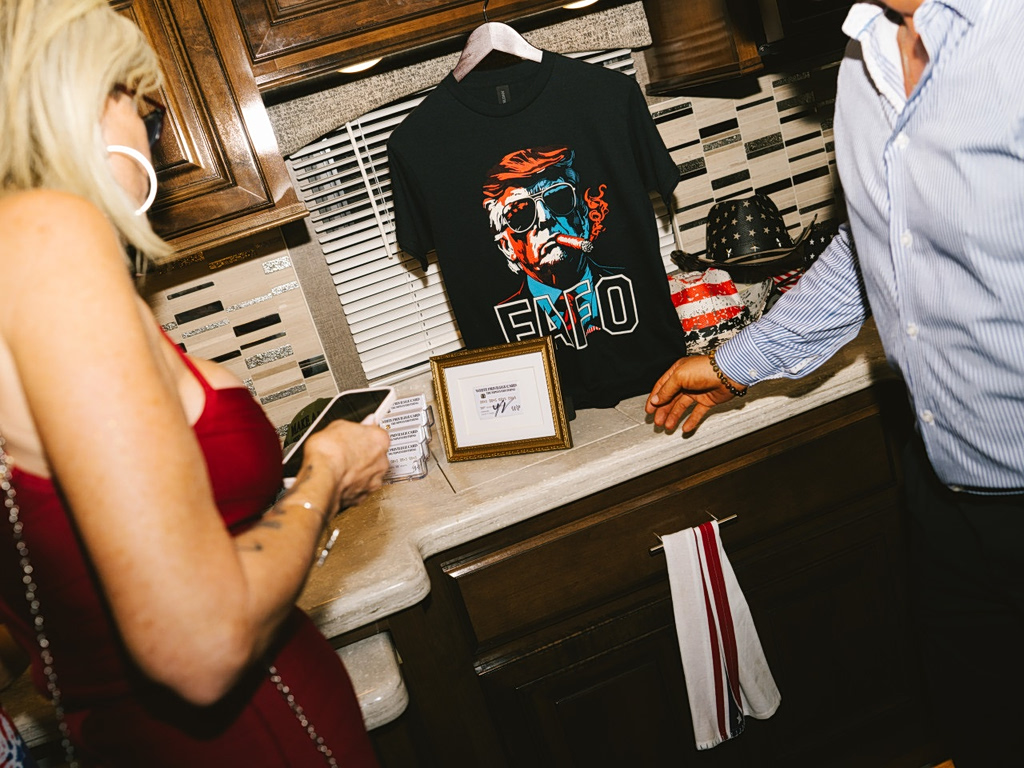
A MAGA bus outside the Kennel Club watch party. Photography by Martina Tuaty for WSJ
‘No way!’
By Wednesday morning, MAGA supporters were pointing fingers in different directions—from Israel and the Iran war to the Trump administration’s handling of the Epstein files. On the Facebook page “Ladies of MAGA,” which has nearly 200,000 members, posters were pivoting from despair and talk of moving to deep-red Idaho to debating whether Vice President JD Vance or another contender was best placed to succeed Trump as MAGA’s standard-bearer.
It was time “to start planning and praying,” wrote one member.
On podcasts and talk radio, the grim midterm postmortems came fast.
“Now, I’m not here to say MAGA is officially dead, but I know what we witnessed last night felt like a political funeral,” Charlamagne tha God said on his syndicated radio show, “The Breakfast Club.”
The pro-Trump media offered little solace. “There is certainly not a guarantee that MAGA people will rise from the ashes,” Bradley Jaye , Breitbart News’s political editor, said on the outlet’s daily podcast. He argued that MAGA would need to regroup to fight Republican elites—“the establishment folks, the Washington, D.C., consultant class”—who are re-energized. “It’s a war. It’s a new war for the ‘America First’ types.”
For many adherents, MAGA has been as much a social and cultural movement as a political one.
That is the case for Lynne Levin, 73, who began attending a MAGA meetup about six years ago. She had recently moved to Florida from New Jersey and was feeling isolated by Covid-19 restrictions.
“These people saved my life. Basically saved my life,” Levin said.

Lynne Levin at the Kennel Club on election night. Photography by Martina Tuaty for WSJ
The social club, Trumpsterz Tuesdays, was hatched by two friends, Tommy Gianquitti and Lisa Menk, who felt ostracized by the anti-Trump people in their lives. “I can’t talk to my friends. I can’t talk to my family. I can’t talk to my co-workers. We need to meet,” is how Menk described its formation. It now counts more than 3,000 members.
The Trumpsterz host pirate-themed parties, their own Mardi Gras, an early Christmas and other events that wouldn’t be unusual in a sociable retirement community. One man said he joined to meet women.
On Tuesday evening they gathered at the Palm Beach Kennel Club, a former dog racing track turned gambling hall near the airport. The crowd was mostly older. The style was red-white-and-blue patriotism with a dash of Tommy Bahama.
As at other MAGA election-night gatherings, a festive evening began in sturdy denial as one after another, attendees dismissed the ominous polls and insisted Republicans would prevail—unless their opponents cheated.
“Trump’s gonna win, and I’m gonna get $5,000,” Gianquitti, one of the hosts, predicted.
There were rousing singalongs to Lee Greenwood’s MAGA anthem “God Bless the U.S.A . ”—which Gianquitti played twice in a row—and “The Star-Spangled Banner.” “The Hustle” and other ‘70s hits gave the feeling of a disco on the Titanic.
Then, just before 8 p.m., an iceberg appeared: Gianquitti began to read early results showing progressive Democrat Angie Nixon leading a Republican in a U.S. Senate race in Florida.
“No way!” Levin gasped.
“Hey, I’m just the messenger,” Gianquitti reminded the crowd as boos rained down.
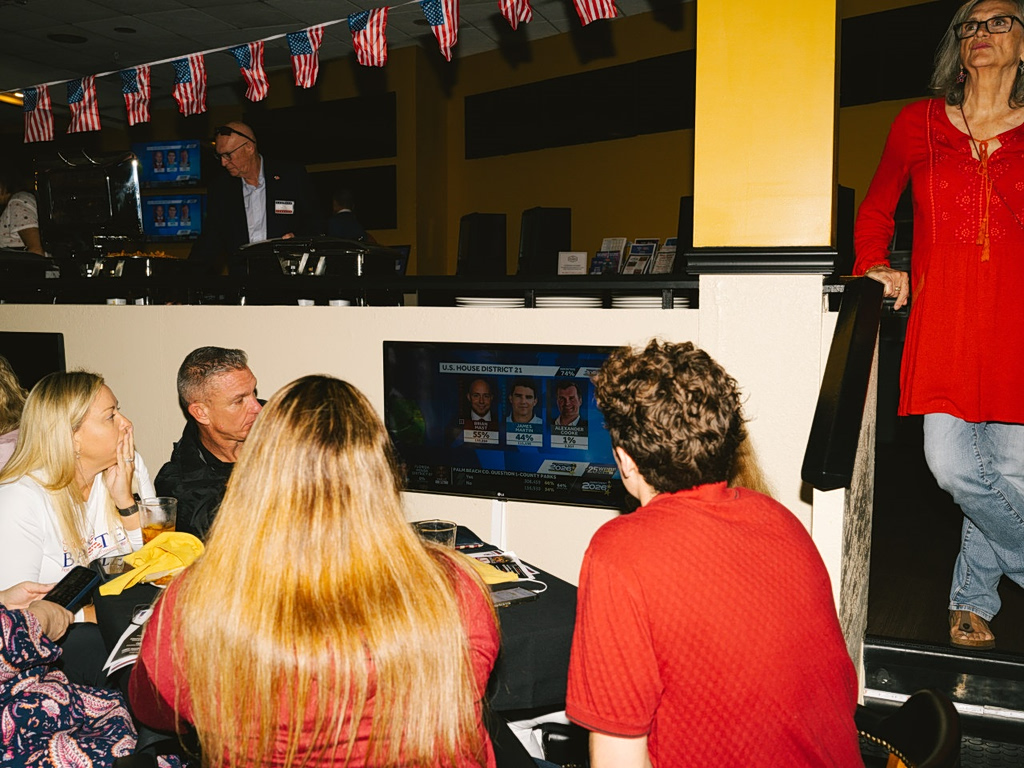
People watch election results at the Kennel Club on Tuesday. Photography by Martina Tuaty for WSJ
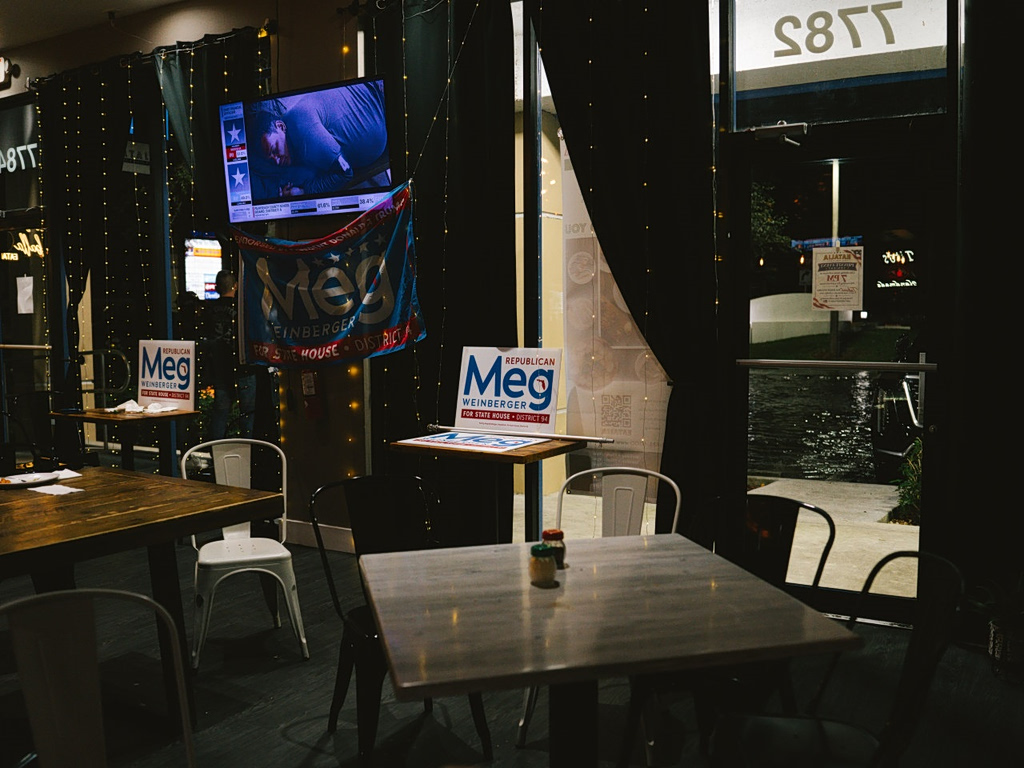
‘MAGA Meg’ Weinberger lost to her Democratic rival. Photography by Martina Tuaty for WSJ
More troubling signs followed: Democrat David Jolly was leading Republican Byron Donalds in the Florida governor’s race. (Both Nixon and Jolly ultimately lost, but the nail-biter contests rattled the room, and soon the House and Senate would fall to Democrats.)
Across town at the Eatalia Pizza Pasta & Grill, where MAGA Meg’s party was winding down, Al Baldasaro, a retired Marine, dismissed the idea of a movement in retreat.
“Trump motivated these people and it’s going to take many years before it goes away,” he said. Of the president who is now a lame duck, he observed: “They will never beat that guy down. He will stand tall.”
As Weinberger’s fate was becoming clear, Levin had her own analysis: “She shouldn’t have named the airport after him.”
Write to Joshua Chaffin at joshua.chaffin@wsj.com and Kris Maher at Kris.Maher@wsj.com