
 Μake us preferred on Google
 Shattered into dozens of pieces, the skeleton of a young man found buried in a medieval Scottish castle is likely the first confirmed case of death by trebuchet strike, a new study finds.
“The fractures suggest a very large area of impact and destruction… It’s likely that this person was killed by a siege engine,” Jo Buckberry, an archaeologist at the University of Bradford, told the Science website.
Presenting her study at a paleopathology conference in Berlin, Buckberry described the injuries of “Skeleton 150,” one of nine early 14th century skeletons discovered in 1997 at Stirling Castle.
Built along a main road leading to Edinburgh, Stirling Castle served as a Scottish stronghold during the war with the English.
The man the skeleton belonged to, around 30 years old, was likely killed during the 1304 siege, when the castle fell into English hands, the researcher estimates.
Several of the nine skeletons showed marks from sharp and blunt weapons, penetrating wounds, and other signs of combat. In addition, the nine bodies were found buried in the castle chapel, a practice that was unusual for the period. It’s likely the men were killed during the siege, when it was impossible to bury the dead outside the walls.
The study “is convincing,” Lukas Waltenberger, an osteologist at Vilnius University in Lithuania who was not involved in the analysis, told Science. The skeleton appears to have suffered a high speed, high force impact that happened within a very short span of time.
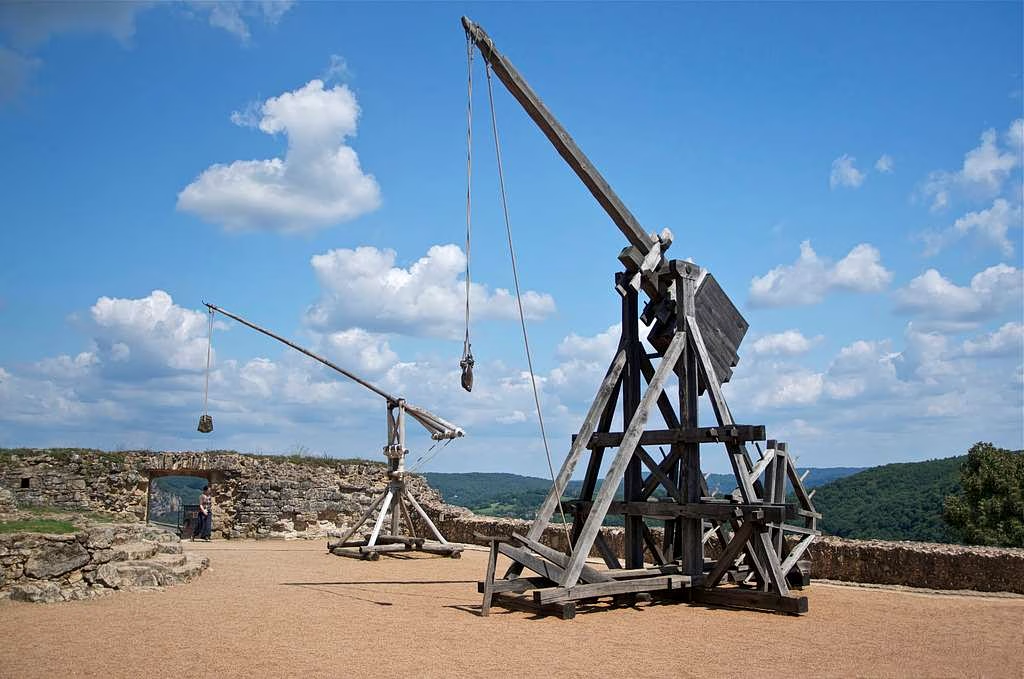
Trebuchets were invented in antiquity and were originally used to launch spears and arrows. Around the 12th century, trebuchets that used a large counterweight to hurl rocks weighing over 100 kilograms across distances of hundreds of meters began to appear.
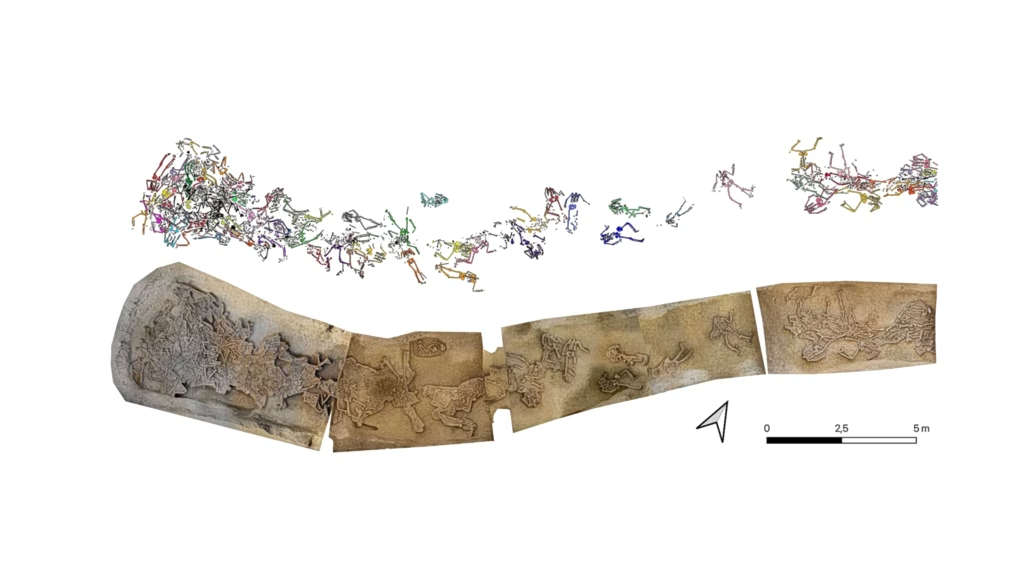
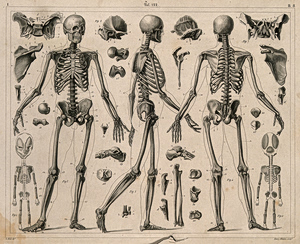
Skeleton 150, standing 1.65 meters tall, showed more than 160 fractures, 61 of them in the skull. A zigzag shaped fracture ran across the shoulder, and nearly 60 unusual fractures were counted in the ribs.
The injuries to the torso and legs ruled out a fall from a great height head first, while the pattern of the fractures and the condition of the bones ruled out trampling by horses or damage to the skeleton after death.
“It’s clear that the force passed through the chest,” said Patrick Randolph-Quinney, an anthropologist at Uppsala University who worked with Buckberry on the bone analysis.
Although there are no historical records of deaths by trebuchet at Stirling Castle, the most likely scenario, the researcher said, is that the man “was struck from behind by something moving at very high speed.”
“The closest parallels I found involved traffic accidents and people who had been struck by trains,” the researcher said.
“What is large and moving at very, very high speed in 1304 AD?” she asked.
Historical sources appear to support the study’s conclusion. During the 1304 siege, the forces of Edward I of England did indeed use trebuchets.
One of those used at Stirling Castle, called the “Warwolf,” was “the largest trebuchet built up to that time,” Buckberry said.
According to accounts from the period, the boulders tore through two stone walls “the way an arrow would pass through a piece of cloth.”