

 Μake us preferred on Google
 The Greek state is seeking to establish itself as a producer of space technology rather than simply a user of satellite data, with plans for the country’s largest-ever satellite manufacturing facility coinciding with the launch of a new national space strategy backed by approximately 350 million euro in funding.
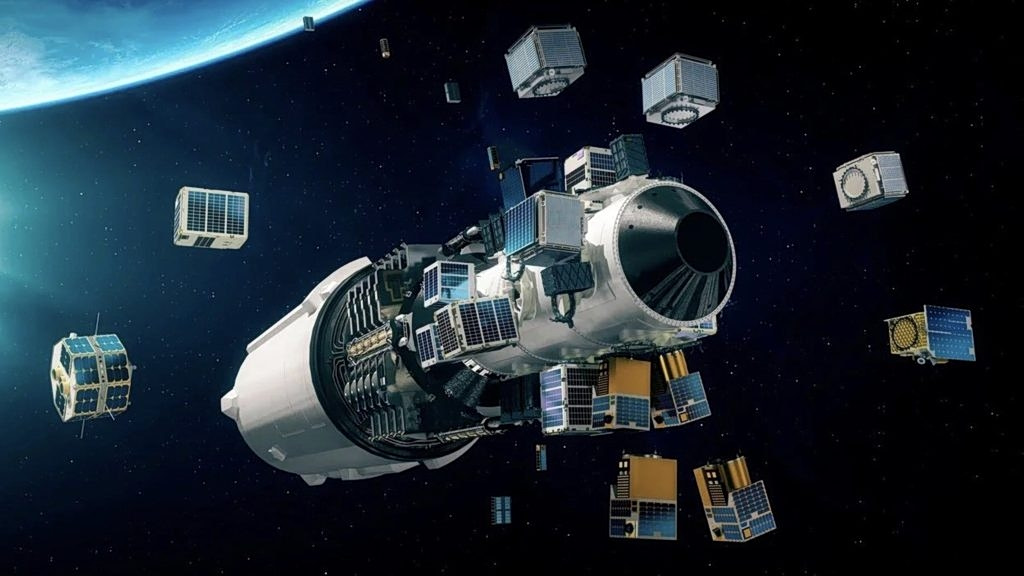
Finnish Earth observation company ICEYE has announced plans to build a satellite production plant in Greece capable of manufacturing up to 150 satellites annually, a move that would create more than 250 highly skilled jobs and make the facility the company’s largest manufacturing hub worldwide if completed as planned.
“We want to establish in Greece a major global hub for manufacturing, research, development and innovation serving the international space industry,” Vassilis Chaloulakos, head of ICEYE Greece, told the state-run AMNA news agency.
The announcement comes as the government unveiled its new HELLAS-SPACE 2.0 strategy under the “Greece in Orbit” initiative, marking the second phase of the country’s national space program.
Prime Minister Kyriakos Mitsotakis said Greece had transformed its space ambitions since 2019, pointing to the development of a domestic space technology ecosystem, the launch of the country’s first satellites and approximately 350 million euro secured through the European Union Recovery and Resilience Facility.
The new program aims to expand the use of satellite technology in wildfire and flood monitoring, maritime surveillance, precision agriculture, border security and secure communications. It builds on the national microsatellite program launched over the past two years, under which Greece has contracted for the deployment of a constellation of Earth observation satellites using synthetic aperture radar and optical imaging technologies.
Digital Governance and Artificial Intelligence Minister Dimitris Papastergiou said the country was entering “a new era” after laying the foundations of its space infrastructure through the initial microsatellite program.
ICEYE has already participated in that effort, supplying synthetic aperture radar satellite technology for Greece’s first national Earth observation satellites. The proposed manufacturing complex would go beyond satellite assembly, incorporating production lines, testing facilities and research laboratories to support the development of future satellite systems.
According to Chaloulakos, the investment is intended to create a complete industrial ecosystem capable of producing hundreds of satellites annually for the company’s global fleet while supporting research into next-generation space technologies.
The government views the project as part of a broader strategy to strengthen Greece’s aerospace industry, retain high-value technological expertise and encourage skilled Greek engineers and researchers working abroad to return home. The facility is expected to create jobs for aerospace engineers, electronics and radar specialists, artificial intelligence researchers, data scientists and satellite production technicians.
Officials have also pledged closer collaboration with Greek universities and technology companies, while the national strategy includes educational initiatives allowing secondary school students to design and build small satellites through a nationwide space program.
The government’s longer-term objective is to position Greece as a competitive European space technology hub, expanding domestic manufacturing capabilities and increasing exports of advanced satellite technologies to international markets.