 Μake us preferred on Google
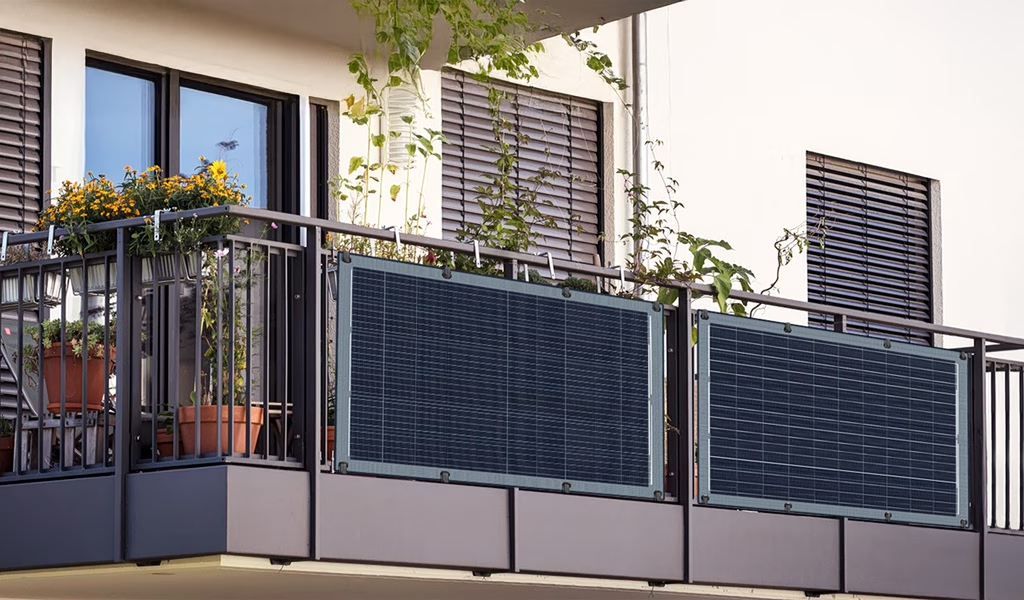
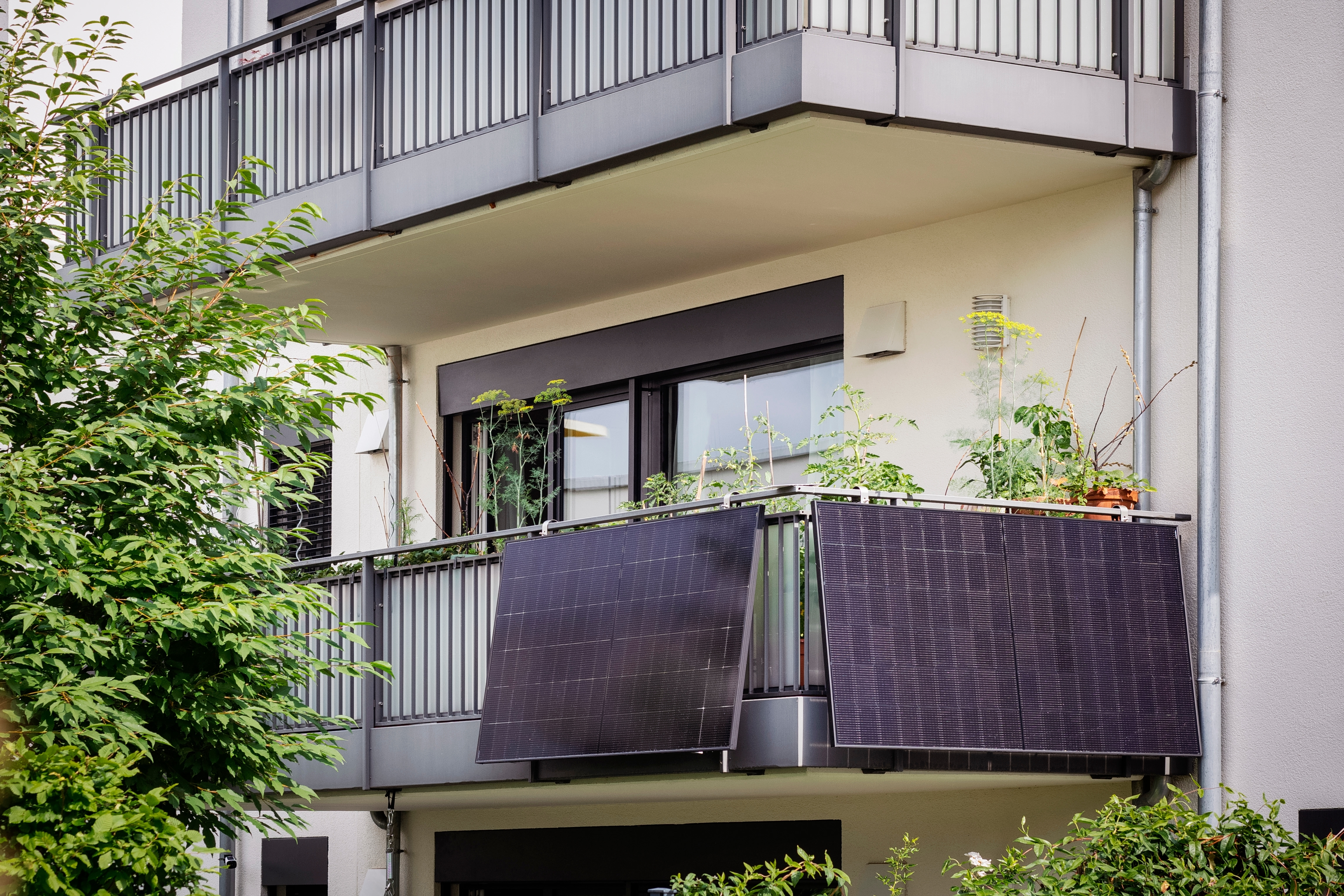
 As electricity costs continue to strain household budgets, a new option is emerging for residents who cannot install traditional rooftop solar panels: balcony solar systems.
These compact plug-in photovoltaic systems, with output of up to 800 watts, are designed primarily for apartment buildings without access to roof space. According to estimates cited in TA NEA, they could reduce a typical household’s annual electricity bill by 20% to 30%, provided strict safeguards ensure that no excess electricity is fed into the power grid.
The systems are intended exclusively for self-consumption. They can have a maximum grid injection capacity of 800 watts and a maximum installed injection capacity of 900 watts, and may also be paired with battery storage.
How the systems work
Under Greece’s new framework, the systems operate through simultaneous netting, meaning the electricity generated is directly offset against the electricity consumed by the household based on certified meter readings from the network operator. The owner cannot use the installation for commercial electricity production.
Consumers wishing to install a balcony solar system must provide their electricity supply details when purchasing the equipment from a retailer or installer. The supplier or installer is then required to notify the electricity distribution network operator through a dedicated digital portal at least five days before installation.
Applicants access the portal using their government tax credentials (Taxisnet) and submit the required information.
Installation requirements
To install and connect the system, users must:
- Submit a new installer declaration, which must be renewed every two years.
- Install a directional sensor to ensure that no electricity is exported to the grid.
- Install a telemetry system to record both electricity production and household consumption for self-consumption calculations.
The framework does not require a grid connection agreement with the electricity distribution operator (HEDNO), nor any additional permits, approvals, or connection fees.
The maximum permitted capacity per electricity supply is 800 watts for output and 900 watts for installed capacity.
An alternative for apartment residents
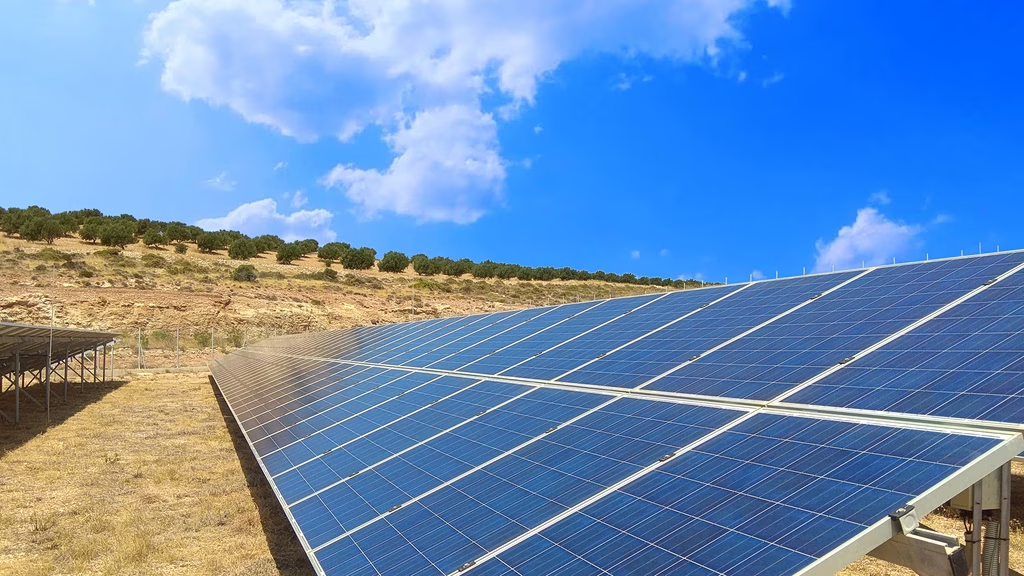
Unlike conventional rooftop solar installations, balcony systems are aimed at households that lack suitable roof space—often a challenge in apartment buildings or rented properties.
While rooftop systems combined with battery storage can potentially provide near energy independence depending on household consumption and system size, balcony solar panels are designed to offset steady daytime electricity use, such as refrigerators, small appliances, and other devices operating during daylight hours.
Their main advantage is making self-generated electricity accessible to households that previously had limited options.
Cost and shared self-consumption
Initial estimates place the cost of a balcony solar installation at around €700 to €1,000. However, industry representatives note that actual costs may be higher because the systems must be connected directly to the home’s electrical panel—not simply plugged into a wall socket—to ensure zero electricity export to the grid. This requires the installation of specialized equipment in the household’s electrical panel.
The new regulatory framework also allows for collective self-consumption, enabling at least two consumers within the same apartment building or residential complex to jointly use a single solar installation and share the electricity it produces.
In addition, third parties may finance, install, or manage a self-consumption system on behalf of the consumer. However, the energy benefits generated by the system remain with the consumer rather than the third-party operator.