 Μake us preferred on Google
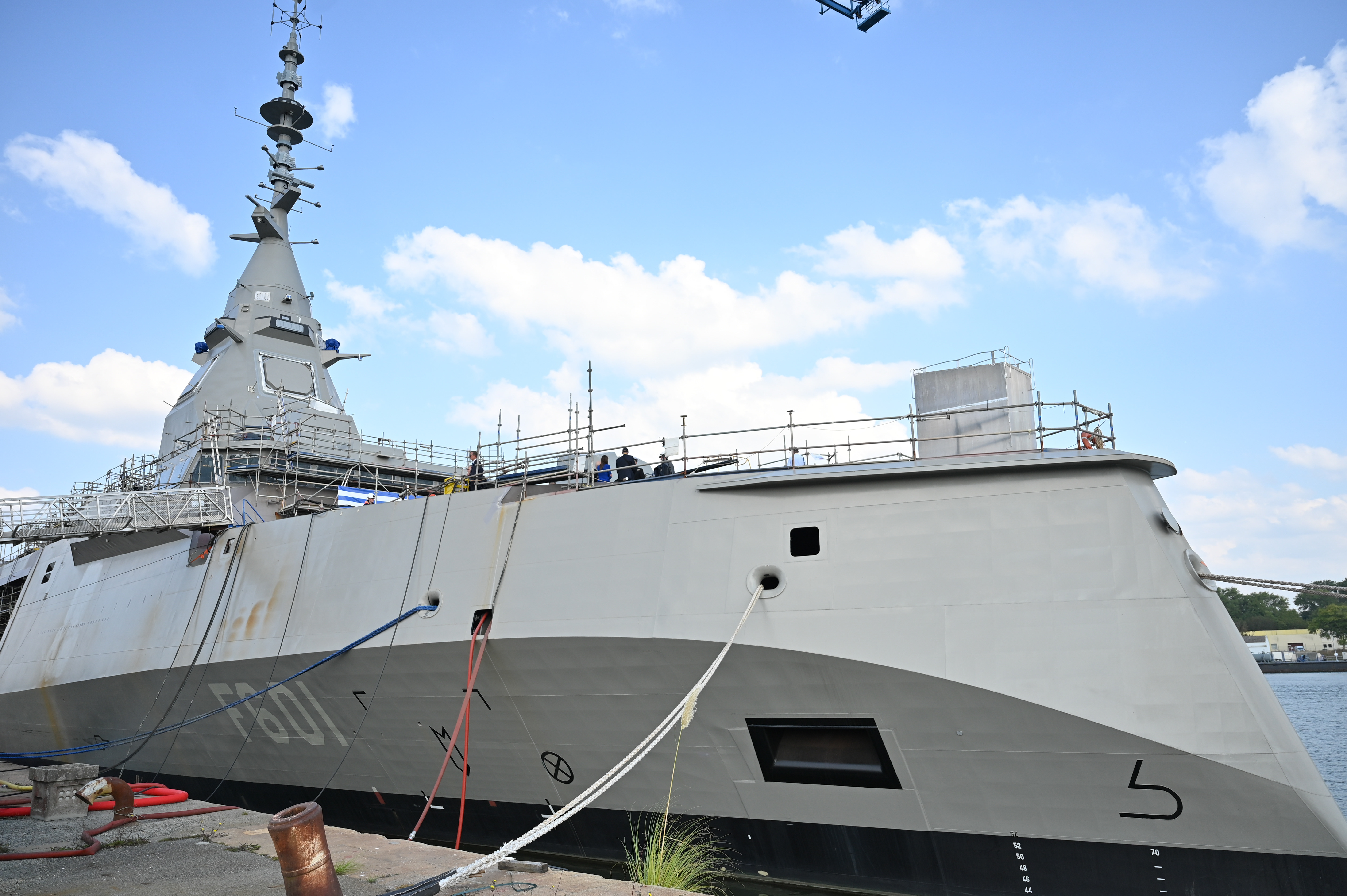
Greece is set to take delivery of its second Belharra-class frigate on Friday, as the Greek flag is raised aboard the Nearchos at the Naval Group shipyards in Lorient, France.
The handover ceremony is scheduled for 2:30 p.m. Greek time. The vessel will become the second French-built FDI (Frégate de Défense et d’Intervention) frigate to join the Hellenic Navy, following the delivery of the Kimon in December 2025.
The acquisition is part of Greece’s effort to strengthen its naval presence in the Aegean and eastern Mediterranean with ships capable of responding to threats in the air, at sea and underwater.
Defense Minister Nikos Dendias has traveled to France for the handover ceremony. He is also scheduled to meet with his French counterpart, Catherine Vautrin.
Their discussions are expected to cover bilateral defense cooperation, regional and European security, and prospects for deepening the strategic relationship between Greece and France.
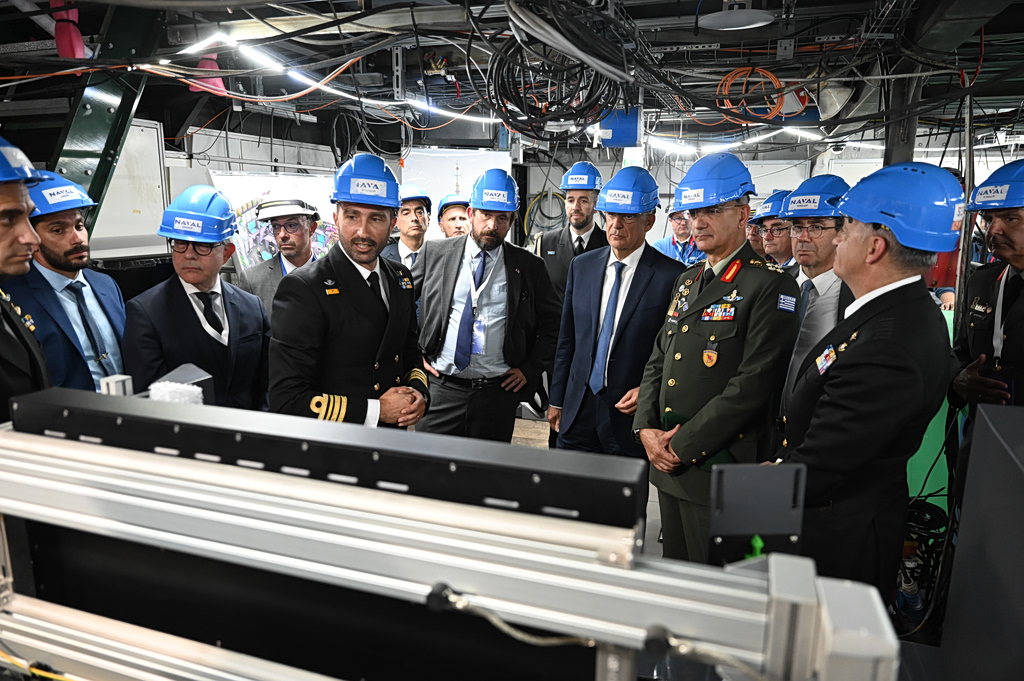
Greek Defense Minister Nikos Dendias attends the launching ceremony of the frigate Nearchos in Lorient, France. (Press Office of the Ministry of National Defense / EUROKINISSI)
Nearchos features twice the missile-launch capacity
The Nearchos is being delivered in the Standard 2 configuration, with 32 active Sylver A50 vertical-launch cells, compared with 16 activated cells aboard the Kimon.
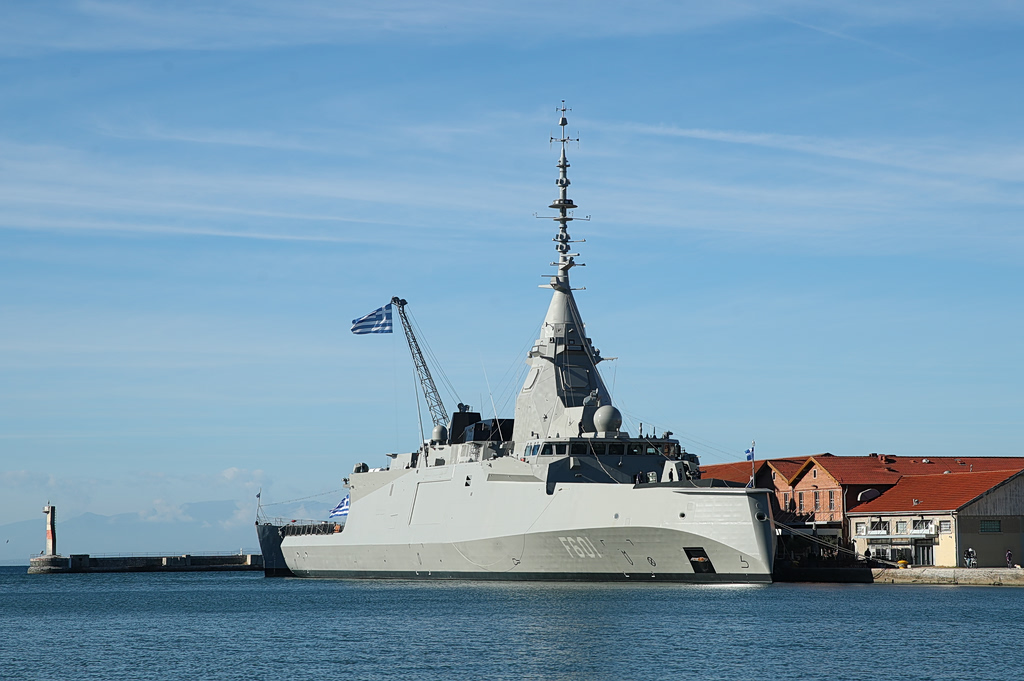
The frigate Kimon, the most advanced vessel in the Hellenic Navy, is docked at the Port of Thessaloniki ahead of the October 28 national holiday celebrations. The ship will be open to the public as part of the events marking the anniversary. Friday, October 23, 2026. (Nasos Simopoulos / EUROKINISSI)
The additional capacity allows the frigate to carry more Aster 30 missiles, which are designed to intercept aircraft and missile threats. This gives the vessel a greater role in air defense, allowing it to protect not only itself but also other naval units operating in the same area.
Its defensive capabilities are further strengthened by a fully operational RAM close-in weapon system, integrated with the SETIS combat management system. The ship also carries additional countermeasure launchers to provide another layer of protection against incoming missiles.
Similar upgrades are planned for the Kimon, which is expected to undergo modernization in 2027 during a scheduled maintenance period.
Four FDI frigates to form core of modernized fleet
The introduction of the Nearchos marks another step in the renewal of Greece’s surface fleet, much of which has relied on frigates that have been in service for decades.
The four FDI frigates — Kimon, Nearchos, Formion and Themistocles — are expected to provide the Navy with advanced capabilities in air defense, anti-ship warfare and anti-submarine operations.
A central component of their technology is the Sea Fire radar, which can detect and track multiple targets. Working with the SETIS combat management system, it helps the crew coordinate and deploy the ship’s weapons more effectively.
Having two vessels of the same class also gives the Navy greater operational flexibility. The frigates can rotate between missions, training and maintenance, reducing the risk of having only one modern vessel available. Experience gained by the crew of the Kimon is also expected to shorten the time needed for the Nearchos crew to adapt to the new ship.
The four FDI frigates are expected to serve as the backbone of the surface fleet for decades to come. They will operate alongside four upgraded MEKO-class frigates and two used Italian Bergamini-class (FREMM) frigates, whose acquisition is already underway. Greece is also examining the possibility of acquiring two more.
Formion expected to receive Greek flag in December
The third FDI frigate, the Formion, is scheduled to receive the Greek flag on December 17, 2026. It will remain in France until March 2027 for additional work and the installation of systems.
This means that three FDI frigates will have been delivered to Greece within approximately one year of the Kimon‘s arrival.
The fourth vessel, the Themistocles, is expected in 2028 and will complete the procurement program. It is due to be delivered in the most advanced configuration of the four ships.