 Μake us preferred on Google
Heavy rainfall in western Lesbos has exposed new fossils in the island’s Petrified Forest, prompting renewed efforts by the Natural History Museum of the Lesvos Petrified Forest to document and protect the discoveries.
The latest findings appeared along the slopes of the Kalloni–Sigri road, where museum staff have begun additional conservation work to prevent the newly exposed remains from deteriorating.
A new protective shelter has already been completed, while further work is underway ahead of winter. Exposure to rain and other natural elements could damage fossils that have been preserved in the island’s soil for millions of years.
Erosion has a dual effect in the area: It gradually removes the material covering buried fossils, revealing previously undiscovered sites, but also threatens the remains once they are exposed. The pyroclastic formations in which the fossils are preserved are particularly vulnerable to water erosion.
For this reason, newly uncovered fossils require immediate protection and conservation to prevent weather-related deterioration.
Ongoing efforts to protect the site
According to the museum, its technical service personnel, working under the director’s supervision, continue conservation interventions in the field without interruption, despite the absence of a dedicated funding program covering the work.
Protecting a natural monument of this scale requires a continuous presence, specialized personnel and sufficient resources. Conservation needs do not end when an individual project is completed, nor can they be put on hold while new funding is approved.
A fossil-rich landscape along the Kalloni–Sigri road
The Open-Air Petrified Forest Museum, developed along the Kalloni–Sigri road, showcases significant paleontological discoveries made during the construction of a major public infrastructure project.
Rescue excavations that began in 2013 uncovered an extensive collection of fossilized tree trunks, root systems, branches, leaves and other plant remains. Together, they provide valuable evidence of the Aegean region’s natural environment millions of years ago.
Several of the most important discovery sites have already been developed into visitor-accessible parks.
At the Fylakio site, approximately 3 kilometers from Sigri, successive forests preserved by a series of volcanic eruptions have been uncovered, along with an impressive root system belonging to a subtropical tree.
At Kotsini, about 6 kilometers from the settlement, researchers have revealed large standing trunks of coniferous and fruit-bearing trees, as well as ancient soils containing numerous fossilized leaves.
How Lesbos’ Petrified Forest formed
The fossils offer a rare insight into the landscape of Lesbos approximately 20 million years ago, when the area was covered by lush subtropical forests.
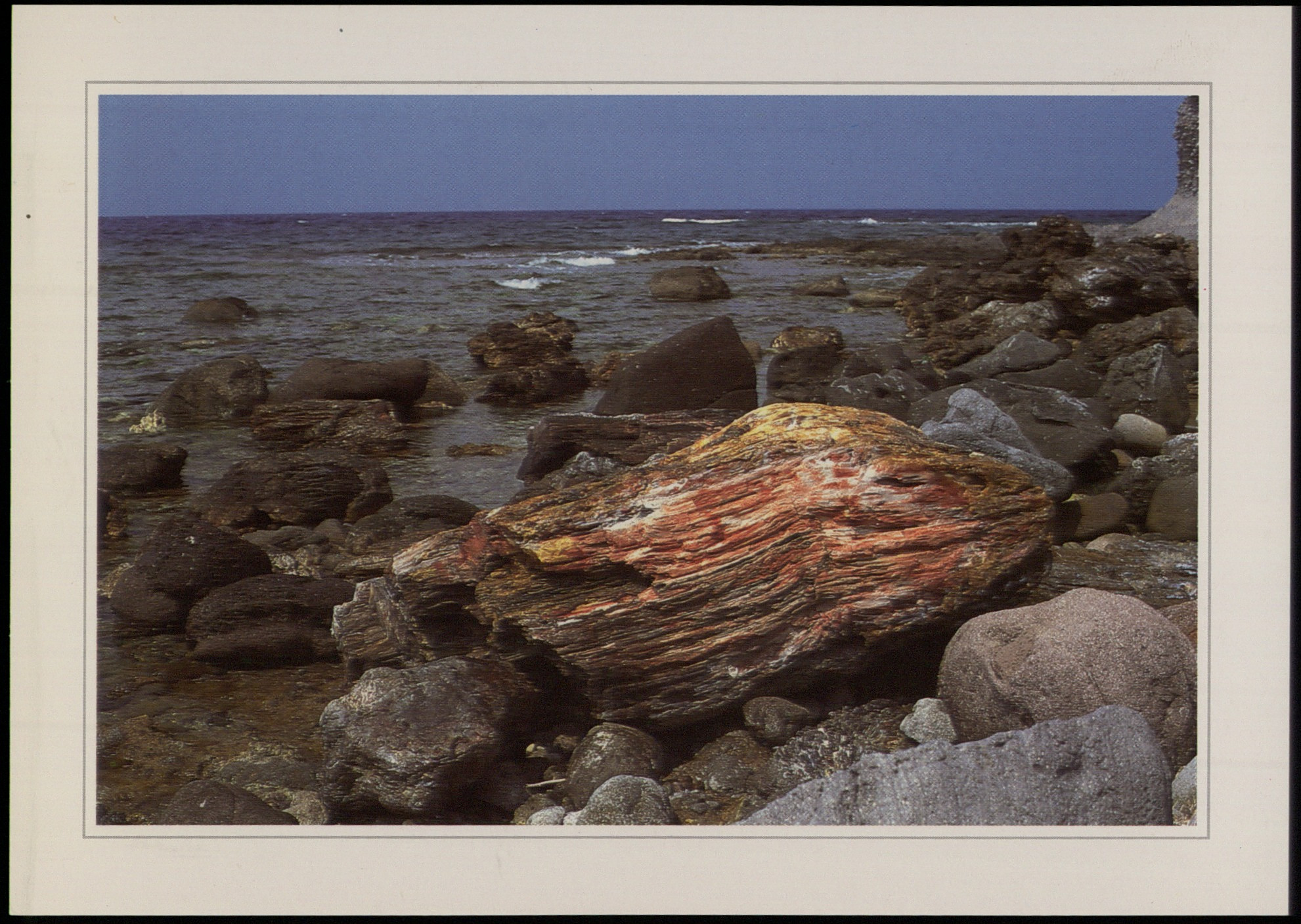
Powerful volcanic eruptions buried the vegetation beneath volcanic deposits. The circulation of hot, silica-rich fluids then enabled the petrification of plant tissues, preserving even details of the wood’s internal structure.
The exceptional state of preservation, together with the presence of trees that remain standing in the exact locations where they originally grew, makes the Lesbos Petrified Forest a site of international scientific importance.
The protected area covers approximately 150 square kilometers. Since 2014, the monument has also been included on UNESCO’s Tentative List of World Heritage Sites.
New discoveries highlight the need for permanent funding
The latest findings demonstrate that exploration in western Lesbos is far from complete. New fossil-bearing locations continue to emerge even without organized excavation work, as natural processes constantly reshape the landscape.
The museum has not yet announced the exact number, dimensions or scientific identification of the newly exposed fossils. For now, its priority is to secure and protect them against further damage from rainfall and erosion.
The newly constructed shelter along the Kalloni–Sigri road is another step toward preserving the unique natural monument. At the same time, the discoveries have renewed attention on the need for stable funding for research, conservation and the development of visitor facilities, ensuring that Lesbos’ natural heritage receives continuous protection rather than depending on the availability of individual funding programs.