 Μake us preferred on Google
For Greece, a public show of American support in a dispute with Turkey is usually a diplomatic prize. But in the case of the Great Sea Interconnector, the question is whether a public statement from Washington could do more harm than good.
As Washington weighs a statement against interference with a planned undersea electricity cable connecting Greece and Cyprus, the Greek government has signaled that it sees little benefit in a public intervention at this stage. Its concern is that a rebuke could put Turkey’s government under pressure to respond more aggressively, complicating the very project American diplomacy is trying to advance.
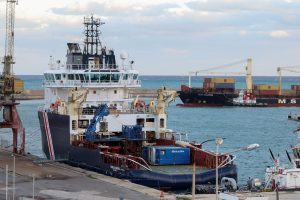
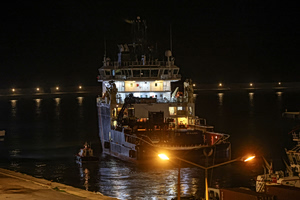
The project would connect the Greek island of Crete to Cyprus, the only European Union member whose electricity system remains disconnected from the bloc’s wider grid. An eventual extension to Israel is also planned. Supported by European funding, the cable is intended to improve energy security and make greater use of renewable electricity across the region.
But the project has become entangled in competing claims to maritime jurisdiction in the eastern Mediterranean. Disagreements between Greece and Turkey over those claims have already slowed its progress.
Washington’s position draws an important distinction. It supports the cable without weighing in on the substance of the underlying disputes between Greece and Turkey. For Athens, the immediate question is how that support can best help the project proceed.
In earlier disputes with Ankara, Greek governments have looked almost reflexively to Washington for statements that go beyond the usual appeals for restraint on both sides. Such interventions serve two purposes. They can put pressure on Turkey while offering a political dividend at home, allowing a Greek government to argue that its diplomatic relationships produce results.
That familiar pattern was evident in the dispute over Turkey’s maritime agreement with Libya, when Athens sought a public American response. In October, the State Department called the announcement of the agreement’s ratification “unhelpful and provocative,” saying it had raised tensions in the region.
The United States has already intervened privately, on its own initiative, to support the project’s progress. Athens welcomes that involvement. And despite Turkey’s objections, the Greek assessment is that Ankara has not, at this stage, escalated its response to the point of preventing the project from moving forward.
A public rebuke could upset that balance. As Athens appears to see it, criticism from the State Department could leave the government of President Recep Tayyip Erdogan exposed to domestic political pressure, encouraging a confrontation it might otherwise choose to avoid. The concern is not a lack of American support, but whether making that support more confrontational would prove counterproductive.
The preference for quiet diplomacy is consistent with the approach Secretary of State Marco Rubio outlined during his October visit to Athens. Speaking alongside his Greek counterpart, Rubio described the cable as an example of overlapping American and Greek interests and said Washington intended to use its diplomatic influence to make the project’s importance clear to all parties. As he explained, such sensitive issues were “best addressed through private diplomacy outside the realm of press conferences.”
That approach rests on a policy framework that predates his tenure as secretary of state. The Eastern Mediterranean Security and Energy Partnership Act of 2019, commonly known as the East Med Act, established support for closer energy cooperation among Greece, Cyprus and Israel as U.S. policy, along with encouragement of private investment in the region’s energy infrastructure.
Rubio helped write that framework. As a Republican senator from Florida, he introduced the legislation alongside Senator Bob Menendez from New Jersey. Now, as secretary of state, he is responsible for putting into practice a policy he helped establish.