 Μake us preferred on Google
 Lake Koronia in northern Greece has lost approximately 94% of its original water surface, with new satellite data showing a dramatic acceleration in its decline over the past three years.
The findings, analyzed by the scientific team of Meteo, the weather and climate service of the National Observatory of Athens, show that the lake’s water area has fallen to approximately 2.7 square kilometers in 2026, raising concerns that it could eventually disappear.
Lake Koronia, located in the Thessaloniki region, was once Greece’s fifth-largest lake, covering 42.8 square kilometers.
Dramatic decline in recent years
The lake’s original area of 42.8 square kilometers is confirmed by official data and by analysis of a Landsat satellite image from August 20, 1984, processed by the Meteo scientific team.
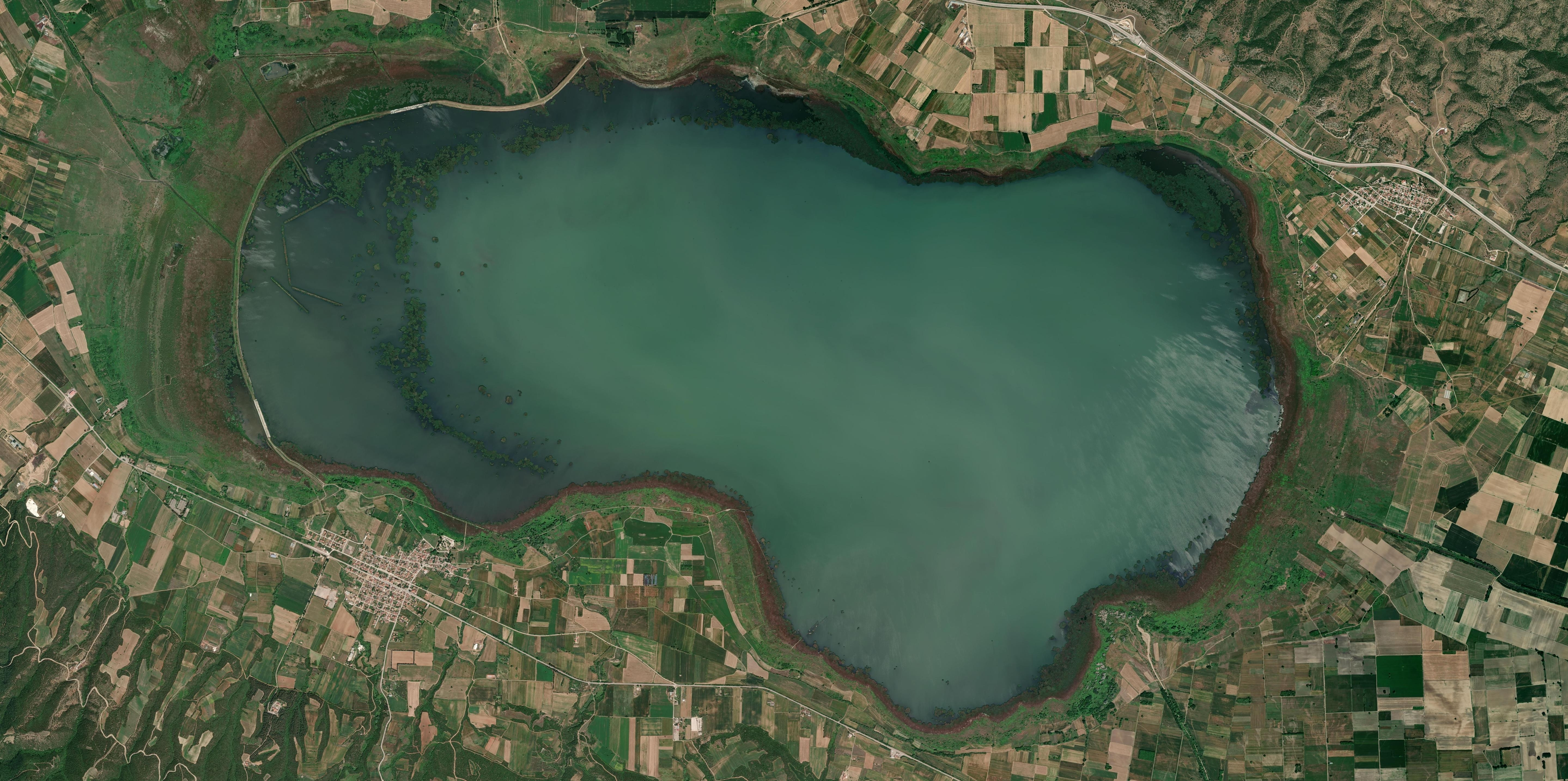
Satellite images from the European Sentinel-2 satellite, part of the European Union’s Copernicus program, show how the lake’s water surface has changed since 2016.
In 2016, the lake covered 34.4 square kilometers, about 20% below its original area.
The decline accelerated sharply over the following three years:
- 2024: 29.8 square kilometers
- 2025: 17.9 square kilometers
- 2026: approximately 2.7 square kilometers
The latest satellite image shows the extent of the lake’s contraction, with its current water surface representing only a small fraction of its former size.
Threat to the lake’s ecosystem
The environmental degradation and shrinking of Lake Koronia began several decades ago. Following interventions by authorities, the lake temporarily recovered to relatively satisfactory levels.
In recent years, however, the problem has returned, with the shrinking water surface threatening the area’s flora and fauna.
The latest developments highlight the need for systematic monitoring of the lake and effective management of its water resources, with the goal of protecting it and achieving its long-term restoration.
The satellite analysis provides a visual record of the lake’s decline, from its condition in 1984 to the sharp contraction documented between 2016 and 2026.