 Μake us preferred on Google
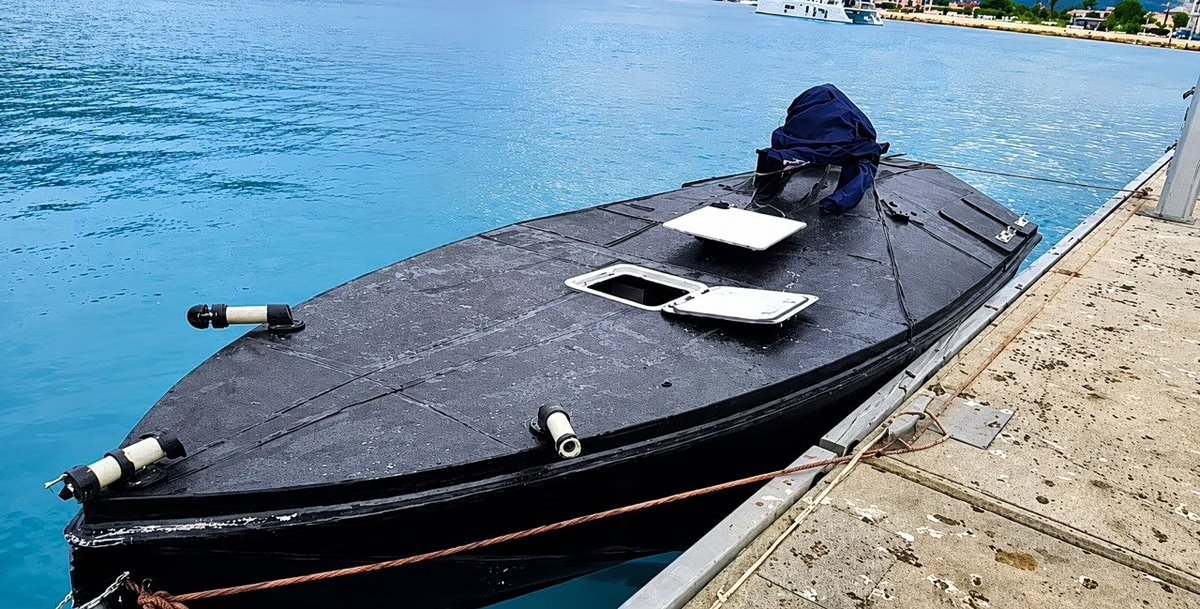
 Greek authorities believe the kamikaze sea drone discovered off the coast of Lefkada on Thursday began its journey from an unidentified Ukrainian vessel sailing in the Ionian Sea near the Ionian Islands.
The remotely operated explosive-laden craft is believed to have been launched into the sea while the Ukrainian vessel was underway, relatively close to the location where it was later found. Its apparent target was a Russian commercial ship moving through Greek waters. However, the strike was never carried out, and the drone continued drifting uncontrolled toward Lefkada.
These are the initial findings presented by TO VIMA, based on the first analysis of the vessel’s GPS system and battery consumption data from the remotely operated craft that triggered alarm among Greek authorities.
The central question now is whether Ukrainian intelligence services were planning to carry out a bombing attack near Greek territory. Analysis of the GPS data and other onboard devices is ongoing, while investigators are also examining four handwritten pages containing wiring instructions and operational guidance that were discovered inside the vessel.
NEWSLETTER TABLE TALK
Never miss a story.
Subscribe now.
The most important news & topics every week in your inbox.
At the same time, authorities are closely examining two other similar attacks targeting Russian ships in the Mediterranean over the past six months.
Fears Ahead of Tourist Season
The discovery of the sea drone — described as a “super bomb” worth an estimated €300,000 — has triggered a major mobilization involving the Armed Forces, Greece’s National Intelligence Service (EYP), and security authorities.
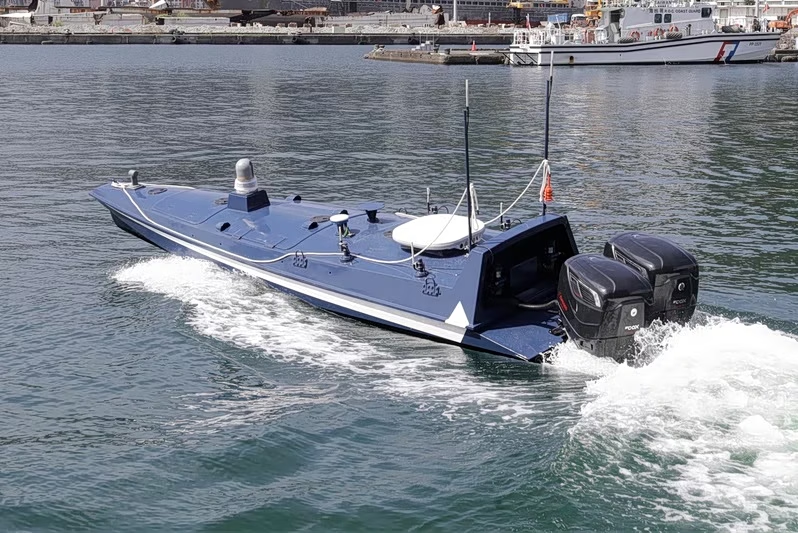
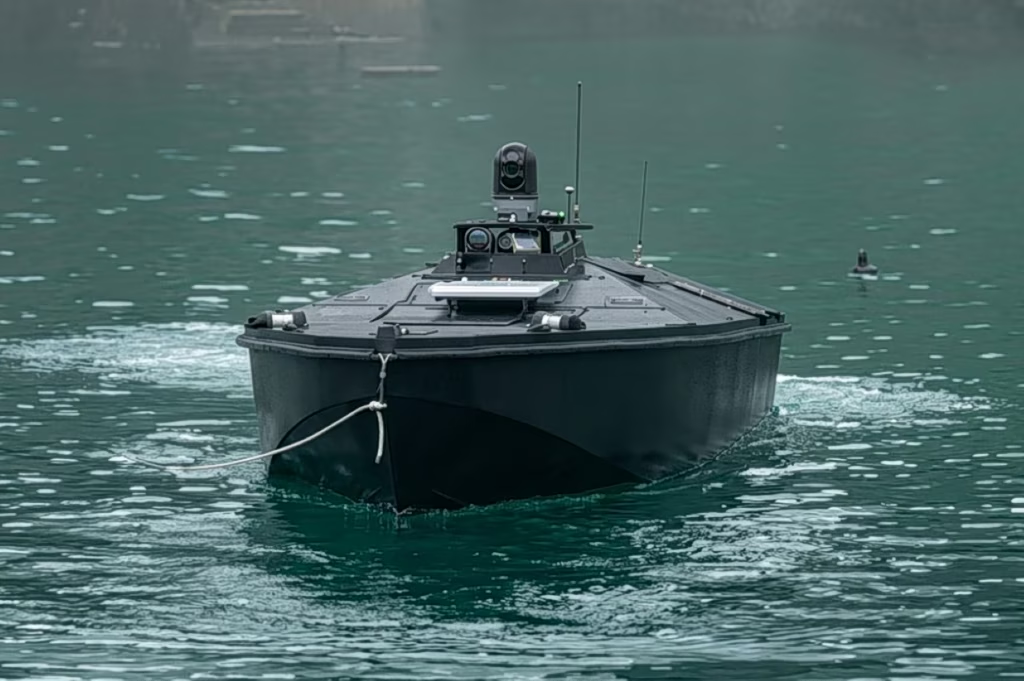
The incident has also raised broader concerns, given the risk of a deadly explosion in one of Greece’s most popular tourist regions. Authorities now acknowledge the growing threat posed by similar “ghost vessels” carrying explosives across the Mediterranean, capable of causing mass casualties if used against commercial or passenger ships, especially in cases of navigational failure.
Investigators are also taking into account the fact that the drone found in Lefkada was trapped in a rocky area and remained operational with battery power still active even 10 hours after it was discovered. The system only shut down after Greek military personnel disconnected its cables.
Authorities further note that during the efforts by fishermen and coast guard officers to immobilize and transport the vessel, there appeared to be no attempt by its operator to maneuver it away or avoid capture.
Fishermen Describe Drone Moving in Circles
Witness accounts from fishermen are also being considered. They reported seeing the vessel moving in circles — a motion likely caused by centrifugal force, as is often the case with drifting unmanned craft.
Investigators also confirmed that, fortunately, the drone’s explosive triggering system had not been activated. Had it been armed, a deadly explosion could have occurred at any moment.
According to the initial assessment and the GPS findings gathered so far, these elements suggest that the drone discovered in Lefkada had already lost guidance control following a failed bombing attempt hundreds of nautical miles away. Officials stress, however, that these conclusions are still preliminary and not yet definitive.
Officials from Greece’s intelligence and military services are initially linking the Lefkada case to two similar attacks carried out in December 2025 and March 2026 against Russian oil tankers near Malta and south of Crete.
At the time, investigators examined two possible launch scenarios: either the drones originated from the Libyan port of Misrata or from a Ukrainian commercial vessel. According to the latest findings, however, the failed targeting operation now appears to have taken place farther north, in the Ionian Sea.