 Μake us preferred on Google
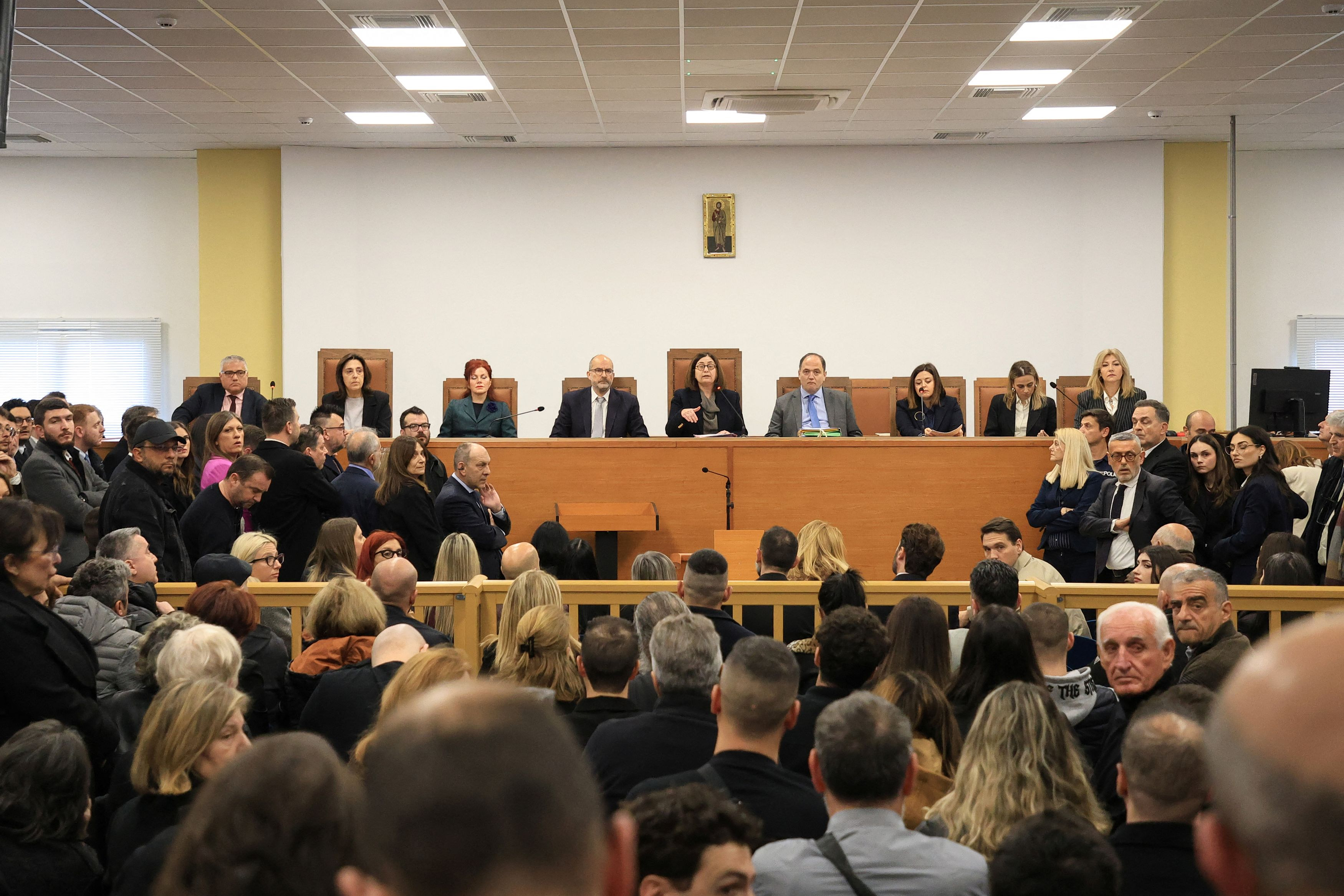
 The prosecutor in the Tempi trial has recommended rejecting the main motions brought by the victims’ lawyers, who spent recent sessions pressing the court to broaden the charges and toughen the case.
In a submission to the court lasting more than an hour, she told the bench it had no power, at this stage, to order a further investigation into the explosion and the endangerment counts, and urged that the request be thrown out as legally unfounded. She took the same line on the bid to charge the two Hellenic Train executives with the same felony as most of the other defendants, and on the move to reclassify the homicide charges from negligence to possible intent, which would carry far heavier penalties.
A door left open
The Prosecutor however, did not shut the question down for good. Once the court begins hearing evidence, she said, the picture could change, and if witnesses or other material that will be examined bring new facts to light, the bench can revisit all of it, whether by bringing fresh charges or by recasting how the existing ones are framed in law.
She applied the same wait-and-see logic to the lawyers’ other requests, holding off on their calls for more witnesses and for fresh evidence, among it the emails sought between the transport ministry, the rail bodies, and Hellenic Train over Contract 717. Whether that material is needed, she said, can only be judged once witnesses have begun testifying and the shape of the evidence becomes clear.
What the lawyers were after
The motions she pushed back on were the work of the victims’ families’ lawyers, who have used recent sessions to try to widen a case they see as drawn too narrowly. The two Hellenic Train executives, the company’s chief executive at the time and its technical director, were sent to trial only over the failure of the GSM-R radio system on the trains, the network meant to let drivers speak to one another along the line. The charges against them stop at negligent homicide and bodily harm, while most of the other defendants face a far graver felony count.
Leading the push to change that is Damianos Balasoulis, who last week asked the court to bring that same felony, compromising transport safety, against the two executives. He backed the request with documents from the railway regulator and the train drivers’ union that had warned of safety problems, poor fire protection, and understaffing long before the crash. Other lawyers pressed to have the homicide charges across the case reclassified to reflect possible intent rather than negligence, and to widen the indictment to cover the explosion and the fire that followed the collision.
A second strand of the motions concerned how the trial is run. Antonis Psaropoulos, a lawyer for victims’ families who lost a child of his own in the disaster, asked the court to organize the testimony around six themes rather than hear it piecemeal, from the emergency response in the first minutes to the safety systems, the fire, the tampering at the crash site, the forensic findings, and finally the passengers’ own accounts. He also sought to call witnesses left off the list, among them fire service officers who had given statements during the investigation, the man who ran OSE between 2021 and 2023, and the former head of Interstar Security, the firm that has guarded and monitored the network by camera since 2017.
The Contract 717 question
Running through much of this is Contract 717, which surfaces again and again in the case. Signed in 2014 between Ergose, the construction arm of the state railway, and a joint venture of Tomi and Alstom, the 41 million euro deal was meant to modernize the signaling and remote-control systems on the main line from Athens through Thessaloniki to Promachonas within two years. It never was completed. Eight extensions and a supplementary contract later, the work was still unfinished on the night of the crash, by which point it had already drawn investigations from Greece’s National Transparency Authority and the European Public Prosecutor’s Office. The emails the lawyers are seeking, between the transport ministry, the rail bodies, and Hellenic Train from 2021 onward, go to that history.