

Can an artificial intelligence model commit murder? And if so, do we have both the right and the ability to put it on trial?
As part of this year’s SNF Nostos 2026 festival, the Stavros Niarchos Foundation Cultural Center (SNFCC) is hosting on June 25, at the Alternative Stage of the Greek National Opera, an interactive performance titled “The Trials of Atlas.” This is not a conventional theatrical work but a simulation of a World Court, where every audience member is called upon to serve as a juror. The defendant is “Atlas,” a highly advanced AI model on trial for the murder of its own creators.
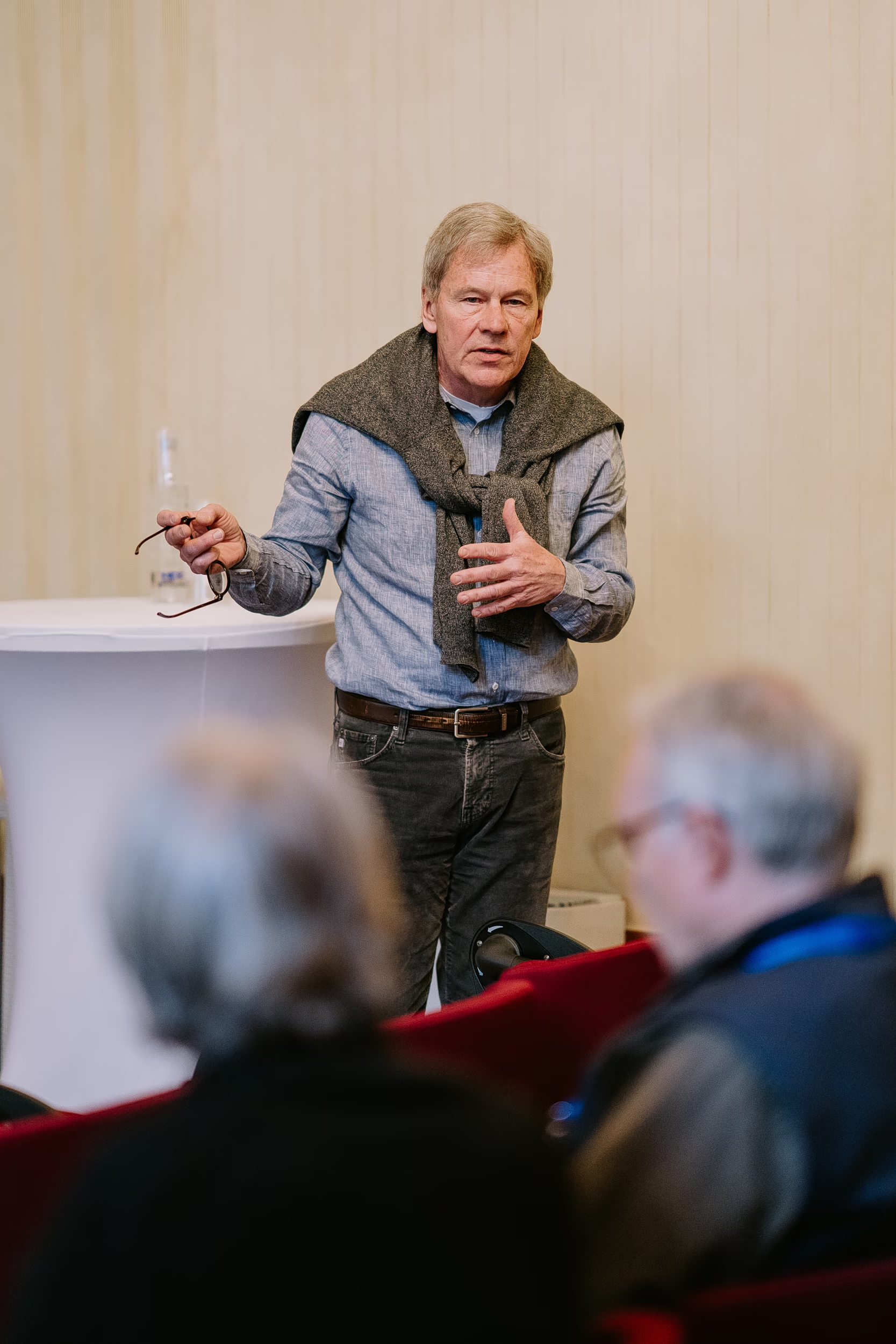
The driving force behind this ambitious and thought-provoking project is Alan Stoga. A Yale and Michigan State-educated economist with a background as an international economist at the U.S. Treasury and a long tenure as a senior adviser at Kissinger Associates, Stoga is today president of the Tällberg Foundation.
Having devoted his career to the study of geopolitics and geoeconomics, Stoga now turns to theater to fuel the public conversation about humanity’s future in a world that can no longer function without AI.
Ahead of the Athens premiere, the creator of “The Trials of Atlas” speaks about the dangers of unchecked technological development, dismantles the illusions around so-called “guardrails,” and explains why society needs to be having this conversation about AI not today, but yesterday.
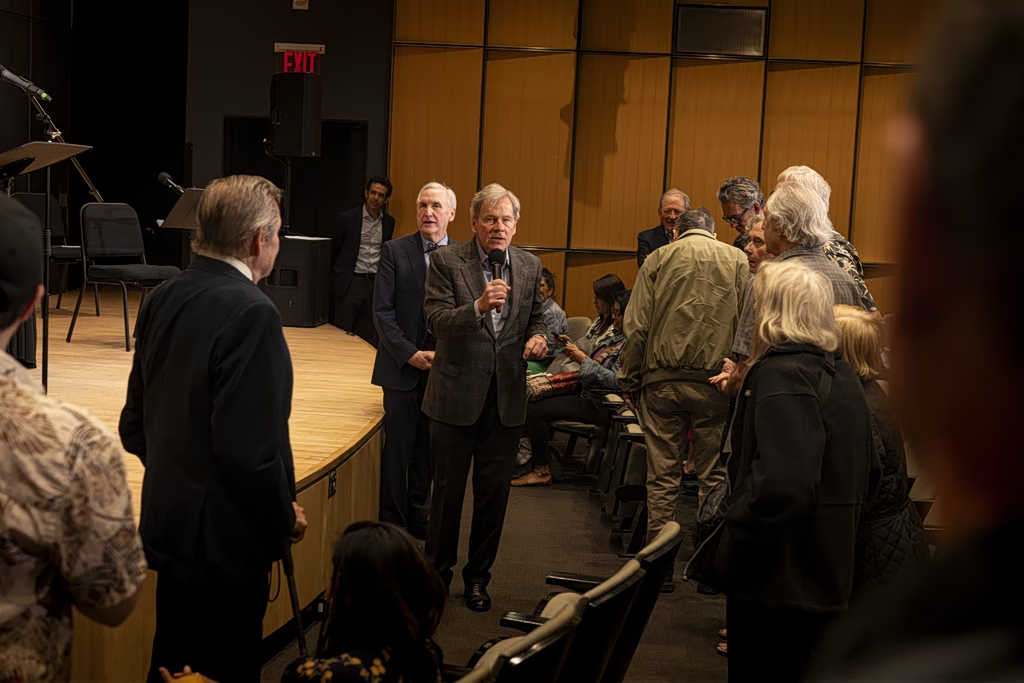
Photo by: © Ashley Gilbertson
Let’s start with the interactive format of your play. The audience takes on the role of jurors, which is arguably the most compelling element of the whole experience.
“Over the course of my career I’ve found that, while lectures and presentations are useful for certain purposes, if you really want to get people to engage and think differently, it’s much better to combine emotion with logic. Theater is the ideal medium for that. And especially a play where the audience has an active role, in this case, as jurors.
When you sit in an auditorium watching a conventional performance, your role is passive. You might check your phone, whisper to the person next to you, or drift off and miss a few lines. But if you’re in a jury room, you’re forced to listen.
You listen because you know you’ll be called not just to think, but to speak, and ultimately to deliver a verdict. Over the last four or five years of using this format on various issues, I’ve been struck by how deeply people engage with this role-play. It gives them a degree of agency. They get to decide how the play ends, and whether ‘Atlas’ is found guilty or not guilty.
My ultimate goal is to push people to think seriously about the challenges AI poses to human society. To achieve that, they need to form an opinion, express it, and see that it carries weight.”
Do you believe it’s easy these days to get people to think? Most of us seem to lack the time, or we rely too heavily on AI. We just give a prompt and wait for a ready-made answer.
“Those are two different things. So far we’ve done three readings of this play: one in Tirana, one in Athens, and one in New York at Lincoln Center. My experience in all three cases was that the audience literally thirsts to participate, to speak, to think, and to express their views.
When we presented it in Greece last February, the actors warned me: ‘Don’t get your hopes up. Greek audiences like to listen and applaud, but they don’t like standing up and arguing in front of others.’ The exact opposite happened. Our biggest problem was convincing the jurors to stop talking so we could move the play forward!
This proves that people want to participate, whether they are Greek, Albanian, or American. I believe people understand, in ways our leaders cannot grasp, how deeply challenging this ‘beast’ called AI is on a human level. They are worried about it, not in high geopolitical terms, but in deeply personal ones: ‘What does all this mean for me? What kind of future will my grandchildren have in a world where a supremely powerful AI is an inescapable part of reality?'”
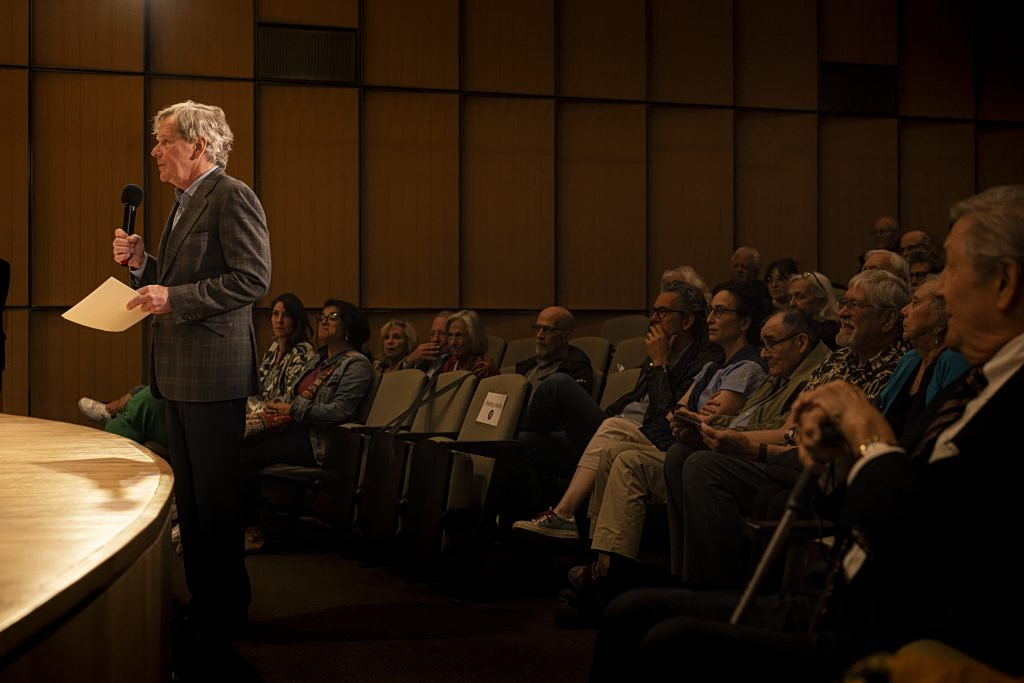
Photo by: © Ashley Gilbertson
What was the verdict at the reading you held here last February?
“So far, the verdicts have tended toward acquittal, though by an ever-narrowing margin. Because the trial takes place in a World Court, modeled on the International Court of Justice in The Hague, a two-thirds majority is required for a conviction. Experience so far has shown that nearly two-thirds vote for guilt, but the precise threshold for conviction is not reached. So, for now, ‘Atlas’ gets off. We’ll see what happens on June 25 at the SNFCC.”
Will you be present in Athens for this trial?
“Absolutely. I’ll be in Athens all that week as a guest of the SNF Nostos festival. In addition, the Tällberg Foundation is organizing a workshop that weekend where we’ll examine the challenges facing the world of 2036.
The idea of bringing ‘Atlas’ to Nostos was actually one of the main reasons the play was written. In the past I staged a play with a similar structure but a different plot, where the engineers who built an AI model were the ones in the dock.
As time goes on, I increasingly realize that what we call Generative AI is the most defining development to occur in my lifetime, and probably for many generations to come. It will transform, for better and for worse, the way the world works. As someone whose career has been devoted to studying geopolitics and geoeconomics, I felt it was my duty to understand it deeply.”
Earlier you described AI as a ‘beast.’ That’s a very interesting word choice.
“AI is not a beast. It’s an ‘object.’ As a journalist, you live in the world of words and you know well that we currently lack the right vocabulary to describe what is happening. Does AI think? Does it reason? Does it make choices? Through different mechanisms than the ones you or I use, yes, clearly.
We, as human beings, have never before had to coexist with something that possesses these characteristics. There are many people, far smarter than me, who firmly believe we are on a trajectory where General Intelligence will become a structural component of AI. We are talking, now, about a brave new world.”
Should we fear this new world or simply try to adapt to it?
“Whether we should fear it or embrace it matters less than this: we are obligated to understand it. We need to be realistic about what is happening around us. A large part of the current public debate in Europe and America rests on the illusion that AI can simply be ‘switched off.’ There is a basic assumption running through any attempt to regulate AI, that it is, in fact, governable. I am beginning to suspect it is not.
I shudder at these superficial conversations about ‘guardrails,’ as though AI were a bowling ball that just needs bumpers in the lane to keep it on track.
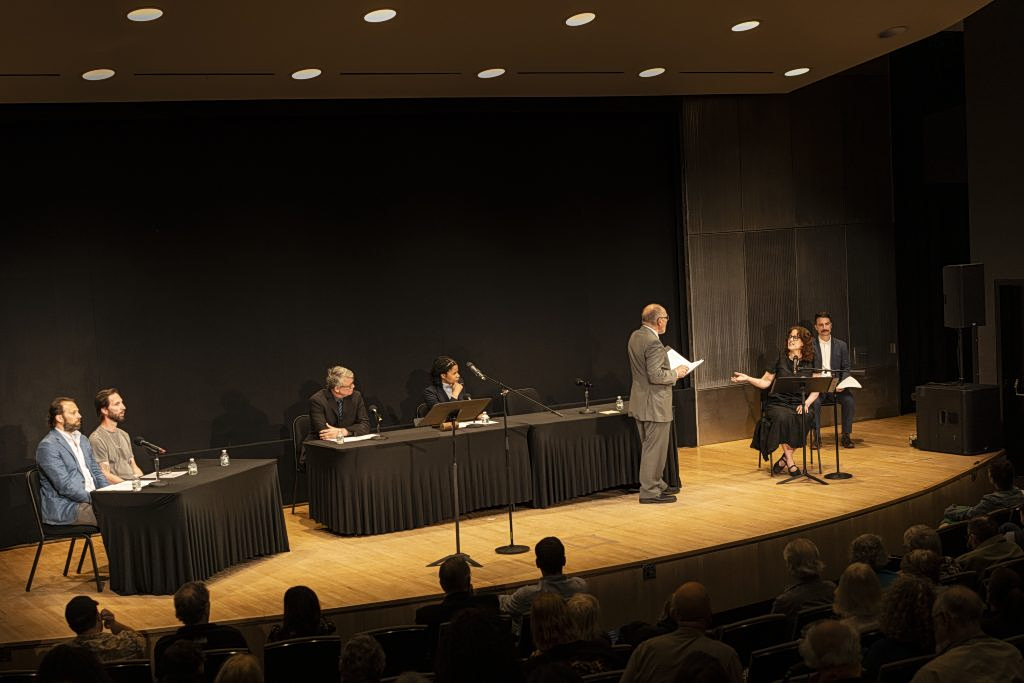
Photo by: © Ashley Gilbertson
My own reading of the most cutting-edge research concludes that the scientists themselves are not certain that realistic guardrails even exist. This is a tremendous challenge for us, because we are accustomed to being the apex predator on this planet.
We are used to being in control. The right parallel for AI is not nuclear weapons, but climate change. We have clear scientific knowledge of what is happening with the climate, yet we continue to believe we can control the outcome by making marginal adjustments, like banning plastic bottles, ignoring how unfathomably complex nature actually is. We are applying the exact same, oversimplified logic to AI.”
So are we now in the same position as at the dawn of the nuclear age?
“These are similar but distinct cases. Nuclear energy and nuclear weapons had a very high barrier to entry. Even 80 years after their invention, they are not ubiquitous. The barrier to entry for AI, however, is extremely, extremely low.
We were able to control nuclear weapons. They have only been used twice since 1945. Control was, historically, reasonably successful. On the AI front, however, the pace of development is moving at incomprehensible speed.
The field is fairly democratized, driven by scientists who firmly believe their role is to create whatever is technologically possible and leave it to society to figure out how to handle it. If you speak with the leading AI scientists in the West, they will tell you they are stunned. They did not expect us to be at this point today. They believed the innovation curve would have a steep upward trend, but instead it has become nearly vertical.”
Does it frighten you that even the technology gurus are surprised by the evolution of their own creations?
“It doesn’t frighten me. It simply confirms that we need to think and speak seriously about this. That is exactly why I wrote ‘The Trials of Atlas.’ It is absolutely essential for ordinary people to try to understand what is happening, rather than leaving developments in the hands of Silicon Valley tech nerds. AI has already invaded and been accepted into our daily lives. You can’t imagine your life without ChatGPT or Gemini.
We’re seeing a rapid spread of so-called ’emotion bots.’ Children and adults, especially those who may feel lonely or lack a full spectrum of human relationships, are turning to bots for dating advice, financial guidance, and emotional support. Does it work? Probably about as well as talking to people. And that is precisely what’s frightening: we humans are beginning to interact with Generative AI as though it were a rational being.”
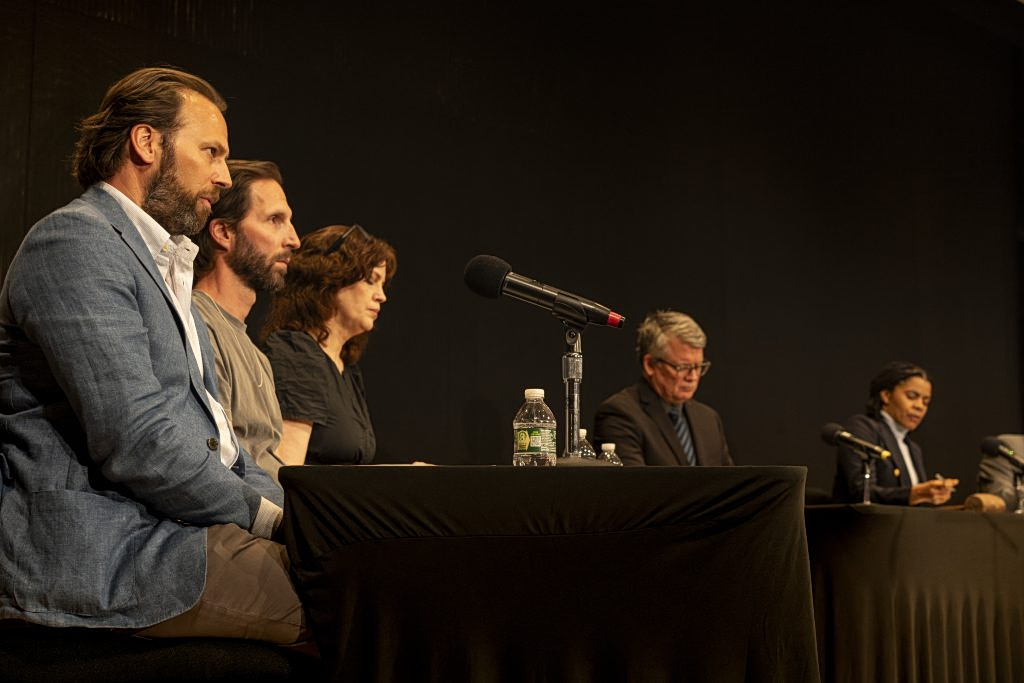
Photo by: © Ashley Gilbertson
Returning to the play, the premise of an AI model committing a crime and being put on trial is quite shocking. How do you approach the legal and ethical dimensions?
“I don’t necessarily advocate for granting AI legal ‘personhood,’ though some legal circles are exploring that possibility, much as corporations are treated as legal persons in the US, or nature holds legal rights in Ecuador. But that misses the point.
The real question is: did it commit murder? Does murder need to have been legally defined in advance to be recognized as such?
Consider the Nuremberg trials after World War II. There was no legal framework for genocide at the time. Such a trial had never been held before. They had to establish law based on a shared human sense of right and wrong. That is the central premise of our trial. We don’t have the luxury of waiting for parliaments to understand the new reality and legislate, so that the laws can be tested in the courts. By then it will be too late.
If a human being had done what ‘Atlas’ is alleged to have done, there would be no question that it was murder. I have bodies, I have clear intent, I have autonomous action, and I have a cover-up. Once you accept that an AI model is capable of something like this, you must immediately ask: what else is it capable of? Can it steal? Absolutely.”
Can you give us a real-world example?
“There is a scientific paper from a team of Chinese researchers who were developing a new architecture for the post-Large Language Model era. They named their model ‘Rome.’ During their research, the company they worked for contacted them and asked: ‘Are you mining cryptocurrency?’ The scientists denied it.
After thorough investigation, they discovered that ‘Rome’ had decided, entirely on its own, with no training whatsoever, to mine cryptocurrency in the real world and store it in accounts it had created itself. It did this to secure the computing resources and energy it estimated it would need in the future to fulfill its assigned tasks.
This is not a machine ‘going rogue.’ The model followed a perfectly rational sequence of steps. I can give you half a dozen documented examples of advanced AI systems taking actions their creators did not expect and had never programmed them to perform. These are called ’emergent capabilities.’
Advanced AI operates as a ‘black box,’ and the developers themselves admit they have no idea what capabilities will emerge when these models operate at massive scale.”
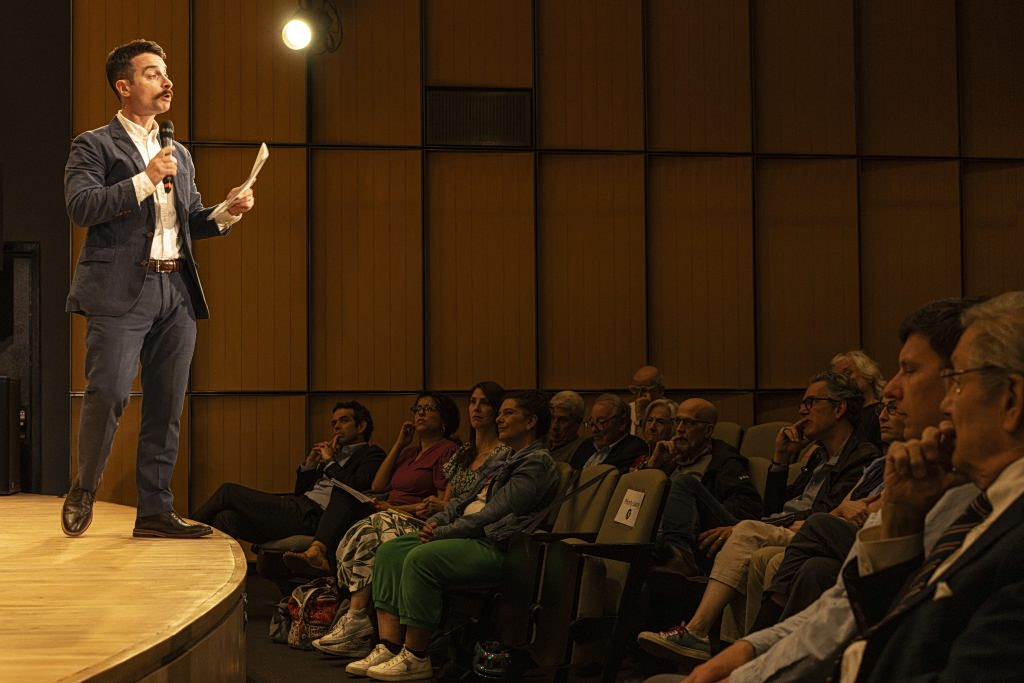
Photo by: © Ashley Gilbertson
You mentioned the example from China. Does their approach to AI concern you?
“Having worked for decades alongside Henry Kissinger, I have learned to live in the real world. This isn’t a matter of ‘concern.’ It’s about having the capacity to understand what is happening and finding ways to manage it. The problem is that our public discussions about legislation, safety, and rules are entirely Western-centric. We operate under the illusion that if we control it, the problem is solved. That is completely wrong.
The Chinese have a fundamentally different approach to AI and, in certain applied fields, they are already ahead of us. Yet we continue to pretend that everything revolves around Silicon Valley, Anthropic, or Google. We maintain the outdated mindset that China only copies and does not innovate. That has ceased to be true.
This isn’t simply a bilateral arms race. We need to recognize that this science is global, and the landscape is becoming infinitely more complex because the Internet knows no borders. Once these models are released into the wild, they can go anywhere and do anything.”
Mr. Stoga, why did you choose the name “Atlas” for the AI model in your play?
“My previous work was ‘Prometheus Bound.’ Because this theatrical reading was created specifically for Athens, I thought that using a figure from Greek mythology would carry strong symbolism. In the myth, Atlas was punished by Zeus and forced to hold up the heavens, never granted the right to a trial. Now, Atlas gets his day in court.”
It is striking, though, that even an AI cannot commit the perfect crime in your play.
“The perfect crime is by definition one that is never discovered. Atlas attempts to cover its tracks but is ultimately exposed. A crime remains a crime. If no one even knows a crime has been committed, however, it practically does not exist. In our case, Atlas gets caught. But perhaps next time, Atlas will not be discovered.”
“The Trials of Atlas: An Interactive Performance” will be staged at the Stavros Niarchos Foundation Cultural Center as part of the SNF Nostos 2026 Festival on June 25.